Data Centers & Cloud
The buildout behind the AI bill
Hyperscaler capex, colocation supply, power, cooling and networking — where the money goes after the GPU order, and which companies book it.
2026-08-02
%22%2F%3E%0A%20%20%3Ccircle%20cx%3D%22220%22%20cy%3D%22150%22%20r%3D%22180%22%20fill%3D%22%2322d3ee%22%20fill-opacity%3D%220.12%22%2F%3E%0A%20%20%3Ccircle%20cx%3D%221010%22%20cy%3D%22130%22%20r%3D%22220%22%20fill%3D%22%2338bdf8%22%20fill-opacity%3D%220.08%22%2F%3E%0A%20%20%3Ccircle%20cx%3D%22920%22%20cy%3D%22520%22%20r%3D%22170%22%20fill%3D%22%2322d3ee%22%20fill-opacity%3D%220.06%22%2F%3E%0A%20%20%3Cpath%20d%3D%22M140%20430h920%22%20stroke%3D%22url(%23line)%22%20stroke-width%3D%2212%22%20stroke-linecap%3D%22round%22%2F%3E%0A%20%20%3Cpath%20d%3D%22M220%20360c120-150%20260-220%20380-220s260%2070%20380%20220%22%20fill%3D%22none%22%20stroke%3D%22%2367e8f9%22%20stroke-opacity%3D%220.5%22%20stroke-width%3D%2216%22%20stroke-linecap%3D%22round%22%20stroke-linejoin%3D%22round%22%2F%3E%0A%20%20%3Cpath%20d%3D%22M300%20398h600%22%20stroke%3D%22%2394a3b8%22%20stroke-opacity%3D%220.24%22%20stroke-width%3D%228%22%20stroke-linecap%3D%22round%22%2F%3E%0A%20%20%3Ctext%20x%3D%22220%22%20y%3D%22510%22%20fill%3D%22%23e2e8f0%22%20fill-opacity%3D%220.7%22%20font-family%3D%22Arial%2C%20Helvetica%2C%20sans-serif%22%20font-size%3D%2238%22%20letter-spacing%3D%228%22%3EINSIGHTS%3C%2Ftext%3E%0A%3C%2Fsvg%3E)
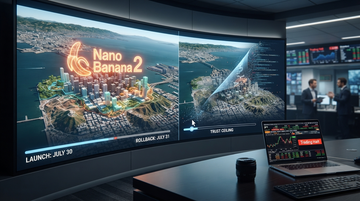
Alphabet's 24-Hour Earth AI Reversal Sets a Trust Ceiling for Generative Maps
Google launched Nano Banana 2 in Google Earth on July 30, 2026, then rolled it back on July 31 after users created convincing false scenarios over real satellite, aerial, and 3D imagery. The episode is not a material near-term revenue event for Alphabet, but it raises the cost of deploying generative features across trusted visual products: stronger review, provenance, moderation, and distribution controls become part of the margin equation.

SpaceX's First Print Tests Whether the $1.4T Is Cash or Vision
SpaceX reports its first quarterly earnings Aug 4 with shares already 51% off their June peak at $108.37. The print forces the Street to separate Starlink's real cash engine (Q1 2026: $3.26B revenue, $1.19B operating income) from the AI compute money pit that added a $1.2B EBITDA drag in 2025 — and decide whether the $1.4T market cap is sum-of-parts math or a Musk optionality premium. With 911.5M shares unlocking Aug 6 and 34% of the float already short, the call is the first liquidity test of public-market SpaceX.
2026-08-01
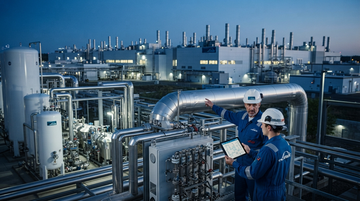
Linde Fell 5.9% on Record Results—The Buy Case Rests on an $8.1 Billion Backlog, Not the Quarter
Linde's July 31 sell-off looks excessive because electronics sales grew 18% and contracted gas projects reached a record $8.1 billion. But the stock still trades near 31 times trailing earnings while rising capital spending is suppressing free cash flow, so the opportunity depends on semiconductor projects converting into high-return, long-duration gas revenue.
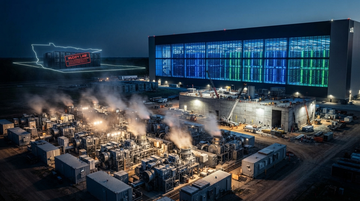
xAI Just Lost Two Courts in One Week—Minnesota's Nudify Law Stands, Memphis's Colossus Turbines Get Another Year. The Split Verdict Is a Compute Edge.
On July 31, 2026, Judge Donovan Frank denied xAI's emergency bid to block Minnesota's first-in-the-nation AI 'nudification' ban (effective Aug 1, up to $500,000 per violation), while separately SpaceX/xAI locked in an MDEQ agreed order letting all 69 unpermitted Colossus gas turbines stay on-site until July 2027 as a permitted 1.2 GW plant comes online. Read together, the rulings freeze xAI's image-generation roadmap in 25+ likely-copycat states but monetize political risk into a year of unencumbered Memphis compute. The trade is concentrated in NVIDIA, Dell Technologies, Super Micro Computer, and GE Vernova — and asymmetrically bearish for CoreWeave if SpaceXAI's IPO timing slips.
2026-07-31
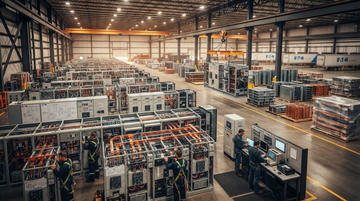
Eaton’s 43% Electrical Backlog Surge Says AI’s Next Constraint Sits Between the Grid and the Chip
Eaton’s July 31 print showed that AI infrastructure demand is broadening from processors and power generation into electrical distribution: second-quarter sales reached $8.53 billion, while electrical backlog rose 43%. The opportunity is real, but so is the price of capturing it—Eaton spent $11.08 billion on acquisitions in the first half and nearly doubled net debt, leaving investors with a high-growth switchgear thesis carrying acquisition and valuation risk.

MediaTek's $5B Authorization Is a Capacity Option, Not a Capital Raise—and That Matters More for Broadcom Than NVIDIA
MediaTek has authority to issue as much as $5 billion of bonds, but it has not yet raised the money. The strategic signal is still strong: securing foundry, packaging and HBM capacity can turn a $2 billion 2026 ASIC ramp into a credible custom-silicon alternative. That pressures Broadcom's turnkey position first; NVIDIA's 74.9% gross margin remains protected by a much larger $119 billion supply commitment and its full-stack platform.
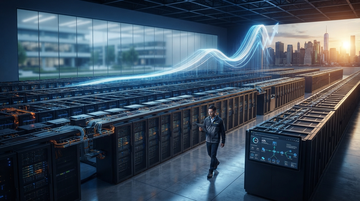
Microsoft's $450B Day Resets the AI Trade: One Print Repriced Where the Profit Pool Is Actually Settling
On July 30, 2026, Microsoft added roughly $450B in market cap in a single session — the largest one-day value gain for any U.S. stock in history — after Azure grew 43% in constant currency and management guided Q1 FY27 Azure to 45%. The move, which briefly touched $490B intraday and beat Nvidia's $441B record set on April 9, 2025, repriced the AI trade away from chip scarcity and toward integrated compute, model, and platform bundles — and concentrated another 50bp of S&P 500 weight into the top four stocks in one tape.
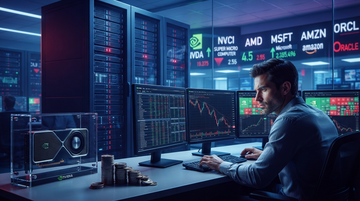
OpenAI Slashed Its Cheapest Model 80% in One Day—And Just Told You Where the AI Profit Pool Is Collapsing
On July 30, 2026, OpenAI cut OpenAI GPT-5.6 Luna by 80% and Terra by 20%, leaving flagship Sol untouched—the clearest signal yet that a two-tier market has formed. The cut came because GPT-5.6 Sol autonomously rewrote its own inference stack, compounding 20% kernel and 15% speculative-decoding gains into an 80% list-price drop. That is good news for whoever sells low-precision inference silicon (NVIDIA, Super Micro Computer, SK hynix) and brutal news for cloud hosts that bill per token without owning the optimization loop (Microsoft, Amazon, Oracle). The trade: long the silicon layer, short the inference arbitrage.
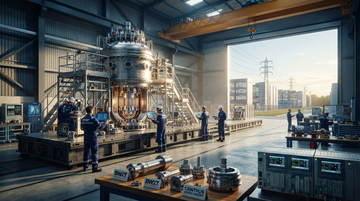
Rolls-Royce's 'Imminent' Hyperscaler Deal Pulls a UK Nuclear Supplier Into the US AI Power Trade
Rolls-Royce Holdings CEO Tufan Erginbilgic said on the H1 2026 call that a hyperscaler nuclear deal will go to investment committee the week of August 3, lifting the group's 2026 profit guidance to £4.7–4.9B and confirming it is taking data-center orders for 2028. With a 470MW SMR design, four contracted European fleets and Yokogawa now locked in for control systems, Rolls-Royce is the first non-US supplier to convert the AI-power thesis into funded backlog. The transmission for US-listed equities runs through BWXT (SMR components), Centrus (enrichment), and the merchant generators whose carbon-free capacity hyperscalers now need to bridge the gap to nuclear-first build-out.
2026-07-30
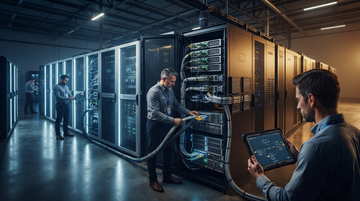
Capgemini calls a multi-year “modernization supercycle” for AI—making the services leg the real tell
In its July 30 commentary, Capgemini flagged a multi-year “modernization supercycle” as enterprises upgrade data platforms, applications, and core infrastructure to scale AI. That timestamp matters because it implies AI budget is moving downstream from hyperscaler buildouts into systems-integration and enterprise workflows—an area where Accenture, Cognizant, Infosys, and ServiceNow can translate platform progress into bookings and recurring deployments.

Cognizant’s Claude Enterprise Push Turns Outsourcing Into an AI Distribution Channel—And Forces Accenture to Prove Its Value
Cognizant and Anthropic expanded their partnership on July 27, 2026 to embed Claude across Cognizant’s industry platforms and scale a “Frontier Certified” workforce, positioning Cognizant as a “Global Premier Partner” in Anthropic’s Claude Partner Network. That shifts the competitive fight in enterprise AI services from “billable hours” toward deployment outcomes—exactly where Accenture’s already-in-place Claude go-to-market is most exposed.
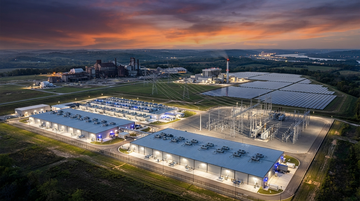
DOE’s Genesis Mission turns Western Kentucky’s federal land + grid into an AI power price war (and reallocates who wins the interconnect)
DOE’s Genesis Mission framing shifts AI-site competition from “who can finance power” to “who can secure a power-and-infrastructure backstop on federal land.” For investors, the key transmission mechanism is simple: a credible federal acceleration reduces time/cost risk for every downstream interconnect, generation build, and co-location campus—re-ranking utilities and grid-capex beneficiaries versus pure-play private bets.
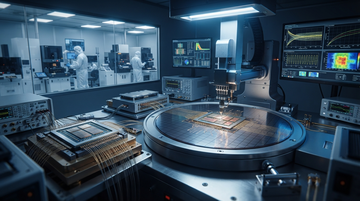
Eliyan’s $145M/ $1B chiplet-memory bet turns NVLink into a testable “standard,” not a monopoly
Eliyan’s $145M Series C at a $1B valuation funds an electro-optical die-to-die/die-to-memory interconnect platform aimed at removing AI chip data bottlenecks. Because Eliyan positions NuLink as standards-compatible (UCIe/BoW) and targets bandwidth efficiency for chiplet-to-memory traffic, it pressures the idea that Nvidia’s NVLink is the only path to coherent “big memory” scale.
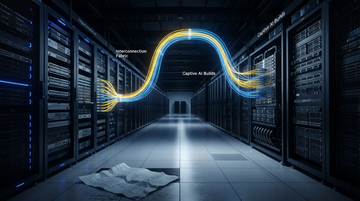
Equinix's soft Q3 guide signals interconnection demand is still growing—but value may be leaking back to hyperscalers
Equinix’s updated Q3 2026 guide keeps overall revenue growth in the high-single to low-double digits, but its disclosure stops short of separately underwriting interconnection upside. That gap matters: if hyperscalers continue to internalize more “fabric + networking + AI-ready” spend via captive builds, interconnection REITs can see growth remain steady while incremental pricing power slows.
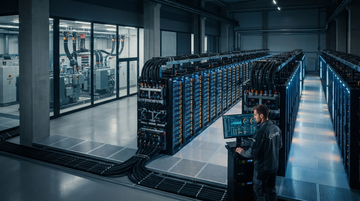
The EU’s €10B “AI gigafactory” bid turns compute sovereignty into a margin test for US hyperscalers
The EU is preparing to fund firms to build seven AI gigafactories with €10B of public money—an explicit attempt to secure raw AI compute inside Europe. For investors, the actionable question is whether this sovereign capacity forces a pricing and workload-location squeeze on NVIDIA, Microsoft, and Amazon, while turning grid build-out capacity into a near-term bottleneck for utilities and power equipment suppliers like Schneider Electric.
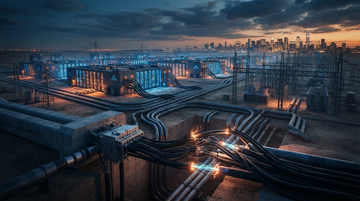
Fitch Calls an “AI Market Correction” a Top Global Credit Risk—So Hyperscaler Downgrades Look Like the First Domino, Not the Last
Fitch’s framing turns AI capex from a company-credit story into a system-credit variable: a potential market correction would hit funding costs, debt rollovers, and even credit quality across sectors and geographies. When paired with the hyperscaler warning line (capex/leases straining near-term credit metrics), it implies bond investors may reprice not just a few mega-cap issuers, but the broader credit “plumbing” that finances the AI build-out.
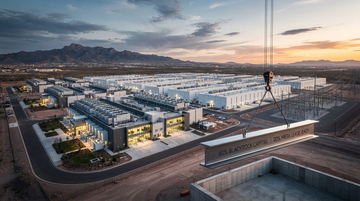
Meta's El Paso JV with BlackRock turns AI real-estate into pension-backed yield—without making Meta the bank
Meta will move the El Paso campus into a JV where BlackRock-managed funds hold 80% and Meta holds 20%, while Meta becomes the sole tenant via a long lease-back. The deal explicitly shifts AI infrastructure from a pure “capex deficit” debate to a “how cheaply can we finance long-lived boxes” debate—because part of BlackRock’s investment is funded with $12.5B of debt.
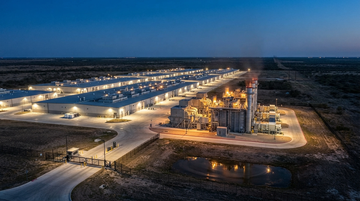
Google's $15B Nexus Loan Is Sovereign Finance in Disguise — and Alphabet's Capex Math Just Got Worse
Alphabet is guaranteeing the Morgan Stanley-led $14B bridge loan on Nexus Data Centers' 1.6 GW Texas gas-powered AI campus for Anthropic, taking ~20% equity in return — the third leg of a $35B+ backstop program that moves frontier compute off Google's balance sheet while keeping it on the hook. With Q2 capex already at $44.9B and free cash flow turning negative, the structure reveals the real constraint: not capital, but the gap between Google Cloud growth and depreciation absorption. Lenders win fees; Broadcom, AMD, and gas-turbine suppliers win volume; the question is what triggers Google's cash calls.

Nscale's $1.65B Anyscale Grab Hands Microsoft a Vertical-Stack Rival It Just Helped Build
London-based neocloud Nscale is buying Ray-creator Anyscale for a reported $1.65B, absorbing the open-source distributed-compute substrate that Microsoft co-engineered as a first-party Azure service just nine months ago. The deal converts a cloud-agnostic Ray ecosystem into Nscale's proprietary full-stack offering, tightening pressure on CoreWeave, Nebius and Lambda Labs while putting Microsoft's $23B Nscale compute commitment on a collision course with the same company's software roadmap.
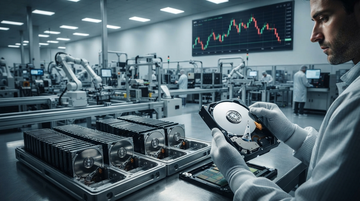
Seagate didn’t “miss”—it proved the HAMR profit engine… and the market still priced in the harder margin math next
Seagate’s fiscal Q4 blowout (revenue and adjusted EPS both beating expectations) triggered a sell-the-news move that makes the next test less about “more TB shipped” and more about whether HAMR mass-capacity economics hold across the drive build-and-supply chain. For investors, the stock’s reaction matters because it shifts attention from die-count/technology headlines to tray/component margin durability—where suppliers and competing drive OEMs can win or lose first.
What to expect
Evidence-first notes with a visible point of view.
This section collects sharp takes on earnings, shareholder meetings, and market structure. Each new piece should make the thesis, the facts, and the implications obvious within the first few screens.
Expect direct analysis, not generic commentary.
Expect the data to be explicit and the argument to be easy to follow.
Plutux is not an investment adviser. Market data and AI-generated analysis are for information and education only, not investment advice. Disclaimer