%22%2F%3E%0A%20%20%3Ccircle%20cx%3D%22220%22%20cy%3D%22150%22%20r%3D%22180%22%20fill%3D%22%2322d3ee%22%20fill-opacity%3D%220.12%22%2F%3E%0A%20%20%3Ccircle%20cx%3D%221010%22%20cy%3D%22130%22%20r%3D%22220%22%20fill%3D%22%2338bdf8%22%20fill-opacity%3D%220.08%22%2F%3E%0A%20%20%3Ccircle%20cx%3D%22920%22%20cy%3D%22520%22%20r%3D%22170%22%20fill%3D%22%2322d3ee%22%20fill-opacity%3D%220.06%22%2F%3E%0A%20%20%3Cpath%20d%3D%22M140%20430h920%22%20stroke%3D%22url(%23line)%22%20stroke-width%3D%2212%22%20stroke-linecap%3D%22round%22%2F%3E%0A%20%20%3Cpath%20d%3D%22M220%20360c120-150%20260-220%20380-220s260%2070%20380%20220%22%20fill%3D%22none%22%20stroke%3D%22%2367e8f9%22%20stroke-opacity%3D%220.5%22%20stroke-width%3D%2216%22%20stroke-linecap%3D%22round%22%20stroke-linejoin%3D%22round%22%2F%3E%0A%20%20%3Cpath%20d%3D%22M300%20398h600%22%20stroke%3D%22%2394a3b8%22%20stroke-opacity%3D%220.24%22%20stroke-width%3D%228%22%20stroke-linecap%3D%22round%22%2F%3E%0A%20%20%3Ctext%20x%3D%22220%22%20y%3D%22510%22%20fill%3D%22%23e2e8f0%22%20fill-opacity%3D%220.7%22%20font-family%3D%22Arial%2C%20Helvetica%2C%20sans-serif%22%20font-size%3D%2238%22%20letter-spacing%3D%228%22%3EINSIGHTS%3C%2Ftext%3E%0A%3C%2Fsvg%3E)
The Two Rulings
A Federal Court Said No, And a State Regulator Said Yes
Within hours of each other on July 31, 2026, xAI drew two opposite rulings that will define the next twelve months of its compute and content strategy. In St. Paul, U.S. District Judge Donovan Frank rejected xAI's emergency request for a temporary restraining order against Minnesota's HF 1606 — the country's first state ban on AI 'nudification' tools, with civil penalties of up to $500,000 per generated image and a private right of action. The judge reasoned that xAI's three-days-before-effectiveness filing suggested 'the harm is not immediate,' letting the statute take effect on schedule at midnight Aug 1. The merits case continues, with a hearing now set for Aug 19.
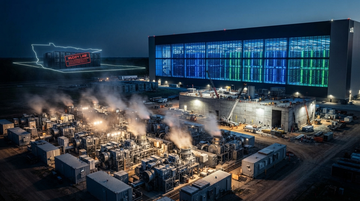
Six hundred miles south, the Mississippi Department of Environmental Quality signed an agreed order with SpaceX (xAI's February 2026 acquirer, now branded SpaceXAI at a $1.25T combined valuation) formalizing a timeline that runs in the opposite direction: all 69 unpermitted mobile gas turbines currently powering the Colossus 1 and 2 supercomputer campuses will remain in operation until at least July 2027, phasing out only as 41 newly-permitted permanent turbines come online at a 1.2 GW combined capacity. The DOJ had already moved to dismiss the NAACP/SELC Clean Air Act suit on June 15, 2026, citing national-security and energy-security grounds.
The Minnesota Block
A $500,000-Per-Image State Law Just Made Grok Image Generation A Patchwork Product
Minnesota's HF 1606, passed 132-1 in the House this spring, targets platforms that distribute AI tools capable of generating non-consensual intimate imagery of real people. Critically, the law imposes strict liability with no safe harbor — xAI's First Amendment challenge failed at the TRO stage, and the state's Aug 19 merits hearing will test whether the statute survives intermediate scrutiny. Minnesota Attorney General Keith Ellison's office argued the law is a 'guardrail' against harm, not a speech restriction; private plaintiffs now have standing to sue for $500,000 per generated image.
| Provision | Detail | Investor Implication |
|---|---|---|
| Effective date | August 1, 2026 | Force product change in <24 hours |
| Civil penalty | Up to $500,000 per violation/image | Catastrophic theoretical exposure for unrestricted tools |
| Private right of action | Yes — victims may sue | Class-action multiplier risk |
| Safe harbor | None (strict liability) | Filtering alone does not shield xAI |
| Artistic/satire exception | Yes (contested in xAI suit) | Narrow carve-out, hard to operationalize |
| First hearing | Aug 19, 2026 (D. Minn., Judge Frank) | TRO denial is not a merits ruling |
The Aug 1 effective date matters more than the merits. Even if xAI ultimately wins at the Aug 19 hearing or on appeal, the law will have shaped product behavior for months. Every state legislature watching Minnesota now has a working statute to copy — California, New York, and Texas are the most likely next adopters, which together with Minnesota would cover roughly 38% of U.S. GDP. For Grok image generation, this is the moment generative AI crosses from a federal-policy vacuum into a 50-state compliance regime, exactly the fragmentation risk hyperscalers have long feared.
The Memphis Win
Mississippi Just Bought xAI Another Year Of Unpermitted Megawatts
The MDEQ agreed order is the more economically consequential ruling by a wide margin. SpaceX/xAI is currently running 69 mobile gas turbines — 15 of which the Shelby County Health Department permitted on July 2, 2025, but the rest have operated under a contested 'mobile source' exemption that the NAACP and Southern Environmental Law Center argued violated the Clean Air Act. The new order freezes the fleet at 69 (no new turbines can be added after July 15, 2026) and starts retirement in August 2026, but full removal is not required until July 2027.
Turbines operating today
69
Mobile gas turbines, ~16–50 MW each
Permanent replacement
41 turbines / 1.2 GW
MDEQ permit granted March 2026
Full removal deadline
July 2027
12-month compliance runway
Annual NOx potential
2,000+ tons
5× Memphis airport; largest in TN/MS/AR
SpaceXAI combined valuation
$1.25T
xAI acquired Feb 2, 2026
DOJ intervention date
June 15, 2026
Sided with SpaceX on nat'l security
Supply Chain
Who Sells Into The Colossus Buildout
xAI's 1-million-square-foot Memphis campus is anchored by three publicly traded compute suppliers, with NVIDIA at the silicon layer, Dell Technologies and Super Micro Computer splitting the rack-and-server integration, and Oracle reportedly in talks to host additional capacity. The mobile turbine fleet itself is a different supplier ecosystem — SpaceXAI acquired 'one of the world's largest mobile gas turbine fleets' rather than buying from Cummins or GE Vernova, but the permanent 1.2 GW plant is precisely the kind of utility-scale order that goes through those two names.
| Company | Ticker | Role | Most recent revenue | Margin profile |
|---|---|---|---|---|
| NVIDIA | nvda | GPU silicon (H100/H200/Blackwell) | $215.9B FY26 Data Center $193.7B | Gross margin ~74% |
| Dell Technologies | dell | Server racks (PowerEdge XE9680) | $134.0B LTM revenue | Gross margin ~19% |
| Super Micro Computer | smci | Liquid-cooled AI servers | $33.7B LTM revenue | Gross margin ~8% |
| Oracle | orcl | Cloud capacity talks; OCI GPU clusters | $67.4B LTM revenue | Gross margin ~66% |
| GE Vernova | gev | Grid equipment for 1.2 GW permanent plant | Power segment scaling | Industrial margins |
| Cummins | cmi | Mobile/utility gas turbines (alternative vendor) | Engine segment | Industrial margins |
Why This Trade Works
The Hidden Read: A State-Level Patchwork That Actually Favors The Incumbent
Conventional wisdom reads the Minnesota ruling as a setback for Musk's platforms. The deeper read is the opposite. A 50-state patchwork of AI content laws raises the compliance bar for any new entrant trying to ship a Grok competitor — the very competitors that would otherwise threaten xAI's monetization of Grok subscriptions on X. The MDEQ order, meanwhile, ensures the underlying training infrastructure gets a 12-month grace period to operate without the permitting friction that has stalled the CoreWeave and Nebius buildout curve.
- Minnesota's law raises marginal compliance cost by an estimated 5–10× for any new AI image tool entering the U.S. market — favoring Grok, which can amortize the cost across the 600M+ X user base.
- Mississippi's order lets the 69-turbine fleet operate at up to ~2,000 tons NOx/yr through Grok 5 training, then transition to a 1.2 GW baseload plant — a model no competitor has permission to replicate.
- DOJ's June 15, 2026 intervention explicitly cited AI innovation and national security, creating a federal-preemption precedent that future xAI permitting fights can invoke.
- The Aug 19 merits hearing is binary: a win for xAI on First Amendment grounds blunts the copycat wave; a loss formalizes the 50-state model and accelerates competitor fragmentation.
Horizons
What Moves In Days, What Matters In Three Years
Short term (days to quarters): The Aug 19 Minnesota hearing is the dominant catalyst. A TRO reinstatement would be a hard negative for xAI's image-generation roadmap; a denial would clear the runway for copycat legislation. Watch Super Micro Computer's next print (fiscal Q4 ends June) for any disclosure of xAI order timing shifts. The DOJ intervention order in the MDEQ docket is a precedent the next neocloud permitting fight — likely CoreWeave in Pennsylvania or IREN in Texas — will test within 90 days.
Long term (one to three years): The structural read favors integrated compute owners. By July 2027, xAI's 1.2 GW permitted plant gives it a permanent power moat CoreWeave ($39B market cap, $6.2B LTM revenue, negative free cash flow) and Nebius cannot match. Meanwhile, the 50-state content patchwork locks in a regulatory moat around the existing Grok distribution channel on X — making the platform harder to disrupt, not easier, for the next three years. The risk to the trade is a successful First Amendment appeal that preempts state nudification laws federally; that outcome would erase xAI's compliance moat but also the imminent copycat wave.
Bottom Line
The Verdict Split Is The Trade
Read separately, the two rulings look like a mixed week for Musk. Read together, they are a regulatory gift: Minnesota's $500,000-per-image law raises the bar for every Grok competitor xAI has not yet built, while Mississippi's agreed order locks in 12 months of unpermitted megawatts for the very training runs that will produce Grok 5. The mechanism is asymmetric — content friction on the demand side, compute slack on the supply side — and it points in the same direction: toward the incumbent.
Investable Names Touched By The Two Rulings
- Colossus 1's 200,000 Hopper GPUs and any 2027 Blackwell expansion feed FY27 data-center revenue; FY26 already printed $193.7B in that segment at 74% gross margin.
- Customer concentration risk (top two direct customers = 36% of FY26 revenue) means any SpaceXAI IPO delay or Colossus-2 power slip is a direct hit to the next two print cycles.
- Aug 19 Minnesota hearing is a binary event: a TRO reinstatement would re-shuffle frontier-AI training demand; a denial cements xAI's compute position into Grok 5 training through mid-2027.
- Confirmed Memphis operator alongside Super Micro Computer; Colossus 2 ramp keeps Dell's PowerEdge XE9680 backlog full into FY27.
- $134B LTM revenue with 8.9% operating margin and 24% capex/revenue gives Dell the manufacturing throughput to absorb a multi-quarter Memphis order without margin compression.
- Risk: any xAI Grok-5 delay or regulatory shock (e.g., renewed DOJ scrutiny of xAI after the Aug 19 hearing) would push out 1–2 quarters of Dell's ISG server backlog.
- Confirmed liquid-cooling supplier for Colossus; 8% gross margin leaves almost no cushion if Memphis ramps slow, but the order is binary on a single customer.
- FMR Q4 (June quarter) print in coming weeks is the cleanest read on xAI order timing — fiscal-year end creates an unusual info asymmetry.
- Forward P/E of 8.5x is the cheapest in the AI-server cohort, but 2.4x beta and prior accounting restatements mean the stock moves 2× fundamentals on any xAI catalyst.
- The 1.2 GW permanent Colossus plant needs grid-tie equipment (transformers, switchgear, grid software) — exactly GE Vernova's utility-scale order book.
- Twelve months of continued mobile-turbine operation does not benefit GEV (mobile units are not its product), but the permanent transition by July 2027 does.
- Watch: if the DOJ's June 15, 2026 intervention order becomes a template for other xAI-permitting battles, GEV becomes a quasi-policy beneficiary across the neocloud sector.
- Memphis's 1.2 GW permitted plant is permanent capacity CoreWeave cannot match in 12 months; the company is at ~29% of 3.5 GW contracted power converted to live capacity.
- Minnesota ruling indirectly benefits CoreWeave as a non-Musk competitor, but the practical effect is muted because the 50-state patchwork raises the same compliance costs for any AI image tool CoreWeave might resell.
- Negative free cash flow, 7.4x debt/equity, and beta of 7.1x make CoreWeave the highest-volatility way to express the 'xAI compute moat' trade on the short side.
- xAI's mobile turbine fleet was acquired, not ordered from Cummins — so Cummins has not won direct revenue from the Memphis buildout.
- The 1.2 GW permanent plant uses turbines that could be Cummins QSK60-series if the procurement was competitive; if not, the order sits with a private or non-U.S. vendor.
- A DOJ intervention precedent making it easier to keep mobile turbines running benefits Cummins's mobile-rental customers across the data-center sector, but the impact is diffuse, not contracted.
- Reports in May 2026 indicated Oracle was in advanced talks to host additional xAI capacity; an OCI deal would diversify xAI beyond Memphis and reduce single-site risk.
- $67.4B LTM revenue at 66% gross margin gives Oracle the balance sheet to absorb a multi-billion-dollar xAI GPU-cloud contract; capex/revenue of 83% shows the company is already in build mode.
- Risk: Oracle's 79% long-term debt/capital ratio and -$8.2 free cash flow per share make any additional xAI capex commitment margin-sensitive; an Aug 19 loss for xAI could push the deal to 2027.