Data Centers & Cloud
The buildout behind the AI bill
Hyperscaler capex, colocation supply, power, cooling and networking — where the money goes after the GPU order, and which companies book it.
2026-08-11
%22%2F%3E%0A%20%20%3Ccircle%20cx%3D%22220%22%20cy%3D%22150%22%20r%3D%22180%22%20fill%3D%22%2322d3ee%22%20fill-opacity%3D%220.12%22%2F%3E%0A%20%20%3Ccircle%20cx%3D%221010%22%20cy%3D%22130%22%20r%3D%22220%22%20fill%3D%22%2338bdf8%22%20fill-opacity%3D%220.08%22%2F%3E%0A%20%20%3Ccircle%20cx%3D%22920%22%20cy%3D%22520%22%20r%3D%22170%22%20fill%3D%22%2322d3ee%22%20fill-opacity%3D%220.06%22%2F%3E%0A%20%20%3Cpath%20d%3D%22M140%20430h920%22%20stroke%3D%22url(%23line)%22%20stroke-width%3D%2212%22%20stroke-linecap%3D%22round%22%2F%3E%0A%20%20%3Cpath%20d%3D%22M220%20360c120-150%20260-220%20380-220s260%2070%20380%20220%22%20fill%3D%22none%22%20stroke%3D%22%2367e8f9%22%20stroke-opacity%3D%220.5%22%20stroke-width%3D%2216%22%20stroke-linecap%3D%22round%22%20stroke-linejoin%3D%22round%22%2F%3E%0A%20%20%3Cpath%20d%3D%22M300%20398h600%22%20stroke%3D%22%2394a3b8%22%20stroke-opacity%3D%220.24%22%20stroke-width%3D%228%22%20stroke-linecap%3D%22round%22%2F%3E%0A%20%20%3Ctext%20x%3D%22220%22%20y%3D%22510%22%20fill%3D%22%23e2e8f0%22%20fill-opacity%3D%220.7%22%20font-family%3D%22Arial%2C%20Helvetica%2C%20sans-serif%22%20font-size%3D%2238%22%20letter-spacing%3D%228%22%3EINSIGHTS%3C%2Ftext%3E%0A%3C%2Fsvg%3E)
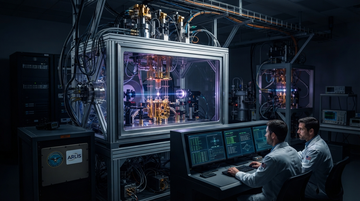
IonQ and ARLIS Are Building the DoD’s First Networked “Blind” Quantum System—Turning Quantum From Demos Into Deployable Mission Capability
IonQ’s newly awarded ARLIS contract is a meaningful step from “quantum access” toward a deployable, multi-node “blind quantum computing” system for national-security research. The investor implication is not just a government check—it’s whether quantum vendors can operationalize networked quantum with the security, control, and integration stack the Pentagon will repeatedly fund.
SEC exempted certain data-center securitizations—so the “ABS-like” buyer universe can expand overnight
A July 29, 2026 SEC staff determination says certain data-center securitizations are not “asset-backed securities” under Exchange Act §3(a)(79), removing a stack of ABS-specific disclosure and risk-retention requirements. For AI infrastructure financing, that effectively widens the capital pool for data-center project paper—shifting more build funding toward the balance sheets and financing channels most comfortable with operating-asset-backed structures like Equinix.
2026-08-10

Akamai’s Q2 proves edge security is the revenue bridge to AI inference—CIS growth is measurable, but the linkage is still the debate
In Akamai Q2 2026 results (quarter ended June 30, 2026), Security revenue grew 10% YoY to $604M while Cloud Infrastructure Services (CIS) grew 39% YoY to $99M—plus $2.8B+ in signed multi-year CIS contracts YTD. The company frames CIS growth as “AI infrastructure” positioning, but it did not quantify an explicit dollar “AI inference” contribution in the earnings materials reviewed, so investors must underwrite the security→inference attachment story more than they can spreadsheet it.

Anthropic turns $30B run-rate into a cyber “industry operating system” with Project Glasswing
Anthropic disclosed a revenue run-rate above $30B and simultaneously launched Project Glasswing, a large, partner-wide defensive cybersecurity effort centered on access to Claude Mythos Preview. The strategic signal isn’t just that Anthropic has “AI security capability”—it’s that Anthropic is trying to convert enterprise trust and regulated buyer demand into a repeatable, credit-funded product line that rides on cloud + security vendor distribution.

Appaloosa’s Q2 pivot bets the AI capex chain is still mispriced—and its “walk-away-from-banks” move tightens the signal
Appaloosa Management (David Tepper) reportedly rotated its Q2 2026 13F exposure toward AI infrastructure—highlighting a sharp add to Micron and a larger position in Amazon, with Taiwan Semi also pushed into core territory—while exiting bank holdings entirely. The investable takeaway isn’t “AI good, banks bad”; it’s that memory + foundry + hyperscaler demand signals can re-rate margins and capex intensity even when financials look safer on paper.

Atlassian's Cloud +31% delivers the AI “attach” proof the enterprise SaaS market has been waiting for
In Q4 FY2026, Atlassian posted $1.766B revenue (+28% YoY) with Cloud revenue at $1.213B (+31% YoY) and $4.8B in RPO (+44%). The key investor takeaway isn’t another AI feature demo—it’s that Cloud acceleration is happening alongside AI-led product momentum, which changes how investors underwrite the monetization timeline from “promises” to “line-item traction.”
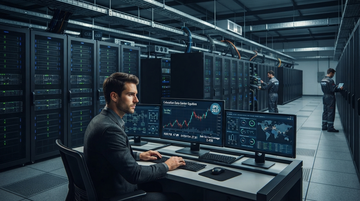
CyrusOne’s 2027 IPO Signal Re-Ratings for “Independent” Data Centers—Because Lenders Are Making Financing a Valuation Variable
CyrusOne is preparing a potential 2027 IPO and has been in discussions with banks about roles, per Reuters. If that listing proceeds, it could force public-market re-pricing across the independent colocation/data-center stack just as tighter lender scrutiny makes leverage and refinancing risk a first-order valuation input.
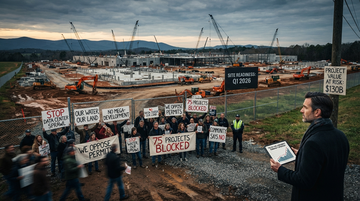
Community opposition is becoming a credit risk—so lenders are shifting data-center financing toward “permit-friendly” states
A Reuters report says lenders are now explicitly folding community opposition into project readiness and drawdown risk. That turns NIMBY/permitting friction into an underwriting variable, which can reorder which markets and operators get built first—and who pays the higher cost of delay.
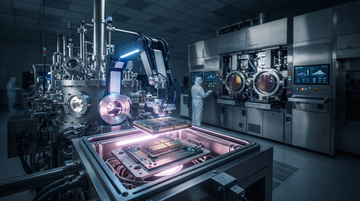
The Real Bottleneck Isn’t Rack Cooling—It’s the IP Stack Behind the Thermal Interface That Makes AI Chips Work
Discovered Materials’ AI-driven “whack-a-mole” approach to finding cooler thermal materials highlights how fast the industry has to iterate to avoid thermal throttling. But the investable constraint is upstream: the process, deposition, and materials IP that can manufacture new thermal interface layers reliably at scale—where Applied Materials sits and where materials suppliers like Shin-Etsu Chemical and Tokyo Ohka Kogyo are built to monetize.

Fisher’s AI-Infrastructure Crowding Trade Is Real—But It’s the “Grid-to-Aircraft-to-Network” Link That Should Matter for Investors
Fisher Asset Management’s latest 13F (quarter ended June 30, 2026) shows aggressive positioning across AI’s “real economy” buildout—power and electrification via GE Vernova, aerospace platforms via GE Aerospace, and enterprise/data-center connectivity via Cisco Systems, alongside the usual AI compute core. The investable takeaway is not that AI exists—it’s that Fisher is paying up for the bottlenecks and replacement cycles that sit between AI demand and the supply chain that fulfills it.
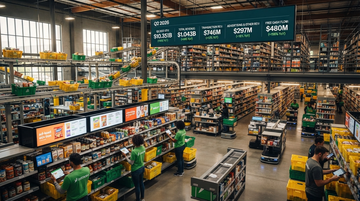
Instacart's ads are outgrowing transactions because grocery data still converts—so the retail e-commerce ad channel is “real demand,” not a funding-cycle artifact
Instacart grew Q2 2026 Advertising & other revenue +16% YoY while transaction revenue rose +13% YoY, with GTV +14% YoY—an uncommon retail pattern where ad-load expands without visibly harming order growth. The proof point is cash too: Q2 free cash flow surged to $480M (+156% YoY), making it harder to dismiss the ad acceleration as purely “spend-driven.”

The Trade Desk's real Q2 2026 ad-tech stress test wasn’t the 3% growth—it was executing a C-suite reset while guiding lower
In Q2 2026, The Trade Desk reported $715M revenue and non-GAAP EPS of $0.34—both short of what markets were looking for—and simultaneously disclosed an executive-leadership rebuild across CFO, CMO, and Chief Commercial roles. The key investor question isn’t whether growth missed; it’s whether the company can re-stabilize go-to-market and measurement execution as CTV/programmatic competition tightens.
2026-08-09
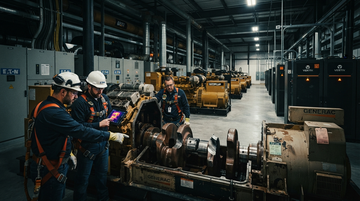
AI Power Spikes Are Forcing First-Order Capex Into UPS, Switchgear, and Generators—Turning Grid Reliability Into an OEM Supply-Line Shock
A new wave of AI power volatility is not just straining the grid; it is shortening the life and pushing the replacement cycles of batteries, generators, and cooling/power electronics inside data centers. That shifts the 2026–27 capex bottleneck from “build power lines” to “rebuild mission-critical power chains,” which can tighten supply and raise downtime-cost risk for operators and volume-forced production for OEMs like Eaton, Vertiv, and Generac.
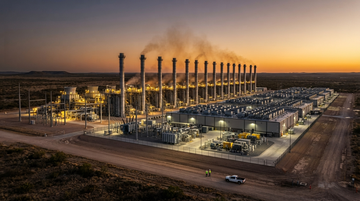
Amazon's Pecos County gas plant permit implies ~33M tons CO2/year—so AI data-center siting is starting to behave like a carbon-forward power project
A planned Amazon-powered AI data-center campus in Pecos County, Texas is tied to an on-site natural-gas power plant permitted to emit up to 33 million tons of CO2 per year. That shifts the hyperscaler AI-capex trade from “compute demand vs. electricity availability” toward a carbon-cost and regulatory-liability problem that can change project economics well before the campus starts full operations.
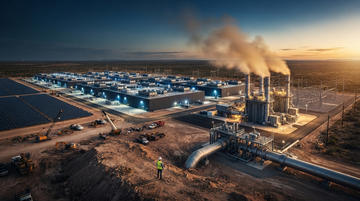
Amazon’s Texas gas permit flips the AI power debate from “capacity” to “carbon cap”—and it makes the ESG discount a competitive advantage
A Texas air-permit authorization for Amazon-backed GW Ranch (Pecos County) contemplates emissions up to 33M tons of CO2e per year, turning AI “power availability” into an immediately measurable climate trade. The result is a reshuffling of who wins in the AI buildout: hyperscalers internalize the permitting risk, while grid and gas-infrastructure names with execution-ready capex ramps are positioned closer to the cash register.
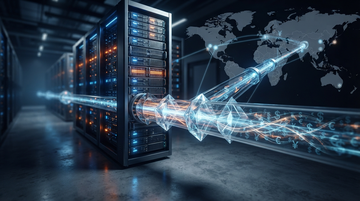
Cloudflare’s Q2 AI-Inference Guide Raised the “Toll” Value of the Internet Edge—So NET Repriced From CDN to Answer-Engine Infrastructure
Cloudflare used its Q2 2026 print to guide fiscal 2026 revenue to $2.864B–$2.870B and non-GAAP EPS to $1.25–$1.26, a combination the market treated like proof that AI inference traffic is accelerating at the edge. The read-through is that Cloudflare (and edge rivals) increasingly function as the “metering + policy control plane” for machine-to-machine traffic—not just a caching layer.

Public support for age checks turns social-media compliance into a likely recurring Meta/Snap/Alphabet cost—58% just moved it closer to law
A Reuters/Ipsos poll found 66% backing laws that require age-verification tools, with 74% of Republicans supporting that specific mechanism. That demand-side political cover shifts age assurance from “mostly litigation risk” toward a more predictable balance-sheet line item for major platforms—especially where youth access is structurally large.
2026-08-08
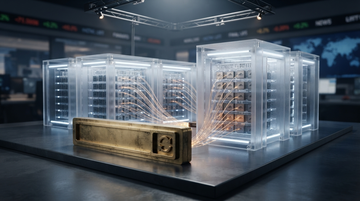
Cloudflare turns the browser into agent compute—then prices the cost drivers (CPU/memory) inside Workers P&L
With Cloudflare’s Kitesurf (launched Aug 6), the “browser” becomes a stateless Rust engine running inside Workers, optimized for AI agent tasks rather than human browsing. The key economic tell is that Cloudflare reports materially lower CPU and especially memory than Chromium for common agent actions—shifting Cloudflare’s agent-compute revenue mechanics away from CDN/security toward browser-like workloads metered by resource cost.
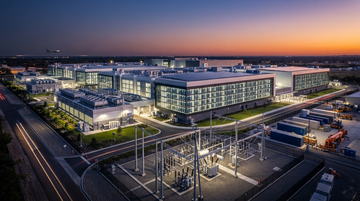
Nvidia’s $3B Lancium Bet Turns Stargate Into a Power-Site Landlord Play—Not a GPU Story
The key market constraint behind Stargate-style AI buildouts is shifting from GPU availability to multi-year power + grid interconnect lock-up. Nvidia’s $3B-scale equity commitment to Lancium (the power infrastructure developer tied to Stargate) matters because it anchors the “AI grid” that determines where compute can actually be deployed.
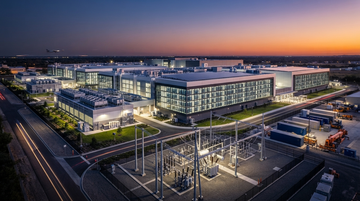
Switch’s confidential IPO filing puts “independent data center” pricing to the test—while Westinghouse’s filing shows the window is still open
Switch’s confidential U.S. IPO process signals that late-stage private capital is willing to underwrite public-market multiples again for scaled data-center operators. The investment question is whether the market is already pricing that transition—or whether an “IPO trust premium” still exists for operators that can monetize power-constrained AI capacity fast enough.
What to expect
Evidence-first notes with a visible point of view.
This section collects sharp takes on earnings, shareholder meetings, and market structure. Each new piece should make the thesis, the facts, and the implications obvious within the first few screens.
Expect direct analysis, not generic commentary.
Expect the data to be explicit and the argument to be easy to follow.
Plutux is not an investment adviser. Market data and AI-generated analysis are for information and education only, not investment advice. Disclaimer