%22%2F%3E%0A%20%20%3Ccircle%20cx%3D%22220%22%20cy%3D%22150%22%20r%3D%22180%22%20fill%3D%22%2322d3ee%22%20fill-opacity%3D%220.12%22%2F%3E%0A%20%20%3Ccircle%20cx%3D%221010%22%20cy%3D%22130%22%20r%3D%22220%22%20fill%3D%22%2338bdf8%22%20fill-opacity%3D%220.08%22%2F%3E%0A%20%20%3Ccircle%20cx%3D%22920%22%20cy%3D%22520%22%20r%3D%22170%22%20fill%3D%22%2322d3ee%22%20fill-opacity%3D%220.06%22%2F%3E%0A%20%20%3Cpath%20d%3D%22M140%20430h920%22%20stroke%3D%22url(%23line)%22%20stroke-width%3D%2212%22%20stroke-linecap%3D%22round%22%2F%3E%0A%20%20%3Cpath%20d%3D%22M220%20360c120-150%20260-220%20380-220s260%2070%20380%20220%22%20fill%3D%22none%22%20stroke%3D%22%2367e8f9%22%20stroke-opacity%3D%220.5%22%20stroke-width%3D%2216%22%20stroke-linecap%3D%22round%22%20stroke-linejoin%3D%22round%22%2F%3E%0A%20%20%3Cpath%20d%3D%22M300%20398h600%22%20stroke%3D%22%2394a3b8%22%20stroke-opacity%3D%220.24%22%20stroke-width%3D%228%22%20stroke-linecap%3D%22round%22%2F%3E%0A%20%20%3Ctext%20x%3D%22220%22%20y%3D%22510%22%20fill%3D%22%23e2e8f0%22%20fill-opacity%3D%220.7%22%20font-family%3D%22Arial%2C%20Helvetica%2C%20sans-serif%22%20font-size%3D%2238%22%20letter-spacing%3D%228%22%3EINSIGHTS%3C%2Ftext%3E%0A%3C%2Fsvg%3E)
Verified deal mechanics + what actually binds the project
Nvidia isn’t just buying chips for Stargate—it’s underwriting the power-site bottleneck via Lancium
The most important part of the Lancium/Stargate news isn’t the headline dollar figure—it’s the contracting object.
Across utility-scale AI data centers, GPU supply is increasingly a “necessary but not sufficient” condition. What determines whether compute can show up on schedule is whether developers can secure grid capacity, build transmission/interconnect, and run power operations with enough reliability to avoid costly downtime.
In this framework, Nvidia’s reported equity-style commitment to Lancium signals an investor-grade move: shifts binding risk from silicon delivery to multi-year power + interconnect timelines. That is exactly the type of lock-up that makes the entire compute stack behave like a landlord/real-asset operator rather than a pure hardware vendor story.
Event verification and primary-source base
What’s confirmed: Lancium’s Stargate 1 campus is built around a power interconnect, and Stargate’s buildout targets multi-GW capacity
Core facts established by sources opened in this session
Stargate flagship campus anchor
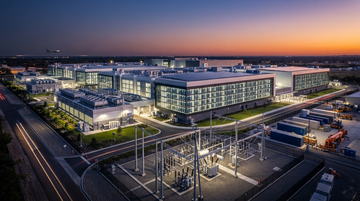
Stargate 1 in Abilene, Texas
Lancium describes Stargate 1 as its flagship campus project.
Interconnect feature that frames the “grid lock-up” thesis
1.2GW interconnect (ERCOT approved)
Lancium states its Abilene campus has a 1.2GW interconnect that is fully approved by ERCOT.
Project scale and build cadence context
Nearly 7GW planned + $400B+ over three years
OpenAI’s update states Stargate reaches nearly 7GW planned capacity and over $400B in investment over the next three years.
Stargate’s stated end-goal
Goal of $500B and 10GW commitment secured by end of 2025
OpenAI’s update describes a $500B goal and a 10-gigawatt commitment target.
Causal chain (event → mechanism → why GPUs aren’t the real lock)
The “AI grid” is the lock-up: Nvidia’s money follows power development, because that’s what controls delivery windows
- Mechanism: Developers like Lancium structure campuses so that power interconnect capacity is pre-approved before large compute arrives—reducing the probability of schedule slips from grid denial or rework.
- Mechanism: Multi-gigawatt AI buildouts shift the bottleneck from “can you ship GPUs” to “can you energize racks with operational reliability,” because outages and curtailment erase the value of scarce compute.
- Mechanism: Equity-style commitments accelerate developer build timelines, which pull future rack onboarding forward by making site access bankable for multiple stakeholders.
- Consequence: When site power is the gating constraint, the project’s economics tilt toward landlords (capacity, interconnect, power orchestration) rather than pure chip sellers.
This is also why the common framing—“Nvidia invested $3B in Stargate”—misses the binding variable. The sources establish that Stargate scale is tied to power delivery (multi-GW targets) and that Lancium’s flagship campus is explicitly interconnect-driven. That makes the Nvidia bet read like an “AI infrastructure power contract” investment, even if the end-use is GPU compute.
Supply-chain map (upstream → midstream developer → downstream operators)
A full supply-chain view: where the $3B-style bet transmits—and where it doesn’t
| Layer | Representative linkage from this session | What accelerates | What does NOT automatically accelerate |
|---|---|---|---|
| Upstream: utility-scale interconnect and power infrastructure | Lancium’s Abilene campus includes ERCOT-approved 1.2GW interconnect | Site readiness and energization schedule certainty | GPU supply itself (chips are still a separate procurement constraint) |
| Midstream: data center power orchestration + campus construction | Lancium frames “energy-efficient AI infrastructure” around the campus | Ability to commission power trains and stabilize operations for tenants | Tenant onboarding if software/compute demand is delayed |
| Downstream: hyperscalers / AI operators / rack tenants | OpenAI’s Stargate updates tie buildout to planned GW scale and investment cadence | Racks can move from planning to onboarding when power is real | Immediate utilization rates if the model-training schedule slips |
Investor relevance: what to watch next and why
Short-term winners: power + infrastructure capacity suppliers and grid-critical integrators; long-term: operators that own “time-to-MW”
Nvidia’s financial capacity to fund capital-heavy customer/site bets (context for why it can afford to be upstream in the stack)
TTM valuation/margin context from data tools; not a forecast of the Lancium deal’s financial outcome.
Unit: USD
Free cash flow (TTM, $B)
Free cash flow to firm (TTM)
119.3
Operating cash flow (TTM, $B)
FY2025 operating cash flow; used as nearby-year reference because TTM OCF not directly returned
64,089,000,000
Nvidia’s ability to do this at scale is supported by its operating/free-cash-flow generation. In the provided financial dataset, NVIDIA shows revenue rising to $130.497B in FY2025 and free cash flow of $60.853B for that fiscal year, alongside strong cash generation overall. In valuation terms, the TTM snapshot shows an enterprise-to-sales multiple around 21.4x and strong free-cash-flow yields for a mega-cap compounder.
The implication isn’t that “more cash = more AI campuses.” It’s that Nvidia can keep funding the upstream constraint layer without immediately stressing its operating cash engine—which changes how markets should think about Nvidia’s role in the AI ecosystem: less passive, more infrastructure-transaction capable.
Data-backed “deal math” proxy (from disclosed power-first milestones)
Why the economics favor the “AI grid owner”: interconnect approval reduces the cost of delay
Stargate scale (planned capacity + investment window)
Nearly 7GW; $400B+
OpenAI’s update on five new Stargate sites (Sep 23, 2025).
Stargate end-goal
$500B; 10GW
OpenAI update describes the commitment target.
Lancium flagship power interconnect
1.2GW (ERCOT approved)
Lancium campus description for Stargate 1 in Abilene, TX.
Nvidia FY2025 revenue and cash engine (context)
$130.5B revenue; $60.9B FCF
Financial tool values for fiscal year ended 2025-01-26.
Fundamentals overlay: what changes for Nvidia’s business model?
This looks like a strategic shift from component leverage to infrastructure leverage
Nvidia already sits deep in the AI compute stack (GPUs, networking, and software), but Lancium/Stargate is different in structure: it suggests Nvidia is willing to participate in the “site-capacity” dimension of demand.
When compute availability is gated by MW and interconnect, Nvidia’s competitive advantage becomes partly indirect: it’s not only that Nvidia’s GPUs are desirable; it’s that Nvidia-funded sites can become the default place where tenants choose to deploy.
So the thesis is not “Nvidia becomes a utility.” It’s that Nvidia’s influence can migrate closer to the bottleneck layer where delays translate into lost revenue opportunities—and that’s a materially different value chain position than selling components into an already-scheduled buildout.
Horizons
What moves first (days–quarters) vs. what compounds (1–3 years)
- Days–quarters: expect market repricing toward grid-and-power delivery enablement rather than only GPU-related near-term demand narratives, because power-first milestone credibility is what tenants can underwrite.
- Days–quarters: NVIDIA may see narrative support from “ecosystem anchoring” even if hardware unit volumes remain primarily supply-driven.
- 1–3 years: the most durable winners should be those that capture value from time-to-MW and commissioning reliability—the operational bottlenecks that power-site landlord economics create.
- 1–3 years: if power constraints ease faster than expected, the landlord premium compresses; if they worsen, it expands.
Listed stocks most plausibly pulled by the power-site constraint
- NVDA can fund upstream constraint layers while maintaining cash generation; FY2025 revenue was $130.497B and FCF was $60.853B.
- Stargate’s multi-GW build cadence implies incremental certainty of future GPU deployments when sites are grid-ready.
- AI campuses that require grid-capable distribution systems increase demand for power management equipment as interconnect-backed projects accelerate commissioning.
- If Stargate-like sites scale toward multi-GW targets, ETN’s order mix can tilt toward data-center power infrastructure over 1–3 years.
- Power-first readiness changes the timing of commissioning; VRT benefits when campuses translate MW availability into uptime-dependent deployments.
- As more interconnect-backed sites become operational, VRT can sell critical infrastructure for thermal + power continuity over quarters.
- Lancium’s campus positioning emphasizes energy efficiency and reliability; if campuses expand renewables and on-site generation, NXT could see demand lift for utility-scale solar balance-of-system buildouts over 1–3 years.
- This is a watch item because the primary sources opened here confirm interconnect and campus framing but do not disclose specific renewable procurement volumes tied to Lancium.
- Grid-ready AI campuses raise the value of electrical distribution and automation; SU can gain from data-center power management and switchgear enablement as MW interconnects get converted into IT capacity.
- If Stargate secures $500B/10GW ambitions, SU’s medium-term backlog sensitivity to power-electrical spend can improve over 1–3 years.