Data Centers & Cloud
The buildout behind the AI bill
Hyperscaler capex, colocation supply, power, cooling and networking — where the money goes after the GPU order, and which companies book it.
2026-08-15
%22%2F%3E%0A%20%20%3Ccircle%20cx%3D%22220%22%20cy%3D%22150%22%20r%3D%22180%22%20fill%3D%22%2322d3ee%22%20fill-opacity%3D%220.12%22%2F%3E%0A%20%20%3Ccircle%20cx%3D%221010%22%20cy%3D%22130%22%20r%3D%22220%22%20fill%3D%22%2338bdf8%22%20fill-opacity%3D%220.08%22%2F%3E%0A%20%20%3Ccircle%20cx%3D%22920%22%20cy%3D%22520%22%20r%3D%22170%22%20fill%3D%22%2322d3ee%22%20fill-opacity%3D%220.06%22%2F%3E%0A%20%20%3Cpath%20d%3D%22M140%20430h920%22%20stroke%3D%22url(%23line)%22%20stroke-width%3D%2212%22%20stroke-linecap%3D%22round%22%2F%3E%0A%20%20%3Cpath%20d%3D%22M220%20360c120-150%20260-220%20380-220s260%2070%20380%20220%22%20fill%3D%22none%22%20stroke%3D%22%2367e8f9%22%20stroke-opacity%3D%220.5%22%20stroke-width%3D%2216%22%20stroke-linecap%3D%22round%22%20stroke-linejoin%3D%22round%22%2F%3E%0A%20%20%3Cpath%20d%3D%22M300%20398h600%22%20stroke%3D%22%2394a3b8%22%20stroke-opacity%3D%220.24%22%20stroke-width%3D%228%22%20stroke-linecap%3D%22round%22%2F%3E%0A%20%20%3Ctext%20x%3D%22220%22%20y%3D%22510%22%20fill%3D%22%23e2e8f0%22%20fill-opacity%3D%220.7%22%20font-family%3D%22Arial%2C%20Helvetica%2C%20sans-serif%22%20font-size%3D%2238%22%20letter-spacing%3D%228%22%3EINSIGHTS%3C%2Ftext%3E%0A%3C%2Fsvg%3E)
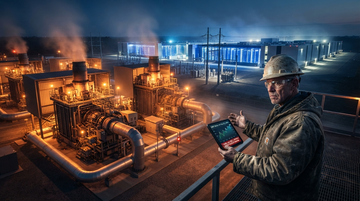
Gas-fired AI power is starting to look like a financing trick: a new forecast argues gas prices could soar above $10/MMBtu—hurting the turbine owners first
A new forecast highlighted in Aug 14, 2026 reporting argues natural gas prices could “soar above $10” per MMBtu in key U.S. hubs as hyperscaler-driven demand meets slower supply growth and higher LNG exports. If that happens, the first margin squeeze likely hits the companies that monetize gas-to-power hardware and contracted availability—while hyperscalers face higher power fuel costs and earlier pushback on expansion timelines.

Nvidia’s Ohio OpenAI guarantee just got smaller—what that says about who really funds the AI data-center build-out
Reports that Nvidia is pulling back its planned Ohio OpenAI financing guarantee are the first visible downgrade to the “Nvidia-as-lender” style of AI infrastructure dealmaking. The key shift for investors: less construction/funding risk stays on Nvidia’s balance-sheet narrative, and more of it reverts to hyperscalers, data-center developers/landlords, and the financing stack behind them.
2026-08-13
Microsoft's China retreat trades tiny revenue for compliance certainty—and signals the AI export-control regime is becoming structural
Microsoft weighing (and likely continuing) a China wind-down is less about demand than about making cross-border AI work legally predictable. With Microsoft explicitly flagging shifting U.S. AI export controls as an uncertainty factor in its FY2026 reporting, the investor takeaway is that hyperscalers will increasingly “partition” engineering and delivery—creating a durable Azure China vacuum for local demand while locking U.S. AI franchises into compliant lanes.

OpenAI’s “Testing Ads in ChatGPT” Turns the Free Tier Into a Live Pricing A/B Lab—And the Ad Market Just Got a New Distribution Toll Booth
OpenAI’s Aug 11 update confirms ChatGPT Ads are expanding beyond the U.S., with ads served at the bottom of answers for logged-in Free and “Go” users while Plus/Pro/Business/Enterprise stay ad-free. Mechanically, the program is built as a controlled monetization experiment—privacy-limited, topic- and history-matched, and measured primarily via aggregate ad engagement—meaning the real competition isn’t only for ad budgets, but for the right to arbitrate “intent” across the conversation. For investors, the signal is that OpenAI is converting the consumer AI funnel into a third ad-ecosystem alongside Google’s search ads and Meta’s social ads.
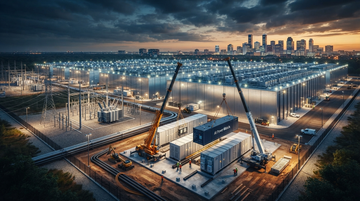
Vantage’s ~$100B exit talk turns AI data centers into a public valuation test for Equinix and Digital Realty
Vantage Data Centers is exploring an IPO around a ~$100B valuation and has also discussed a sale, with discussions still informal. Either outcome would pressure public “AI-ready” market pricing because it would anchor a new reference value for wholesale hyperscale land plus contracted capacity—re-rating Equinix and Digital Realty through capital-cost and replacement-value math, not just sentiment.
2026-08-12
Anthropic’s unreleased Claude jumped the “Riemann zeta” lower bound to 67.2%—and the moat is shifting from demos to math-proof cadence
Anthropic says an unreleased Claude research version advanced a long-standing Riemann zeta bound from 41.6% to 67.2%, then produced a Lean formalization that passed validation checks. The valuation implication is bigger than the headline: the lab is turning mathematical reasoning into something closer to a publishable, verification-ready workflow—exactly the kind of capability that justifies “frontier science” spending at $965B valuation levels.
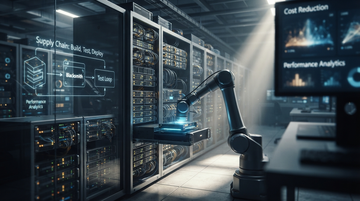
Blacksmith’s near-10x re-rating doesn’t prove “AI tests AI” is a moat—yet it does prove CI cost and test latency became investable infrastructure
Blacksmith’s valuation jump (reported alongside its $10M Series A) is best read as proof that the software supply chain is being re-priced for an AI era: build, test, and feedback loops matter more than ever. The key investor question isn’t whether AI-generated code needs testing—it’s whether Blacksmith’s “CI for faster, cheaper, observable runs” can compound into a durable workflow lock when AI tools push code frequency up and failure modes change.

Bank of America’s $250B pledge reframes AI buildout finance as a bankable “industrial policy” product — and changes who gets paid
Bank of America says it will mobilize and deploy $250B by July 4, 2027 across digital, energy, and core US infrastructure. The investable takeaway isn’t just scale: the bank is positioning project finance + capital markets fees as a repeatable, measured pipeline—at a time when its own net interest income and investment-banking fees are already moving up. Investors should watch whether this “banking the buildout” focus increases earning-asset yield and fee share without loading up credit risk into a cycle that private credit has been dominating.
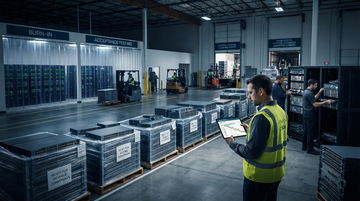
Cisco's FY27 guide effectively sets a “$9B+ AI order bar”—and it will be judged on revenue conversion, not backlog headlines
Cisco guided the market with an AI-networking demand runway that hinges on sustaining a high order pace into FY27. The key risk is that supply-chain and acceptance timing can push revenue recognition out of the quarter—so investors should treat “AI order proof” as a revenue-conversion test, with every miss resetting expectations for the entire networking trade.
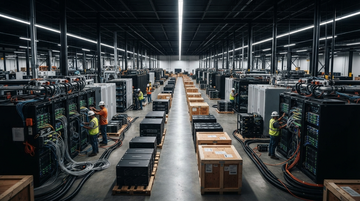
CoreWeave proves $104B backlog can still lose $626M—because the AI cloud “toll booth” is a financing story before it’s a cash story
In its Q2 2026 update, CoreWeave more than doubled revenue to $2.58B and reported an approximately $104B revenue backlog, yet also posted a $626M net loss and guided full-year 2026 revenue to $12.4B–$13.2B. The gap implies that the economic conversion of signed commitments into cash is being delayed by build-and-finance timing—so 2026 looks like a construction bill, not a backlog monetization victory.
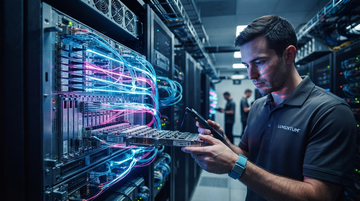
Lumentum turns “1.6T is coming” into Q4 revenue—making optical capacity conversion the new proof point investors should price
Lumentum’s fiscal Q4 2026 delivered a record $1.006B in revenue and $3.23 non-GAAP diluted EPS, while full-year revenue rose to $3.014B—nearly tripling year over year. The key signal is not just growth; it’s that optical networking hardware (including the company’s optical communications engine) is translating hyperscaler throughput plans into measurable quarterly dollars, giving the 800G/“1.6T” AI interconnect narrative a company-level anchor.

OpenAI’s Linux Desktop App Push Turns the Developer OS into the Last AI Distribution Frontier (and Bypasses Both Apple and Microsoft)
OpenAI’s ChatGPT desktop app is now in preview on Linux, bundling ChatGPT, ChatGPT Work, and Codex in a packaged install for mainstream Linux distributions. The strategic shift matters less because “Linux is niche,” and more because it attacks distribution control at the OS layer—where both Apple and Microsoft typically set rules—while pulling more developer workflows into the same subscription funnel.
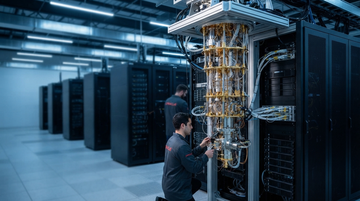
Oracle’s Quantinuum quantum-cloud deal is a tell: hybrid AI compute beats a “quantum hedge,” and cost-out is funding the path
Oracle and Quantinuum plan to deploy Quantinuum Helios inside Oracle Cloud Infrastructure (OCI) to sell “hybrid quantum-AI” access rather than a standalone quantum bet. At the same time, Oracle’s latest 10-K shows large, AI-aimed restructuring charges—supporting a view that Oracle is cost-out funding the expensive, classical compute required while quantum matures.
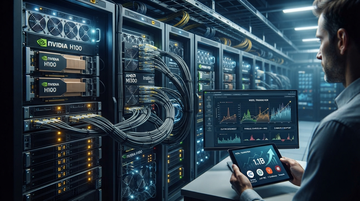
River AI’s $1.1B Round Turns Custom-Model Training Into a Co-Op Between NVIDIA and AMD
River AI says it raised $1.1B in a round led by General Catalyst and AMP PBC, with strategic participation from both NVIDIA and AMD Ventures. The bigger signal isn’t just the money—it’s River’s pitch that enterprises can train and deploy custom frontier “open-weight” models via an API in minutes, forcing chip vendors to compete on not only hardware, but end-to-end training workflows.

Sandbar’s Stream Ring reframes the AI wearable race: the “voice interface” wins only if inference cost and privacy both survive the finger
Sandbar’s Stream Ring bets that voice—not screens—will be the interface layer for mainstream AI wearables, and it tries to make the experience feel “always available” without becoming always-listening. The key investor takeaway is not the ring form factor; it’s how Sandbar structures the voice workflow to control privacy risk and reduce the on-device vs. cloud inference cost curve. If other wearable makers copy the same interaction economics, the winners may be the companies supplying edge compute, audio capture, and low-latency on-device inference rather than the model providers.
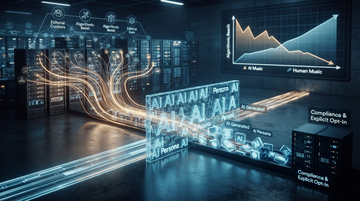
Spotify’s “AI Persona” Label Turns AI Music Into a Distribution Problem—Before UMG/WMG Can Even Standardize a Rulebook
Spotify will show an “AI Persona” badge on some artist profiles and, by default, exclude labeled AI Personas from editorial and algorithmic recommendations starting mid‑September 2026. The move creates a distribution firewall that changes how AI music wins audiences—shifting value away from platform reach, and toward compliance and explicit listener opt-ins long before labels align on standardized handling.
2026-08-11

Aug 10–14 AI-Infra Earnings Is the First “Build-vs-Buy Audit” for the Hyperscaler Cloud Race
Between Nebius, CoreWeave, and Super Micro Computer, investors get a rare same-window read on how much margin and contracted demand the AI infrastructure stack can actually monetize. The cluster matters because it turns the “data-center financing is the bottleneck” thesis into an earnings-testable build-versus-rent problem—starting with Nebius’s $7–$9B ARR target and >3GW contracted power, and flowing into CoreWeave’s and Supermicro’s ability to keep gross profit quality intact as 2027 backlog visibility becomes the market’s next currency.
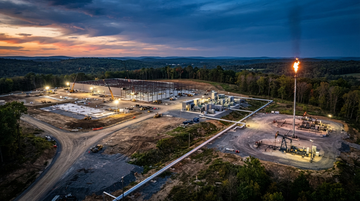
Alpha Compute’s Pennsylvania play reframes the AI data-center bottleneck: buying gas rights to beat the power queue
Alpha Compute ALP reportedly plans to buy Pennsylvania land plus gas rights to anchor a 55MW AI data-center campus—an unusually fuel-first approach to a project pipeline dominated by utility interconnect timelines. If the gas-rights control is real and bankable, it shifts “site control” from the grid side to the upstream fuel side, tightening the link between midstream gas operators and data-center power buildouts.
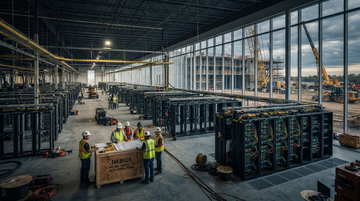
Nebius’s Vineland delay risk just re-priced the “build-fast, rent-fast” AI-server trade
D.A. Davidson’s 30% cut to its Nebius price target—citing Vineland, New Jersey buildout delays that may not complete this year—spotlights a new failure mode for neocloud economics: infrastructure timing, not GPU demand, is what can break revenue ramps. With Nebius already framing long-duration GPU delivery tranches that can affect performance/credits, investors should expect second-order repricing risk across other AI-compute landlords when project timelines slip.

NVIDIA's $500B Wall Street syndicate reframes AI capex ownership: bankers—not GPUs—become the gatekeeper
A reported Nvidia partnership with Apollo, BlackRock, Blackstone, Brookfield, Goldman Sachs, and KKR targets >$500B of third‑party financing for AI infrastructure, shifting the “capex stack” from Nvidia’s balance sheet to Wall Street underwriting. For investors, the key is not Nvidia’s chips—it’s how financeable-asset structure (and who prices risk) changes hyperscaler ROI, network/equipment throughput, and ultimately who captures the margin.
What to expect
Evidence-first notes with a visible point of view.
This section collects sharp takes on earnings, shareholder meetings, and market structure. Each new piece should make the thesis, the facts, and the implications obvious within the first few screens.
Expect direct analysis, not generic commentary.
Expect the data to be explicit and the argument to be easy to follow.
Plutux is not an investment adviser. Market data and AI-generated analysis are for information and education only, not investment advice. Disclaimer