%22%2F%3E%0A%20%20%3Ccircle%20cx%3D%22220%22%20cy%3D%22150%22%20r%3D%22180%22%20fill%3D%22%2322d3ee%22%20fill-opacity%3D%220.12%22%2F%3E%0A%20%20%3Ccircle%20cx%3D%221010%22%20cy%3D%22130%22%20r%3D%22220%22%20fill%3D%22%2338bdf8%22%20fill-opacity%3D%220.08%22%2F%3E%0A%20%20%3Ccircle%20cx%3D%22920%22%20cy%3D%22520%22%20r%3D%22170%22%20fill%3D%22%2322d3ee%22%20fill-opacity%3D%220.06%22%2F%3E%0A%20%20%3Cpath%20d%3D%22M140%20430h920%22%20stroke%3D%22url(%23line)%22%20stroke-width%3D%2212%22%20stroke-linecap%3D%22round%22%2F%3E%0A%20%20%3Cpath%20d%3D%22M220%20360c120-150%20260-220%20380-220s260%2070%20380%20220%22%20fill%3D%22none%22%20stroke%3D%22%2367e8f9%22%20stroke-opacity%3D%220.5%22%20stroke-width%3D%2216%22%20stroke-linecap%3D%22round%22%20stroke-linejoin%3D%22round%22%2F%3E%0A%20%20%3Cpath%20d%3D%22M300%20398h600%22%20stroke%3D%22%2394a3b8%22%20stroke-opacity%3D%220.24%22%20stroke-width%3D%228%22%20stroke-linecap%3D%22round%22%2F%3E%0A%20%20%3Ctext%20x%3D%22220%22%20y%3D%22510%22%20fill%3D%22%23e2e8f0%22%20fill-opacity%3D%220.7%22%20font-family%3D%22Arial%2C%20Helvetica%2C%20sans-serif%22%20font-size%3D%2238%22%20letter-spacing%3D%228%22%3EINSIGHTS%3C%2Ftext%3E%0A%3C%2Fsvg%3E)
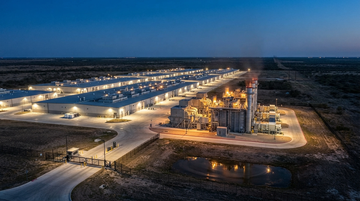
On July 30, 2026, the WSJ reported that Nexus Data Centers — a Woodlands, Texas developer backed by Transition Equity Partners — is in advanced talks to borrow roughly $15 billion from a Morgan Stanley-led bank consortium to build an AI campus in Hubbard, Texas, fully leased to Anthropic. The package splits into a $14 billion bridge loan plus a revolving credit facility, expected to be refinanced in bond or loan markets later in 2026. Alphabet's Google is providing financial guarantees covering Anthropic's lease and power-payment obligations at the site and — per Reuters and other outlets — taking approximately 20% equity in the data-center-and-power-asset SPV. The deal could be formally announced within days of the report. This is not a one-off accommodation. It is the latest leg of a financing architecture that has quietly placed Alphabet's balance sheet behind an estimated $35 billion of Anthropic-linked data-center capacity across five U.S. sites, on top of the up-to-$40 billion equity commitment Google already made to Anthropic at a $350 billion valuation in April 2026.
Deal mechanics
The structure is project finance, not a corporate loan — and that distinction is the point
Three terms make this transaction look unlike any ordinary bank facility. First, the borrower is the SPV, not Anthropic. Nexus Data Centers — a developer, not the AI lab — borrows against the data-center-plus-power-asset it is building. Second, Google is guarantor, not principal, stepping in only on Anthropic lease and power-payment default. Third, the equity kicker (roughly 20% to Google) gives Alphabet an asset-level claim on a 1.6 GW behind-the-meter gas plant and 500 MW of initial data-center capacity on a 2,900-acre site that could scale to 7.7 GW. For Morgan Stanley and the syndicate, the economics are compelling: AI-linked debt issuance is on track to exceed $570 billion in 2026 per the bank's own research, and the firm has separately pitched a leveraged-loan product for data-center developers targeting CLO buyers. The Nexus bridge follows its $27 billion bookrunning role on the Meta-Hyperion facility in October 2025 (now scaled to $50 billion). Goldman Sachs and JPMorgan are reportedly joining the broader Anthropic-related debt tranches. Hyperscalers themselves are projected to issue $250–300 billion in debt in 2026 for data-center buildouts — the marginal financing dollar has shifted from public equity to private credit and project finance.
Total Nexus financing package
$15B
$14B bridge + RCF; led by Morgan Stanley
Google equity stake in SPV
~20%
In data-center + power-asset SPV
On-site power generation
1.6 GW
Natural-gas plant owned by Nexus
Initial DC capacity (Phase 1)
500 MW
On 2,900-acre site, scaling to 7.7 GW
Google-backstopped portfolio
$35B
Five data-center leases as of June 2026 (Bloomberg)
Hyperscaler capex
Alphabet is now borrowing capacity it cannot easily book — Q2 cash flow turned negative
The Nexus deal lands against the worst free-cash-flow print Alphabet has produced since the AI capex cycle began. In Q2 2026, Alphabet spent $44.9 billion on property and equipment — up 100% year-over-year — while operating cash flow was $39.1 billion. The result: negative free cash flow of $5.85 billion, the first sustained FCF deficit in the company's history. Capex consumed 115% of operating cash flow in the quarter, and full-year capex guidance has been raised to $91–93 billion. The off-balance-sheet Nexus structure is the answer to a constraint the headline numbers do not yet show: Alphabet can still borrow, but every dollar of data-center build starts adding depreciation years before the matching Google Cloud revenue materializes. By guaranteeing third-party debt and accepting equity instead of PP&E, Alphabet converts an AI capex line into an off-balance-sheet exposure with optional equity upside — a pattern, not an event.
Alphabet capex has crossed operating cash flow in 2026
Quarterly capex, $ billions, Q1 2025 – Q2 2026
Unit: $B
Q1 2025
17.2
Q2 2025
22.5
Q3 2025
24
Q4 2025
27.5
Q1 2026
32.3
Q2 2026
44.9
| Quarter | Revenue ($B) | Capex ($B) | Capex / Rev | Operating CF ($B) | Free Cash Flow ($B) |
|---|---|---|---|---|---|
| Q1 2025 | 96.5 | 17.2 | 17.8% | 30.5 | 13.3 |
| Q2 2025 | 101.0 | 22.5 | 22.3% | 28.5 | 6.0 |
| Q3 2025 | 102.5 | 24.0 | 23.4% | 33.6 | 9.6 |
| Q4 2025 | 113.8 | 27.5 | 24.2% | 41.2 | 13.7 |
| Q1 2026 | 108.7 | 32.3 | 29.7% | 41.5 | 9.2 |
| Q2 2026 | 119.8 | 44.9 | 37.5% | 39.1 | -5.85 |
Concentration of exposure
Morgan Stanley has become the bank the AI buildout cannot do without
The same WSJ package that surfaces the Nexus financing points to Morgan Stanley as the lead arranger — the third marquee AI-infrastructure mandate the bank has seized in twelve months. It already runs Meta-Hyperion ($27B, expanded to $50B), led the TeraWulf $3.2B Google-backed bond in 2026, and is reportedly trading portions of the larger $35B Anthropic-related debt package. Goldman Sachs sits on the AI-debt league tables as well; JPMorgan is the third member of the troika underwriting the Anthropic cap stack. For lenders, the economics are excellent: data-center loans carry floating-rate coupons tied to SOFR, benefit from the borrower's hedge against a hyperscaler of investment-grade credit quality (here, Alphabet as guarantor), and increasingly clear through the leveraged-loan / CLO channel Morgan Stanley has been pushing. The risk is concentration — if the AI compute thesis cracks at one hyperscaler, a single default can cascade through multiple bank books.
- Morgan Stanley arranged ~$27B of debt and ~$2.5B of equity into the Meta-Hyperion SPV in October 2025 — the largest private bond offering on record — and now leads the $15B Nexus financing for Anthropic.
- The bank projects ~$20B in AI-related leveraged-finance deals for 2026; JPMorgan projects $150B over five years. The leveraged-loan / CLO channel is now absorbing data-center debt that previously sat on bank balance sheets.
- Goldman Sachs and JPMorgan, alongside Morgan Stanley, are the three banks reportedly tapped to lead Anthropic's IPO at a $965B valuation — the same three banks now writing the debt behind Anthropic's compute build.
Upstream and downstream
The Nexus campus ties together chips, gas turbines, and project finance — three different investor bases
Read the supply chain end-to-end and the Nexus project is the unifying SPV for three distinct financing flows that have previously been fragmented. Upstream, the chips inside the data center come from Broadcom (TPUs co-designed with Google — 3.5 GW contracted in the April 2026 Google-Broadcom-Anthropic deal) and AMD (up to 2 GW of Instinct MI450 GPUs committed under the July 22, 2026 AMD-Anthropic partnership, with AMD taking up to $5B of Anthropic equity). The rack-scale servers, networking, and storage sit in the $40B+ of Alphabet capex that flowed through Q1 and Q2 2026. Downstream, the 1.6 GW gas power plant is the project-finance pivot: rather than rely on ERCOT grid power, Nexus owns generation next to a major gas pipeline. That puts upstream gas producers — including EQT, the largest U.S. natural-gas pure-play — and the OEMs behind high-efficiency gas turbines in the supply chain for AI compute. Lenders, in turn, get a credit package underwritten by a Alphabet guarantee and an Anthropic lease — which is what makes the bridge loan investment-grade in everything but name. Finally, on the customer side, Anthropic signed direct data-center leases (12+ LOIs totaling >1 GW earlier in 2026) precisely to escape the hyperscaler margin stack. With Q2 2026 revenue projected at $10.9 billion (+130% sequentially) and first-ever operating profit of $559 million, Anthropic now has the cash-flow profile to absorb a 15–20 year lease on 1.6 GW of capacity — if the trajectory holds.
- Upstream chips: Broadcom TPU capacity (3.5 GW contracted April 2026) and AMD Instinct MI450 (2 GW, first silicon H1 2027). NVIDIA's role shrinks as Anthropic diversifies accelerators.
- Upstream power: 1.6 GW behind-the-meter gas generation on site; relies on Marcellus / Haynesville gas. EQT, the largest U.S. gas producer, has been pitching itself as the AI-power feedstock beneficiary.
- Midstream finance: Morgan Stanley leads the bridge; Goldman Sachs and JPMorgan likely on the syndicate and the refinancing bond. CLO buyers are the marginal incremental investor in 2026.
- Downstream demand: Anthropic leases the campus; Google Cloud and other hyperscalers may indirectly consume TPU capacity through Google's broader Google Cloud–Anthropic compute agreement.
Underwriting mechanics
What actually triggers Google's cash call — and why this matters more than the headline number
The reported guarantee structure covers Anthropic's lease and power-payment commitments at the site. That wording is precise: Google does not guarantee repayment of the $14B bridge. It guarantees the cash flows that service the debt. If Anthropic cannot pay rent to Nexus, or if Nexus cannot pay the gas-turbine operator, Alphabet steps in — but only to the extent of those commitments, and only for the duration of any default. The practical trigger sequence: (1) Anthropic defaults on lease payments to Nexus; (2) Nexus cannot service the bridge loan; (3) lenders accelerate; (4) Alphabet either pays the lease obligations or forecloses on its 20% equity. Because Anthropic's Q2 2026 revenue is projected at $10.9B and forecast to scale to $47B annually by mid-May, a near-term trigger is implausible. The real risk is a 2028–2030 scenario in which AI compute commoditizes, Anthropic's revenue growth slows, and 15-year lease obligations on 1.6 GW of gas-fired capacity become uneconomic. At that point, Google's \"guarantee\" becomes an open-ended capacity take-or-pay. This is why Alphabet took 20% equity instead of a flat fee: it converts a credit guarantee into an asset-level claim that recovers value if Anthropic defaults but the power-and-shell assets still have a market. The structure is classic 1990s infrastructure project finance — applied to frontier AI compute for the first time at this scale.
Investor takeaway
Where the transmission mechanism sits, and the catalysts to watch over the next two quarters
Three mechanisms move first on this news. (1) Bank underwriters — Morgan Stanley, Goldman Sachs, JPMorgan — collect upfront fees on a $15B bridge and on the likely Q4 refinancing into bonds and term loans. Fee economics for AI-infrastructure debt run 50–100 bps higher than comparable corporate paper. (2) Custom-silicon vendors — Broadcom for TPU co-design, AMD for MI450 GPUs — see a contractually committed customer. Anthropic's 3.5 GW TPU + 2 GW AMD pipeline was a forward statement until Nexus signed. (3) Gas-feedstock suppliers — EQT is the largest U.S. natural-gas pure-play and most exposed to AI-power demand narratives, though Nexus owns its own turbines and may contract gas directly. The transmission is slower but real for hyperscaler data-center landlords — Equinix, Digital Realty, Iron Mountain. If AI tenants continue shifting toward direct leases with project-finance-backed SPVs, the wholesale colocation market loses share to bespoke builds. That trend was visible in Meta-Hyperion's pivot from Equinix to a Blue Owl-Morgan Stanley SPV. What could break the thesis: any indicator that Anthropic is renegotiating its lease envelope (a sign of softening demand), a credit-rating action on Alphabet tied to contingent liabilities, or a slowdown in the CLO bid that has absorbed the leveraged-loan paper. Through Q4 2026 the catalysts are positive — deal close, refinancing, ramp of the TPU and AMD chip deliveries. Through 2028, the risk skew rises.
Stocks in the transmission path
- $44.9B Q2 capex and -$5.85B FCF make the off-balance-sheet Nexus structure the preferred route; Google's $40B equity + $35B lease backstop + $15B Nexus loan + 20% Nexus equity stack quietly nears $90B of AI exposure.
- Q3 and Q4 capex prints are the catalyst — any FCF improvement from Cloud growth (Q2 Cloud +82% YoY to $24.8B) lets Alphabet absorb more compute on-balance-sheet and reduce reliance on third-party SPVs.
- Rating-agency view on contingent liabilities is the long-tail risk; a single negative action re-prices the structure across all five data-center backstops.
- $14B Nexus bridge + RCF plus likely underwriting on the Q4 refinancing adds a marquee AI-infrastructure mandate on top of the $27B Meta-Hyperion and $3.2B TeraWulf deals.
- Bank has sold >$40B in AI-infrastructure bonds in 2026, overtaking Goldman Sachs on AI-debt league tables per industry trackers — fee mix is improving at exactly the moment credit spreads are widening.
- Concentration risk cuts both ways: AI-infrastructure exposure now touches underwriting, trading, and loan books simultaneously — one bad hyperscaler print hits all three.
- The 3.5 GW TPU co-design deal with Google for Anthropic (April 2026) is now physically backed by the Nexus campus, converting forward demand into a deliverable schedule.
- Broadcom's ASIC backlog includes Nexus-ramped TPUs from H2 2026 — the stock trades on AI-revenue inflection points and Nexus is one of them.
- Custom-silicon market share is consolidating with Broadcom + Marvell controlling ~95% of the co-design market; the deal reinforces that moat.
- Up to $5B equity stake in Anthropic plus 2 GW Instinct MI450 commitment (July 22, 2026) is now backed by data-center capacity from Nexus and other Google-guaranteed sites.
- H1 2027 silicon delivery gives AMD a hard date for revenue inflection; analysts price the MI450 program into 2027 numbers but not yet into 2026.
- Stock's 151x trailing P/E prices in much of the upside; execution risk on Helios rack-scale deployment is the swing factor.
- Anthropic's deliberate diversification to Broadcom TPU + AMD MI450 reduces NVIDIA's share of Anthropic's compute stack from dominant to minority — a structural share-loss headline.
- NVIDIA's growth does not depend on Anthropic; Meta, OpenAI, and sovereign-cloud customers still buy at scale, so the mix shift is dilution, not destruction.
- Watch Anthropic's next compute tender: any reversion toward NVIDIA GPUs would be a tactical bullish signal; continued diversification is the base case.
- Reportedly co-leads the broader Anthropic-related debt alongside Morgan Stanley and JPMorgan; syndicate role on the Nexus refinancing is the near-term catalyst.
- Goldman Sachs has lost AI-debt league-table share to Morgan Stanley in 2026; a Nexus co-leadership would partially close the gap.
- Watch for fee disclosure on Q3 and Q4 trading-revenue lines — AI-infrastructure underwriting is now a meaningful component.
- Largest U.S. natural-gas pure-play positioned to supply behind-the-meter data-center turbines including Nexus's 1.6 GW plant.
- Nexus owns its own turbines and could contract gas directly with EQT; pricing of any long-term gas-supply agreement is the catalyst.
- The 'gas as AI power' narrative is crowded; a single project-level disclosure from Nexus on gas sourcing would reprice the trade.