%22%2F%3E%0A%20%20%3Ccircle%20cx%3D%22220%22%20cy%3D%22150%22%20r%3D%22180%22%20fill%3D%22%2322d3ee%22%20fill-opacity%3D%220.12%22%2F%3E%0A%20%20%3Ccircle%20cx%3D%221010%22%20cy%3D%22130%22%20r%3D%22220%22%20fill%3D%22%2338bdf8%22%20fill-opacity%3D%220.08%22%2F%3E%0A%20%20%3Ccircle%20cx%3D%22920%22%20cy%3D%22520%22%20r%3D%22170%22%20fill%3D%22%2322d3ee%22%20fill-opacity%3D%220.06%22%2F%3E%0A%20%20%3Cpath%20d%3D%22M140%20430h920%22%20stroke%3D%22url(%23line)%22%20stroke-width%3D%2212%22%20stroke-linecap%3D%22round%22%2F%3E%0A%20%20%3Cpath%20d%3D%22M220%20360c120-150%20260-220%20380-220s260%2070%20380%20220%22%20fill%3D%22none%22%20stroke%3D%22%2367e8f9%22%20stroke-opacity%3D%220.5%22%20stroke-width%3D%2216%22%20stroke-linecap%3D%22round%22%20stroke-linejoin%3D%22round%22%2F%3E%0A%20%20%3Cpath%20d%3D%22M300%20398h600%22%20stroke%3D%22%2394a3b8%22%20stroke-opacity%3D%220.24%22%20stroke-width%3D%228%22%20stroke-linecap%3D%22round%22%2F%3E%0A%20%20%3Ctext%20x%3D%22220%22%20y%3D%22510%22%20fill%3D%22%23e2e8f0%22%20fill-opacity%3D%220.7%22%20font-family%3D%22Arial%2C%20Helvetica%2C%20sans-serif%22%20font-size%3D%2238%22%20letter-spacing%3D%228%22%3EINSIGHTS%3C%2Ftext%3E%0A%3C%2Fsvg%3E)
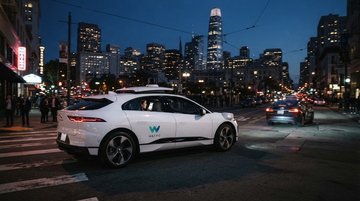
Verified event: exclusivity/ride integration likely unwinds by early 2028
Waymo is reportedly preparing to leave Uber as the default on-demand AV interface—and that shifts the economics of every trip
Reuters, citing the Financial Times, says Waymo is exploring ending its partnership with Uber and has notified Uber it plans to enter “these markets” independently in January 2028, when the contract permits. The immediate operational dispute is described as including vehicle cleanliness/routing concerns and Uber’s complaints about sudden unavailability in bad weather, alongside disagreement over commercial terms.
What’s “real” vs. “reported” in this phase
Reuters/FT claim you can anchor
Waymo exploring an exit; independence targeted for Jan 2028 if contract allows
Described in the Reuters piece on July 24, 2026.
Deal scope you can anchor
Uber previously integrated Waymo autonomous vehicles into Uber’s ride-hailing and food delivery platforms
Anchored to Reuters coverage of the Phoenix arrangement ending.
Market list specificity
Not fully enumerated in the Reuters July 24 snippet we could open
Reported as “these markets”; we treat exact city list as not disclosed in the opened excerpt.
Supply-chain aware: who owns which “trip layer”
A partnership is not just a marketing wrapper—on-demand AV revenue is constrained by the operational and liability stack
When Waymo’s vehicles run inside Uber’s app, the partnership effectively hands Uber the front-end demand funnel (booking, payment, rider matching) while Waymo retains the core autonomy execution. If the arrangement ends, the economic burden moves toward the party that owns more of the trip lifecycle: vehicle allocation, dispatch/routing integration, insurance/risk handling, and the operations needed to keep the service available enough that riders don’t churn.
- If Uber loses the integration, its near-term “autonomy credibility” premium in the marketplace can weaken because customers no longer see Waymo as an on-demand option on the Uber app.
- If Waymo exits first-party distribution on Uber, it must invest in (and staff) the missing layers required to reliably scale trip volume through its own booking surface.
- The operational frictions cited by Reuters (cleanliness/routing and sudden unavailability during bad weather) imply that the partnership break is not purely philosophical—it’s about service reliability KPIs that directly affect unit economics and utilization.
Verified precedent: Phoenix shows the partnership can unwind without ending Waymo’s service
The earlier Phoenix change proves the model: integration can stop, but Waymo can keep serving riders via its own fleet
Separately, Reuters reported on June 29, 2026 that Uber and Alphabet’s Waymo ended their self-driving partnership in Phoenix, Arizona. Reuters states Uber had integrated Waymo’s autonomous vehicles into Uber’s ride-hailing and food delivery platforms; Waymo then said vehicles used for the pilot were integrated back into Waymo’s own Phoenix fleet, where they remain available through Waymo’s app. That is the clearest “mechanism template” for what a broader Uber exit could look like.
| City (verified) | What ended | Where riders could book next | What stayed with Waymo |
|---|---|---|---|
| Phoenix, AZ (Reuters Jun 29, 2026) | Uber–Waymo self-driving partnership in Phoenix | Waymo app (vehicles remain available through Waymo) | Autonomy execution + vehicle allocation inside Waymo’s own fleet |
Investor-relevant: capex and cash generation constraints after decoupling
Uber’s financial capacity to “fund a fleet” is different from Waymo’s—and that’s why distribution exits matter
On the investor side, the partnership breakup is best understood as a call on who pays for the full-stack constraints. Uber has a platform business model, but an Uber-owned autonomy fleet would be materially different from its asset-light ride marketplace. If Waymo stops showing up on Uber as an on-demand surface, Uber’s autonomy revenue contribution from Waymo integration could fall, while Waymo must carry more of the trip lifecycle economics.
Uber revenue (Q1 2026)
$13.20B
Quarterly revenue from Uber income statement data tool (period ending 2026-03-31).
Uber net income (Q1 2026)
$263M
Quarterly net income from Uber income statement data tool (period ending 2026-03-31).
Alphabet revenue (Q2 2026)
$119.80B
Quarterly revenue from Alphabet income statement data tool (period ending 2026-06-30).
Alphabet net income (Q2 2026)
$112.19B
Quarterly net income from Alphabet income statement data tool (period ending 2026-06-30).
Who captures latent demand? (mechanism-first, then beneficiaries)
If the Uber ride surface disappears, latent AV demand likely moves to (1) Waymo’s own booking and (2) competing AV surfaces
- Layer 1 (booking surface): the rider’s default behavior changes when Waymo is no longer “one tap away” inside Uber. The immediate demand shift tends to favor the operator that can offer the same convenience without reliability gaps.
- Layer 2 (availability): Reuters’ cited cleanliness/routing and bad-weather unavailability issues indicate that reliability is a gating factor for converting demand into paid rides. The party controlling operations and dispatch gets the feedback loop first.
- Layer 3 (liability handoff): ending integration transfers more risk-handling and operational responsibilities to Waymo’s side, changing both cost structure and how fast the service can expand.
Data-backed fundamentals check (listed equities likely most exposed)
Fundamentals lens: platform margin resilience vs. autonomy capex pressure
Recent operating leverage snapshot: Uber and Alphabet earnings power
Quarterly net income comparison from data tools (most recent quarters available via the tool calls above).
Unit: USD
Uber (Q1 2026 net income)
USD
263,000,000
Alphabet (Q2 2026 net income)
USD
112,193,000,000
The fundamentals picture is not that Alphabet is “better at autonomy” than Uber. It’s that Alphabet has demonstrated massive net income scale in recent quarters, which can absorb service-ops integration and reliability investments without the market immediately re-rating liquidity risk. Conversely, Uber can still face unit-economics pressure if AV riders churn when Waymo is removed from the Uber surface.
Related listed stocks (evidence-backed linkage to the AV ride economics shift)
- If Waymo exits Uber’s surface, Uber can see higher rider churn in affected cities because AV booking convenience declines without Uber gaining new AV supply.
- In days-to-quarters, sentiment can swing on any evidence that robotaxi rides contribute less to engagement than before even if total Mobility revenue stays stable.
- In 1–3 years, the risk is that Uber must pay more to recreate an autonomy “credibility premium” through partnerships or its own initiatives at higher commercial terms.
- Alphabet may gain control of the front-end conversion funnel, but it also takes on more full-stack operational and liability economics as distribution is no longer outsourced.
- Near-term (quarters), reliability disputes (cleanliness/routing, bad-weather unavailability) can become more visible because Waymo controls the entire rider experience through its own booking flow.
- Long-term (1–3 years), a successful decoupling could compound if Waymo converts demand into repeat rides at scale without partnership frictions.
- More autonomy “full-stack” ownership can increase compute intensity for training, simulation, and fleet ops; NVIDIA is a key AI compute supplier so capex demand can be sticky.
- In days-to-quarters, market focus on AV infrastructure spend can support NVIDIA valuation multiples even before trip economics stabilize.
- In 1–3 years, if more firms internalize ride-stack reliability, inference/training budgets can rise supporting sustained data-center/AI demand.
- If Waymo becomes less visible on Uber, riders looking for mainstream on-demand AV could test competing services; Tesla becomes a plausible beneficiary via its Robotaxi narrative but timing is not disclosed in the Reuters sources opened.
- Near-term, the linkage is sentiment-driven: any service availability/market expansion news can move TSLA faster than fundamentals.
- In 1–3 years, Tesla’s outcome depends on whether it can deliver availability and pricing that offset the lost Uber surface convenience without passenger churn.
- More autonomy operations owned end-to-end can increase demand for orchestration/analytics tooling; Palantir could be used for fleet operations, but no disclosed deal is provided in the Reuters sources opened.
- Near-term, the investment case is primarily an indirect AI/ops-enablement read-through with execution risk.
- Long-term (1–3 years), if AV operators internalize more of the trip lifecycle, software integration budgets can rise but the revenue linkage remains unquantified here.