%22%2F%3E%0A%20%20%3Ccircle%20cx%3D%22220%22%20cy%3D%22150%22%20r%3D%22180%22%20fill%3D%22%2322d3ee%22%20fill-opacity%3D%220.12%22%2F%3E%0A%20%20%3Ccircle%20cx%3D%221010%22%20cy%3D%22130%22%20r%3D%22220%22%20fill%3D%22%2338bdf8%22%20fill-opacity%3D%220.08%22%2F%3E%0A%20%20%3Ccircle%20cx%3D%22920%22%20cy%3D%22520%22%20r%3D%22170%22%20fill%3D%22%2322d3ee%22%20fill-opacity%3D%220.06%22%2F%3E%0A%20%20%3Cpath%20d%3D%22M140%20430h920%22%20stroke%3D%22url(%23line)%22%20stroke-width%3D%2212%22%20stroke-linecap%3D%22round%22%2F%3E%0A%20%20%3Cpath%20d%3D%22M220%20360c120-150%20260-220%20380-220s260%2070%20380%20220%22%20fill%3D%22none%22%20stroke%3D%22%2367e8f9%22%20stroke-opacity%3D%220.5%22%20stroke-width%3D%2216%22%20stroke-linecap%3D%22round%22%20stroke-linejoin%3D%22round%22%2F%3E%0A%20%20%3Cpath%20d%3D%22M300%20398h600%22%20stroke%3D%22%2394a3b8%22%20stroke-opacity%3D%220.24%22%20stroke-width%3D%228%22%20stroke-linecap%3D%22round%22%2F%3E%0A%20%20%3Ctext%20x%3D%22220%22%20y%3D%22510%22%20fill%3D%22%23e2e8f0%22%20fill-opacity%3D%220.7%22%20font-family%3D%22Arial%2C%20Helvetica%2C%20sans-serif%22%20font-size%3D%2238%22%20letter-spacing%3D%228%22%3EINSIGHTS%3C%2Ftext%3E%0A%3C%2Fsvg%3E)
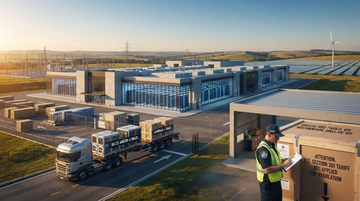
Brazil is trying to outrun an AI-capex constraint—by making the hardware bill for new data centers materially cheaper. The bill is designed around a narrow but powerful lever: suspending federal taxes on IT-related capital expenditures for qualifying data-center operators. In the same period, US grid bottlenecks are tightening—most visibly through state-level pauses and interconnection friction—so hyperscalers can look for alternative geographies where power and project economics line up faster.
What changed in Brazil
REDATA makes qualifying data-center IT capex tax-suspended starting Jan. 1, 2026
Brazil’s incentives: what gets suspended (capex) and the key conditions
Program name / legal vehicle
REDATA via Provisional Measure (MP) No. 1,318/2025
Start date
Jan. 1, 2026
Taxes suspended on qualifying IT capex
PIS/COFINS; IPI; and import tax plus PIS/COFINS-Imports
Major operational requirements
10% of capacity for domestic market (or 10% extra R&D alternative) + clean/renewable energy commitments
REDATA’s core investor impact is not “more subsidies” in the abstract—it is specific tax heads that hit the IT bill for servers, networking gear, and other ICT components used in qualifying fixed assets. That matters for cash-on-cash returns because the tax suspension reduces upfront cost and accelerates payback on new capacity.
What’s happening in the US
US grid friction is pushing hyperscalers toward new “buildable queues,” not just new sites
The bottleneck isn’t only political. In practice, it’s the timeline for securing interconnection capacity and approvals—especially where demand is concentrated in data centers and large-scale load additions. Texas illustrates the mechanism: interconnection requests ballooned, and state leadership pushed for an audit and process slowdown that affects how quickly new data-center loads can move from application to power-ready status.
| Trigger point | What changed | Scale mentioned | Downstream effect |
|---|---|---|---|
| Aug. 3, 2026 (audit push) | Audit/timeline pressure on data-center requests in ERCOT queue | Interconnection requests ~474 GW; ~90% for data centers | Slows the pace at which new projects clear power readiness |
The complication for investor math
Brazil’s AI race is running alongside a new US Section 301 tariff—adding cross-border cost risk
The incentives that make Brazil attractive for data-center buildouts collide with trade policy. The US imposed a 25% Section 301 tariff on certain goods of Brazil, announced as final action in mid-July 2026. Even when the tariff does not directly target the in-country capex incentive, it can raise equipment and logistics costs for supply chains that depend on Brazilian origin goods.
Supply-chain transmission: who sells into “the next queue”
From capex incentives to equipment demand: power and thermal systems are the highest-sensitivity beneficiaries
- REDATA targets IT-related capex, so demand concentrates in electrical distribution, UPS/power management, and heat-removal—components that determine how fast sites can run at contracted capacity.
- When US power interconnection slows, equipment lead times become more valuable: firms that can lock orders early can gain margin in a “compressed commissioning window.”
- Tax suspension changes the capital allocation timeline: operators can more credibly front-load equipment orders if they expect lower upfront federal tax exposure on qualified fixed assets.
That creates a plausible (and testable) investment logic: if Brazil accelerates site readiness and capacity starts, then power/thermal suppliers tied to data-center build cycles should see a lift in orders—especially where equipment is a gating constraint for commissioning rather than a late-stage finishing item.
Listed-company lens (fundamentals)
How to think about the public markets angle: cash flow, capex cycles, and REIT-style exposure to build starts
Digital Realty (FY2025 revenue)
$6.11B
FY2025 reported revenue, in its annual results
Equinix (FY2025 revenue)
$9.26B
FY2025 reported revenue, in its annual results
Vertiv (FY2025 revenue)
$10.23B
FY2025 reported revenue, in its annual results
Eaton (FY2025 revenue)
$27.45B
FY2025 reported revenue, in its annual results
These companies sit at different points in the chain. Data-center REITs monetize ready space (and are sensitive to build starts and lease-up), while power/thermal suppliers monetize equipment attach and service cycles. In a world where some capacity growth moves geographically because US power queues tighten, the winners should be the firms that either (a) already have Brazil execution channels or (b) are positioned to sell equipment globally into new build geographies.
Investor playbook
What to watch next: whether REDATA pulls forward actual deployments vs. paperwork
Revenue scale matters because “order pull-through” shows up in the top line over time
FY2025 revenues for selected public proxy companies spanning colo/infra + power/thermal supply chain.
Unit: USD
Digital Realty Trust (DLR)
FY2025 revenue
6,112,692,000
Equinix (EQIX)
FY2025 revenue
9,260,000,000
Vertiv (VRT)
FY2025 revenue
10,229,900,000
Eaton (ETN)
FY2025 revenue
27,448,000,000
- Short term (days–quarters): look for management commentary on Brazil/LatAm order timing, pipeline conversion, and commissioning schedules that cite tax/regulatory facilitation.
- Medium term (1–3 years): confirm whether Brazil incentives correlate with announced capacity additions and whether equipment lead times compress (a sign that the new queue is actually running).
- Risk to the thesis: if the Section 301 tariff and logistics costs raise landed equipment prices materially, operators may delay procurement despite the incentive—pushing the “paper advantage” forward, not the builds.
Where this story can land in public markets
- Brazil incentives can increase the probability of lease-up momentum for LatAm/EMEA footprints if capacity starts accelerate (monitor 2026–2027 guidance).
- DLR’s FY2025 revenue was $6.11B, giving it scale to fund regional build programs while absorbing policy-driven timing shifts.
- If power delays persist in the US, DLR’s competitive position can strengthen in a geographically diversified build cycle rather than only Texas-facing risk.
- A “next queue” geography can pull forward demand for interconnection-heavy deployments (EQIX benefits when customers choose ready connectivity).
- EQIX reported $9.26B revenue in FY2025, indicating operating scale that can smooth regional execution risk.
- In a climate where US approvals slow, EQIX can capture incremental capacity growth if REDATA-linked build starts translate into colocation take-up by 2027.
- Because REDATA targets IT-related capex, it can raise attach intensity for power/thermal systems that enable faster commissioning.
- Vertiv’s FY2025 revenue was $10.23B, so incremental order flow in a new build geography can show up meaningfully over 2–4 quarters.
- If US power constraints delay US projects but Brazil accelerates, Vertiv may shift revenue timing toward earlier deployments outside the US build queue.
- Eaton’s grid/power exposure can benefit from higher data-center electrical build intensity where tax incentives reduce capex drag (watch 2026–2027 order commentary).
- Eaton reported $27.45B revenue in FY2025, so the company can absorb volatility—but not ignore margin pressure if trade frictions rise.
- The Section 301 tariff risk creates a counter-force: Eaton may face higher landed-equipment/logistics costs depending on supply-chain origin mix.
- If LatAm builds expand, mobile/fiber backhaul demand can rise; CCI can gain exposure to telecom infrastructure add-ons tied to data-center growth.
- CCI’s FY2025 revenue is not captured in the annual income fetch used here, so direction relies on supply-chain logic rather than a cited topline number.
- Watch for explicit management linkage to LatAm infrastructure demand in upcoming results after REDATA take-up.