Power & Grid
Load growth, and who gets to build for it
Interconnection queues, rate cases, turbines and transmission — what data-center demand is doing to utilities and the equipment makers behind them.
2026-07-28
%22%2F%3E%0A%20%20%3Ccircle%20cx%3D%22220%22%20cy%3D%22150%22%20r%3D%22180%22%20fill%3D%22%2322d3ee%22%20fill-opacity%3D%220.12%22%2F%3E%0A%20%20%3Ccircle%20cx%3D%221010%22%20cy%3D%22130%22%20r%3D%22220%22%20fill%3D%22%2338bdf8%22%20fill-opacity%3D%220.08%22%2F%3E%0A%20%20%3Ccircle%20cx%3D%22920%22%20cy%3D%22520%22%20r%3D%22170%22%20fill%3D%22%2322d3ee%22%20fill-opacity%3D%220.06%22%2F%3E%0A%20%20%3Cpath%20d%3D%22M140%20430h920%22%20stroke%3D%22url(%23line)%22%20stroke-width%3D%2212%22%20stroke-linecap%3D%22round%22%2F%3E%0A%20%20%3Cpath%20d%3D%22M220%20360c120-150%20260-220%20380-220s260%2070%20380%20220%22%20fill%3D%22none%22%20stroke%3D%22%2367e8f9%22%20stroke-opacity%3D%220.5%22%20stroke-width%3D%2216%22%20stroke-linecap%3D%22round%22%20stroke-linejoin%3D%22round%22%2F%3E%0A%20%20%3Cpath%20d%3D%22M300%20398h600%22%20stroke%3D%22%2394a3b8%22%20stroke-opacity%3D%220.24%22%20stroke-width%3D%228%22%20stroke-linecap%3D%22round%22%2F%3E%0A%20%20%3Ctext%20x%3D%22220%22%20y%3D%22510%22%20fill%3D%22%23e2e8f0%22%20fill-opacity%3D%220.7%22%20font-family%3D%22Arial%2C%20Helvetica%2C%20sans-serif%22%20font-size%3D%2238%22%20letter-spacing%3D%228%22%3EINSIGHTS%3C%2Ftext%3E%0A%3C%2Fsvg%3E)

2026-07-27

2026-07-26

Nvidia’s SK Hynix $500B-style memory lock-up reframes HBM as a contracted utility—tightening the HBM choke point for every other AI GPU maker
Public reporting confirms Nvidia has secured advanced AI memory supply from SK hynix via a multiyear technology partnership announced June 7, 2026. The key market impact is structural: when the “input bottleneck” gets prepaid and custom-developed, HBM behaves less like a commodity and more like a utility with allocation power—compressing upside for Micron and Samsung and making AMD- and Broadcom-adjacent supply strategies more substitute-constrained.

A single Northern Virginia line fault made PJM absorb a 3 GW “AI load step” — and it instantly made backup power a grid-reliability business
On July 22, a Northern Virginia transmission line fault triggered hyperscale data centers to automatically transfer load to backup power, while PJM recorded a sudden drop of more than 3 GW (~3% of demand at the time). The event reframes “backup power” from a discretionary reliability feature into an underwriting-grade requirement for AI capacity—turning power-management, switching, and generator/energy systems into the true beneficiaries of AI scaling.

Small businesses just sued over “forced labor” tariffs—turning tariff power into a refund-and-injunction fight at the importer level
Two U.S. small businesses challenged the Trump administration’s Section 301 “forced labor” tariffs in the Court of International Trade, arguing the program preserved the invalidated emergency-tariff architecture rather than providing a reasoned, practice-specific remedy. The demand-side wedge matters for investors because it shifts outcomes from “policy backlash” to “case-by-case duty collection, injunction risk, and refund exposure,” with immediate pressure on downstream importers and sellers and longer-run uncertainty for cross-border supply-chain pricing.

The Grid Reliability Cap Starts at 100°F: Why AI’s Power Boom Is Forcing Utilities to Reprice Delivery Risk
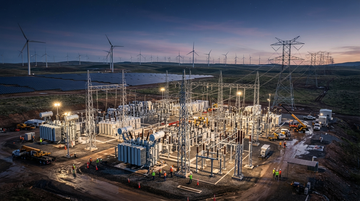
A single PJM disturbance that dropped “more than 3 gigawatts” after a transmission-line fault shows how tightly today’s grid margins are being used up by data-center load. Layer that with GE Vernova’s surge in electrification demand and you get a new investment reality: the limiting factor is no longer just generation—it’s transformer/dispatchability delivery under hotter, more volatile peak weather.
2026-07-24

Etched’s $10.3B Valuation Is a Bet Against “One-Model-to-Fill-a-GPU” — and It’s Powered by a Two-Stage Prefill/Decode Memory Architecture
Etched’s reported $300M Series C at a $10.3B valuation validates venture appetite for vertical inference specialization—not horizontal “GPU duopoly” scaling. The company’s own framing (prefill-first compute at low voltage + decode-side shared “cluster-scale memory” over a proprietary interconnect) suggests the market is paying for systems throughput and latency, not just raw FLOPs.

The Supreme Court Quietly Shrinks Tariff Power—So Markets Now Trade the “Surviving Statute” Not the Tariff Headline
The Supreme Court’s February 2026 ruling that IEEPA cannot authorize tariffs forces the administration to pivot to other statutory authorities, changing both how fast new duties can be imposed and how easily importers can challenge them. The July 2026 tariff wave that follows is therefore a “statute selection” story—investor impact concentrates in firms’ cost pass-through, legal exposure, and inventory timing rather than in any single rate.

The Vietnam Tariff Shock Is a Margin Bet: Brands Can’t Just “Pay Duty”—They Have to Re-write Contract Math
Vietnam is the apparel exporter that looks most exposed when the U.S. moves from a temporary, broad 10% tariff regime into a higher, country-sliced structure. For the most Vietnam-heavy shippers—like Nike—the spread between Vietnam and alternative sourcing hubs can become a gross-margin event, unless contract pricing and reroute timing are designed to absorb the duty differential.
2026-07-23

FCC’s “Chinese parts” device ban turns into a replacement-lead-time tax: here’s the compliance checklist for who re-certifies, who loses supply, and who pays delays
The FCC’s move to bar sales of devices containing components from “blacklisted” Chinese firms is best modeled as an equipment-authorization and certification disruption—not just a geopolitical headline. Using FCC’s Covered List mechanics and the communications equipment authorization rules, you can map a practical timeline: upstream testing/authorization constraints force redesigns; downstream buyers then face re-certification and possible sales/importation limits that can translate into margin and delivery shocks.

GE Vernova GEV Backlog Confirms Electrification Demand—but Margins and Cash Timing Depend on What Gets Built, Not What’s Booked
GE Vernova’s June 30, 2026 backlog rose to $176.3B and its Electrification backlog to $44.6B (+30% sequential), giving investors unusually concrete evidence that utility electrification capex is still translating into orders. But the profit map is changing: near-term margins and working capital are driven by execution timing, segment mix, and “order-to-revenue” conversion rather than backlog level alone. The backlog can be a demand canary—yet it can still mislead on margin durability if the incremental dollars skew toward slower-to-earn projects or higher execution risk.

GE Vernova’s Backlog Is Strong—but the “Margin Leakage” Risk Lives in Equipment Mix and Execution-Cost Timing, Not Demand
GE Vernova reports a growing electrification and grid backlog (RPO) of $44.6B, but the backlog’s margin quality depends on equipment-vs-services mix and how execution costs and timelines hit project-level contracts. In its latest filings, GE Vernova shows large RPO growth concentrated in Power and Electrification equipment (where schedule and cost overruns matter most), while it separately flags tangible cost/timeline pressure in other execution-heavy businesses—an investor analogue for what can go wrong. The actionable takeaway: treat backlog growth as necessary proof of demand, and backlog composition + disclosed execution risks as the real predictor of margin and cash-flow outcomes.

USMCA’s “Deadline Cliff” Is Losing Its Edge: Why a 2026→2027 Drag Changes Auto & Trucking Pricing Power
U.S. Trade Representative Jamieson Greer confirmed the U.S. did not renew USMCA in its current form and indicated the process could extend into next year via interim arrangements. For investors, that shifts the auto supply-chain from “meet the rule-or-pay tariffs” urgency into a “re-price production and capacity” regime—affecting Union Pacific, CSX, and UPS through timing of North America cross-border flows and planning.
2026-07-22
2026-07-17

2026-07-16
2026-07-15
2026-07-14

2026-07-13

2026-07-11
What to expect
Evidence-first notes with a visible point of view.
This section collects sharp takes on earnings, shareholder meetings, and market structure. Each new piece should make the thesis, the facts, and the implications obvious within the first few screens.
Expect direct analysis, not generic commentary.
Expect the data to be explicit and the argument to be easy to follow.
Plutux is not an investment adviser. Market data and AI-generated analysis are for information and education only, not investment advice. Disclaimer