Power & Grid
Load growth, and who gets to build for it
Interconnection queues, rate cases, turbines and transmission — what data-center demand is doing to utilities and the equipment makers behind them.
2026-08-28
%22%2F%3E%0A%20%20%3Ccircle%20cx%3D%22220%22%20cy%3D%22150%22%20r%3D%22180%22%20fill%3D%22%2322d3ee%22%20fill-opacity%3D%220.12%22%2F%3E%0A%20%20%3Ccircle%20cx%3D%221010%22%20cy%3D%22130%22%20r%3D%22220%22%20fill%3D%22%2338bdf8%22%20fill-opacity%3D%220.08%22%2F%3E%0A%20%20%3Ccircle%20cx%3D%22920%22%20cy%3D%22520%22%20r%3D%22170%22%20fill%3D%22%2322d3ee%22%20fill-opacity%3D%220.06%22%2F%3E%0A%20%20%3Cpath%20d%3D%22M140%20430h920%22%20stroke%3D%22url(%23line)%22%20stroke-width%3D%2212%22%20stroke-linecap%3D%22round%22%2F%3E%0A%20%20%3Cpath%20d%3D%22M220%20360c120-150%20260-220%20380-220s260%2070%20380%20220%22%20fill%3D%22none%22%20stroke%3D%22%2367e8f9%22%20stroke-opacity%3D%220.5%22%20stroke-width%3D%2216%22%20stroke-linecap%3D%22round%22%20stroke-linejoin%3D%22round%22%2F%3E%0A%20%20%3Cpath%20d%3D%22M300%20398h600%22%20stroke%3D%22%2394a3b8%22%20stroke-opacity%3D%220.24%22%20stroke-width%3D%228%22%20stroke-linecap%3D%22round%22%2F%3E%0A%20%20%3Ctext%20x%3D%22220%22%20y%3D%22510%22%20fill%3D%22%23e2e8f0%22%20fill-opacity%3D%220.7%22%20font-family%3D%22Arial%2C%20Helvetica%2C%20sans-serif%22%20font-size%3D%2238%22%20letter-spacing%3D%228%22%3EINSIGHTS%3C%2Ftext%3E%0A%3C%2Fsvg%3E)
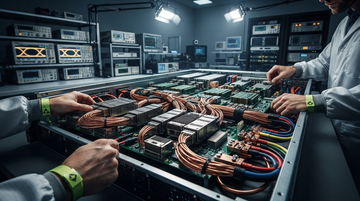
The “dollars per rack” race quietly reorders the BOM: high-speed 224G-grade connectors and 48V power interconnects are becoming the compounding constraint
As AI rack designs push faster copper SerDes and higher bus voltages, the connector/interconnect layer is shifting from “plumbing” to a margin-controlling build constraint. Evidence from TE Connectivity and Luxshare Precision shows 224G connector ecosystems are already being engineered for next-gen switch slot density, while Amphenol reports AI-related strength within IT datacom alongside fast revenue growth.
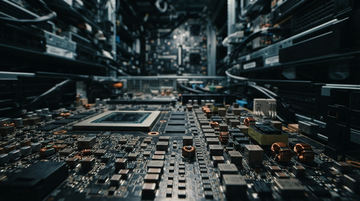
AI Servers’ Quietest Bottleneck Is the Passive Layer: MLCC + Power Magnetics Can Gain Content Share Even When “Component Strength” Reads False
The passive parts that sit under every GPU power step—MLCCs and power magnetics inside the 48V rack ecosystem—can grow faster than the “GPU-cycle” proxy because higher power density increases decoupling and transient-demand content per rack. Using Murata’s reported financials as a compounding baseline, the investment takeaway is that winners in capacitors/inductors can look steadier than the semiconductor tape, while memory-price volatility can distort how component strength shows up in reported supply chains.
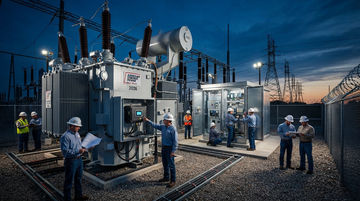
Trump’s Bulk-Power National Emergency Turns Grid Security Into a Mandated Order Book—Transformer, Switchgear, and OT Cyber Winners (and the “who gets paid first” map)
On Aug. 26, 2026, Trump signed an executive order (EO 14420) that makes foreign-produced bulk-power equipment a national-emergency compliance target. The practical effect is a faster, procurement-linked shift from “recommended” grid cybersecurity to hard, equipment-level restrictions and mitigation conditions—reordering cash flows across utilities, domestic integrators, transformer/switchgear OEMs, and OT-cyber vendors.
2026-08-27
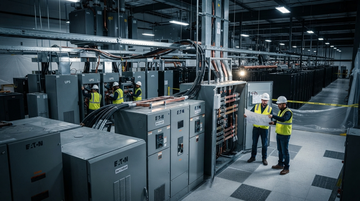
Grid-to-GPU’s new bottleneck isn’t transformers—it’s who can schedule switchgear, UPS and interconnection fast enough to hit data-center deadlines
AI capex is colliding with power-delivery realities that don’t clear on silicon lead times. The result: switchgear-to-UPS-to-interconnection becomes the scheduling choke point where long backlogs, constrained commissioning windows and utility bottlenecks convert into multi-quarter project deferrals and pricing power for a narrow set of electrical-equipment suppliers.
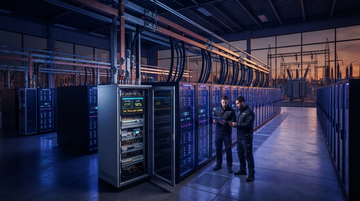
IREN has the miner-to-AI pivot—but the margin test is electricity volatility, not customer contracts
IREN is set to print its FY26 earnings on Aug. 27, 2026, after a year of transforming from Bitcoin mining into AI “cloud services” plus colocation-like revenue. The company’s disclosures already admit electricity price and electricity-market volatility can directly impair margins if it can’t curtail or monetize load at the right times—exactly the risk behind the “miner-to-AI landlord” thesis. The investor question is whether FY26 results (and guidance embedded in the print) show electricity as a controllable pass-through—or a profit killer when spot power spikes.
Rivian’s CFO exit to GE Vernova spotlights a real execution-and-cash tradeoff—EV ramp risk is rising as grid/AI demand pulls finance talent
Rivian RIVN disclosed that CFO Claire McDonough plans to resign effective Oct. 30, 2026, appointing Derek Mulvey as interim CFO. The timing matters: Rivian is already in the R2 ramp phase, while GE Vernova GEV has built its growth story around grid modernization for AI-driven power needs—so the CFO move reads less like a personal career step and more like capital-and-people reallocation.
2026-08-26
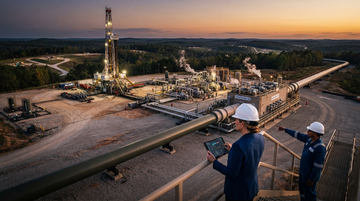
Gunvor’s >$1B Haynesville bid flags a gas-trading power shift: feedgas control is the scarce margin
Gunvor is reportedly in talks to buy Haynesville shale assets for more than $1B, a sign that LNG-era economics are pulling trading-house capital into US gas basins. The deal’s implied wager is that the export margin increasingly depends on securing feedgas access (and bottleneck capacity) rather than simply owning more production barrels of hydrocarbons.

Marvell's Q2 FY27 print turns “custom-silicon backlog” into earnings power—or exposes it as optics
Marvell’s Q2 FY27 setup is being judged on whether it converts AI networking “bookings” into sustainable revenue, margin, and cash generation. The only defensible way to tell is to read the print alongside its outlook math: Q2 FY27 revenue guidance centers on $2.7B with a GAAP gross margin range of 52.1%–53.1% and explicit calls for “exceptional AI-related bookings.”
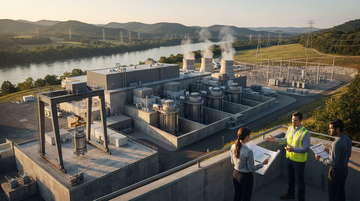
NuScale's TVA deal would be a utility-scale SMR procurement step—if it turns into binding PPAs
TVA and ENTRA1 Energy disclosed an agreement to enable up to 6 GW of NuScale SMR capacity across TVA’s seven-state territory, with ENTRA1 targeting development and ownership and selling electricity to TVA under future power purchase agreements. For investors, the inflection is not the “up to” headline scale—it’s whether this moves from planning to bankable contract terms that translate into revenue and backlog for NuScale while shifting cash-flow economics toward the asset owner and EPC ecosystem.

Zoom isn’t monetizing AI the way the market wants: agent features are proving adoption, not pricing power
Zoom’s Q2 results show steady top-line growth alongside ongoing AI feature expansion, but the earnings evidence does not yet show a clear, separable “agentic pricing” revenue line. The key question for investors is whether Zoom can convert AI Companion/agent workflows into outcome-priced upgrades faster than Microsoft bundles Copilot into Teams-led suites—without sacrificing seat growth.
2026-08-25
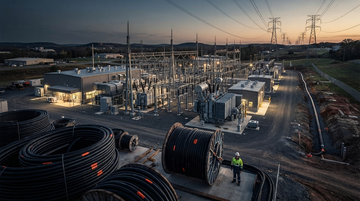
HVDC’s “unmapped toll” is landing in converter stations and XLPE cable, not reactors—because PJM is already pricing grid pain at ~$6B/H1 and AI will have to pay it again
PJM’s transmission-constraint costs surged to $6 billion in the first half of 2026, turning congestion into a near-cash “toll” for any AI load that arrives without enough long-haul transfer capacity. The bottleneck chain for adding that capacity is concentrated: converter stations plus XLPE land/subsea cable (and the HVDC transformer scope around them), where multi-year backlogs and long lead times translate grid buildout into a pricing-power opportunity.

OpenAI’s Jalapeño posts 1.5–1.9× more inference work per watt—turning “custom silicon” from an option into a pricing-power threat for NVIDIA
OpenAI published its first Jalapeño inference-chip benchmark results on Aug. 25, claiming 1.5–1.9× more AI work per watt at peak throughput and 1.7–3.6× lower end-to-end latency versus stated comparison systems. Because inference is the spend that scales with live usage, the headline is that OpenAI can potentially shift its next compute build from “GPUs as the default” toward purpose-built accelerators—compressing NVIDIA’s margin cushion just ahead of its Aug. 26 earnings.

SpaceX’s $100B “Starbase, Louisiana” reframes AI from power-and-chips to launch-and-orbit capacity
SpaceX’s planned $100B Starbase, Louisiana spaceport targets propellant production, vehicle processing, and an expanded launch cadence—then it explicitly pulls forward the timeline for orbital AI data-center deployments to late 2027. The market implication is simple: when orbital compute moves from prototype flights to scaled constellations, launch slots become a gating input that can reprice the space/value chain.
2026-08-24
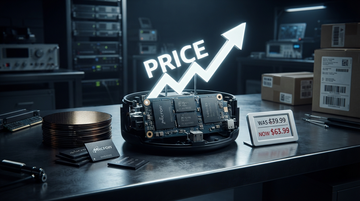
Amazon's 60% device price hikes confirm memory pricing power is moving into consumer hardware
Amazon raised prices on multiple first-party devices—including the Echo Dot base model—by as much as 60%, explicitly citing “significant increases” in memory and storage component costs. The move is a retail-grade proof point that DRAM/NAND tightness can translate into end-demand pricing, sharpening 2H26 contract-price narratives for Micron, SK Hynix, and Samsung Electronics while increasing the near-term risk that Amazon’s device ecosystem growth depends on a tighter—or costlier—hardware attachment loop.

IREN’s Aug. 27 earnings are the first real “miner-to-AI landlord” stress test after power volatility—and the 10‑Q already shows why margins can’t be treated as fixed
IREN IREN is set to report on Aug. 27, and the pivot story lives or dies on how quickly electricity cost shocks flow through to profitability. In its latest filed results, the company reports electricity as a major cost driver for both bitcoin mining and AI Cloud Services, including earlier history of switching electricity procurement terms at its Childress site—exactly the kind of mechanism that can turn short-term power volatility into margin volatility.

Nvidia’s “equity seat” bid in Perplexity would make $30B+ AI search a compute-powered toll road to Google’s ad machine
Recent reporting says Nvidia is in discussions to invest in a Perplexity funding round that would value the answer-search startup at more than $30B, potentially turning Nvidia’s existing inference relationship into an equity-and-platform lever. If that happens, investors should watch not just Perplexity’s growth, but the first-order supply-chain economics: higher inference demand, faster iteration of model-serving stacks, and a tougher monetization path for Google’s search monopoly as “answer” turns into the default entry point.
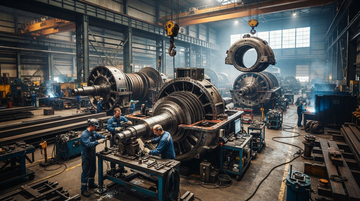
GE Vernova should get a rerating if “steam capacity” stays the next AI power choke point
Reuters reported Siemens Energy is weighing a spin-off (or IPO) and a stepwise stake sale for its “Transformation of Industry” unit, which includes industrial steam turbines. That matters because hyperscaler-driven power buildouts increasingly hinge on steam-side equipment lead times as much as on gas turbine delivery—setting up a valuation read-through to GE Vernova’s power-and-steam franchise.
2026-08-23
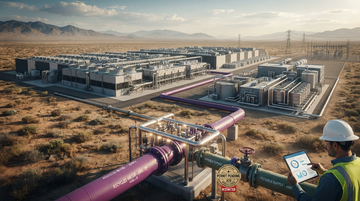
AI Data Centers Are Entering a “Second Constraint” Era—Water Permits, Not Just Power, Decide Who Can Scale
Water scarcity and permitting are moving from background risk to a primary scheduling constraint for AI data centers in drought-prone regions. The practical battleground is cooling choice (water-withdrawing vs. closed-loop) and whether hyperscalers can route cooling demand through recycled-water systems—shifting capex from plant construction into treatment, monitoring, and recycling infrastructure.

Canada’s retaliation pressure is skipping cars and aluminum—because the tariff “holes” are concentrated in oil, uranium, potash, and Quebec power
The Aug. 21–23 escalation under the Section 338 tariff snap-back framework explicitly exempts energy and potash from the U.S. action, shifting the real economic stress to the segments the U.S. cannot replace quickly. For investors, that means the first repricing is likely to show up in Cameco, Nutrien, and Canadian oil producers’ U.S.-listed peers—while U.S. utilities and power merchants face second-order stress from Quebec’s cross-border electricity exposure.
2026-08-22

What to expect
Evidence-first notes with a visible point of view.
This section collects sharp takes on earnings, shareholder meetings, and market structure. Each new piece should make the thesis, the facts, and the implications obvious within the first few screens.
Expect direct analysis, not generic commentary.
Expect the data to be explicit and the argument to be easy to follow.
Plutux is not an investment adviser. Market data and AI-generated analysis are for information and education only, not investment advice. Disclaimer