%22%2F%3E%0A%20%20%3Ccircle%20cx%3D%22220%22%20cy%3D%22150%22%20r%3D%22180%22%20fill%3D%22%2322d3ee%22%20fill-opacity%3D%220.12%22%2F%3E%0A%20%20%3Ccircle%20cx%3D%221010%22%20cy%3D%22130%22%20r%3D%22220%22%20fill%3D%22%2338bdf8%22%20fill-opacity%3D%220.08%22%2F%3E%0A%20%20%3Ccircle%20cx%3D%22920%22%20cy%3D%22520%22%20r%3D%22170%22%20fill%3D%22%2322d3ee%22%20fill-opacity%3D%220.06%22%2F%3E%0A%20%20%3Cpath%20d%3D%22M140%20430h920%22%20stroke%3D%22url(%23line)%22%20stroke-width%3D%2212%22%20stroke-linecap%3D%22round%22%2F%3E%0A%20%20%3Cpath%20d%3D%22M220%20360c120-150%20260-220%20380-220s260%2070%20380%20220%22%20fill%3D%22none%22%20stroke%3D%22%2367e8f9%22%20stroke-opacity%3D%220.5%22%20stroke-width%3D%2216%22%20stroke-linecap%3D%22round%22%20stroke-linejoin%3D%22round%22%2F%3E%0A%20%20%3Cpath%20d%3D%22M300%20398h600%22%20stroke%3D%22%2394a3b8%22%20stroke-opacity%3D%220.24%22%20stroke-width%3D%228%22%20stroke-linecap%3D%22round%22%2F%3E%0A%20%20%3Ctext%20x%3D%22220%22%20y%3D%22510%22%20fill%3D%22%23e2e8f0%22%20fill-opacity%3D%220.7%22%20font-family%3D%22Arial%2C%20Helvetica%2C%20sans-serif%22%20font-size%3D%2238%22%20letter-spacing%3D%228%22%3EINSIGHTS%3C%2Ftext%3E%0A%3C%2Fsvg%3E)
What happened
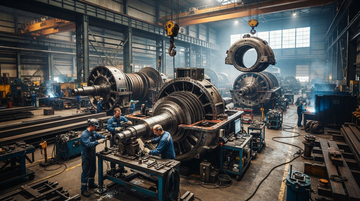
Siemens Energy is considering monetizing its industrial steam-turbine business unit in a staged deal
Reuters (June 18, 2026) reported that Siemens Energy is considering spinning off (or IPO) its “Transformation of Industry” division, and that a first step would likely divest about 60% of the shares while Siemens Energy would retain 40%.
Key deal structure disclosed by Reuters
Staged ownership change (first step)
Divest ~60% / retain 40%
Reported by Reuters, Jun 18, 2026
What the unit includes
Industrial steam turbines and related equipment
Context: Siemens Energy’s industrial “Transformation of Industry” coverage
Why investors care
Steam-side lead times can throttle AI power schedules
Analyst inference; see evidence-backed mechanism below
Why the market may be underpricing steam-side equipment
The “AI power bottleneck” narrative is often gas-heavy—but the steam side can be the limiter once plants are ordered
AI-driven demand is pushing a wave of power projects, especially gas CCGT and nuclear-related steam needs. In that buildout, gas turbines often get the headlines, but the project schedule doesn’t end at the gas machine: the steam generation chain (heat recovery steam generators, steam turbines, generators, controls, and auxiliaries) becomes the schedule gate for achieving full capacity delivery.
So when Siemens Energy moves to partially monetize a unit that includes industrial steam turbines, it is not just a corporate-finance story. It is a signal that the market should re-check the economics and scarcity value of the steam-side bottleneck—especially for suppliers that can translate that scarcity into higher services mix, conversion quality, and cash generation.
What the deal implies for valuation power in US-listed GE Vernova
A steam-turbine stake sale is a “quality of scarcity” test for the whole power-equipment chain
The investor takeaway is about relative valuation: if buyers are willing to pay for exposure to industrial steam turbines at a meaningful ownership premium (directly through a stake-sale/spin-off structure), then the market’s tendency to focus only on gas-turbine supply can leave steam-side players—and their services portfolios—temporarily undervalued.
Siemens Energy revenue momentum
€39.1B (FY2025)
FY2025 revenue from the Siemens Energy income statement; reported as of FY2025 period end (fiscal year ended Sep 30, 2025).
GE Vernova scale
$38.1B (FY2025)
FY2025 revenue from the GE Vernova income statement; reported as of FY2025 period end (fiscal year ended Dec 31, 2025).
Siemens Energy profitability turnaround
€1.41B net income (FY2025)
FY2025 net income from the Siemens Energy income statement; fiscal year ended Sep 30, 2025.
GE Vernova profitability
$4.88B net income (FY2025)
FY2025 net income from the GE Vernova income statement; fiscal year ended Dec 31, 2025.
Those figures don’t prove steam is the bottleneck. But they set the context for why a corporate carve-out can matter: the underlying steam-turbine unit isn’t a “small bolt-on” inside a distressed conglomerate; it sits within a business that can translate industrial equipment scarcity into earnings power—if the supply constraint persists.
Supply-chain map: from turbine scarcity to services cash
Steam bottlenecks propagate through components, staffing, and long-cycle service revenue
- Steam turbine output can become the limiting step after project-level gas and interconnection decisions, pushing commissioning windows later even when gas delivery is booked.
- Scarcity tends to show up first in backlog conversion quality and service contract attach—then in pricing and margin, once fleets come under performance pressure.
- Steam-side constraints also stress maintenance and overhaul capacity (rotor, casing, seals, valve systems), which can lift recurring aftermarket revenue faster than new-build cycles.
- Because steam capacity serves both CCGT heat-recovery trains and nuclear steam cycles, the bottleneck can overlap multiple customer investment programs.
What to watch next (catalysts and falsifiable signals)
The next 1–3 quarters should reveal whether steam scarcity is tightening or easing
Profitability trend context for the two key listed chains
A quick look at net income scale supporting the “scarcity monetization” backdrop (not a steam-only proof).
Unit: USD/EUR net income
Siemens Energy net income (FY2023)
FY2023 net income
-4,532,000,000
Siemens Energy net income (FY2025)
FY2025 net income
1,414,000,000
GE Vernova net income (FY2023)
FY2023 net income
-438,000,000
GE Vernova net income (FY2025)
FY2025 net income
4,884,000,000
In the next reporting cycle, investors should look for: (1) any explicit steam/industrial turbine margin guidance changes, (2) order and backlog commentary tied to steam-side delivery, and (3) aftermarket/service growth that outpaces new-build. If those show strength while gas demand is stable, the steam-bottleneck narrative becomes harder to dismiss.
Bottom line
Why this corporate move could matter for GE Vernova’s multiple
If Siemens Energy is comfortable monetizing (and ultimately potentially separating) the industrial steam turbine unit, it implies that the market is willing to underwrite steam-side economics as a durable franchise—not just a cyclical component of a larger OEM portfolio. For GE Vernova, that is directionally positive because steam turbines and generators sit inside the same capacity-constrained ecosystem that AI-driven power projects must complete.
Listed stocks most exposed to the steam-side capacity narrative
- A steam-side scarcity narrative supports higher-quality backlog conversion for turbines and related services over the next 1–3 quarters.
- FY2025 profitability scale implies room for margin expansion if service mix continues to lift into FY2026.
- If customers face steam constraints, aftermarket overhaul demand should stay resilient after plant commissioning windows move out.
- The proposed stake-sale/spin-off structure suggests investors see value in the industrial steam-turbine unit, but execution risk remains.
- FY2025 net income recovery indicates the company can fund industrial transformation while monetizing assets into 2026.
- If coordination frictions increase, delivery performance could deteriorate, weakening valuation support in the short term.
- If steam-side bottlenecks tighten, industrial boiler/steam solutions demand should reaccelerate over the next 6–18 months.
- Watch for whether order commentary cites steam capacity constraints rather than broad industrial demand.
- If hyperscaler-driven power prioritizes quick gas delivery first, gas-turbine order momentum can remain dominant in the near term.
- If projects increasingly stall on steam completion, incremental upside may shift from gas-only to gas-plus-steam ecosystems beyond 2026.