Power & Grid
Load growth, and who gets to build for it
Interconnection queues, rate cases, turbines and transmission — what data-center demand is doing to utilities and the equipment makers behind them.
2026-08-06
%22%2F%3E%0A%20%20%3Ccircle%20cx%3D%22220%22%20cy%3D%22150%22%20r%3D%22180%22%20fill%3D%22%2322d3ee%22%20fill-opacity%3D%220.12%22%2F%3E%0A%20%20%3Ccircle%20cx%3D%221010%22%20cy%3D%22130%22%20r%3D%22220%22%20fill%3D%22%2338bdf8%22%20fill-opacity%3D%220.08%22%2F%3E%0A%20%20%3Ccircle%20cx%3D%22920%22%20cy%3D%22520%22%20r%3D%22170%22%20fill%3D%22%2322d3ee%22%20fill-opacity%3D%220.06%22%2F%3E%0A%20%20%3Cpath%20d%3D%22M140%20430h920%22%20stroke%3D%22url(%23line)%22%20stroke-width%3D%2212%22%20stroke-linecap%3D%22round%22%2F%3E%0A%20%20%3Cpath%20d%3D%22M220%20360c120-150%20260-220%20380-220s260%2070%20380%20220%22%20fill%3D%22none%22%20stroke%3D%22%2367e8f9%22%20stroke-opacity%3D%220.5%22%20stroke-width%3D%2216%22%20stroke-linecap%3D%22round%22%20stroke-linejoin%3D%22round%22%2F%3E%0A%20%20%3Cpath%20d%3D%22M300%20398h600%22%20stroke%3D%22%2394a3b8%22%20stroke-opacity%3D%220.24%22%20stroke-width%3D%228%22%20stroke-linecap%3D%22round%22%2F%3E%0A%20%20%3Ctext%20x%3D%22220%22%20y%3D%22510%22%20fill%3D%22%23e2e8f0%22%20fill-opacity%3D%220.7%22%20font-family%3D%22Arial%2C%20Helvetica%2C%20sans-serif%22%20font-size%3D%2238%22%20letter-spacing%3D%228%22%3EINSIGHTS%3C%2Ftext%3E%0A%3C%2Fsvg%3E)

2026-08-05
2026-08-04
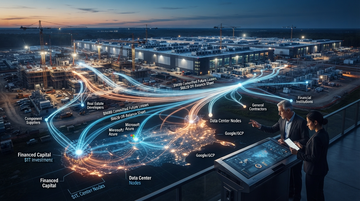
AI’s $1 Trillion Lease Tab: Hyperscalers Shift Utilization and Refinancing Risk—But It Reappears Everywhere
Moody’s estimates $662B of future data-center lease commitments across the largest U.S. hyperscalers sit off balance sheets because they’re not yet commenced—despite the projects being financed and under construction. That shifts occupancy and refinancing risk down the supply chain, turning “leased compute” into a system-wide obligation map investors can’t ignore.

onsemi's guided-up AI data-center demand is shifting the “power bottleneck” from GPUs to SiC and power-silicon
In its latest quarter and outlook, onsemi guided to faster AI data-center momentum, with silicon-carbide and power-silicon demand framed as scaling alongside broader power architectures. The practical investor read: when hyperscalers add AI racks, the spend doesn’t only show up in GPUs/HBM—it increasingly pulls forward discrete power devices, SiC, and server-power capacity, tightening the link between AI capex and onsemi’s growth.
2026-08-03
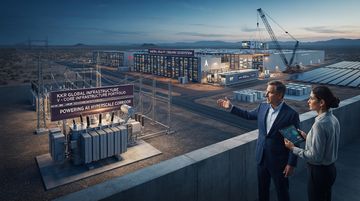
KKR’s $19.2B infrastructure close marks the LP “go-ahead” for AI power + data-center deals (and it changes the deal math)
KKR’s KKR Global Infrastructure Investors V closing at $19.2B is the clearest public confirmation that large LP capital is willing to fund long-duration AI-adjacent infrastructure. The investable takeaway: this capital should compress the risk premium—and therefore improve entry valuations—for equity, credit, and lease/contract structures that sit between hyperscalers and the grid.
OpenAI’s “abundant intelligence” is a capex doctrine—and the bill routes through Nvidia, Oracle, and the AI power grid
OpenAI’s Jul 31 “Building abundant intelligence” framing reads less like a product roadmap and more like a compute-scale-out discipline: plan infrastructure years ahead, measure success by useful work per cost, and keep pushing the capability-per-dollar frontier. When you combine that with OpenAI’s explicit GPT-5.6 cost cuts and its Nvidia partnership commitment to deploy at least 10 GW starting in 2H’26, the likely winners are the suppliers who monetize GPU scale, cloud capacity, and (most underpriced) reliable power.
2026-08-01

2026-07-31
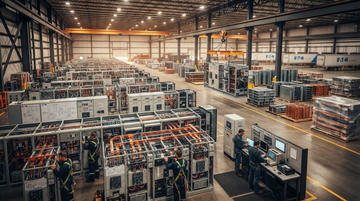
Eaton’s 43% Electrical Backlog Surge Says AI’s Next Constraint Sits Between the Grid and the Chip
Eaton’s July 31 print showed that AI infrastructure demand is broadening from processors and power generation into electrical distribution: second-quarter sales reached $8.53 billion, while electrical backlog rose 43%. The opportunity is real, but so is the price of capturing it—Eaton spent $11.08 billion on acquisitions in the first half and nearly doubled net debt, leaving investors with a high-growth switchgear thesis carrying acquisition and valuation risk.
Novo's ZEUS Heart-Drug Flop Doesn't Kill the GLP-1 Trade — It Redraws the Obesity Stack's Power Lines
Novo Nordisk lost ~$30B in market cap Friday after ziltivekimab — an anti-IL-6 antibody, not a GLP-1 — flunked its 6,300-patient ZEUS cardiovascular outcomes trial with a hazard ratio of 0.99. The bigger story is what the failure reveals: the cardiovascular label is going to be won by GLP-1 mechanism drugs (where Eli Lilly already owns the SUMMIT HFpEF data), not by anti-inflammatory add-ons. With HERMES and ARTEMIS still reading out in H1 2027, the GLP-1 trade pivots from TAM to indication-by-indication — and the supply chain that picks up the slack is concentrated in three US wholesalers and a few CDMO champions.
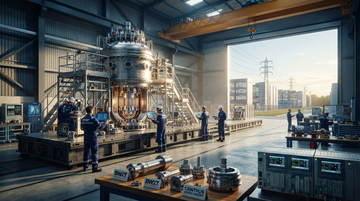
Rolls-Royce's 'Imminent' Hyperscaler Deal Pulls a UK Nuclear Supplier Into the US AI Power Trade
Rolls-Royce Holdings CEO Tufan Erginbilgic said on the H1 2026 call that a hyperscaler nuclear deal will go to investment committee the week of August 3, lifting the group's 2026 profit guidance to £4.7–4.9B and confirming it is taking data-center orders for 2028. With a 470MW SMR design, four contracted European fleets and Yokogawa now locked in for control systems, Rolls-Royce is the first non-US supplier to convert the AI-power thesis into funded backlog. The transmission for US-listed equities runs through BWXT (SMR components), Centrus (enrichment), and the merchant generators whose carbon-free capacity hyperscalers now need to bridge the gap to nuclear-first build-out.

Westinghouse’s IPO Has a $30 Billion Shadow Price — but the Services Base Must Justify It
Westinghouse’s confidential filing is more than an IPO: it tests whether public investors will pay a premium for a reactor OEM that services roughly 63% of the operating fleet while retaining upside to a proposed 10-reactor U.S. buildout. The strongest valuation support comes from recurring fuel and outage work, not unbuilt reactors; the biggest complication is a government participation right that becomes economically relevant above a $17.5 billion threshold. For investors, the filing could reprice Cameco and Brookfield Renewable Partners first, then suppliers such as BWX Technologies if conditional projects become funded orders.
2026-07-30
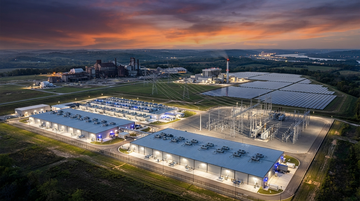
DOE’s Genesis Mission turns Western Kentucky’s federal land + grid into an AI power price war (and reallocates who wins the interconnect)
DOE’s Genesis Mission framing shifts AI-site competition from “who can finance power” to “who can secure a power-and-infrastructure backstop on federal land.” For investors, the key transmission mechanism is simple: a credible federal acceleration reduces time/cost risk for every downstream interconnect, generation build, and co-location campus—re-ranking utilities and grid-capex beneficiaries versus pure-play private bets.
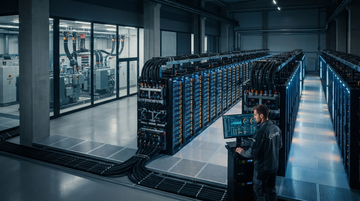
The EU’s €10B “AI gigafactory” bid turns compute sovereignty into a margin test for US hyperscalers
The EU is preparing to fund firms to build seven AI gigafactories with €10B of public money—an explicit attempt to secure raw AI compute inside Europe. For investors, the actionable question is whether this sovereign capacity forces a pricing and workload-location squeeze on NVIDIA, Microsoft, and Amazon, while turning grid build-out capacity into a near-term bottleneck for utilities and power equipment suppliers like Schneider Electric.
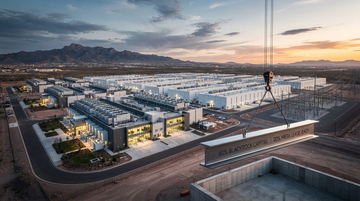
Meta's El Paso JV with BlackRock turns AI real-estate into pension-backed yield—without making Meta the bank
Meta will move the El Paso campus into a JV where BlackRock-managed funds hold 80% and Meta holds 20%, while Meta becomes the sole tenant via a long lease-back. The deal explicitly shifts AI infrastructure from a pure “capex deficit” debate to a “how cheaply can we finance long-lived boxes” debate—because part of BlackRock’s investment is funded with $12.5B of debt.

UMG.AS’s Q2 streaming-led beat shows catalog owners still have pricing power—but the next 12–18 months hinge on platform deal renegotiations, not subscriber counts
Universal Music Group’s Q2 growth was driven by streaming-related pricing and “Streaming 2.0” agreement benefits, including wholesale price increases that added 3.5 percentage points to recorded-music growth. The investable implication: if platforms can’t outgrow rising content costs, the pricing runway shifts from consumer subscription momentum to who controls the catalog and the contract terms.
2026-07-29

AI hardware is pulling air cargo capacity toward data-center “just-in-time”—and operators with scheduling power are the gatekeepers
In 2025, air cargo transported more than two-thirds of global AI-related goods, making aircraft utilization and slot allocation a strategic bottleneck rather than a background logistics variable. The air-freight scarcity that e-commerce previously dominated is shifting to dense, time-sensitive AI hardware lanes, where the margin moves from shipping volume to capacity control.
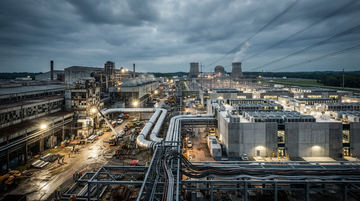
NextEra’s Kentucky “uranium-to-data-center” bet reframes nuclear as grid-speed, not just generation
A proposed $100B-scale NextEra–Brookfield data center campus would repurpose DOE’s Paducah uranium-enrichment footprint into a power-and-compute hub. The investor question isn’t whether nuclear is “clean power”—it’s whether co-locating hyperscale load with a nuclear-linked strategy can compress interconnection and build timelines, shifting value toward NextEra as the project’s grid-speed integrator.

P&G’s “muted” 2027 implies brand power stops trading up—and margin protection turns into a promotion math problem
P&G’s latest filings and earnings disclosures point to a cautious consumer environment where brand-driven pricing has less “upside” than investors assumed, shifting the burden to mix, elasticity, and promotional discipline. The key investment question becomes whether P&G can keep volume steady without funding growth with higher trade and share-of-wallet pressure.
![S&P Global [SPGI] just showed “AI cost-down” didn’t break its pricing power—yet the tollbooth is shifting from “data volume” to “trusted decision workflow” insight cover](https://images-1379091077.cos.na-ashburn.myqcloud.com/insights/covers/20260729_spgi_data_tollbooth_360px.png)
S&P Global [SPGI] just showed “AI cost-down” didn’t break its pricing power—yet the tollbooth is shifting from “data volume” to “trusted decision workflow”
In its latest quarter, [SPGI] grew total revenue to $4.146B (+10% y/y) while pushing adjusted operating margin to 54.3% (+200 bps y/y), including strong momentum in Ratings (+17% revenue) and Indices (+20%). The key durability test for an AI-led commoditization cycle is whether clients still pay for S&P Global’s workflow-trust layer—not whether AI can generate generic analysis cheaply.
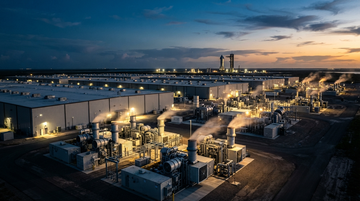
House Democrats Just Forced xAI/SpaceXAI to Answer a Clean-Air Permitting Loophole—Turning 27–60 “Unpermitted” Gas Turbines Into a Federal Risk
A House Energy & Commerce ranking-member letter to SpaceXAI demands documents and site-visit access about Colossus 1/2 turbines alleged to be operating “without air permits,” explicitly describing an attempted dodge via “mobile sources.” For hyperscalers planning behind-the-meter gas capacity, the message is simple: once on-site turbines reach scale, permitting becomes a federal oversight issue, pushing the market mix toward utility PPAs (and away from regulatory arbitrage).
What to expect
Evidence-first notes with a visible point of view.
This section collects sharp takes on earnings, shareholder meetings, and market structure. Each new piece should make the thesis, the facts, and the implications obvious within the first few screens.
Expect direct analysis, not generic commentary.
Expect the data to be explicit and the argument to be easy to follow.
Plutux is not an investment adviser. Market data and AI-generated analysis are for information and education only, not investment advice. Disclaimer