Power & Grid
Load growth, and who gets to build for it
Interconnection queues, rate cases, turbines and transmission — what data-center demand is doing to utilities and the equipment makers behind them.
2026-08-15
%22%2F%3E%0A%20%20%3Ccircle%20cx%3D%22220%22%20cy%3D%22150%22%20r%3D%22180%22%20fill%3D%22%2322d3ee%22%20fill-opacity%3D%220.12%22%2F%3E%0A%20%20%3Ccircle%20cx%3D%221010%22%20cy%3D%22130%22%20r%3D%22220%22%20fill%3D%22%2338bdf8%22%20fill-opacity%3D%220.08%22%2F%3E%0A%20%20%3Ccircle%20cx%3D%22920%22%20cy%3D%22520%22%20r%3D%22170%22%20fill%3D%22%2322d3ee%22%20fill-opacity%3D%220.06%22%2F%3E%0A%20%20%3Cpath%20d%3D%22M140%20430h920%22%20stroke%3D%22url(%23line)%22%20stroke-width%3D%2212%22%20stroke-linecap%3D%22round%22%2F%3E%0A%20%20%3Cpath%20d%3D%22M220%20360c120-150%20260-220%20380-220s260%2070%20380%20220%22%20fill%3D%22none%22%20stroke%3D%22%2367e8f9%22%20stroke-opacity%3D%220.5%22%20stroke-width%3D%2216%22%20stroke-linecap%3D%22round%22%20stroke-linejoin%3D%22round%22%2F%3E%0A%20%20%3Cpath%20d%3D%22M300%20398h600%22%20stroke%3D%22%2394a3b8%22%20stroke-opacity%3D%220.24%22%20stroke-width%3D%228%22%20stroke-linecap%3D%22round%22%2F%3E%0A%20%20%3Ctext%20x%3D%22220%22%20y%3D%22510%22%20fill%3D%22%23e2e8f0%22%20fill-opacity%3D%220.7%22%20font-family%3D%22Arial%2C%20Helvetica%2C%20sans-serif%22%20font-size%3D%2238%22%20letter-spacing%3D%228%22%3EINSIGHTS%3C%2Ftext%3E%0A%3C%2Fsvg%3E)
2026-08-13

Ackman’s Netflix re-entry is a value signal: the streaming winner now looks priced like a cash utility
Bill Ackman’s Pershing Square has disclosed a fresh Netflix stake alongside new positions in Visa and Mastercard, reframing the mega-cap growth crowd back toward cash-flow durability. With Netflix running at an annualized revenue base near $48.4B and free cash flow of ~$11.0B on the latest trailing window, this looks like a bet that “streaming wars” have ended and the market is over-discounting the remaining cash engine.

A.P. Møller-Mærsk A/S captures reroute pricing power while Hapag-Lloyd AG absorbs the Middle East cost shock
Maersk’s Q2 2026 results helped it lift full-year guidance for 2026 for a second time, framing Middle East disruption as a pricing and demand tailwind. By contrast, Hapag-Lloyd disclosed a Middle East cost shock in its 2026 results messaging—without showing the same offsetting uplift—making container liners an “earnings divergence” trade tied to contract exposure, not a uniform sector story.
2026-08-12

Apple's Sept. 1 handoff to John Ternus reframes the next power test: will hardware engineering steer the services flywheel—or risk it?
Apple will transition CEO power to [John Ternus] on Sept. 1, while Tim Cook becomes Executive Chairman. That leadership split forces investors to re-check Apple’s services-led narrative through a hardware lens—because the CEO’s job now likely starts with product-cycle timing, silicon/UX integration, and supply-chain execution rather than just monetization and ecosystems.

Made by Google 2026: Pixel’s Gemini on-device push turns every new phone into a distribution channel—potentially compressing app-store bargaining power
Google’s Made by Google 2026 lineup puts Gemini “Intelligence” directly into Pixel 11, Pixel Watch 5, and a new Pixel Tag experience, with explicit on-device compute claims tied to a new TPU. If this improves response speed and lowers friction for everyday actions, it can shift user time from third-party apps toward Google-first workflows, pressuring platforms built around app discovery and extensions.
2026-08-11
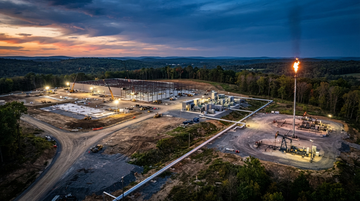
Alpha Compute’s Pennsylvania play reframes the AI data-center bottleneck: buying gas rights to beat the power queue
Alpha Compute ALP reportedly plans to buy Pennsylvania land plus gas rights to anchor a 55MW AI data-center campus—an unusually fuel-first approach to a project pipeline dominated by utility interconnect timelines. If the gas-rights control is real and bankable, it shifts “site control” from the grid side to the upstream fuel side, tightening the link between midstream gas operators and data-center power buildouts.
![RBC [ry], BMO [bmo] cash out of Moneris for $1.44B—and the Canadian acquirer gap shifts bargaining power toward US-scale acquirers and processors insight cover](https://images-1379091077.cos.na-ashburn.myqcloud.com/insights/covers/20260811_rbc_bmo_moneris_francisco_partners_1_44b_sale_360px.png)
RBC [ry], BMO [bmo] cash out of Moneris for $1.44B—and the Canadian acquirer gap shifts bargaining power toward US-scale acquirers and processors
RBC [ry] and BMO [bmo] are selling Moneris to Francisco Partners in a $1.44B deal, taking a major Canadian merchant-acquiring platform out of a captive bank model. The practical risk isn’t just ownership—it’s how acquiring capacity, routing strategy, and merchant pricing negotiate with Visa [v] / Mastercard [ma] and global processors once the local acquirer playbook is run by US PE-backed operators.
2026-08-10

Appaloosa’s Q2 pivot bets the AI capex chain is still mispriced—and its “walk-away-from-banks” move tightens the signal
Appaloosa Management (David Tepper) reportedly rotated its Q2 2026 13F exposure toward AI infrastructure—highlighting a sharp add to Micron and a larger position in Amazon, with Taiwan Semi also pushed into core territory—while exiting bank holdings entirely. The investable takeaway isn’t “AI good, banks bad”; it’s that memory + foundry + hyperscaler demand signals can re-rate margins and capex intensity even when financials look safer on paper.
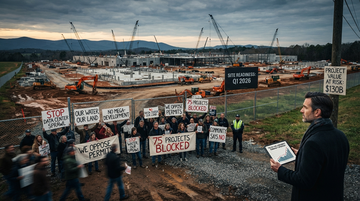
Community opposition is becoming a credit risk—so lenders are shifting data-center financing toward “permit-friendly” states
A Reuters report says lenders are now explicitly folding community opposition into project readiness and drawdown risk. That turns NIMBY/permitting friction into an underwriting variable, which can reorder which markets and operators get built first—and who pays the higher cost of delay.

Fisher’s AI-Infrastructure Crowding Trade Is Real—But It’s the “Grid-to-Aircraft-to-Network” Link That Should Matter for Investors
Fisher Asset Management’s latest 13F (quarter ended June 30, 2026) shows aggressive positioning across AI’s “real economy” buildout—power and electrification via GE Vernova, aerospace platforms via GE Aerospace, and enterprise/data-center connectivity via Cisco Systems, alongside the usual AI compute core. The investable takeaway is not that AI exists—it’s that Fisher is paying up for the bottlenecks and replacement cycles that sit between AI demand and the supply chain that fulfills it.
2026-08-09
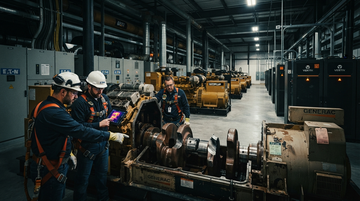
AI Power Spikes Are Forcing First-Order Capex Into UPS, Switchgear, and Generators—Turning Grid Reliability Into an OEM Supply-Line Shock
A new wave of AI power volatility is not just straining the grid; it is shortening the life and pushing the replacement cycles of batteries, generators, and cooling/power electronics inside data centers. That shifts the 2026–27 capex bottleneck from “build power lines” to “rebuild mission-critical power chains,” which can tighten supply and raise downtime-cost risk for operators and volume-forced production for OEMs like Eaton, Vertiv, and Generac.
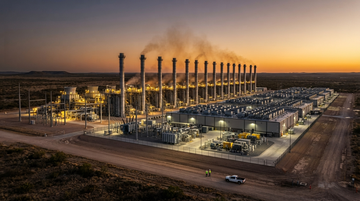
Amazon's Pecos County gas plant permit implies ~33M tons CO2/year—so AI data-center siting is starting to behave like a carbon-forward power project
A planned Amazon-powered AI data-center campus in Pecos County, Texas is tied to an on-site natural-gas power plant permitted to emit up to 33 million tons of CO2 per year. That shifts the hyperscaler AI-capex trade from “compute demand vs. electricity availability” toward a carbon-cost and regulatory-liability problem that can change project economics well before the campus starts full operations.
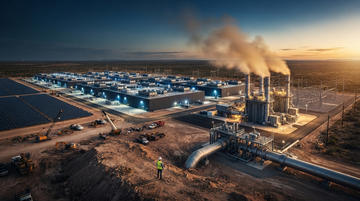
Amazon’s Texas gas permit flips the AI power debate from “capacity” to “carbon cap”—and it makes the ESG discount a competitive advantage
A Texas air-permit authorization for Amazon-backed GW Ranch (Pecos County) contemplates emissions up to 33M tons of CO2e per year, turning AI “power availability” into an immediately measurable climate trade. The result is a reshuffling of who wins in the AI buildout: hyperscalers internalize the permitting risk, while grid and gas-infrastructure names with execution-ready capex ramps are positioned closer to the cash register.

Apple's CXMT test isn’t a price story—it’s a sanctions-and-qualification story that can *stabilize Apple’s bill or strengthen SK hynix and Samsung’s pricing power
Apple is reported to have progressed to qualification testing of [CXMT] PRC DRAM for iPhone/Mac devices sold in China, while also engaging US policy for clearance. The first-order market implication is that CXMT can’t credibly undercut pricing yet, so the substitution “math” likely sharpens near-term leverage for SK Hynix and Samsung Electronics while raising a binary compliance risk for Apple’s sourcing pipeline.
2026-08-08
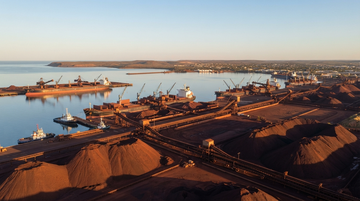
BHP’s Port Hedland 48-hour stoppage is a “steel-margin repricer,” not an iron-ore headline blip
A two-day protected action at BHP ’s Port Hedland Bulk Export Terminal starts with a 24-hour ship-loading ban (Aug 8) and then a 24-hour terminal stoppage (Aug 9). With the stoppages likely affecting ~800,000 metric tons of seaborne iron ore shipments per day, the shock hits steel input costs and downstream pricing faster than iron ore itself can mean-revert.
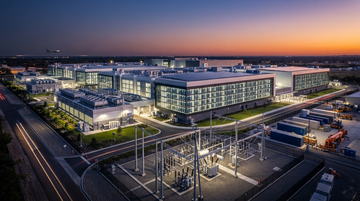
Nvidia’s $3B Lancium Bet Turns Stargate Into a Power-Site Landlord Play—Not a GPU Story
The key market constraint behind Stargate-style AI buildouts is shifting from GPU availability to multi-year power + grid interconnect lock-up. Nvidia’s $3B-scale equity commitment to Lancium (the power infrastructure developer tied to Stargate) matters because it anchors the “AI grid” that determines where compute can actually be deployed.
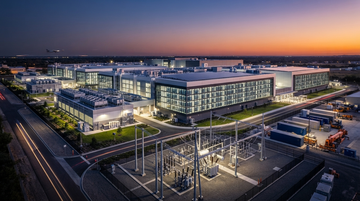
Switch’s confidential IPO filing puts “independent data center” pricing to the test—while Westinghouse’s filing shows the window is still open
Switch’s confidential U.S. IPO process signals that late-stage private capital is willing to underwrite public-market multiples again for scaled data-center operators. The investment question is whether the market is already pricing that transition—or whether an “IPO trust premium” still exists for operators that can monetize power-constrained AI capacity fast enough.
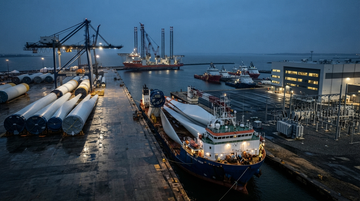
Trump’s “cancel offshore wind and pay” policy turns developers’ sunk costs into a utility balance-sheet problem—$4B becomes a 2027 grid reprice trigger
The Trump administration’s offshore-wind buyouts have reached nearly $4B in taxpayer-backed settlements to cancel leases and projects, shifting risk from developers to whoever ultimately must fund the replacement generation build. For investors, the signal isn’t just lower clean power supply—it’s a new cancellation-with-compensation mechanism that can re-rate regulated utilities’ capital plans starting in 2027.
2026-08-07

AIG’s underwriting surge is real—cat losses fell and prior-year development swung, so the “pricing power” answer depends on how much of the beat was accident-year vs. reserve mechanics
AIG’s first-quarter 2026 earnings jump was driven by a sharp reduction in catastrophe-related charges and favorable prior-year loss reserve development—not just by accident-year underwriting. SEC disclosures show favorable prior-year development in the same period, reinforcing that the beat has a reserve-development component. For investors, the key question is whether AIG can sustain favorable development while catastrophe costs normalize—because that’s what determines whether the US P&C cycle sees durable pricing power.

American International Group's underwriting “beat” is mostly lower catastrophe losses and reserve, not broad pricing power
In American International Group’s latest disclosed underwriting results, the General Insurance combined ratio improved to 90.1 vs 91.8, with the underwriting income increase tied to $258m lower catastrophe losses and $183m higher favorable prior-year development. The implication for investors isn’t “pricing is the only story”—it’s that the cycle is still dominated by loss-cost variability, catastrophe timing, and reserve/reinsurance mechanics.
What to expect
Evidence-first notes with a visible point of view.
This section collects sharp takes on earnings, shareholder meetings, and market structure. Each new piece should make the thesis, the facts, and the implications obvious within the first few screens.
Expect direct analysis, not generic commentary.
Expect the data to be explicit and the argument to be easy to follow.
Plutux is not an investment adviser. Market data and AI-generated analysis are for information and education only, not investment advice. Disclaimer