%22%2F%3E%0A%20%20%3Ccircle%20cx%3D%22220%22%20cy%3D%22150%22%20r%3D%22180%22%20fill%3D%22%2322d3ee%22%20fill-opacity%3D%220.12%22%2F%3E%0A%20%20%3Ccircle%20cx%3D%221010%22%20cy%3D%22130%22%20r%3D%22220%22%20fill%3D%22%2338bdf8%22%20fill-opacity%3D%220.08%22%2F%3E%0A%20%20%3Ccircle%20cx%3D%22920%22%20cy%3D%22520%22%20r%3D%22170%22%20fill%3D%22%2322d3ee%22%20fill-opacity%3D%220.06%22%2F%3E%0A%20%20%3Cpath%20d%3D%22M140%20430h920%22%20stroke%3D%22url(%23line)%22%20stroke-width%3D%2212%22%20stroke-linecap%3D%22round%22%2F%3E%0A%20%20%3Cpath%20d%3D%22M220%20360c120-150%20260-220%20380-220s260%2070%20380%20220%22%20fill%3D%22none%22%20stroke%3D%22%2367e8f9%22%20stroke-opacity%3D%220.5%22%20stroke-width%3D%2216%22%20stroke-linecap%3D%22round%22%20stroke-linejoin%3D%22round%22%2F%3E%0A%20%20%3Cpath%20d%3D%22M300%20398h600%22%20stroke%3D%22%2394a3b8%22%20stroke-opacity%3D%220.24%22%20stroke-width%3D%228%22%20stroke-linecap%3D%22round%22%2F%3E%0A%20%20%3Ctext%20x%3D%22220%22%20y%3D%22510%22%20fill%3D%22%23e2e8f0%22%20fill-opacity%3D%220.7%22%20font-family%3D%22Arial%2C%20Helvetica%2C%20sans-serif%22%20font-size%3D%2238%22%20letter-spacing%3D%228%22%3EINSIGHTS%3C%2Ftext%3E%0A%3C%2Fsvg%3E)
Bottom line
The data center race is no longer constrained by capital alone. It is constrained by electrons.
Meta's expanded Louisiana plan is the clearest symbol of the current AI infrastructure cycle: money is plentiful, ambition is bigger than ever, and the grid is now the gating item. A project that starts life as a compute bet quickly becomes a utility, transmission, and permitting problem.
That is why the market should think about Meta less as a pure software story and more as an industrial-scale infrastructure buyer. The real economic moat in AI data centers may not be owning the GPUs. It may be getting the power first.
What changed
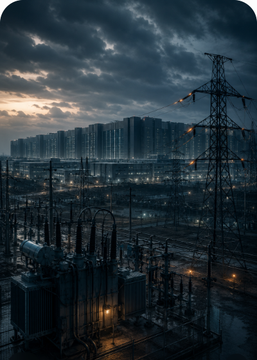
The latest reporting shows the buildout is colliding with a physical system that cannot scale as fast as software can.
The most visible signal is Meta's Louisiana project, now projected to cost more than $50 billion and reach 5 gigawatts of compute capacity. That is a staggering number, but it still does not solve the grid question. The same week, reports pointed to transformer shortages, multi-year procurement delays, and a record number of blocked or delayed U.S. data center projects.
The useful way to read this is that the market moved from 'can the company fund the build?' to 'can the utility system physically connect it on time?' That is a very different bottleneck.
| Constraint | Recent signal | Market implication |
|---|---|---|
| Power transformers | Utilities are ordering equipment up to five years in advance | Critical grid hardware is now a schedule risk. |
| Project approvals | 75 U.S. projects were blocked or delayed in early 2026 | Community and permitting risk is now material. |
| Megaproject scale | Meta lifted a Louisiana data center to $50 billion | Scale is increasing faster than infrastructure delivery. |
| Grid topology | Northern Virginia and other hubs are already stretched | Secondary markets may win if they can offer power first. |
Who wins and who loses
This shift is bullish for grid vendors and utility-scale power, but it is less friendly to pure growth stories that need perfect execution.
The likely winners are Entergy, GE Vernova, Constellation Energy, Vistra, and other names exposed to generation, transmission, switchgear, transformers, and firm power. If every new data center needs a mini-utility strategy, then the companies selling the power stack get pricing leverage.
The losers are anyone assuming the old playbook still works. Pure build-to-suit data center economics get harder when interconnection, local politics, and water usage turn every site into a bespoke project. The return on capital gets worse if a building is finished before the electrons arrive.
- Utilities with available capacity can monetize scarcity faster.
- Electrical equipment suppliers benefit from long lead times and urgent procurement.
- Hyperscalers may have to co-finance infrastructure, reducing the elegance of the business model.
- Local communities are increasingly willing to slow projects that raise power bills or water stress.
What to watch
The next phase is about who can bundle compute with power, not just who can announce the biggest campus.
If hyperscalers start signing more direct power deals, building on-site generation, or partnering with utilities on transmission, then the constraint becomes a competitive advantage for the companies that solve it best. If not, the grid wall will keep pushing schedules out and capital costs up.
The market implication is blunt: AI infrastructure is moving from an 'asset-light software-margin' story into an 'industrial execution' story.
Constraint severity in the data center buildout
Qualitative severity score based on the cited reports. This is an analytical index, not an official metric.
Unit: severity / 10
Transformer shortages
Five-year procurement problem
10
Grid interconnection
Timing risk at the utility boundary
9
Community opposition
Permitting and political friction
8
Capital availability
Still manageable for hyperscalers
4