%22%2F%3E%0A%20%20%3Ccircle%20cx%3D%22220%22%20cy%3D%22150%22%20r%3D%22180%22%20fill%3D%22%2322d3ee%22%20fill-opacity%3D%220.12%22%2F%3E%0A%20%20%3Ccircle%20cx%3D%221010%22%20cy%3D%22130%22%20r%3D%22220%22%20fill%3D%22%2338bdf8%22%20fill-opacity%3D%220.08%22%2F%3E%0A%20%20%3Ccircle%20cx%3D%22920%22%20cy%3D%22520%22%20r%3D%22170%22%20fill%3D%22%2322d3ee%22%20fill-opacity%3D%220.06%22%2F%3E%0A%20%20%3Cpath%20d%3D%22M140%20430h920%22%20stroke%3D%22url(%23line)%22%20stroke-width%3D%2212%22%20stroke-linecap%3D%22round%22%2F%3E%0A%20%20%3Cpath%20d%3D%22M220%20360c120-150%20260-220%20380-220s260%2070%20380%20220%22%20fill%3D%22none%22%20stroke%3D%22%2367e8f9%22%20stroke-opacity%3D%220.5%22%20stroke-width%3D%2216%22%20stroke-linecap%3D%22round%22%20stroke-linejoin%3D%22round%22%2F%3E%0A%20%20%3Cpath%20d%3D%22M300%20398h600%22%20stroke%3D%22%2394a3b8%22%20stroke-opacity%3D%220.24%22%20stroke-width%3D%228%22%20stroke-linecap%3D%22round%22%2F%3E%0A%20%20%3Ctext%20x%3D%22220%22%20y%3D%22510%22%20fill%3D%22%23e2e8f0%22%20fill-opacity%3D%220.7%22%20font-family%3D%22Arial%2C%20Helvetica%2C%20sans-serif%22%20font-size%3D%2238%22%20letter-spacing%3D%228%22%3EINSIGHTS%3C%2Ftext%3E%0A%3C%2Fsvg%3E)
Earnings • SMR financing vs. revenue recognition
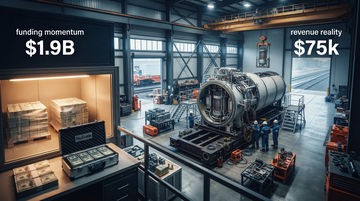
The first SMR “revenue-reality” test looks brutal: $75k revenue, $1.9B liquidity
Q2 2026 revenue
$0.075M
Three months ended Jun 30, 2026, reported Aug 5, 2026
Q2 2026 revenue change
↓ $8.0M YoY
Revenue decreased by $8.0M versus the same period a year earlier
Q2 2026 cash, cash equivalents
$0.766B
As of Jun 30, 2026, reported Aug 5, 2026
Q2 2026 total investments
$1.127B
Short-term + long-term investments as of Jun 30, 2026
The headline tension in NuScale Power’s Q2 2026 print isn’t that the company has losses—it’s that revenue recorded $75,000 in Q2 2026, while liquidity (cash plus investments) stood at $1.9B. That combination doesn’t automatically imply fraud or accounting trickery, but it does change how you should underwrite the SMR timeline: investors may be financing progress well before customers buy enough “billable” milestones to create visible revenue continuity.
| Metric (Q2 2026) | Value | What it implies for SMR underwriting |
|---|---|---|
| Revenue | $75k | A near-zero revenue run-rate makes quarterly comparability fragile and shifts the market to liquidity risk. |
| Cash & cash equivalents | $766.5M | Funding runway looks long in the near term; it can mask revenue delays. |
| Short- + long-term investments | $1.1265B | Investments amplify liquidity, but they don’t equal future backlog monetization. |
| Reported revenue drivers vs. prior year | Completed Fluor FEED Phase 2 work in late 2025 created prior-year comparables | The quarter’s revenue shortfall is tied to timing of deliverables, not demand signals alone. |
What changed • Why revenue fell so hard
The filing points to timing: Fluor FEED Phase 2 finished in late 2025, leaving no 2026 comparable
NuScale Power doesn’t describe this as an AI-demand collapse; it describes a deliverables timing issue in revenue recognition. In the quarter ended Jun 30, 2026, the company states that revenue decreased primarily because revenue recognized from Fluor Front-End Engineering and Design (“FEED”) Phase 2 engineering services supporting the RoPower project was completed in late 2025—so there was no comparable activity in 2026. The same filing also notes that June 2026 pricing revisions for certain FEED Phase 2 services reduced revenue and accounts receivable, contributing to negative gross margin.
Supply chain lens • from engineering work to billable milestones
Full supply-chain view: the bottleneck is converting FEED/license progress into customer-accepted, revenue-recognized work
- Front-end engineering completion can move earlier costs and activity into prior periods, then leave a “quiet” revenue quarter until the next approved deliverable bundle ships.
- Pricing revisions to prior deliverables can depress current-period gross margin even when the engineering work is already done—reducing revenue quality in the transition quarter.
- Liquidity can rise when cash isn’t tied to incremental working-capital demands (for example, fewer billable milestones can mean less receivables generated in the quarter).
- For downstream buyers, the commercial milestone path (licensing, design acceptance, site/offtake terms) can lag procurement headlines, so revenue recognition becomes the slowest link.
This supply-chain framing matters because SMR “AI power” narratives often talk about grid-scale megawatts as if financing, site prep, and design acceptance compress into a single moment. In reality, nuclear project monetization is lumpy: revenue shows up when customers accept specific engineering outputs, not when hyperscalers announce energy targets.
The cash pile isn’t the same thing as operating progress
Liquidity rose, but operating cash flow and the revenue line disagree—so investors must separate runway from monetization
Over the trailing window shown in the company’s financials, NuScale Power reported negative operating cash flow and large cash outflows driven by ongoing operating losses and investment activity—yet it still ended the quarter with very large cash, cash equivalents, and investments. The market implication is straightforward: liquidity growth can preserve optionality and reduce immediate dilution pressure, but it doesn’t prove that the next wave of engineering or licensing milestones is already customer-accepted in billable form.
Q2 2026 operating cash flow
Not disclosed in the extracted excerpt
Primary filing provides cash flow statements; revenue drivers and cash/investments are clearly disclosed
Q2 2026 revenue categories
$75k total
Three months ended Jun 30, 2026; disaggregated categories sum to total revenue
Q2 2026 liquidity
$1.892B
Cash ($766.5M) + short-term investments ($305.7M) + long-term investments ($820.8M)
Investor checklist • what to watch next quarter
A revenue “rebound” is the only confirmation that FEED timing is cyclical—not structural
- Track whether the company names new billable engineering or licensing deliverables replacing the completed late-2025 FEED Phase 2 activity.
- Look for gross margin stabilization after pricing revisions; recurring negative gross margin can signal deliverable rework, not just timing.
- Monitor the cash flow statement for whether cash is increasingly driven by operations versus financing, because that changes dilution risk.
- Read liquidity moves alongside potential incremental share issuance programs; financing can extend runway but can also cap upside if revenue conversion doesn’t follow.
Hyperscaler/AI-power implication • the misread investors often make
AI power demand can be real while SMR revenue stays quiet—because customer adoption isn’t the same as billable output
The mistake is assuming that AI-driven electricity demand automatically accelerates SMR revenue in the near term. What the quarter shows is that monetization depends on deliverable acceptance cycles with customers and upstream engineering partners, not on macro narratives. If milestone work is already completed and only priced-adjusted retroactively, the next period may show low revenue even when the project is progressing.
Listed stocks most directly exposed to the SMR cash-vs-revenue signal
- Revenue totaled $75,000 in Q2 2026, making near-term valuation depend on liquidity and milestone pacing rather than earnings power.
- Cash and investments reached $1.892B as of Jun 30, 2026, extending runway but not proving billable milestone conversion.
- The filing attributes the revenue drop to completed late-2025 Fluor FEED Phase 2 work, so investors need evidence of replacement revenue drivers next quarter.
- NuScale’s disclosed revenue driver points to Fluor FEED Phase 2 timing ending in late 2025, which can shift Fluor’s project-services recognition across quarters.
- If FEED Phase 2 revisions reduce revenue in transition periods, gross margin volatility risk rises for engineering-service partners around milestone transitions.
- SMR pace remains lumpy; Fluor’s exposure is therefore more project-cycle than steady grid-demand demand in the near term.
- SMR monetization can lag AI power announcements; investors should separate data-center megawatt plans from near-term nuclear billable work timing.
- Watch for evidence of contracted, accepted power-delivery milestones rather than concept-stage partnerships translating into supplier revenue.
- The NuScale quarter highlights that demand narratives can coexist with near-zero recognized supplier revenue until milestones are accepted.
- Watch for grid procurement contracts with billable acceptance clauses that would pull SMR revenue forward from “future” to “recognized.”
- When early-stage SMR suppliers show low recognized revenue, investors often rotate toward operators with existing generating assets and steadier cash conversion.
- NuScale’s quarter supports a near-term thesis that incumbent nuclear can better match AI-driven power needs immediately versus long-lead SMR builds.