%22%2F%3E%0A%20%20%3Ccircle%20cx%3D%22220%22%20cy%3D%22150%22%20r%3D%22180%22%20fill%3D%22%2322d3ee%22%20fill-opacity%3D%220.12%22%2F%3E%0A%20%20%3Ccircle%20cx%3D%221010%22%20cy%3D%22130%22%20r%3D%22220%22%20fill%3D%22%2338bdf8%22%20fill-opacity%3D%220.08%22%2F%3E%0A%20%20%3Ccircle%20cx%3D%22920%22%20cy%3D%22520%22%20r%3D%22170%22%20fill%3D%22%2322d3ee%22%20fill-opacity%3D%220.06%22%2F%3E%0A%20%20%3Cpath%20d%3D%22M140%20430h920%22%20stroke%3D%22url(%23line)%22%20stroke-width%3D%2212%22%20stroke-linecap%3D%22round%22%2F%3E%0A%20%20%3Cpath%20d%3D%22M220%20360c120-150%20260-220%20380-220s260%2070%20380%20220%22%20fill%3D%22none%22%20stroke%3D%22%2367e8f9%22%20stroke-opacity%3D%220.5%22%20stroke-width%3D%2216%22%20stroke-linecap%3D%22round%22%20stroke-linejoin%3D%22round%22%2F%3E%0A%20%20%3Cpath%20d%3D%22M300%20398h600%22%20stroke%3D%22%2394a3b8%22%20stroke-opacity%3D%220.24%22%20stroke-width%3D%228%22%20stroke-linecap%3D%22round%22%2F%3E%0A%20%20%3Ctext%20x%3D%22220%22%20y%3D%22510%22%20fill%3D%22%23e2e8f0%22%20fill-opacity%3D%220.7%22%20font-family%3D%22Arial%2C%20Helvetica%2C%20sans-serif%22%20font-size%3D%2238%22%20letter-spacing%3D%228%22%3EINSIGHTS%3C%2Ftext%3E%0A%3C%2Fsvg%3E)
Bottom line
Constellation is the cleanest public-market way to express the AI need for always-on power.
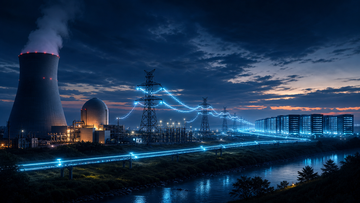
The market often talks about AI as if chips are the whole story. They are not. AI needs firm power, and firm power has become the scarce input. Constellation sits right in that lane because it owns nuclear baseload, long-duration contracts, and the credibility to sign load for customers that cannot afford downtime.
That is why a one-day stock move matters less than the multi-year setup. The real thesis is that AI load growth is pushing electricity from a utility-side operating expense into a strategic capacity decision.
What changed
AI data centers need 24/7 power, and the grid is not built for that kind of urgency.
EIA expects U.S. electricity use to rise 1% in 2026 and 3% in 2027, the fastest four-year growth stretch since 2000. Constellation's own business overview says data center power demand has tripled since 2014, and its public-policy work says the U.S. needs reliable power as AI and data-center load rises. That is a structural shift, not a weather story.
The company is already turning that thesis into contracts. The restarted Crane Clean Energy Center is expected to deliver 835 MW to the PJM grid for Microsoft when it returns in 2027 or 2028. Constellation also has new load commitments with data-center developers. The message is simple: customers are buying certainty, not just electrons.
| Layer | What it means | Why it matters |
|---|---|---|
| Nuclear baseload | High capacity factor, always on | AI load needs 24/7 reliability. |
| Long PPAs | Multi-year contract visibility | Revenue becomes more durable. |
| Grid congestion | Transmission delays | Existing generation gets a premium. |
| Rate politics | Bills can rise for households | Regulatory risk can cap the rerating. |
Why the market cared
Utility valuation is starting to reflect capacity scarcity, not just regulated returns.
The stock's July 2 rise was modest, but the bigger point is that investors keep paying up for firms that can turn scarce power into contracted revenue. Constellation's mix of nuclear generation, load-following capability, and customer contracts makes it closer to an AI infrastructure asset than a plain-vanilla utility.
This is also where the supply chain broadens. The immediate beneficiaries are not just generators; they are transmission equipment vendors, grid operators, uranium and fuel services, and the datacenter developers that can secure power first. The losers are customers stuck on the wrong side of rate hikes and connection queues.
EIA says electricity demand is no longer flat
The bars show the key growth numbers that matter for the AI power trade: near-term U.S. electricity growth and Constellation's longer-term demand view.
Unit: Percent growth
2026 growth
EIA forecast
1
2027 growth
EIA forecast
3
2029 demand outlook
Constellation business view
15.8
Long-term read
The long-term opportunity is strong, but policy, rates, and capex still matter.
If AI load keeps rising, Constellation's existing nuclear fleet becomes more valuable because it can sell certainty into a market that is short on firm capacity. That should support long-duration contracts and improve the odds of future uprates, restarts, and life extensions.
The risk is that ratepayer politics, regulatory scrutiny, and capital intensity move faster than the business can monetize the load. Residential electricity prices are already expected to rise in 2026, which means the political feedback loop can tighten quickly. The long-term outlook is clear enough to support the thesis, but not so clear that the equity can ignore execution and policy risk.
- Upstream winners include transmission, fuel services, and equipment suppliers that help firm power reach load centers.
- Downstream winners include hyperscalers and AI developers that can lock in 24/7 power.
- The big risk is that higher bills trigger rate-payer backlash and tougher regulation.
- The long-run upside is that existing baseload assets become more valuable as AI load gets harder to serve.