%22%2F%3E%0A%20%20%3Ccircle%20cx%3D%22220%22%20cy%3D%22150%22%20r%3D%22180%22%20fill%3D%22%2322d3ee%22%20fill-opacity%3D%220.12%22%2F%3E%0A%20%20%3Ccircle%20cx%3D%221010%22%20cy%3D%22130%22%20r%3D%22220%22%20fill%3D%22%2338bdf8%22%20fill-opacity%3D%220.08%22%2F%3E%0A%20%20%3Ccircle%20cx%3D%22920%22%20cy%3D%22520%22%20r%3D%22170%22%20fill%3D%22%2322d3ee%22%20fill-opacity%3D%220.06%22%2F%3E%0A%20%20%3Cpath%20d%3D%22M140%20430h920%22%20stroke%3D%22url(%23line)%22%20stroke-width%3D%2212%22%20stroke-linecap%3D%22round%22%2F%3E%0A%20%20%3Cpath%20d%3D%22M220%20360c120-150%20260-220%20380-220s260%2070%20380%20220%22%20fill%3D%22none%22%20stroke%3D%22%2367e8f9%22%20stroke-opacity%3D%220.5%22%20stroke-width%3D%2216%22%20stroke-linecap%3D%22round%22%20stroke-linejoin%3D%22round%22%2F%3E%0A%20%20%3Cpath%20d%3D%22M300%20398h600%22%20stroke%3D%22%2394a3b8%22%20stroke-opacity%3D%220.24%22%20stroke-width%3D%228%22%20stroke-linecap%3D%22round%22%2F%3E%0A%20%20%3Ctext%20x%3D%22220%22%20y%3D%22510%22%20fill%3D%22%23e2e8f0%22%20fill-opacity%3D%220.7%22%20font-family%3D%22Arial%2C%20Helvetica%2C%20sans-serif%22%20font-size%3D%2238%22%20letter-spacing%3D%228%22%3EINSIGHTS%3C%2Ftext%3E%0A%3C%2Fsvg%3E)
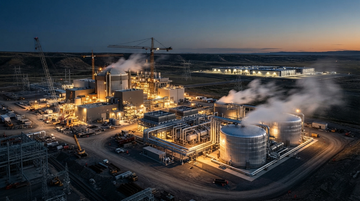
Power-grid speed for AI buildouts
The real pitch behind Natrium is dispatchability—storage-backed load-following, inside the nuclear plant’s physics
Baseload nuclear is easy to describe for planners: steady output, low-carbon generation. Hyperscalers and grid operators, though, care about something more specific—how fast power can follow changing load and ramp when a cluster turns on, shifts workloads, or responds to grid conditions.
Natrium’s differentiator is that TerraPower couples a sodium fast reactor to a molten-salt energy storage system designed to behave like a heat battery. The result is a unit that can deliver its stated electric output while the storage system can boost to 500 MWe when demand spikes—a grid-speed feature baseload-only SMR concepts don’t claim as a built-in capability.
Reactor electrical output
345 MWe
Natrium technology description (reactor size in electric output)
Storage-backed boost capability
500 MWe
Natrium technology description (peak/boost output when needed)
Molten-salt concept
Thermal energy storage
Integrated molten salt energy storage system coupled to the reactor
Kemmerer licensing milestone
Mar 4, 2026
NRC construction permit approval announcement for Kemmerer Unit 1
What changes operationally when storage is inside the plant
Why molten salt matters: it lets nuclear act like a flexible generator without forcing the reactor to “drive the ramp”
Grid operators generally don’t want every ramping event to be a thermal-shock problem for the nuclear portion. Natrium’s design intent is to integrate a molten-salt energy storage system such that the power block can use stored heat when needed.
TerraPower describes Natrium as a system where the molten salt energy storage is coupled to the reactor and supports firm, flexible power; separately, the storage capacity can be configured for site requirements. In investor terms: the storage system is the mechanism that converts nuclear from “always-on watts” into “contractable dispatchable output” that better matches the AI data-center load shape.
From theory to site execution
TerraPower is already turning Natrium’s flexibility story into a commercial schedule: Kemmerer Unit 1 construction begins after the NRC permit
The flexibility thesis only matters if projects move from presentation deck to steel in the ground. TerraPower’s Kemmerer Unit 1 in Wyoming is the company’s first deployment path.
Two milestones matter for how quickly dispatchable nuclear could translate into contracted power: (1) the NRC construction permit, and (2) the transition from licensing into construction work.
NRC issued the construction permit approval announcement on Mar 4, 2026 for Kemmerer Unit 1. Shortly after, TerraPower announced the official start of construction on Apr 23, 2026 for the Kemmerer Unit 1 project. Those dates anchor the operational translation of Natrium’s “storage-backed load-following” claim into a near-term build execution window.
Demand signal: data-center developers want “firm + fast,” not just clean baseload
Natrium’s first data-center collaboration centers on power-deployment structures that match fast-moving AI load
Terraform-style electricity procurement is increasingly about delivery certainty and contractable ramp behavior. TerraPower’s strategic collaboration with data-center developer Sabey Data Centers is explicitly about exploring deployment structures to support Sabey’s current and future data center operations.
In that collaboration description, TerraPower ties Natrium’s data-center relevance directly to the same core power metrics: a 345 MWe sodium fast reactor with storage enabling output boosts up to 500 MWe. The point isn’t marketing—it's a measurable grid interface: the plant’s electricity can be augmented with storage when load surges rather than requiring the reactor to do all the work.
- Storage-backed output makes capacity contracts easier to defend during AI-driven peak ramps rather than only during average-hour energy delivery.
- A boost feature can reduce reliance on expensive short-term peaking procurement if the operator can dispatch storage within contract terms.
- Built-in thermal storage aligns nuclear procurement with renewable-heavy grid realities where net load volatility rises.
Fuel-cycle implication for investors
If Natrium is “nuclear + storage,” the next supply-chain constraint becomes HALEU availability and fabrication capacity
Any dispatchable nuclear buildout intensifies the fuel-cycle bottleneck—not just reactor construction. TerraPower has disclosed a strategic term sheet arrangement with ASP Isotopes for HALEU, including planned investment in a HALEU enrichment facility in South Africa and a supply agreement for fuel delivery for Natrium.
For investors, the key is that the storage-backed flexibility doesn’t remove the need for uranium enrichment—it raises the importance of having HALEU delivered on schedule because delayed fuel is a direct schedule risk for the first real deliverable power.
In other words: even if a hyperscaler cares most about ramping capability, the bottleneck that decides whether those ramps arrive on time is still HALEU supply and downstream fuel fabrication capacity.
Supply-chain map: where “molten salt” changes who wins and loses
Full supply chain: molten-salt thermal storage pulls in a second set of industrial winners beyond reactor vendors
Classic nuclear development concentrates attention on reactor manufacturers, EPC contractors, and major construction trades. Natrium’s molten-salt storage adds another system layer: heat-storage tanks, heat-transfer loops, and high-temperature materials that can safely hold and move stored energy.
That matters because hyperscalers increasingly sign long-horizon power agreements. Over time, those contracts can turn storage-specific industrial capacity from a niche to a repeatable build requirement across multiple sites.
What’s verifiable from the Natrium descriptions is the technology’s core pairing—345 MWe sodium fast reactor plus molten-salt storage capable of boosting output to 500 MWe—meaning storage is not decorative; it is an operating feature. What’s not disclosed in the sourced materials above are specific vendor names for the tank and salt-handling supply chain.
| Ecosystem layer | Natrium-specific feature | Investor relevance | What is (and isn’t) disclosed here |
|---|---|---|---|
| Nuclear island | Sodium fast reactor at 345 MWe | Core generation capability and safety/availability performance drives contracted power value | Capex schedule and vendor names not disclosed in sources used above |
| Thermal storage / balance of plant | Molten-salt energy storage that can boost to 500 MWe | Storage system is the mechanism for load-following behavior and peak augmentation | Storage-tank/salt vendor names not disclosed in the sources used above |
| Fuel-cycle | HALEU enrichment investment plan and fuel delivery supply agreement | Fuel availability is a commissioning gating item for dispatchable power delivery | Quantities/dates beyond the term-sheet framing not disclosed here |
| Data-center counterparties | Deployment structures for Sabey’s current and future operations | A repeatable demand base strengthens the commercial argument for multiple Natrium deployments | Specific unit counts and contract terms not disclosed in the sources used above |
What to watch next (evidence-based milestones)
Short-term (quarters): permit-to-construction discipline and grid-interface proof
- Watch for construction milestones that confirm schedule discipline after the Mar 4, 2026 permit approval for Kemmerer Unit 1.
- Track whether commissioning plans preserve the storage-backed boost concept as a measurable operating mode (not just a design goal).
- Monitor whether data-center counterparties expand from collaboration framing into identifiable procurement of dispatchable capacity.
What matters over 1–3 years
Long-term (1–3 years): HALEU supply commitments and the repeatability of “nuclear + storage” contracts
- HALEU supply progress becomes a “delivery timing” variable for revenue realization because commissioning depends on fuel availability.
- The storage-backed boost feature becomes a competitive differentiator only if it is repeatable across additional deployments beyond the first unit.
- Contracts with hyperscalers/data-center developers will increasingly reward plants that can defend ramping capacity during grid stress and peak events.
Listed-market plays with the clearest linkage (storage, grid build, and nuclear-adjacent supply chains)
- Grid-scale buildout and power-conditioning demand can rise as more firm capacity is added, but margin impact depends on capex timing versus utility procurement cycles.
- Eaton’s electrical infrastructure exposure strengthens if data centers increase demand for faster, more reliable interconnection upgrades (days–quarters).
- If nuclear and data-center power projects delay, electrical demand may flatten—leaving the thesis to play out more slowly (1–3 years).
- More firm capacity procurement for load growth can support regulated capital deployment aligned to AI-driven demand growth (1–3 years).
- Dispatchability needs can increase value of grid reliability investments in periods when demand volatility rises (days–quarters).
- If baseload + storage-backed generation expands, it can reduce the need for expensive peaking procurement—supporting planning economics (1–3 years).
- Grid reliability and substation/capex programs can benefit as data-center load drives interconnection upgrades (days–quarters).
- Turbomachinery and high-temperature power-block work can benefit if molten-salt storage plants scale, but near-term revenue timing is uncertain (1–3 years).
- A storage-backed nuclear build wave could change demand mix toward steam/hot-heat integration projects after construction starts (days–quarters).
- If Japan accelerates advanced-nuclear deployment to manage demand swings, equipment demand can rise, but timing depends on local approvals and construction cycles (1–3 years).
- Any global precedent from Natrium’s licensing path can improve investor confidence in timelines, indirectly affecting nuclear-capex expectations (days–quarters).