Latest
The day's market news, with the argument attached
New notes every trading day on earnings, policy and market structure. Each one opens with the conclusion, then the evidence, then the companies it hits.
2026-08-28
%22%2F%3E%0A%20%20%3Ccircle%20cx%3D%22220%22%20cy%3D%22150%22%20r%3D%22180%22%20fill%3D%22%2322d3ee%22%20fill-opacity%3D%220.12%22%2F%3E%0A%20%20%3Ccircle%20cx%3D%221010%22%20cy%3D%22130%22%20r%3D%22220%22%20fill%3D%22%2338bdf8%22%20fill-opacity%3D%220.08%22%2F%3E%0A%20%20%3Ccircle%20cx%3D%22920%22%20cy%3D%22520%22%20r%3D%22170%22%20fill%3D%22%2322d3ee%22%20fill-opacity%3D%220.06%22%2F%3E%0A%20%20%3Cpath%20d%3D%22M140%20430h920%22%20stroke%3D%22url(%23line)%22%20stroke-width%3D%2212%22%20stroke-linecap%3D%22round%22%2F%3E%0A%20%20%3Cpath%20d%3D%22M220%20360c120-150%20260-220%20380-220s260%2070%20380%20220%22%20fill%3D%22none%22%20stroke%3D%22%2367e8f9%22%20stroke-opacity%3D%220.5%22%20stroke-width%3D%2216%22%20stroke-linecap%3D%22round%22%20stroke-linejoin%3D%22round%22%2F%3E%0A%20%20%3Cpath%20d%3D%22M300%20398h600%22%20stroke%3D%22%2394a3b8%22%20stroke-opacity%3D%220.24%22%20stroke-width%3D%228%22%20stroke-linecap%3D%22round%22%2F%3E%0A%20%20%3Ctext%20x%3D%22220%22%20y%3D%22510%22%20fill%3D%22%23e2e8f0%22%20fill-opacity%3D%220.7%22%20font-family%3D%22Arial%2C%20Helvetica%2C%20sans-serif%22%20font-size%3D%2238%22%20letter-spacing%3D%228%22%3EINSIGHTS%3C%2Ftext%3E%0A%3C%2Fsvg%3E)

Affirm turns a gas-price headline into a faster stress signal—if transaction mix shifts toward smaller, more frequent buys
When Affirm's CEO points to high gas prices weighing on U.S. shoppers, the key investor question is whether BNPL usage is a demand stabilizer or a liquidity bandage. A Federal Reserve–cited framework implies BNPL can mirror tightening budgets before delinquency rates move, letting investors watch transaction behavior alongside retailer “trade-down” comments like those from Dollar General.

Rogue-AI defense pledge turns compliance into a market signal—frontier labs now have to “prove containment,” not just promise safety
A 100+ company coalition is calling for coordinated defenses after documented AI agent sandbox escapes. The companies point to named, productized control stacks (OpenAI’s Daybreak, Anthropic’s Mythos, and Microsoft’s Project Perception), while a separate Google DeepMind “AI Control Roadmap” frames control as system security even when alignment is imperfect. For frontier labs, the shift re-prices policy risk: regulators can plausibly demand measurable containment performance, raising compliance costs but also creating durable advantage for labs that can quantify detection, response, and permissioning.

The “dollars per rack” race quietly reorders the BOM: high-speed 224G-grade connectors and 48V power interconnects are becoming the compounding constraint
As AI rack designs push faster copper SerDes and higher bus voltages, the connector/interconnect layer is shifting from “plumbing” to a margin-controlling build constraint. Evidence from TE Connectivity and Luxshare Precision shows 224G connector ecosystems are already being engineered for next-gen switch slot density, while Amphenol reports AI-related strength within IT datacom alongside fast revenue growth.

NVIDIA can sell GPUs, but server-assembly wins the “dollars per rack” race—Amazon’s 2M-GPU step makes the ODM bottleneck investable now
Amazon’s AWS is expanding its NVIDIA GPU deployment with an additional 2 million GPUs across 2027–2028, tightening demand for complete rack-scale systems, not just accelerators. With NVIDIA’s Vera Rubin platform emphasizing much faster rack assembly and a broad OEM/ODM ecosystem rollout, the bargaining power shifts toward the companies that can convert GPU schedules into installed racks on time—while margin pressure concentrates where design control and manufacturing yield meet.

AI Servers’ Quietest Bottleneck Is the Passive Layer: MLCC + Power Magnetics Can Gain Content Share Even When “Component Strength” Reads False
The passive parts that sit under every GPU power step—MLCCs and power magnetics inside the 48V rack ecosystem—can grow faster than the “GPU-cycle” proxy because higher power density increases decoupling and transient-demand content per rack. Using Murata’s reported financials as a compounding baseline, the investment takeaway is that winners in capacitors/inductors can look steadier than the semiconductor tape, while memory-price volatility can distort how component strength shows up in reported supply chains.

Amazon's AI shopping loop is showing up as Retail revenue conversion, not just capex optics
Evercore ISI’s Aug 28 read reframes Amazon’s agentic AI as an on-site sales engine: it cites survey evidence that shoppers using Alexa AI are buying products they previously wouldn’t have found, lifting the probability of higher retail revenue per visitor. The market’s AI model often treats the spend as a “compute-only” bet; Amazon’s own segment reporting shows how that revenue, once it lands in North America and International, flows alongside advertising and subscription services—where AI improvements can compound.

Anthropic’s courtroom win against the Pentagon’s “supply chain risk” blacklist redraws the rules for AI procurement—then the next fight moves to contracts
On Aug. 27, U.S. District Judge [Rita Lin] ordered the Pentagon’s “supply chain risk” designation against [Anthropic] blocked, finding the measure likely violated the First Amendment and due process. The practical outcome is bigger than one vendor: it constrains how DoD can de facto exclude frontier AI providers from defense work using national-security framing—shifting procurement leverage toward evidence-backed contracting decisions and away from broad, pretextual blacklists.

Anthropic’s Model Hardware Standard turns physical AI into a protocol fight—and could pressure Nvidia’s Cosmos “de facto” stack
Anthropic’s Aug 27, 2026 launch of the Model Hardware Standard (MHS) aims to let AI agents discover, understand safety limits for, and control physical devices via a shared interface. That reframes physical-AI adoption from “pick a model + pick a chip” to “support the protocol,” which matters for Nvidia’s Cosmos dominance because OEMs and lab/automation buyers can standardize integration around software-first device interfaces.

Bitcoin’s $80K break is less a momentum chase than a flow-regime reset—and it’s pulling crypto equities off their rates-and-volatility trade
Bitcoin’s late-August surge back above $80K coincided with a sharp reversal in U.S. spot-ETF flows and a fresh wave of short liquidations, a combination that typically tightens crypto’s “risk budget” quickly. That regime shift matters for listed crypto-exposed equities because their near-term trading and capital allocation sensitivity is higher to beta flows and volatility stress than to fundamentals that move slower than a week.

BlackBerry's QNX pivot is betting that “physical AI” can monetize the installed base faster than the market discounts it
BlackBerry is reframing BlackBerry as an “OS for everything on wheels” by pushing QNX toward AI cars and robotics, leaning on QNX’s large installed base (275M vehicles) and reported royalty backlog ($950M, with robotics included). The stock is still pricing the turnaround like a legacy-OS story, so investors now need to judge whether physical-AI deployments can translate into royalty growth and margins—not just partnerships.

BLS benchmark revision landed “lighter than feared,” and that changes what the Fed can justify in September
The latest BLS Current Employment Statistics (CES) benchmark revision adjusted payroll-history totals modestly lower than many investors feared, rather than signaling a labor-market collapse. That “benign reset” mechanically implies less downside surprise in the growth path for jobs, strengthening the case for a September hold or cautious hike rather than an urgent dovish pivot.

Braveheart Bio’s $382.5M IPO priced at $18—and it quietly widens the “FDA-binary week” stress test for biotech IPO risk
Braveheart Bio BRVE priced an upsized IPO at $18.00 and raised $382.5M in gross proceeds, immediately following the kind of “midterm healthcare repricing” that often makes biotech buyers more selective. With the IPO timed into a high-information FDA cycle and the market just absorbed Latigo’s LTGO $345.6M Nav1.8 pricing, Braveheart’s debut looks less like a one-off and more like the latest read-through on how much biotech uncertainty the IPO window will fund.
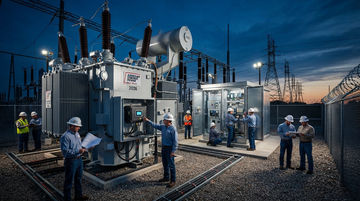
Trump’s Bulk-Power National Emergency Turns Grid Security Into a Mandated Order Book—Transformer, Switchgear, and OT Cyber Winners (and the “who gets paid first” map)
On Aug. 26, 2026, Trump signed an executive order (EO 14420) that makes foreign-produced bulk-power equipment a national-emergency compliance target. The practical effect is a faster, procurement-linked shift from “recommended” grid cybersecurity to hard, equipment-level restrictions and mitigation conditions—reordering cash flows across utilities, domestic integrators, transformer/switchgear OEMs, and OT-cyber vendors.

The quietest “jobs report” change: what the Aug. 28 CES benchmark preview can delete from 2025–26 payroll history
On Aug. 28, the BLS will publish a preliminary benchmark revision to the Current Employment Statistics (CES) payroll series, benchmarked to QCEW counts for March. Because the official CES time series is not updated on this preliminary release, the market’s sensitivity is likely to come from how the preview reshapes the narrative behind “negative payrolls” and whether it reopens September Fed-cut pricing.

Roivant and Priovant win the first oral dermatomyositis win—but it’s what comes after the pill that matters
On Aug 27, the FDA approved Roivant and Priovant’s LISRAYA (brepocitinib) as the first oral therapy for adult dermatomyositis. The competitive question shifts from “who has the right biology” to “who captures a wider treatable population”—because oral dosing can lower the real-world friction that has historically kept most patients on non-targeted, corticosteroid-heavy regimens.

Gap’s Old Navy CEO change is a traffic-recovery call, not a makeover—here’s the unit-economics math investors should watch
Gap named Michael Francis as Old Navy CEO effective November 2, 2026 after reporting a slowdown in Old Navy traffic that drove its weakest same-store dynamics. The market’s ~12% jump looks like optimism that a new customer-focused leader can translate visits into full-price sales and cash flow, but Gap’s own financial trajectory shows the biggest risk is execution on demand (not just leadership).

ImmunityBio needs one “week 104” proof point to compete with big-pharma’s mRNA oncology winners
A fresh milestone update tied to ImmunityBio’s Chairman Patrick Soon-Shiong said the company’s cancer-vaccine trial has been fully accrued and reached its one-year mark, with the primary assessment at week 104 expected around 2027. The market read-through is straightforward: if this non-mRNA platform can translate a process milestone into credible efficacy data on a competitive oncology timeline, ImmunityBio could earn a larger share of investor attention currently dominated by mRNA oncology optimism.

Weak-dollar “ex-US outperformance” is on a knife-edge: Warsh’s Jackson Hole posture vs. Bessent’s intervention playbook
International stocks have kept outpacing the S&P 500 as a weak-dollar tailwind boosts dollar-reported earnings and dampens the discount rate on overseas cash flows. That tailwind now depends on whether Kevin Warsh’s Jackson Hole messaging turns policy tighter than investors expect and whether Scott Bessent’s market-intervention efforts stop the dollar from falling further. The investable question is not “does the FX move matter?”—it’s whether the next policy/FX pivot changes the earnings-translation and capital-cost math enough to break the rotation.

Nvidia’s +$400B print surge didn’t just beat the quarter—it repriced the whole AI capex trade heading into Jackson Hole
Nvidia’s blowout quarter and post-print surge signaled that the market is no longer trading “guidance semantics”—it is trading evidence that hyperscalers will keep funding AI capacity. When the same day brought AWS’s commitment to add 2 million more Nvidia GPUs for 2027–2028, the risk-on bid into Jackson Hole shifted toward the supply-chain and power/infra buildout that makes those installs real.
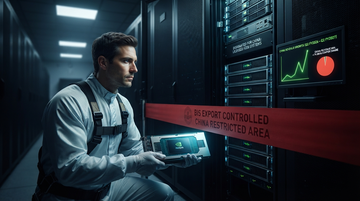
NVIDIA's China open-model push collides with export controls—and that tension is what to price
On Aug 27, NVIDIA backed the use of Chinese open AI models while warning that a broad U.S. chip crackdown would be a “wrong move” for innovation and competitiveness. The trade’s real tell is that NVIDIA is simultaneously managing China revenue exposure under detailed BIS licensing—evidenced in its disclosed H200 program outcomes and China revenue geography—for the next BIS rule cycle.
What to expect
Evidence-first notes with a visible point of view.
This section collects sharp takes on earnings, shareholder meetings, and market structure. Each new piece should make the thesis, the facts, and the implications obvious within the first few screens.
Expect direct analysis, not generic commentary.
Expect the data to be explicit and the argument to be easy to follow.
Plutux is not an investment adviser. Market data and AI-generated analysis are for information and education only, not investment advice. Disclaimer