Latest
The day's market news, with the argument attached
New notes every trading day on earnings, policy and market structure. Each one opens with the conclusion, then the evidence, then the companies it hits.
2026-08-27
%22%2F%3E%0A%20%20%3Ccircle%20cx%3D%22220%22%20cy%3D%22150%22%20r%3D%22180%22%20fill%3D%22%2322d3ee%22%20fill-opacity%3D%220.12%22%2F%3E%0A%20%20%3Ccircle%20cx%3D%221010%22%20cy%3D%22130%22%20r%3D%22220%22%20fill%3D%22%2338bdf8%22%20fill-opacity%3D%220.08%22%2F%3E%0A%20%20%3Ccircle%20cx%3D%22920%22%20cy%3D%22520%22%20r%3D%22170%22%20fill%3D%22%2322d3ee%22%20fill-opacity%3D%220.06%22%2F%3E%0A%20%20%3Cpath%20d%3D%22M140%20430h920%22%20stroke%3D%22url(%23line)%22%20stroke-width%3D%2212%22%20stroke-linecap%3D%22round%22%2F%3E%0A%20%20%3Cpath%20d%3D%22M220%20360c120-150%20260-220%20380-220s260%2070%20380%20220%22%20fill%3D%22none%22%20stroke%3D%22%2367e8f9%22%20stroke-opacity%3D%220.5%22%20stroke-width%3D%2216%22%20stroke-linecap%3D%22round%22%20stroke-linejoin%3D%22round%22%2F%3E%0A%20%20%3Cpath%20d%3D%22M300%20398h600%22%20stroke%3D%22%2394a3b8%22%20stroke-opacity%3D%220.24%22%20stroke-width%3D%228%22%20stroke-linecap%3D%22round%22%2F%3E%0A%20%20%3Ctext%20x%3D%22220%22%20y%3D%22510%22%20fill%3D%22%23e2e8f0%22%20fill-opacity%3D%220.7%22%20font-family%3D%22Arial%2C%20Helvetica%2C%20sans-serif%22%20font-size%3D%2238%22%20letter-spacing%3D%228%22%3EINSIGHTS%3C%2Ftext%3E%0A%3C%2Fsvg%3E)

Hormel’s Q3 print shows pricing held—while grocery-style volumes slid, tightening the path to a steadier Q4
In Hormel Foods’s Q3 FY2026 report (ended Jul 26, 2026), organic net sales fell ~2% alongside retail volume pressure, while foodservice still showed modest net sales growth. That mix suggests trade-down isn’t crushing protein pricing power yet—but it is already hitting throughput, making Q4 a volumes-versus-price timing game rather than a pure cost story.
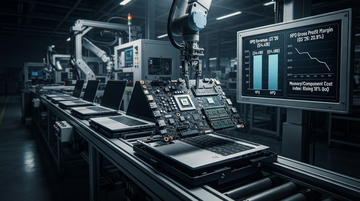
HP Inc.'s AI-PC story is failing the first test: unit momentum isn’t showing up, and memory costs decide the margin outcome
HP’s latest quarter showed revenue resilience while the PC side weakened, forcing investors to separate “AI-PC mix” rhetoric from unit-driven refresh demand. The bigger risk isn’t the AI features themselves—it’s that elevated memory/component costs can swamp any pricing benefit, especially if the upgrade cycle stalls on shipment volumes.

Instinct’s $350M round at a $2.5B valuation bets consumer-AI “distribution plumbing” beats frontier training—overnight
Instinct raised $350M at a $2.5B valuation, valuing a private consumer AI assistant on the premise that “agent distribution” (access to messages, inbox, and device workflows) can monetize before enterprise ROI is proven. The pricing signal is less about raw model quality and more about bundling execution into daily life—while the biggest risk is that the same deep data access needed for usefulness can trigger trust and platform constraints.

IREN has the miner-to-AI pivot—but the margin test is electricity volatility, not customer contracts
IREN is set to print its FY26 earnings on Aug. 27, 2026, after a year of transforming from Bitcoin mining into AI “cloud services” plus colocation-like revenue. The company’s disclosures already admit electricity price and electricity-market volatility can directly impair margins if it can’t curtail or monetize load at the right times—exactly the risk behind the “miner-to-AI landlord” thesis. The investor question is whether FY26 results (and guidance embedded in the print) show electricity as a controllable pass-through—or a profit killer when spot power spikes.
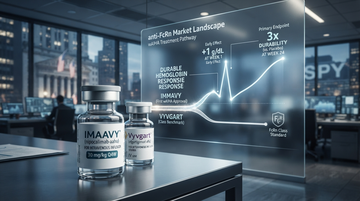
J&J’s Imaavy approval turns wAIHA into the anti‑FcRn class’s first real pricing proving ground—and raises the bar for argenx’s Vyvgart
On Aug. 24, 2026, the FDA approved Janssen’s Imaavy (nipocalimab-aahu) as the first treatment specifically cleared for warm autoimmune hemolytic anemia (wAIHA). Because this is the first commercially approved test of the anti‑FcRn mechanism in wAIHA, the launch will quickly become a benchmark that shapes payer and physician expectations for future FcRn expansions—including whether Vyvgart remains the default reference point within the class.

Caterpillar and the capex cycle got the Fed’s “cut” story harder to defend after durable-goods core orders stayed firm while consumer prices ran hot
The U.S. durable-goods print showed new orders rising for July and—crucially—core capital-goods demand staying resilient, aligning with an ongoing investment cycle. With July retail sales posting their first monthly dip and July inflation measures staying elevated, the near-term policy question shifts toward “how high for how long,” which matters for industrial earnings and order visibility.

KKR’s $250M DOJ HSR settlement turns merger-filing compliance into a deal-velocity cost center
The DOJ says KKR evaded or botched Hart-Scott-Rodino filings across at least 16 transactions, and the proposed settlement would impose a $250M civil penalty. The key investor takeaway isn’t only the hit to one firm—it’s how this sets a new, priced benchmark for HSR compliance execution risk across every mega-sponsor’s acquisition pipeline.

Moderna’s $2B convertible bets oncology—dilution math hinges on capped calls, not the headline bond size
Moderna MRNA announced a $2.0B private placement of convertible senior notes due 2032 to fund oncology growth flexibility and repayment of debt, while also paying for capped-call hedges to limit dilution. The “bull trap” debate is less about whether the company needs cash and more about whether the equity’s implied conversion path is realistic given the capped premium and Moderna’s persistent cash burn.

Novo Nordisk clears China NMPA acceptance for an oral Wegovy bid—shifting the obesity “pill-first” battlefield toward price-controlled, domestic-led competition
China’s NMPA has accepted Novo Nordisk’s application to sell an oral version of Wegovy, giving Novo a first-mover regulatory position in the world’s second-largest obesity market. The bigger investment story is how China’s price controls and fast-growing domestic oral GLP-1 copycats can compress Novo’s China margin upside, even as the oral category expands the global TAM for semaglutide-class therapies.

NVIDIA turns model distribution into a moat with a $12.9B Hugging Face buy
The reported $12.9B NVIDIA agreement to acquire Hugging Face would shift control of a key open-model “traffic layer” from a neutral ecosystem to a silicon owner. For investors, the bet is less about GPUs sold today and more about shaping how open weights, datasets, and developer workflows route compute demand over the next 1–3 years.
NYSE Texas’ Dallas headquarters opening turns the “venue war” into a real capacity bet for the next mega-IPO wave
The NYSE has opened a Dallas headquarters for NYSE Texas, formalizing the incumbent’s physical commitment to Texas’ new listing ecosystem just as the mega-IPO window is back in focus. The key investor takeaway is that the headquarters move shifts exchange competition from marketing and regulatory process to execution: listings, listing support, and end-to-end deal workflow friction all become harder to ignore.
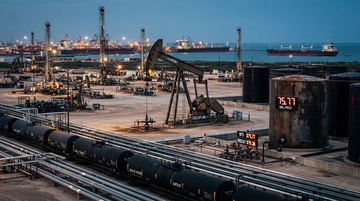
OPEC’s Iran-war price floor is being underwritten by China—and the first crack shows up when WTI slips below $80
Reuters’ reporting on the Iran-war crude reshuffle points to a structural change: as China slows buying, OPEC+ loses the ability to “hold” prices with its supply discipline. The near-term market signal is showing up in real-time benchmark pricing—while US shale’s capital discipline determines whether this becomes a shallow dip or a sustained oversupply regime.

ChatGPT Ads Goes Live in India: OpenAI Turns a Free-Tier Experiment into a Market-Level Revenue Play
OpenAI’s ChatGPT Ads rollout has moved from closed testing into a first real-market launch in India, with ads set to begin appearing for Free and Go users and an Ads Manager self-serve path for advertisers arriving next. The move matters because it targets one of the world’s cheapest, highest-inquiry ad markets where Google and Meta have historically monetized attention at scale.

Rivian’s CFO exit to GE Vernova spotlights a real execution-and-cash tradeoff—EV ramp risk is rising as grid/AI demand pulls finance talent
Rivian RIVN disclosed that CFO Claire McDonough plans to resign effective Oct. 30, 2026, appointing Derek Mulvey as interim CFO. The timing matters: Rivian is already in the R2 ramp phase, while GE Vernova GEV has built its growth story around grid modernization for AI-driven power needs—so the CFO move reads less like a personal career step and more like capital-and-people reallocation.

Trump’s Fed independence fight returns with a “cause” test—right as July PCE stays stuck high
A renewed attempt by President Trump to remove Fed Governor Lisa Cook is now tied to a judicially enforced “for-cause” standard and Cook’s right to respond, after the Supreme Court paused Trump’s earlier effort on June 29. With July core PCE still running at 3.3% year-over-year, the political shock adds another source of repricing risk for term premium, the dollar, and September rate-cut odds.

Urban Outfitters' Q2 shows Gen‑Z demand isn’t cracking—it’s getting sorted, brand by brand
In Urban Outfitters' Q2 FY2027 results (ended July 31, 2026), growth held up across its brand portfolio, while inventory rose fast enough to stress the “which side are you on?” question heading into back-to-school. The differentiator is Urban Outfitters' mix: Free People and Anthropologie are outperforming comps, but inventory growth suggests management is still fighting for sell-through rather than waiting for demand to fully stabilize.

A “tariff pass-through” test is about to decide whether AI capex keeps its pace
A new U.S. semiconductor import-tariff escalation (Section 232) targets “advanced computing chips” and specified derivative products, effective Jan. 15, 2026. Nvidia’s customers are simultaneously being told server prices tied to its AI accelerators could rise 15%+ as DRAM costs surge—creating a rare setup to see who absorbs the combined shock: hyperscalers, server OEMs, memory importers, or end devices.

Veeva’s Q2 FY2027 print answers the “seat cuts vs. surprises” question: R&D/Quality growth stayed intact
In Veeva June-ending Q2 FY2027 (ended Jul 31, 2026), total revenue grew 18% year over year and subscription revenue grew 16% year over year, with R&D and Quality Solutions delivering $419.4M in the quarter. The release also points to continued Development Cloud/Quality Cloud adoption and a large biopharma selecting Veeva EDC—suggesting that “budget tightening” shows up more as deal timing and mix, not wholesale seat loss.

Workday’s AI “beat” doesn’t turn into guidance: the market is paying for application-software AI demand that isn’t showing up yet
Workday’s fiscal Q2 results beat expectations, but its outlook language points to longer sales cycles and pricing-model work rather than a visible step-up in enterprise AI application demand. Put against Nvidia’s blowout-driven AI-trade exuberance, Workday’s quarter is an early warning that near-term AI budgets may be routing more strongly to infrastructure than to HR/finance software execution.

Z.ai’s Ox Alpha reveal reframes the open-weights threat: attribution is solved, policy pricing turns next
With Z.ai now confirming it is behind Ox Alpha, the open-weights debate shifts from anonymous “frontier” speculation to an identifiable, sanctioned-chains risk question. The reveal also moves the window for pre-release review from theory to practice—because when weights are promised for immediate release, policy responses become a timing game rather than a discovery one.
What to expect
Evidence-first notes with a visible point of view.
This section collects sharp takes on earnings, shareholder meetings, and market structure. Each new piece should make the thesis, the facts, and the implications obvious within the first few screens.
Expect direct analysis, not generic commentary.
Expect the data to be explicit and the argument to be easy to follow.
Plutux is not an investment adviser. Market data and AI-generated analysis are for information and education only, not investment advice. Disclaimer