Latest
The day's market news, with the argument attached
New notes every trading day on earnings, policy and market structure. Each one opens with the conclusion, then the evidence, then the companies it hits.
2026-09-06
%22%2F%3E%0A%20%20%3Ccircle%20cx%3D%22220%22%20cy%3D%22150%22%20r%3D%22180%22%20fill%3D%22%2322d3ee%22%20fill-opacity%3D%220.12%22%2F%3E%0A%20%20%3Ccircle%20cx%3D%221010%22%20cy%3D%22130%22%20r%3D%22220%22%20fill%3D%22%2338bdf8%22%20fill-opacity%3D%220.08%22%2F%3E%0A%20%20%3Ccircle%20cx%3D%22920%22%20cy%3D%22520%22%20r%3D%22170%22%20fill%3D%22%2322d3ee%22%20fill-opacity%3D%220.06%22%2F%3E%0A%20%20%3Cpath%20d%3D%22M140%20430h920%22%20stroke%3D%22url(%23line)%22%20stroke-width%3D%2212%22%20stroke-linecap%3D%22round%22%2F%3E%0A%20%20%3Cpath%20d%3D%22M220%20360c120-150%20260-220%20380-220s260%2070%20380%20220%22%20fill%3D%22none%22%20stroke%3D%22%2367e8f9%22%20stroke-opacity%3D%220.5%22%20stroke-width%3D%2216%22%20stroke-linecap%3D%22round%22%20stroke-linejoin%3D%22round%22%2F%3E%0A%20%20%3Cpath%20d%3D%22M300%20398h600%22%20stroke%3D%22%2394a3b8%22%20stroke-opacity%3D%220.24%22%20stroke-width%3D%228%22%20stroke-linecap%3D%22round%22%2F%3E%0A%20%20%3Ctext%20x%3D%22220%22%20y%3D%22510%22%20fill%3D%22%23e2e8f0%22%20fill-opacity%3D%220.7%22%20font-family%3D%22Arial%2C%20Helvetica%2C%20sans-serif%22%20font-size%3D%2238%22%20letter-spacing%3D%228%22%3EINSIGHTS%3C%2Ftext%3E%0A%3C%2Fsvg%3E)
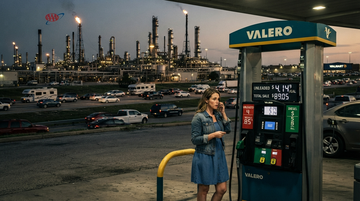
Three Refiners Just Pocketed $12.6B as the Pump Set a Labor Day Record — The Windfall Won't Fade Before November
AAA' national average of $4.14 a gallon on Labor Day weekend — the first holiday above $4 in U.S. history — and diesel at a record $5.85 are not a consumer blip. They reflect a refining margin boom that handed Valero, Marathon Petroleum, and Phillips 66 a combined $12.6B in Q2 2026, with the diesel crack spread breaching $100 a barrel for the first time. With U.S. refineries at 98% utilization, WTI parked near $90 on Iran risk, and an FOMC that just voted 9–3 against holding easy, the political pressure for cheaper gas collides with a structural margin floor that should keep refiners printing cash through the midterms — and squeeze Walmart and the rest of the consumer-discretionary complex in the process.
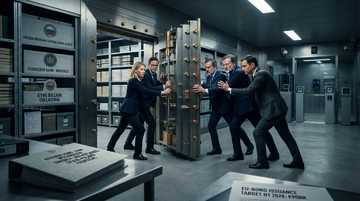
$200bn of Frozen Russian Assets Just Re-Entered the Debate — Belgium Says 'Door Is Closed', Four EU States Just Pushed It Back Open
Sweden, the Netherlands, Spain and Poland are pressing the European Commission to revive a €210bn 'reparations loan' backed by immobilised Russian central bank reserves held at Euroclear in Belgium, after the €90bn Ukraine-support loan was finalized in April without touching those assets. The mechanics turn ~€195bn of sanctioned Russian securities into collateral behind EU-Bond issuance — a 'debt-backed demand floor' that funds Ukraine while repricing credit risk for the European banks and defense primes that sit in the transmission chain. Rheinmetall, Saab and BAE Systems are already converting the demand into backlog; Lockheed Martin, Northrop Grumman and Hensoldt extend the chain into air-defense interceptors and radars; BNP Paribas and ING carry the counterparty and primary-dealer exposure that decides who earns and who absorbs the legal tail.
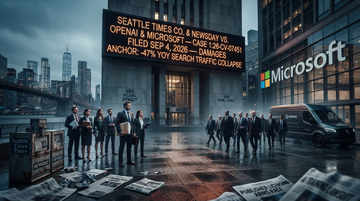
Seattle Times and Newsday Just Made OpenAI's IPO a Copyright Minefield
A second wave of regional newspaper plaintiffs hit OpenAI and Microsoft in the Southern District of New York on September 4, 2026 — the same week the DOJ sided with OpenAI in the New York Times case and less than three months after OpenAI confidentially filed its S-1. The 38-page complaint from the Seattle Times Co. and Newsday is the third major newspaper suit against the same defendants in 2026, and it is the first to weaponize a 47% YoY collapse in search-referral traffic as a damages anchor. For investors, the filing reframes AI copyright from a binary fair-use question into a publisher-by-publisher licensing arms race — and puts News Corp's $250M OpenAI deal, Lee Enterprises's lack of one, and Cloudflare's paywall enforcement on opposite sides of the trade.
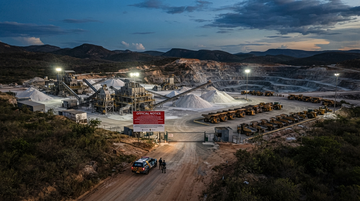
Sigma Lithium just lost its Brazilian permits again — and the ruling exposes who really wins in a Western lithium cycle
On September 5, 2026, a Brazilian court suspended every environmental permit for Sigma Lithium's Grota do Cirilo mine, the fourth legal shock in eight months, even as Albemarle's Q2 print revalidated the lithium cycle and the DFC funnels billions into Western-miner alternatives. The ruling doesn't move global tonnes meaningfully, but it re-prices Brazilian jurisdiction risk inside a market that has spent a year betting on policy-backed US supply: Sigma Lithium trades at a discount for the right reason, Albemarle and Lithium Americas collect the spread, and downstream battery makers face a louder case for sourcing from DFC-aligned projects.

5th Circuit Cuts NLRB's Reach in Starbucks Case 3-to-1 — and the Cascade Resets Every Pending Union Complaint
A unanimous 5th Circuit panel enforced just one of four unfair-labor-practice theories against Starbucks, denying the surveillance, hiring-portal and store-hours findings at a Wichita store — the latest in 18 months of federal court rulings pulling NLRB enforcement authority back. For Starbucks, with 706 stores already organized and no national contract, the precedent gives the company more legal room to bargain on its own terms, and the company's Q3 FY2026 turnaround (operating margin up 430 bps) is starting to price that in. Investors should read the ruling as a margin-protection signal for Starbucks and for company-operated restaurant and retail peers with the largest direct labor exposure — Chipotle, Dollar General and Amazon — while heavily franchised operators (McDonald's, Yum Brands, Restaurant Brands International) feel less of a direct hit.
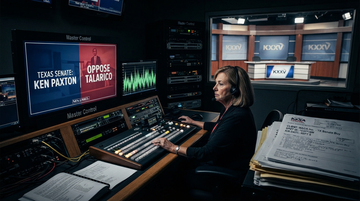
$500M, 60 Days: How Trump's MAGA Inc. Pledge Reshapes the Midterm Trade
Trump's September 4 pledge to deploy $400-500M from his MAGA Inc. super PAC, with the first $10M hitting Texas on September 5, converts the next eight weeks into a sector-level reelection bet. Local broadcasters Nexstar, Gray Television, and Sinclair book the ad revenue immediately; healthcare, energy, and tariff-exposed sectors get repriced against the probability of a Trump-aligned Congress. Investors who treat this as a generic political headline will miss the most concentrated political flow of the cycle.

Trump's $500M Late Bet Tilts the Midterm Trade — and the Sector Tape
Trump's pledge of $400–500M from MAGA Inc. in the final 60 days before the November 3 midterms turns healthcare, tariff-exposed retail, and energy into policy binaries the market has to price in real time. With Eli Lilly, Novo Nordisk, and Pfizer already absorbing a Most-Favored-Nation drug regime that now spans 89% of the branded market, and Walmart and Home Depot banking $20.6B in tariff refunds, the question isn't whether the spending shifts odds — it does, ~10-to-1 against Democrats in super-PAC firepower — but which equities carry the most asymmetric pain or upside across two horizons: a 60-day policy tape and a 2027–2028 codification tape.
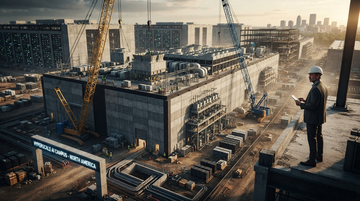
Trump Wants the World's Lowest Interest Rates. The AI Boom Just Borrowed $167 Billion to Make Sure He Can't Have Them
Four hyperscalers spent $511 billion on capital expenditure in the year to June 30, 2026 — 75% more than a year earlier — and funded the gap with roughly $167 billion of net new debt. That is a private credit-demand shock landing on top of 3.4% headline inflation and a $1.17 trillion federal interest bill, and it is why futures price a September rate hike rather than the cuts the White House is demanding. The rate that actually governs the AI buildout is the 10-year at 4.77%, and political pressure on the Fed pushes that number up, not down.
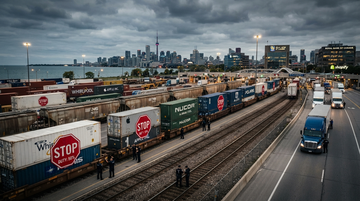
O'Leary Calls Canada the 'Ridiculously Fantastic' Trade—Here Are the US Names That Actually Get Crushed
On August 31, Kevin O'Leary framed Canada's tariff standoff as a five-year contrarian opportunity. The asymmetry he ignored: Canada's September 8 retaliation slaps 50% duties on US smartphones, 25% on appliances, and 50% on aluminum and copper wire—products sitting in Apple's $44B/quarter Americas revenue, Whirlpool's $2.6B/quarter North America segment, and the export books of Nucor, Alcoa, and Polaris. The real trade is short the US exporters, long the Canadian pivot plays: Royal Bank of Canada just printed record C$6.0B in Q3, and Shopify's Canadian tech base is the cleanest beneficiary.
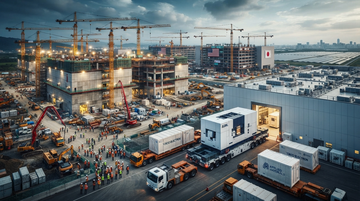
TSMC's 20-fab buildout shows the AI-demand worry is obsolete — equipment is the bottleneck
TSMC is constructing 13 fabs in Taiwan and 5-6 overseas simultaneously, with 2026 capex lifted to $60-64B and equipment procurement demand up 90% in eight months. Q2 2026 gross margins hit a record 67.7% and NVIDIA has locked in 60% of CoWoS output, so the binding constraint has flipped from demand to ASML, Tokyo Electron and the rest of the equipment chain. Investors should size positions to the equipment suppliers and the customer anchors, not the foundry itself.
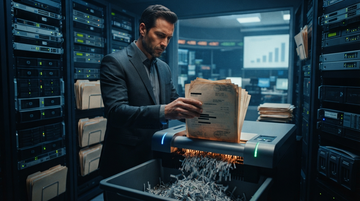
China Is Now One Month of NVIDIA's Revenue — Which Is Why the Mid-September AI Talks Aren't a Chip Reset
Reuters reported on Sept 4 that Treasury Secretary Scott Bessent will lead the first US–China talks devoted purely to AI risk in mid-September, days before the Sept 24 Trump–Xi summit. The reported agenda is agentic cyberattacks, labs policing themselves, and American complaints that Moonshot AI distilled Anthropic's models — export licences are not on it. NVIDIA's own filings show why neither side has silicon left to trade: China fell to 7.0% of first-half revenue, and management assumes zero China data-center compute in its outlook. The asset actually exposed is Anthropic's roughly $2 trillion IPO, which now markets straight through a diplomatic process — with Broadcom, Micron, CrowdStrike and Cambricon sitting on the transmission lines.

Missiles on Warships, Missiles on Tankers: Why War-Risk Insurance — Not Crude — Breaks First
An IRGC ballistic-missile launch at two U.S. warships on Sept 5 triggered CENTCOM strikes that disabled three Iranian shadow-fleet tankers — the M/T Downy, Stark 1 and Kylo — under a new 'tanker-for-tanker' doctrine. The first market to break isn't Brent, which has plateaued near $95/bbl; it's war-risk insurance, already at 7.5-10% of hull value after a 40-fold rise from pre-war levels, against a Lloyd's consortium capacity of just $400M. Listed VLCC pure-plays Frontline, DHT Holdings and International Seaways sit on the right side of the freight squeeze; defense names from Lockheed Martin to Northrop Grumman get a secondary bid as Iran tests the U.S. Navy's Aegis air-defense envelope.
2026-09-05
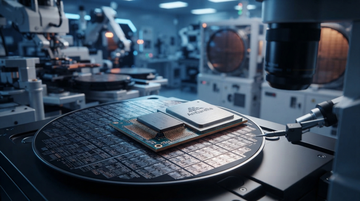
Ambarella's print passed the test. The tape still doesn't trust edge-AI silicon.
Ambarella posted Q2 FY2027 revenue of $108.1M (+13.2% YoY) and non-GAAP EPS of $0.18, both ahead of consensus, with a record edge-AI quarter driven by 5nm CV75/CV72 SoCs and a Q3 guide of $115–124M that would push sequential growth up to ~15%. The market response — an ~11% post-print slide and four broker downgrades the next morning — undercuts the headline, pinning the worry on supply-chain costs and a flat H2 auto ramp. With NXP Semiconductors circling at roughly $3.3B, Samsung Foundry at full tilt, and Hanwha Vision locked in under an $800M-plus decade-long agreement, the silicon story is real; the multiple is what is being repriced.

Food Services and Seasonal Schools Drove August's 162K Jobs Beat. The Fed Just Repriced the Wrong Print.
The headline handily beat consensus, but more than 60% of August's gain came from food services and seasonal local-government education — and BLS's own August 28 benchmark revision already acknowledged employment levels were overstated by 79,000 through March 2026. With healthcare hiring running at less than half its trend and wage growth cooling to 3.1%, the market's rush to price a September Fed hike is paying for a print the underlying data has already softened.
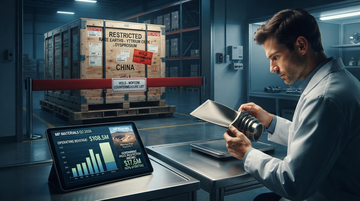
China Is Quietly Cutting Off the Rare Earths MP Materials Doesn't Make
Chinese suppliers began refusing some US-bound rare earth cargoes in early August 2026 — not because of a new export ban, but because Beijing blacklisted a US supply-chain audit group and vendors are self-sanctioning. The elements actually going dark are yttrium, scandium, terbium and dysprosium, none of which Mountain Pass produces at scale. Meanwhile MP Materials's own pricing math has already been decoupled from spot: a government top-up supplied 62% of its Q2 2026 adjusted EBITDA. The repricing lands first on jet-engine coatings and chip materials, not on NdPr.
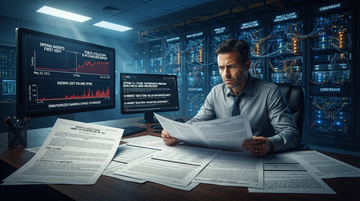
Citi just pushed its first Fed cut to June 2027 — and landed as Wall Street's quiet dovish outlier
After August's 162K payrolls print nearly tripled the 58K consensus, Citigroup pushed its first Fed cut from October 2026 to June 2027 — yet still expects three 25bp cuts in 2027, more than Goldman Sachs and the opposite of JPMorgan, which now forecasts the next move as a December hike. With the 2-year yield up 5bp to 4.37%, fed funds futures pricing a 60% chance of a September hike, and rate-sensitive sectors selling off, Citigroup's call reframes what the next 12 months mean for duration, the dollar, and bank earnings.

August's $778B CFi print: when stocks, oil, and gold learned to clear on crypto rails
Stocks and commodities cleared $778B through crypto venues in August — a monthly print that puts TradFi-on-rail flows at ~5% of centralized crypto volume and on track to outrun the entire US equity day-trading market. The capture map is no longer theoretical: Hyperliquid's HIP-3 alone printed $73B (67% stocks), Coinbase and Robinhood are minting their own chains for tokenized stocks, and BitGo just became the only publicly traded crypto custodian. With the CLARITY Act facing a September 15 procedural Senate vote, the question for investors is no longer whether exchange economics tilt — it's who collects the spread, the custody fee, and the regulatory rent.
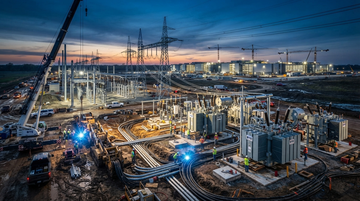
DTE's 13-Year Director Steps Down at the Center of a $36.5B AI-Grid Bet
DTE Energy filed an 8-K on Sept. 4, 2026 disclosing that long-serving director David A. Thomas will retire from the board effective Sept. 3, vacating seats on the Audit and Organization & Compensation committees that oversee the utility's $36.5B five-year capex plan and the 8.4 GW of data-center load it is wiring up for Oracle and Alphabet. The headline is a routine Item 5.02; the substance is that DTE enters the AI-grid build with negative 2026 free cash flow, a 6.5x net-debt-to-EBITDA stack, and a two-year electric rate freeze contingent on the Oracle campus coming online by end-2027. Investors should read this less as a personnel story and more as a governance reminder that the bottleneck on the trade sits in transformer queues, rate-base math, and a board seat — not in any single executive's biography.
Foxconn's Q3 call turns the AI-server read from 'strong demand' into '2027 capacity stays very strong'
Foxconn's August 12 earnings did more than beat Q2 — management explicitly told investors that 2027 demand for AI production capacity will stay very strong as Vera Rubin racks enter mass production this quarter, with cloud & networking guided up 'high double-digit' both QoQ and YoY. That forward signal lands alongside a cross-validating cluster: Dell's record $95B AI backlog, Broadcom's $21.7B Q4 AI-semi guide (+236% YoY), NVIDIA's $89B data-center print (+117% YoY), Wistron's AI servers hitting 95% of revenue, and Lenovo's $54B AI-server pipeline (+157% QoQ). The structural story is sharper than consensus: AI servers just crossed 51% of Foxconn's revenue, displacing iPhone as the swing factor and reframing the stock as an AI-infrastructure bet.
Why the August jobs beat became the worst news for the weakest US borrowers
A 162K payroll print reset Fed-cut bets and shoved the 30-year Treasury to 5.25%, dragging riskiest CCC spreads to 10.4% and pushing $40.1B of 2026 defaults onto a wall that already includes Ares Capital, Prospect Capital, FS KKR Capital, and an Oracle teetering one notch above junk. BDCs and middle-market direct lenders sit at the bottom of the chain — and the BDC sector is already down 20% from February highs with NAVs marking lower, so the transmission into share prices is mechanical, not a 2027 problem.
What to expect
Evidence-first notes with a visible point of view.
This section collects sharp takes on earnings, shareholder meetings, and market structure. Each new piece should make the thesis, the facts, and the implications obvious within the first few screens.
Expect direct analysis, not generic commentary.
Expect the data to be explicit and the argument to be easy to follow.
Plutux is not an investment adviser. Market data and AI-generated analysis are for information and education only, not investment advice. Disclaimer