Latest
The day's market news, with the argument attached
New notes every trading day on earnings, policy and market structure. Each one opens with the conclusion, then the evidence, then the companies it hits.
2026-09-02
%22%2F%3E%0A%20%20%3Ccircle%20cx%3D%22220%22%20cy%3D%22150%22%20r%3D%22180%22%20fill%3D%22%2322d3ee%22%20fill-opacity%3D%220.12%22%2F%3E%0A%20%20%3Ccircle%20cx%3D%221010%22%20cy%3D%22130%22%20r%3D%22220%22%20fill%3D%22%2338bdf8%22%20fill-opacity%3D%220.08%22%2F%3E%0A%20%20%3Ccircle%20cx%3D%22920%22%20cy%3D%22520%22%20r%3D%22170%22%20fill%3D%22%2322d3ee%22%20fill-opacity%3D%220.06%22%2F%3E%0A%20%20%3Cpath%20d%3D%22M140%20430h920%22%20stroke%3D%22url(%23line)%22%20stroke-width%3D%2212%22%20stroke-linecap%3D%22round%22%2F%3E%0A%20%20%3Cpath%20d%3D%22M220%20360c120-150%20260-220%20380-220s260%2070%20380%20220%22%20fill%3D%22none%22%20stroke%3D%22%2367e8f9%22%20stroke-opacity%3D%220.5%22%20stroke-width%3D%2216%22%20stroke-linecap%3D%22round%22%20stroke-linejoin%3D%22round%22%2F%3E%0A%20%20%3Cpath%20d%3D%22M300%20398h600%22%20stroke%3D%22%2394a3b8%22%20stroke-opacity%3D%220.24%22%20stroke-width%3D%228%22%20stroke-linecap%3D%22round%22%2F%3E%0A%20%20%3Ctext%20x%3D%22220%22%20y%3D%22510%22%20fill%3D%22%23e2e8f0%22%20fill-opacity%3D%220.7%22%20font-family%3D%22Arial%2C%20Helvetica%2C%20sans-serif%22%20font-size%3D%2238%22%20letter-spacing%3D%228%22%3EINSIGHTS%3C%2Ftext%3E%0A%3C%2Fsvg%3E)

Credo’s post-earnings drop tests whether copper interconnect cash flows can keep up with AI rack spend — even as Dell confirms demand is accelerating
Credo CRDO reported Q1 FY2027 results above the optics-friendly narrative investors were pricing, but the stock sold off sharply the next day. The key question for AI rack investors is whether the market is rotating from “copper rack capture” to “optics/other bottlenecks,” and whether Credo’s guidance supports that transition.

Sep. 2 broke the “resilience” script: 10-year yields hit 2026’s top zone while earnings-season support ended and oil surged
On Sep. 2, the US reignited direct hostilities with Iran as the 10-year Treasury yield pushed to its highest level since Nov. 2023, while crude prices firmed after the conflict flare-up. With the Q2 earnings window effectively done and buyback blackouts typically starting, investors lose two key sources of dip-buying support just as the market’s discount-rate sensitivity returns.

Fervo’s 396 MW Google PPA turns geothermal into an AI-grade “24/7” contract test—without proving the margin math yet
Fervo FRVO spiked on Sept. 1 after announcing a 396 MW enhanced-geothermal power purchase agreement with GOOG for its Cape Station GeoCluster, targeted to come online in 2028 and expandable to nearly 1 GW by June 2030. The market is treating that contract as a commercialization signal for the drill-to-ORC-to-PPA supply chain—yet Fervo’s latest financials still show revenue at the hundreds of thousands and negative operating cash flow, so any “AI multiple” is being priced ahead of repeatable cost and margin delivery.

Markets may be pricing “hands-off” AI deregulation—yet the FSB is warning that frontier AI could destabilize finance via cyber risk
At the G20 technology meeting, the US pressed for a light-touch, non-institutional approach to AI governance (“Carolina Principles”). In parallel, the FSB chair warned that frontier AI could materially worsen cyber risk and trigger a potentially disorderly financial-stability correction—creating a policy divergence that may keep near-term AI capex risk premia low while raising longer-tail tail-risk.

GitLab just sold “security-anchored AI seats” with its Aug. 28 model shifts—here’s the pricing test that matters
GitLab used its Sept. 1 after-hours Q2 FY2027 print to tie AI value to security, context, and governance—and paired it with a new packaging model (GitLab Flex) that’s designed to keep seats monetizable as AI capabilities roll out. The market question is whether that works as AI model-layer discounts and “codegen commoditization” intensify; the answer in this quarter is less about headline revenue growth and more about how fast bookings and retention are converting into durable subscription economics.

GLP-1’s “aftermath” is boosting breast implant demand—why Establishment Labs could be the next device-spillover trade
A fresh TD Securities note ties rising GLP-1 use to a faster pace of U.S. breast augmentation procedures and related “post-weight-loss” volume demand, framing the opportunity as the drug’s downstream correction cycle rather than the drug sales themselves. For Establishment Labs, the bullish setup hinges on whether GLP-1-driven weight loss keeps shifting patients toward implant-based restoration as the Motiva U.S. launch scales.

DOJ’s Google ad-tech breakup shot is blocked again: who loses the “divestiture discount” trade?
A Sept. 2, 2026 court order blocks the U.S. from forcing Alphabet’s Google to sell AdX, keeping the company’s ad-tech stack intact. With structural relief repeatedly rejected, the “breakup discount” narrative for ad-tech competitors and related shorts has a clearer problem: the most likely remedy path is behavioral, not divestiture.

HPE must turn AI orders into high-margin “systems” fast enough to outpace Juniper debt—its Sept. 2 guide is the test
Hewlett Packard Enterprise HPE is set to report on Sept. 2, with investors focused on whether Cloud & AI operating leverage can offset higher-than-ideal financing and keep margins consistent as AI systems backlog converts. In its most recent quarter disclosures, HPE showed $16.4B cumulative AI systems bookings, a $5.9B AI backlog entering Q3, and raised fiscal 2026 EPS while lowering expected net interest expense by about $75M—signals that matter because AI margins and interest costs decide whether “dollars per rack” economics close.

July JOLTS just steadied the labor-demand backdrop—but it doesn’t fully rescue the two-hike path into September payrolls
BLS’s July JOLTS kept the labor market’s “hiring engine” roughly intact: job openings and hires held near June levels, while quits stayed around a steady 1.9% rate. That mix supports “some cooling without a collapse,” which can slow the hawkish repricing—yet it also gives policymakers less reason to expect an abrupt demand unwind ahead of Friday’s payrolls.

Lynas’s rare-earth takeover “confirmations” turned the market to a financing-and-security question: who can actually pay for the Western supply chain?
Lynas has confirmed it held confidential discussions with MP Materials about a potential transaction, but said those discussions were not ongoing as of February 2024—an admission that reframes Western rare-earth consolidation as a problem of funding and approvals, not just strategy. The more investors anchor on “who owns the only scaled non-China capability,” the more MP Materials and other U.S.-linked rare-earth plays trade on whether capital markets and regulators can clear a path quickly enough to beat China’s supply leverage.

Medtronic's raised FY27 EPS guide lands right after a 13.7% organic quarter — and it reads like a medtech demand rerate, not an execution beat
Medtronic reported Q1 FY27 revenue of $9.756B with 13.7% organic growth, including cardiovascular up 18.9% organic, and it raised FY27 EPS guidance to $5.94–$6.00 (non-GAAP). The signal looks strongest in contrast to Johnson & Johnson, which lowered FY26 EPS guidance due to deal-related costs by about $0.64, shifting attention from pipeline timing to near-term purchasing behavior.

Microsoft starts making Azure quarterly revenue comparable—turning “cloud growth” into an auditable line investors can model
Microsoft’s latest reporting changes begin separating Azure’s cloud economics from the broader Intelligent Cloud bucket in a way that lets investors track quarterly Azure growth directly (instead of inferring it through a blended segment). The shift matters most for AI cloud economics: it clarifies how much incremental demand is converting into measurable Azure revenue, and it changes how the market will price Microsoft’s capex-heavy AI buildout.

MongoDB's Sept. 1 print is the first test of whether AI spend monetizes at the application-data layer (or stalls at the rack)
MongoDB will report Q2 FY2027 results for the three months ended July 31, 2026 after markets close on Sept. 1, with guidance baked into the event materials: total revenue of $771.8M (+30% YoY) and Atlas revenue up ~29% YoY. The investor question is whether the AI buildout pushes usage deeper into the database/data plane (vector + workload intensity), translating into durable Atlas expansion—or whether demand concentrates in accelerators and infrastructure.

The $40B ETF shuffle: offshore conversions are rerouting foreign demand—and inviting a Treasury/IRS test
A Bloomberg report links roughly $40B of new ETF restructuring to a strategy that helps non-U.S. investors reduce exposure to U.S. estate tax on U.S.-situs assets. The risk for the industry is not just lost flows to U.S.-listed funds, but a possible Treasury/IRS tightening that could unwind parts of the economics and shift demand toward alternative fund wrappers.
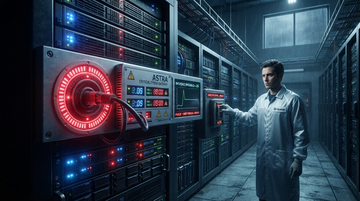
Astra just hit OpenAI’s first “Critical Cyber” line—and OpenAI responded by turning capability into a gated product
OpenAI says its upcoming Astra model may meet the “Critical” cybersecurity threshold in its Preparedness Framework, which it defines in terms of end-to-end, minimally supervised cyberattack ability. In response, OpenAI is tightening execution controls—adding higher-frequency monitoring to all Astra inference with tools and requiring the strictest security safeguards for Astra/cyber workloads—effectively limiting how agentic security power can be operationalized.

Shein’s HK price discovery makes “de-minimis-free” a margin debate—Temu’s comp gets repriced with every slide
Shein’s second-session weakness on the HKEX turns an IPO valuation story into a live test of cross-border parcel economics after the de-minimis advantage. The market’s reaction is likely to flow through to PDD’s Temu unit expectations—because both models hinge on whether savings from lightweight customs treatment can be replaced by new fulfillment math.

SiriusXM’s “overlooked” pivot isn’t about dying satellite—it's about rebuilding distribution through ad-tier in-car access
Deutsche Bank’s bull case argument (as it’s been described publicly) hinges on SiriusXM’s transition from a largely closed, satellite-driven subscriber base toward an ad-tier, in-car-first listening model. The risk to that transition is timing: in-car audio can be disrupted quickly by connectivity and app-native listening, and SiriusXM’s own filings show that connected-vehicle services are tracked separately from its satellite subscriber math.

Snowflake turns “consumption math” into margin discipline — and the guide implies the $190B Databricks ceiling isn’t binding
Snowflake used its Sep 2 after-hours print to answer the core “consumption math” question: revenue is explicitly tied to platform consumption, and the AI story is paired with raised FY2027 margin and cash guidance. The Q2 FY2027 results and guidance show fast, profitable scaling (product revenue +37% YoY; non-GAAP operating margin guide 14.5%), even as Snowflake flags AI-related pricing mechanics as a consumption risk.

Taiwan’s $20B U.S. push isn’t “Made in USA”—it’s a tariff-shaped fab and factory supply-chain buildout
Taiwan’s government-linked disclosure of an additional $20B of U.S. investment reinforces a clear pattern: tariff-linked relocation is concentrating capacity buildout in Asian electronics ecosystems, not broadly “reshoring” the whole industrial base. The investable opportunity clusters upstream in tools/material handling and gases, and downstream in EMS/thermal/mechanical integration—where relocation turns into orders, not press headlines.

The U.S. tells courts to treat LLM training on copyrighted text as fair use—shifting AI’s biggest IP risk from “content owners” to “model builders”
On Sept. 1, 2026, the U.S. government filed a statement of interest arguing that copying copyrighted works to train large language models is fair use, even when the training is commercial. If courts follow that view, the market’s “licensing-first” assumption for AI training economics weakens—potentially reducing the leverage of content owners and tightening the focus of risk management on labs and platform operators.
What to expect
Evidence-first notes with a visible point of view.
This section collects sharp takes on earnings, shareholder meetings, and market structure. Each new piece should make the thesis, the facts, and the implications obvious within the first few screens.
Expect direct analysis, not generic commentary.
Expect the data to be explicit and the argument to be easy to follow.
Plutux is not an investment adviser. Market data and AI-generated analysis are for information and education only, not investment advice. Disclaimer