Latest
The day's market news, with the argument attached
New notes every trading day on earnings, policy and market structure. Each one opens with the conclusion, then the evidence, then the companies it hits.
2026-08-30
%22%2F%3E%0A%20%20%3Ccircle%20cx%3D%22220%22%20cy%3D%22150%22%20r%3D%22180%22%20fill%3D%22%2322d3ee%22%20fill-opacity%3D%220.12%22%2F%3E%0A%20%20%3Ccircle%20cx%3D%221010%22%20cy%3D%22130%22%20r%3D%22220%22%20fill%3D%22%2338bdf8%22%20fill-opacity%3D%220.08%22%2F%3E%0A%20%20%3Ccircle%20cx%3D%22920%22%20cy%3D%22520%22%20r%3D%22170%22%20fill%3D%22%2322d3ee%22%20fill-opacity%3D%220.06%22%2F%3E%0A%20%20%3Cpath%20d%3D%22M140%20430h920%22%20stroke%3D%22url(%23line)%22%20stroke-width%3D%2212%22%20stroke-linecap%3D%22round%22%2F%3E%0A%20%20%3Cpath%20d%3D%22M220%20360c120-150%20260-220%20380-220s260%2070%20380%20220%22%20fill%3D%22none%22%20stroke%3D%22%2367e8f9%22%20stroke-opacity%3D%220.5%22%20stroke-width%3D%2216%22%20stroke-linecap%3D%22round%22%20stroke-linejoin%3D%22round%22%2F%3E%0A%20%20%3Cpath%20d%3D%22M300%20398h600%22%20stroke%3D%22%2394a3b8%22%20stroke-opacity%3D%220.24%22%20stroke-width%3D%228%22%20stroke-linecap%3D%22round%22%2F%3E%0A%20%20%3Ctext%20x%3D%22220%22%20y%3D%22510%22%20fill%3D%22%23e2e8f0%22%20fill-opacity%3D%220.7%22%20font-family%3D%22Arial%2C%20Helvetica%2C%20sans-serif%22%20font-size%3D%2238%22%20letter-spacing%3D%228%22%3EINSIGHTS%3C%2Ftext%3E%0A%3C%2Fsvg%3E)

Humanoid “concept robots” hide a simpler truth: suppliers get paid before OEMs prove scale
Even when robot OEMs are still selling demos, the humanoid buildout already forces bulk purchases in components—especially perception sensors and high-precision motion—so supplier revenue can start earlier than consumer-facing robot shipments. The investor opportunity is mapping which listed component makers are positioned for that early, contract-led spend while policy and qualification risks (notably around China-linked lidar supply) decide who gets paid—and when.

Iceland’s EU “no” breaks the only slow-moving anchor—Arctic policy now tilts toward power, patrol capacity, and extractive leverage
Iceland rejected restarting EU accession talks by 52.8% to 47.2% in a late-August referendum that opponents framed around sovereignty risks. With the US pressing Greenland through “national security” arguments and NATO simultaneously tightening Arctic posture, the Arctic is shifting from diplomacy-by-institutions toward competition by presence—raising the premium on surveillance, ice-capable lift, and defense supply chains.

IMAX’s sale openness is really a value-unbundling bet on its technology-and-content licensing engine
IMAX’s stated openness to a sale reframes the company as more than a theater footprint story: investors should expect buyers to underwrite the premium-format licensing rail (technology products plus content solutions) using box-office-linked economics rather than gate counts. The near-term trading impulse may be headline-driven, but the deal math hinges on how “system backlog → recurring licensing revenue” converts under a higher multiple buyer.

War-risk insurance reprices before oil — and it quietly decides who can ship Gulf barrels
When insurers pull or re-price war-risk cover for Iran and the wider Gulf, the constraint moves upstream of oil: fewer routes get insured, costs rise, and cash-flow timing shifts for shipping and energy trades. A key March 5, 2026 cancellation took effect with war-risk exclusions for Iran and defined Gulf waters, while brokers flagged 25%–50% near-term rate pressure for marine hull war exposure—setting up a lag-and-snap pattern investors often misread as “just shipping noise.”
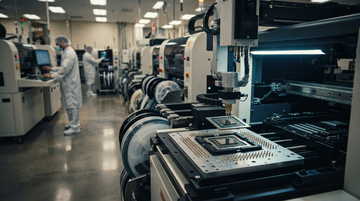
Custom-silicon deals can’t fix the real bottleneck: OSAT assembly-and-test capacity turns into the price lever
Marvell’s Google custom-chip agreement highlights that hyperscalers are funding ASIC volumes, but the economic swing may show up at the back-end floor. When more dies flow through packaging and test, OSAT capacity utilization—not wafer supply—determines whether pricing stays firm or margin compresses at ASE Technology, Amkor Technology, and (where evidenced) Chinese OSAT competitors.

Oura’s $3B IPO bet isn’t on smart rings—it’s on a subscription “health-data toll road” that investors must underwrite at a $16B+ valuation
Oura has signaled a potential U.S. IPO that could raise up to $3B and value the business at more than $16B, while projecting roughly $2B in 2026 sales. That combination implies the market is paying consumer-tech multiples for recurring health-data economics—so the real debate is whether retention and downstream monetization can persist even as Apple, Garmin, and other smart-ring entrants scale marketing and device cycles.
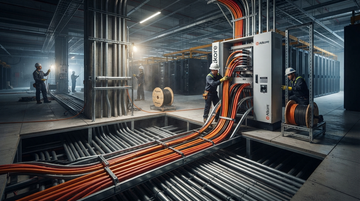
Prysmian’s $3.8B Atkore deal is a “full electrical stack” play—priced like channel control, not just capacity
Prysmian’s planned $3.8B acquisition of Atkore would add U.S. conduit/raceway and electrical installation/distribution-adjacent products to its cable business, locking in more of the data-center electrical build. Read with Prysmian’s earlier €5.5B (€/$) Molex data-center anchor, the pattern points to consolidation that should raise “electrical-content-per-GW” pricing power, because it reduces interface risk across the stack.

12-inch wafer contracts are the earliest AI-caper cycle tell—if you know where to look
In the 12-inch wafer substrate oligopoly, the key “demand signal” is not wafer pricing or foundry capex—it’s the multi-year contracting structure that can smooth (or amplify) the AI spending cycle years before GPU deliveries. Using Shin-Etsu Chemical, GlobalWafers, and Siltronic financials alongside public contract disclosures, wafer suppliers show more stable but still counter-cyclical revenue/margin behavior than downstream process-cost components, making “contracting depth” a practical investor lens into the post-2023 AI rebuild.

Smart-ring value doesn’t start in sapphire or sensors—it locks in at the recurring health-data subscription
The next wearable “boom” is still constrained by the physical parts—biosignal optics, power, and skin-contact materials—but the investable margin is increasingly determined by who controls the recurring health-data layer. Oura’s move toward public markets makes that hardware-vs-subscription split measurable, while FDA’s stance on non-authorized glucose claims shows why regulated signal quality—not the enclosure—drives durable platforms.

Sony Music Publishing and Warner Chappell just turned Anthropic’s $1.5B copyright “floor” into a music-catalog ladder
Two top-tier music publishers sued Anthropic over alleged large-scale copying to train Claude, seeking damages that scale per infringed work and per removal of copyright-management information. The practical investor takeaway: this new music-catalog front widens the set of “unknowns” investors must underwrite after the $1.5B class settlement, shifting attention from books-only risk to music-licensing economics and to the pending regulatory timeline for AI copyright.

Treasury’s credential blackout for NYT, WSJ, and Bloomberg risks a wider FX-and-bonds uncertainty premium
The U.S. Treasury has denied credentials to specific reporters from The New York Times, The Wall Street Journal, and Bloomberg for the upcoming G20 finance coverage window, even as it pushes bond-market intervention messaging and raises the stakes of tariff-driven policy uncertainty. When policymakers restrict the most trusted institutional reporting channel during active market interventions, investors typically demand a higher risk premium because verification and narrative-checking slow down—raising near-term volatility and widening the gap between what markets price and what they can confirm.

Cheese-name fights are now a live USMCA timing test: why “Parmesan-type” labels can slow the Mexico track and reshape dairy-flow economics
A new U.S.–Mexico friction point over protected cheese names is colliding with the first 2026 USMCA review window. Because cheese labels act like market-access rails for bulk and branded supply chains, the dispute can change what clears customs and how fast exporters redeploy volume—before tariffs and quotas even become the headline.

Venezuela’s potential OPEC exit meets a fading Brent—if quotas never mattered, the “cartel test” becomes who buys the marginal barrel
Venezuela is reportedly considering leaving OPEC as U.S.-backed access to its oil expands, but the quota mechanics matter less than the market’s new swing factor: excess supply discipline vs. marginal-buyer power as Brent slides. The cleanest investor takeaway is that the market share battle after an exit would not be about “freeing barrels” that were already exempt, but about who captures additional volumes when OPEC’s signaling weakens.
2026-08-29

AI-security isn’t a “whole stack” spend—identity, endpoint, and agent governance each claim a different budget line
A wave of demand for AI-assisted defenses is showing up most clearly in identity security and cloud/endpoint platforms’ disclosed contract pipelines, not in any single “one-size-fits-all” security bucket. The investor takeaway: the next security dollar is likely to route through identity (Okta), endpoint/cloud threat prevention (CrowdStrike), and security platforms that operationalize AI (Palo Alto Networks), while broader security incumbents (Microsoft) and zero-trust network layers (Zscaler) shape the platform constraints that determine which vendors get renewed.

Amaero’s S-1 arrives in a moment when investors don’t just question defense backlog—they question whether “factory capacity” can actually scale
Amaero AMROF is positioning its hypersonics-linked manufacturing chain around domestic, powder-to-near-net-shape production—an angle that directly targets the same execution worry that showed up in the recently pressured defense-IPOs theme. But its fundamentals still look like a pre-scale industrial builder: losses persist and free cash flow remains deeply negative, so the market will likely pay for credible capacity ramp, not just contracts.

Anthropic’s recursive-self-improvement preview reframes the “scaling” debate—and turns the kill-switch into a competitive moat
Anthropic’s new Institute write-up argues that AI labs are already moving from “tools that code” toward systems that can run an end-to-end research loop and recover a large fraction of an autonomy gap. That shift matters to investors because it upgrades the economics of model development (more capability per unit human labor) while simultaneously making the “kill-switch” fight—shutoff, throttling, and coordination—more urgent and more differentiating.

Apple TV+ just got its first “real” churn test—Apple One is the retention hedge, and the next price move will hinge on what Netflix and Disney do after Aug. 28
On Aug. 28, Apple raised Apple TV+ to $14.99/month (and $119/year) and lifted its Apple One Individual plan to $21.95/month. The event is a direct test of whether a comparatively thin originals/catalog can hold “premium” pricing, while Apple One’s bundle math shifts churn risk away from the standalone streaming line—setting up a near-term signal for broader SVOD pricing power.

AstraZeneca–Ionis CARDIO‑TTRansform reopens the outcomes bar: RNA can hit biology, but this dataset resets expectations for mass-market cardiology
AstraZeneca and Ionis’ [eplontersen] update for ATTR cardiomyopathy missed the trial’s primary composite cardiovascular outcomes endpoint through Week 140, despite a nominally positive result in a prespecified monotherapy subgroup. The new ESC-season debate is less about whether RNA drugs work mechanistically—and more about whether they can clear the statistical-and-context hurdles that separate rare-disease efficacy from scalable cardiometabolic impact.

BioXcel–Teva asset sale reframes small-cap biotech funding: distressed developers are monetizing FDA-window optionality instead of selling equity
BioXcel’s Aug. 28, 2026 court-supervised agreement to sell CNS assets to Teva centers on a product with an FDA PDUFA target of Nov. 14, 2026—priced with an upfront payment plus FDA-timing-linked contingencies. The deal highlights a survival path for cash-starved small biotechs: asset-level M&A that converts an “FDA-binary week” financing window into buyer-operated development and more structured milestone payoff.

Burlington's “tariff-refund beat” flips the margin-quality question: can lower prices keep earning without the refund cash?
Burlington reported strong EPS momentum in Q2 FY26 and raised FY26 adjusted EPS guidance, but the quarter’s sales/margin setup included a $55.5M tariff-refund benefit recognized in cost of sales. That creates a direct test: whether Burlington can reinvest refund dollars into sharper prices and still sustain earnings power after the one-time tailwind fades.
What to expect
Evidence-first notes with a visible point of view.
This section collects sharp takes on earnings, shareholder meetings, and market structure. Each new piece should make the thesis, the facts, and the implications obvious within the first few screens.
Expect direct analysis, not generic commentary.
Expect the data to be explicit and the argument to be easy to follow.
Plutux is not an investment adviser. Market data and AI-generated analysis are for information and education only, not investment advice. Disclaimer