Latest
The day's market news, with the argument attached
New notes every trading day on earnings, policy and market structure. Each one opens with the conclusion, then the evidence, then the companies it hits.
2026-08-29
%22%2F%3E%0A%20%20%3Ccircle%20cx%3D%22220%22%20cy%3D%22150%22%20r%3D%22180%22%20fill%3D%22%2322d3ee%22%20fill-opacity%3D%220.12%22%2F%3E%0A%20%20%3Ccircle%20cx%3D%221010%22%20cy%3D%22130%22%20r%3D%22220%22%20fill%3D%22%2338bdf8%22%20fill-opacity%3D%220.08%22%2F%3E%0A%20%20%3Ccircle%20cx%3D%22920%22%20cy%3D%22520%22%20r%3D%22170%22%20fill%3D%22%2322d3ee%22%20fill-opacity%3D%220.06%22%2F%3E%0A%20%20%3Cpath%20d%3D%22M140%20430h920%22%20stroke%3D%22url(%23line)%22%20stroke-width%3D%2212%22%20stroke-linecap%3D%22round%22%2F%3E%0A%20%20%3Cpath%20d%3D%22M220%20360c120-150%20260-220%20380-220s260%2070%20380%20220%22%20fill%3D%22none%22%20stroke%3D%22%2367e8f9%22%20stroke-opacity%3D%220.5%22%20stroke-width%3D%2216%22%20stroke-linecap%3D%22round%22%20stroke-linejoin%3D%22round%22%2F%3E%0A%20%20%3Cpath%20d%3D%22M300%20398h600%22%20stroke%3D%22%2394a3b8%22%20stroke-opacity%3D%220.24%22%20stroke-width%3D%228%22%20stroke-linecap%3D%22round%22%2F%3E%0A%20%20%3Ctext%20x%3D%22220%22%20y%3D%22510%22%20fill%3D%22%23e2e8f0%22%20fill-opacity%3D%220.7%22%20font-family%3D%22Arial%2C%20Helvetica%2C%20sans-serif%22%20font-size%3D%2238%22%20letter-spacing%3D%228%22%3EINSIGHTS%3C%2Ftext%3E%0A%3C%2Fsvg%3E)

CFTC turns “Trump trade” into enforceable insider trading: $172,539 penalty for betting on advance speech wording
The CFTC fined former White House teleprompter operator Gabriel Perez $172,539 for trading Kalshi “mention market” contracts using advance access to nonpublic Trump speech text. The case matters to markets because it treats political communications as tradeable “information,” collapsing the line between political insiders and prediction-market traders—and raising compliance risk for any firm that lets employees monetize what they know.

Chicago PMI’s sharp contraction signal adds heat to the “two-plus hikes” Fed repricing—because prices held up
The Aug. 28 Chicago Business Barometer (Chicago PMI) collapsed to 47.1, showing regional manufacturing momentum is breaking before next week’s ISM and jobs prints. But the composition of the report—especially the price pressure language that Warsh tied to “work to do”—creates a different risk for investors: inflation is staying sticky enough to keep policy tight even as growth cools.

Covenant’s planned Leipzig missile plant turns Europe from “buy-local pain” into “localized build,” and it matters most for the primes that can scale production fast
Reuters reports Covenant plans to start producing intermediate-range missiles near Leipzig from 2027, with potential capacity up to 1,000 units a year and ranges over 1,500 km. That shifts part of Europe’s rearmament spend from importing into local procurement to local manufacturing—changing the margin and capacity story for U.S. and European missile primes, while tightening the supply-chain bottleneck around motors, seekers, and precision production.

CXMT’s 1260H lawsuit turns a policy label into a DRAM pricing question
CXMT’s suit challenges the Pentagon’s “Chinese military company” designation that can trigger U.S. procurement restrictions under Section 1260H. The key investor takeaway is whether courts keep narrowing designation power—making it harder to wall off capital from China’s DRAM buildout—and therefore shifting the balance of risk across Micron, SK hynix, and Samsung Electronics.

Elastic just proved “AI search + observability” can show up in the cash engine — but the market is still paying for margin upside
After reporting its Q1 FY2027 results on Aug. 27, Elastic posted a sharp tape gain Aug. 28 as investors looked for proof that AI-search and observability demand is translating into measurable billings momentum. In its quarter, Elastic reported $132.0M of operating cash flow and grew subscription revenue to $448.7M, while maintaining a large $1.854B backlog of contracted future revenue to recognize.

The grid emergency isn’t a power-policy problem—it’s a materials bottleneck upstream of the turbine
The U.S. has framed a national emergency around the foreign supply of bulk-power electric equipment, because reliability can’t wait for long lead-time replacements. At the same time, data-center electrification faces a copper chain strain, while the wind-and-grid buildout still depends on rare-earth magnets. Investors should watch which listed suppliers can convert constrained input availability into backlog, pricing power, and margin support.

Farm Bill stalled in the Senate while corn and wheat surge: how policy risk reshapes crop-insurance, SNAP, and lender math for the 2027 crop cycle
On Aug. 6, 2026, the Senate Agriculture Committee failed to advance the 2026 Farm Bill after a SNAP cost-sharing fight turned into a party-line roadblock. That political uncertainty lands right as corn and wheat futures hit more-than-three-year highs on Aug. 28, intensifying the near-term tug-of-war between higher revenue expectations and risk-transfer/payments that depend on stalled policy.
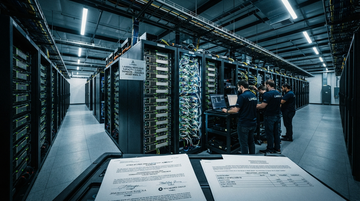
NVIDIA's GPU demand is only half the story—Lambda just proved chip-collateral debt is now setting the neocloud capacity floor
Lambda’s $1B GPU-debt raise (Aug 28, 2026) signals a shift in the AI compute buildout: lenders—backed by the hardware itself—are increasingly funding capacity growth, not end customers. The result is a new credit layer where GPU deployment can keep scaling until collateral value or contracted cash flows break.

Eli Lilly's Mounjaro approval turns GLP-1 into a cardio franchise—at Novo Nordisk's expense
Eli Lilly won an FDA cardiovascular-risk reduction label for Mounjaro (tirzepatide) in high-risk type 2 diabetes, effectively widening the GLP-1 outcomes market beyond glucose control. With the SURPASS-CVOT readout showing a relative MACE reduction versus Trulicity, Lilly now has a cleaner payer script and a faster path to address higher-acuity cardiovascular patients. For Novo Nordisk, that label expansion raises competitive pressure on its GLP-1 outcomes posture and makes the next few quarters less about diabetes uptake and more about whether prescribers treat Mounjaro as a default cardio-risk option.
![Open-weight AI’s M&A boom is turning “open” into a paid gateway — and NVIDIA [NVDA] is positioning to own the distribution layer insight cover](https://images-1379091077.cos.na-ashburn.myqcloud.com/insights/covers/20260829_open_weight_ai_ma_trend_360px.png)
Open-weight AI’s M&A boom is turning “open” into a paid gateway — and NVIDIA [NVDA] is positioning to own the distribution layer
The hottest acquisition targets in open-weight AI are increasingly the distribution rails: model hubs, licensing platforms, and routing layers. With reported activity clustering around $13B-scale offers for Hugging Face and dealmaking that channels open-weight usage through major platforms, the “open” tier risks being priced into fewer hands. The winners are the infrastructure owners that can convert open models into compute demand and enterprise subscriptions, while the frontier labs face a consolidation-driven moat reset.

OpenAI’s Cursor cutoff turns an IDE feature into leverage—developers will replatform their model stack before Nov. 12, 2026
OpenAI says it will end its contract providing OpenAI models to Cursor after SpaceX’s acquisition, with a proposed shutoff date of Nov. 12, 2026. The immediate market effect is less about Cursor’s editor popularity and more about forcing millions of coding workflows to switch frontier-model backends—likely benefiting cloud and rival-model ecosystems that can absorb the displaced API demand on short notice.
![[OpenAI]'s Thailand accelerator and [Meta]'s India-to-OpenAI hire point to an emerging-market distribution war insight cover](https://images-1379091077.cos.na-ashburn.myqcloud.com/insights/covers/20260829_openai_emerging_market_expansion_360px.png)
[OpenAI]'s Thailand accelerator and [Meta]'s India-to-OpenAI hire point to an emerging-market distribution war
Two Aug. 28 moves—OpenAI backing Thai AI startups via an eight-week government-linked accelerator and a top Meta India/Southeast Asia executive jumping to OpenAI—fit the same playbook: buy local adoption speed, not just model quality. For investors, the next “AI revenue war” is likely won by whoever can translate AI capability into trusted, locally deployable workflows at scale in high-growth regions.

Rusfertide’s FDA nod turns hepcidin mimicry into a bankable PV franchise—and rewrites who wins the iron-biology arms race
On Aug. 28, 2026, the FDA approved Mimrylo (rusfertide) as the first drug of its kind for polycythemia vera (PV), validating hepcidin-mimetic control of iron trafficking as a prescription-grade mechanism. The approval directly crystallizes the commercial “tollbooth” for Protagonist Therapeutics—$275M triggered to date and tiered royalties—while also setting a clearer competitive benchmark for rival hepcidin-modulating programs aimed at PV, post-PV myelofibrosis, and anemia.
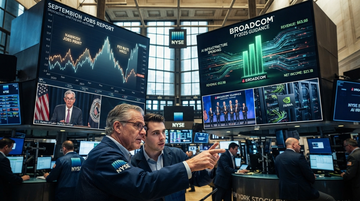
September is a two-test binary: a hawkish Warsh Jobs print + Broadcom’s guide decide whether the post-Nvidia AI rally turns into a trend or a fade
Markets are heading into September with two near-term verdicts that move rates and AI multiples in lockstep: the first jobs print after July’s contraction-and-the Fed-hawk “re-accelerate” debate, followed immediately by Broadcom’s next guide bar. If the jobs data forces a more hawkish rate path, investors will demand proof that AI infrastructure spending is still accelerating—Broadcom’s commentary becomes the stress test.

Thinking Machines is betting venture ROI on “small” AI—an alternative to trillion-dollar compute labs
Thinking Machines (founded and led by Mira Murati) is positioning its strategy around a focused, “bet small” doctrine—aiming for learn-fast deployment rather than frontier-scale capex. That capital-allocation choice matters because it reframes how investors should think about AI infrastructure pricing: compute-heavy scale may win performance, but smaller wagers can win speed, optionality, and unit-economics.

Ukraine’s EU loan ratification turns European rearmament into a debt-backed demand floor — and forces margin math for US primes’ Europe backlogs
Ukraine’s ratification process clears the way for the EU’s €90B Ukraine support loan framework for 2026–2027, with the package explicitly tied to urgent budgetary and defence industrial capacity needs. For defense suppliers, the shift from grant-like support to sovereign-debt-financed procurement increases the probability of sustained multi-year ordering even when national budgets tighten — but it also raises the odds of a tighter pricing spread and margin share for US prime contractors competing for the newly financed European work.

Corn and wheat at 3-year highs don’t automatically mean fertilizer margins—Louisiana gas-cost capacity can flip the second derivative in US nitrogen pricing power
With grains strong, the real supply-chain swing is whether US nitrogen pricing tightens or normalizes as new Louisiana capacity moves through permitting and operations. CF Industries’ Blue Point complex and its near-term urea supply plan point to a more local, gas-cost-advantaged margin story that the grains rally can’t price unless fertilizer tightness persists under China-driven export friction.

Venezuela’s “65B barrels” deal shifts the bet from reserves to refinery economics—and the market will price the sequencing risk
If the U.S. deal ultimately turns Venezuelan “proven” reserves into sanctioned, Gulf-bound barrels, the first measurable winners are Gulf Coast refiners that can monetize heavy crude through wider heavy-to-light and sour crude differentials. But investors will discount the deal’s headline scale until sanctions easing, custody/marketing mechanics, and field-to-export execution line up—because the difference between “control claims” and “timely barrels” is what determines near-term spreads.

Walmart’s $50M opioid case close removes an EPS overhang—and tightens the remaining “liability ladder” on manufacturers and distributors
On Aug. 28, 2026, the U.S. government announced a $50 million settlement with Walmart to resolve allegations tied to invalid opioid prescriptions filled by its pharmacies. The amount is small versus Walmart’s prior multistate opioid framework, and the case is framed as “allegations only,” which matters for how investors should think about remaining exposure across the opioid supply chain.
2026-08-28

What to expect
Evidence-first notes with a visible point of view.
This section collects sharp takes on earnings, shareholder meetings, and market structure. Each new piece should make the thesis, the facts, and the implications obvious within the first few screens.
Expect direct analysis, not generic commentary.
Expect the data to be explicit and the argument to be easy to follow.
Plutux is not an investment adviser. Market data and AI-generated analysis are for information and education only, not investment advice. Disclaimer