%22%2F%3E%0A%20%20%3Ccircle%20cx%3D%22220%22%20cy%3D%22150%22%20r%3D%22180%22%20fill%3D%22%2322d3ee%22%20fill-opacity%3D%220.12%22%2F%3E%0A%20%20%3Ccircle%20cx%3D%221010%22%20cy%3D%22130%22%20r%3D%22220%22%20fill%3D%22%2338bdf8%22%20fill-opacity%3D%220.08%22%2F%3E%0A%20%20%3Ccircle%20cx%3D%22920%22%20cy%3D%22520%22%20r%3D%22170%22%20fill%3D%22%2322d3ee%22%20fill-opacity%3D%220.06%22%2F%3E%0A%20%20%3Cpath%20d%3D%22M140%20430h920%22%20stroke%3D%22url(%23line)%22%20stroke-width%3D%2212%22%20stroke-linecap%3D%22round%22%2F%3E%0A%20%20%3Cpath%20d%3D%22M220%20360c120-150%20260-220%20380-220s260%2070%20380%20220%22%20fill%3D%22none%22%20stroke%3D%22%2367e8f9%22%20stroke-opacity%3D%220.5%22%20stroke-width%3D%2216%22%20stroke-linecap%3D%22round%22%20stroke-linejoin%3D%22round%22%2F%3E%0A%20%20%3Cpath%20d%3D%22M300%20398h600%22%20stroke%3D%22%2394a3b8%22%20stroke-opacity%3D%220.24%22%20stroke-width%3D%228%22%20stroke-linecap%3D%22round%22%2F%3E%0A%20%20%3Ctext%20x%3D%22220%22%20y%3D%22510%22%20fill%3D%22%23e2e8f0%22%20fill-opacity%3D%220.7%22%20font-family%3D%22Arial%2C%20Helvetica%2C%20sans-serif%22%20font-size%3D%2238%22%20letter-spacing%3D%228%22%3EINSIGHTS%3C%2Ftext%3E%0A%3C%2Fsvg%3E)
Supply-chain consolidation • Data centers & AI power infrastructure
The deal is not “more parts”—it’s fewer interfaces across the electrical build
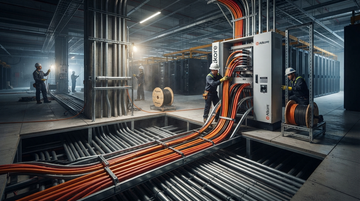
Prysmian’s announced plan to buy Atkore for $95 per share (about $3.8B enterprise value) is framed as an expansion into “fully-fledged electrical solutions.” The supply-chain implication is more specific: it moves Prysmian from primarily being a cable/component supplier to controlling a larger portion of the electrical infrastructure assembly path—conduit/raceway protection and installation-related electrical systems that sit between cable outputs and the electrical distribution that ultimately energizes IT loads.
That is the structural difference versus “bottleneck” narratives that stop at transformers, HVDC/XLPE, or switchgear. Those constraints can limit how much can be installed. But the pricing question is often different: when multiple suppliers must coordinate across interfaces, procurement gets fragmented—and the premium tends to go to the actor with the cleanest channel position and the simplest specification. The Atkore move directly targets that interface problem in the U.S. market.
Verified event • Deal structure
What Prysmian is paying, what it is buying, and what management is promising
Purchase price
$95.00
Atkore shares converted to $95.00 in cash per share, as disclosed in Prysmian’s definitive merger agreement announcement dated Aug 3, 2026
Deal size
~$3.8B
Enterprise value approximately $3.8B (also referenced as ~$3.3B) in Prysmian’s Aug 3, 2026 announcement
Synergies (run-rate)
~$150M
Annual run-rate EBITDA synergies targeted within three years after closing, disclosed Aug 3, 2026
Expected closing window
End-2026 target
Close by calendar year end 2026 subject to approvals and customary conditions, disclosed Aug 3, 2026
Prysmian’s deal terms emphasize two classic “integration-led” value levers: (1) a vertically more complete offering for contractors and (2) cost and operating leverage through procurement, footprint, and logistics. The announcement also points to the core product adjacency needed to make cable specs easier to build: electrical conduits/tubes and cable management/protection systems, plus related installation-oriented components.
| Electrical layer | What Prysmian is adding via Atkore | Why it changes procurement |
|---|---|---|
| Cable protection & routing | Conduit/raceway and tubes used to protect electrical cables | Specifications can be bundled, reducing cross-supplier substitutions |
| Cable management | Trays/ladders/baskets and related cable management systems | Fewer SKUs and fewer installers coordinating across vendors |
| Electrical infrastructure “installation layer” | Cable-adjacent framing/armoring and installation-related products (within Atkore’s electrical and safety/infrastructure lines) | Simplifies contract scope from cable supply to in-building electrical readiness |
Data points • Why the AI electrical stack gets priced this way
Serial consolidation is becoming the pricing mechanism—because specs are cross-linked
Prysmian didn’t limit its 2026 AI electrical footprint to cables. In July 2026, it signed a long-term agreement with Molex (a Koch company) worth up to €5.5B for optical cables used inside data centers, supported by a €550M upfront payment. That anchors demand and capacity planning on the fiber/cable side.
Now pair that with the Atkore acquisition: it extends Prysmian deeper into the in-building electrical stack between cable output and electrical distribution/energization. Together, they describe a shift from “selling components into a bottleneck” to “owning the build path that determines how much content and coordination each GW requires.”
At the operating level, Prysmian can also rationalize cost structure across overlapping supply chains (materials handling, manufacturing planning, and U.S. distribution/logistics). Meanwhile Atkore’s business mix includes both electrical conduit/cable-management and safety/infrastructure solutions that are used in critical-infrastructure build-outs—an overlap that can increase attach rates for contractors when customers prefer fewer vendor handoffs.
Supply-chain wiring • Upstream-to-downstream mapping
Full chain view: materials → components → distribution → build → energized IT loads
- At the upstream end, cable/conduit content increases when data-center electrical design standardizes—consolidators can influence BOM simplification and substitute risk.
- In distribution, conduit/cable-management are typically procured through electrical/industrial channels; owning more SKUs can shift ordering behavior from “project-by-project” to “preferred vendor” bundles.
- At the contractor build step, fewer interfaces reduce rework: conduit/mounting/tray alignment can be coordinated with cable routing and termination readiness.
- At the energized-load endpoint, delivery reliability matters: schedule slippage in any one layer forces costly catch-up procurement—this is where channel consolidation often captures premium margins.
This is the mechanism behind why “electrical stack” consolidation is more valuable than standalone production expansion. Production capacity can be constrained, but procurement pricing often reflects interface complexity. The Atkore move targets that complexity in the U.S. electrical installation layer.
Company fundamentals • Capacity to execute
Prysmian is large enough to finance the next layer—and its reporting supports ongoing scale
Prysmian FY2024 revenue
€17.0B
Prysmian FY2024 income statement figure (reported currency EUR)
Atkore FY2024 context (latest financial window available)
Net income not positive (TTM snapshot)
Atkore operating profitability is volatile; the acquisition premium is primarily about strategic positioning and synergy capture
Prysmian FY2024 EBIT
€1.20B
Prysmian FY2024 income statement EBIT
Prysmian FY2024 EBITDA
€1.66B
Prysmian FY2024 income statement EBITDA
Horizons • What changes first vs. what pays later
Short-term: deal execution and contractor sentiment. Long-term: standardization of the electrical stack
In the next several quarters, what tends to move first is sentiment around (1) regulatory and approval path, and (2) synergy credibility, plus any working-capital or distribution capacity investments needed to support U.S. demand. For Atkore, deal mechanics are already visible in SEC disclosures tied to shareholder approval and customary conditions.
Over 1–3 years, the real thesis is about “standardization.” If data-center developers and electrical contractors start choosing bundled solutions (cable + in-building electrical infrastructure components), then the supplier that spans more layers can price with less compromise and fewer substitutions. Prysmian’s serial 2026 moves—first the Molex fiber anchor, then the Atkore electrical-infrastructure acquisition—are consistent with building that standardization path.
- Near-term catalyst: closing by end-2026 can re-rate the deal from “option value” to “executed platform expansion.”
- Near-term risk: integration can pressure margins before synergy realization, especially if supply planning and logistics are disrupted.
- Long-term bull case: bundled electrical-content specs can raise attach rates for conduit/cable-management with every new cable build-out.
- Long-term bear case: customer procurement policies can remain fragmented if projects insist on multi-vendor compliance or if qualification requirements are slow.
Research angles • Answered with verifiable inputs
What investors should watch to confirm (or falsify) the “stack consolidation” pricing story
- Synergy delivery: whether Prysmian can credibly show progress toward the ~$150M run-rate target within the stated three-year window.
- Product attachment: whether Prysmian’s reporting begins to reflect more share of “in-building electrical readiness” content attached to cable programs.
- U.S. channel position: whether the combined portfolio increases preferred-vendor status with electrical wholesalers/contractors (observable through customer mix changes, where disclosed).
- Contracting schedule reliability: whether management ties AI/data-center growth to fewer project delays (even if exact metrics are not disclosed, language typically shifts).
- Execution risk: regulatory friction could shift the closing timeline; the investment case depends on timing relative to data-center build schedules.
Public-market linkages: who should benefit (or get hurt) when the stack gets consolidated
- The $3.8B Atkore deal is positioned to add margin-accretive electrical infrastructure content if $150M run-rate synergies land within ~3 years.
- The same period includes a €5.5B Molex fiber/cable anchor, so Prysmian can match upstream cable supply to downstream electrical installation build-outs in data centers.
- Closing by end-2026 can reduce deal uncertainty quickly, typically supporting valuation multiple expansion on execution confidence.
- Atkore shareholders receive $95.00 cash per share, so value is crystallized near-term if approvals close on time.
- Integration risk is external: the deal includes run-rate synergies of ~$150M for the buyer, so margin pressure risk shifts to stakeholders pre-close through execution costs.
- As Prysmian expands the offered stack, Atkore’s standalone strategic bargaining power likely declines over 1–3 years unless Synergy delivery fails.
- The €5.5B long-term agreement includes a €550M upfront payment, so Molex’s data-center build-out demand should be supported for up to 10 years by fiber/cable supply reliability.
- If Prysmian adds electrical infrastructure layers via Atkore, Molex may face lower supply fragmentation, potentially improving procurement continuity for Molex-led system integration.