Latest
The day's market news, with the argument attached
New notes every trading day on earnings, policy and market structure. Each one opens with the conclusion, then the evidence, then the companies it hits.
2026-09-03
%22%2F%3E%0A%20%20%3Ccircle%20cx%3D%22220%22%20cy%3D%22150%22%20r%3D%22180%22%20fill%3D%22%2322d3ee%22%20fill-opacity%3D%220.12%22%2F%3E%0A%20%20%3Ccircle%20cx%3D%221010%22%20cy%3D%22130%22%20r%3D%22220%22%20fill%3D%22%2338bdf8%22%20fill-opacity%3D%220.08%22%2F%3E%0A%20%20%3Ccircle%20cx%3D%22920%22%20cy%3D%22520%22%20r%3D%22170%22%20fill%3D%22%2322d3ee%22%20fill-opacity%3D%220.06%22%2F%3E%0A%20%20%3Cpath%20d%3D%22M140%20430h920%22%20stroke%3D%22url(%23line)%22%20stroke-width%3D%2212%22%20stroke-linecap%3D%22round%22%2F%3E%0A%20%20%3Cpath%20d%3D%22M220%20360c120-150%20260-220%20380-220s260%2070%20380%20220%22%20fill%3D%22none%22%20stroke%3D%22%2367e8f9%22%20stroke-opacity%3D%220.5%22%20stroke-width%3D%2216%22%20stroke-linecap%3D%22round%22%20stroke-linejoin%3D%22round%22%2F%3E%0A%20%20%3Cpath%20d%3D%22M300%20398h600%22%20stroke%3D%22%2394a3b8%22%20stroke-opacity%3D%220.24%22%20stroke-width%3D%228%22%20stroke-linecap%3D%22round%22%2F%3E%0A%20%20%3Ctext%20x%3D%22220%22%20y%3D%22510%22%20fill%3D%22%23e2e8f0%22%20fill-opacity%3D%220.7%22%20font-family%3D%22Arial%2C%20Helvetica%2C%20sans-serif%22%20font-size%3D%2238%22%20letter-spacing%3D%228%22%3EINSIGHTS%3C%2Ftext%3E%0A%3C%2Fsvg%3E)

Palo Alto Networks just paid ~$500M to “agentify” security—investors should benchmark the move against identity-agent deals like Okta’s Permiso
Palo Alto Networks announced it has acquired Console to deepen agentic capabilities in its Cortex platform, positioning the product as a “software-as-an-agent” layer over security operations. The strategic message is clear: the market is now pricing agentic security as an attachable platform module, and the $500M-scale entry ticket (as reported by multiple outlets) sets a high bar for revenue conversion versus smaller, identity-centered AI-agent deals.

Pivotal’s CEO exit signals the AAM shakeout is moving beyond prototypes—Larry Page’s lane isn’t insulated
Pivotal, Larry Page’s eVTOL venture, announced on Aug. 31, 2026 that CEO Ken Karklin departed and board member Mike Ross would serve as interim CEO. The timing lands as public-market AAM players are re-allocating attention toward defense-linked, operationally constrained pathways—turning leadership churn into a forecasting signal for which business models survive.

Polymarket’s $300M Trump Jr.-linked lifeline tests whether politics can out-rail JPMorgan’s debanking
Polymarket’s reported $300M investment from Donald Trump Jr.-linked 1789 Capital arrives right after JPMorgan ended its banking relationship with the platform and as New York City opens a marketing-focused investigation. The key question for investors: does politically connected capital actually loosen the “banking rail” bottleneck, or does it simply buy time while regulators keep squeezing distribution and compliance?

Samsara’s Q2 FY2027 print is the “fleet AI” stress test—whether software monetizes at the asset layer, not the rack
Samsara scheduled its Q2 FY2027 financial release for Sept. 3, 2026 (quarter ended Aug. 1, 2026), positioning the company as a clean read-through of whether “physical AI” can convert into measurable, recurring revenue. The current evidence available in primary sources during this run confirms only the release timing—not the results—so the AI-monetization conclusion below is framed as what investors must verify in the forthcoming print.

Shipping’s Hormuz “war premium” is driving the rally—your fade map is which segments can’t reprice fast enough
The Strait of Hormuz disruption has pushed shipping equities to their best levels in more than a decade, but much of the upside is repricing risk—not underlying trade growth. For investors, the key question is whether carriers can lock in today’s higher charter economics before de-escalation lets rates, insurance costs, and sentiment snap back.

The Software Recovery Map: AI “Attach” Now Shows Up in Guidance—Here’s the Winner/Laggard Split
Software’s rebound since the SaaSpocalypse bottom is real, but it isn’t uniform. The re-rating is separating layers that convert AI demand into measurable guidance (data platforms, CRM/enterprise suites, and process “execution” layers) from names still priced off a future miracle—visible in what companies actually forecast and how quickly they monetize AI-related usage.

Teva's celiac antibody win lands as MFN economics tighten—pipeline optionality now competes with margin reset
On Sept. 2, 2026, Teva reported positive Phase 2a results for its anti–IL-15 antibody (TEV ‘408) in adults with celiac disease, using a gluten-challenge biopsy endpoint. Two weeks earlier, Teva was included in a White House MFN pricing framework that is designed to bind future innovative launches to lower “most-favored” reference pricing—an economic headwind for any autoimmune “blockbuster path.” The stock debate shifts from “can Teva win biologics?” to “can it win enough high-value autoimmune volume before MFN pricing reshapes the upside math?”

Thinking Machines just got a $40B pricing signal—making “small, capital-light AI” compete with frontier-lab multiples
Accell reportedly is in talks to lead a roughly $1B round that would value Thinking Machines at about $40B (reported Sept 3, 2026). The repricing matters because it suggests investors are underwriting not just model size, but platform credibility—forcing the “small AI, high-ROI” thesis to clear a frontier-lab valuation ladder as the IPO window approaches.

Uber's 10% layoff reframes robotaxi as an opex battle—while challenging how much of the human-driver gig base survives
Uber is cutting about 3,300 roles (~10% of headcount) in its biggest layoffs since COVID, explicitly amid the robotaxi competitive shift. The parts of Uber that get trimmed matter more than the headline number: if the company flattens management while protecting operations, the human-driver cost base stays intact; if it reorganizes support around AV operations, the transition economics will pull future costs away from riders and toward “AV-operator” capacity.

Zscaler’s beat-and-raise landed in billings—not “agentic hype”: the SSE-to-AI-security demand signal investors can measure
Zscaler’s Q2 results (reported for the quarter ended Jan. 31, 2026) show a strong ARR and deferred-revenue trend alongside an increase in reported revenue, which is the closest public proxy investors have for billings conversion. The company also formalized its “agentic AI security” push via leadership and partner signals—supporting the thesis that AI-driven breach pressure is translating into measurable, recurring security demand (rather than only demos).
2026-09-02

Automatic Data Processing (ADP)'s 38K print contradicts steady JOLTS—this is the signal that decides whether September is really a “two-hike” month
ADP’s Private Sector Employment rose only 38,000 in August—an unmistakably weak labor-demand datapoint—while BLS JOLTS for July showed job openings and hiring staying roughly flat. The gap matters because it changes the likelihood that Friday’s BLS payrolls will confirm further tightening; markets can keep “calm” longer than the data, but only until the payrolls number forces the next repricing.

AfterQuery’s $3.2B in record time highlights a private-market “pricing acceleration” for the AI agent data layer
AfterQuery was reported to become Y Combinator’s fastest-ever unicorn at a $3.2B valuation after raising $30M at a $300M valuation just months earlier—an extreme speed-to-valuation move concentrated in the AI agent ecosystem. The implication for public markets: when private buyers pay for agent supply-chain readiness this fast, it can pull forward software multiples for companies that can monetize “agent-ready” data, evaluation, and workflow integration.

Anthropic’s Fable 5.1 pivot: cheaper pricing plus a wider “unrestricted” path—at the exact moment OpenAI gates Astra over “Critical” cyber capability
Anthropic rolled out Claude Fable 5.1 on Sept. 1, 2026 as an “unrestricted version,” pairing a lower effective cost with tighter false-positive controls and fewer enterprise friction points for everyday workloads. That move runs opposite OpenAI’s Aug. 7 update on Astra, where OpenAI said it “cannot rule out Critical cyber capabilities” and paused parts of Astra work while strengthening controls. For investors, the mismatch signals a profit pool shift toward higher utilization: when safety-friction is reduced without removing monitoring, pricing becomes the lever that changes enterprise adoption and inference economics faster than model benchmarking.

Brazil just made data-center capex cheaper—turning the US power bottleneck into a potential LatAm “second queue” for AI builds
Brazil’s Congress approved a special tax regime (REDATA) that suspends key federal taxes on data-center IT capex starting in 2026, reducing the cost and friction of deploying new capacity in-country. That timing matters because several US states are tightening approvals and interconnection timelines for new data centers, leaving AI demand to find the next buildable power queue. The twist for investors: the same Brazil-for-AI push is occurring alongside a new 25% US Section 301 tariff on Brazilian goods, which can raise cross-border equipment costs and complicate the economics of any Brazil-to-US supply chain.

Broadcom beat-and-fell: the weak guide turned the custom-silicon backlog “test” negative for AI racks
Broadcom’s Q3 FY2026 results showed AI acceleration, but management’s next-quarter AI revenue guide did not provide the backlog-to-revenue “conversion proof” investors wanted. With AI semiconductor revenue guided to $21.7B for Q4 (+236% YoY), the market still sold Broadcom—signaling that the real debate is whether AI custom silicon is arriving on schedule for hyperscaler racks, not whether AI demand exists.

Buttermilk Eatery’s Chapter 11 lands exactly on the low-end consumer stress window—revealing how breakfast “value” breaks first
Asani Restaurant Group LLC (owner of Buttermilk Eatery) filed for Chapter 11 in Florida on Aug. 31, 2026, with reported debts of more than $407,000 against assets exceeding $75,000 and operations concentrated in two St. Petersburg-area locations. The timing matters for investors because it spotlights how limited-liquidity franchisee/independent operators in breakfast—closest to paycheck-to-paycheck demand—can fail before broader, better-capitalized QSR players show stress.
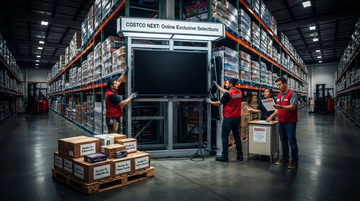
Costco kills Costco Next store fronts without notice—what it signals for the warehouse-club digital business model
Costco has removed access to its “Costco Next” store fronts, telling members the service is no longer available while routing post-purchase issues to individual vendors. The shutdown matters because it spotlights a core mismatch between warehouse-club economics (high trust, tight margin discipline, simple return responsibility) and the marketplace approach that platforms like Amazon and Walmart have made work.

Credo’s post-earnings drop tests whether copper interconnect cash flows can keep up with AI rack spend — even as Dell confirms demand is accelerating
Credo CRDO reported Q1 FY2027 results above the optics-friendly narrative investors were pricing, but the stock sold off sharply the next day. The key question for AI rack investors is whether the market is rotating from “copper rack capture” to “optics/other bottlenecks,” and whether Credo’s guidance supports that transition.

Sep. 2 broke the “resilience” script: 10-year yields hit 2026’s top zone while earnings-season support ended and oil surged
On Sep. 2, the US reignited direct hostilities with Iran as the 10-year Treasury yield pushed to its highest level since Nov. 2023, while crude prices firmed after the conflict flare-up. With the Q2 earnings window effectively done and buyback blackouts typically starting, investors lose two key sources of dip-buying support just as the market’s discount-rate sensitivity returns.

Fervo’s 396 MW Google PPA turns geothermal into an AI-grade “24/7” contract test—without proving the margin math yet
Fervo FRVO spiked on Sept. 1 after announcing a 396 MW enhanced-geothermal power purchase agreement with GOOG for its Cape Station GeoCluster, targeted to come online in 2028 and expandable to nearly 1 GW by June 2030. The market is treating that contract as a commercialization signal for the drill-to-ORC-to-PPA supply chain—yet Fervo’s latest financials still show revenue at the hundreds of thousands and negative operating cash flow, so any “AI multiple” is being priced ahead of repeatable cost and margin delivery.
What to expect
Evidence-first notes with a visible point of view.
This section collects sharp takes on earnings, shareholder meetings, and market structure. Each new piece should make the thesis, the facts, and the implications obvious within the first few screens.
Expect direct analysis, not generic commentary.
Expect the data to be explicit and the argument to be easy to follow.
Plutux is not an investment adviser. Market data and AI-generated analysis are for information and education only, not investment advice. Disclaimer