%22%2F%3E%0A%20%20%3Ccircle%20cx%3D%22220%22%20cy%3D%22150%22%20r%3D%22180%22%20fill%3D%22%2322d3ee%22%20fill-opacity%3D%220.12%22%2F%3E%0A%20%20%3Ccircle%20cx%3D%221010%22%20cy%3D%22130%22%20r%3D%22220%22%20fill%3D%22%2338bdf8%22%20fill-opacity%3D%220.08%22%2F%3E%0A%20%20%3Ccircle%20cx%3D%22920%22%20cy%3D%22520%22%20r%3D%22170%22%20fill%3D%22%2322d3ee%22%20fill-opacity%3D%220.06%22%2F%3E%0A%20%20%3Cpath%20d%3D%22M140%20430h920%22%20stroke%3D%22url(%23line)%22%20stroke-width%3D%2212%22%20stroke-linecap%3D%22round%22%2F%3E%0A%20%20%3Cpath%20d%3D%22M220%20360c120-150%20260-220%20380-220s260%2070%20380%20220%22%20fill%3D%22none%22%20stroke%3D%22%2367e8f9%22%20stroke-opacity%3D%220.5%22%20stroke-width%3D%2216%22%20stroke-linecap%3D%22round%22%20stroke-linejoin%3D%22round%22%2F%3E%0A%20%20%3Cpath%20d%3D%22M300%20398h600%22%20stroke%3D%22%2394a3b8%22%20stroke-opacity%3D%220.24%22%20stroke-width%3D%228%22%20stroke-linecap%3D%22round%22%2F%3E%0A%20%20%3Ctext%20x%3D%22220%22%20y%3D%22510%22%20fill%3D%22%23e2e8f0%22%20fill-opacity%3D%220.7%22%20font-family%3D%22Arial%2C%20Helvetica%2C%20sans-serif%22%20font-size%3D%2238%22%20letter-spacing%3D%228%22%3EINSIGHTS%3C%2Ftext%3E%0A%3C%2Fsvg%3E)
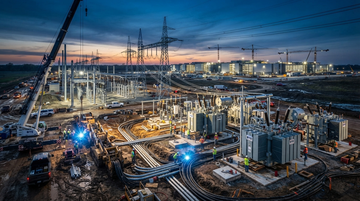
The Sept. 4 8-K filing is short enough to fit on one screen: David A. Thomas, who joined DTE Energy's board in 2013, told the company on Sept. 1 he will retire effective Sept. 3, and the disclosure contains no related-party arrangements. The same week, the company quietly filed a Form 4 showing Vice Chairman & Group President Trevor F. Lauer selling 5,000 shares at an average of $135.71 — with no 10b5-1 plan disclosed. Read together, the two filings bracket the question investors are really asking about the $36.5B AI-grid trade: who is watching the capex, and are they still buying?
The 8-K reads as routine — and that is the point
Item 5.02 of Form 8-K requires disclosure of director departures and officer appointments at public companies, but the trigger here is narrow: Thomas was a director, not a named executive officer. He chaired no committee and held no operating role. What he did hold, per the 2026 DTE proxy, were seats on the Audit Committee and the Organization & Compensation Committee — the two bodies that oversee the books behind a $36.5B capex plan and the executive pay tied to its execution.
Director tenure
13 years
Joined DTE board in 2013
Committee seats vacated
Audit + O&C
Per 2026 proxy committee rosters
2025 director compensation
$290,038
Cash $130K + stock $160K + other
Board size after departure
12 of 13
11 independent of 13 nominees pre-departure
None of that makes Thomas's exit an officer-level event. The framing of a top-bench reshuffle overstates the news. But on a board where 11 of 13 seats are independent and the only management directors are Joi Harris (CEO since Sept. 8, 2025) and Executive Chairman Jerry Norcia, every independent departure is a vote the company cannot afford to lose during a multi-year build-out. The replacement timeline — not the departure — is the watch item.
The real story is a $36.5B capex push for 8.4 GW of AI load
DTE Energy raised its five-year capital plan to $36.5B for 2026–2030 in February 2026, a roughly 22% increase over the prior $30B plan, with DTE Electric's share alone jumping to $30B from $24B (+25%) — an increase the company attributes largely to data-center demand. Two contracts are already in hand: a 1.4 GW Oracle/Related Digital campus in Saline Township that was approved by the Michigan Public Service Commission in December 2025 and is now under construction, and a 1 GW Google data center in Van Buren Township whose contracts were submitted to regulators in Q1 2026. Together the executed deals represent 2.4 GW; DTE puts the full pipeline at up to 8.4 GW.
Five-year total capex plan
$36.5B
2026–2030, vs. $30B prior plan (+22%)
DTE Electric five-year plan
$30B
vs. $24B prior 2025–2029 plan (+25%)
Data-center pipeline
8.4 GW
2.4 GW executed; up to 6 GW in additional opportunities
2026 capex guidance
$6.7–6.8B
vs. ~$3.9B operating cash flow → negative FCF
DTE's own data-center facts page pegs the Saline Oracle project at approximately $300M of annual incremental grid investment once it comes online, and the Van Buren Google contract at roughly $1.7B of positive affordability benefits over the life of the deal. The two combined are projected to contribute around $9B to the electric system through 2045 — a number that becomes the central argument for keeping the build on schedule.
Where the cash comes from is the trade
The numbers do not yet work without help. DTE Energy's 2026 capex guidance of $6.7–6.8B runs against projected operating cash flow of about $3.9B, producing roughly negative $2.8–2.9B of free cash flow in a single year. Capex-to-revenue sits at 32.7% on a TTM basis, well above the 15–20% typical for regulated electric utilities. Net debt to EBITDA is 6.5x — high for the sector — and the company filed a $474.3M electric rate case on April 23, 2026, the same day it announced the rate freeze tied to data-center milestones.
DTE Energy 2026 funding gap vs. peers
Higher bars mean more capex intensity or balance-sheet stress. Capex/Revenue from latest TTM; Net debt/EBITDA from latest TTM.
Unit: x
DTE — Capex/Revenue
TTM through Q2 2026
0.3
CMS — Capex/Revenue
Michigan peer utility, TTM
0.5
DTE — Net Debt/EBITDA
TTM through Q2 2026
6.5
CMS — Net Debt/EBITDA
TTM through Q2 2026
6.1
GEV — Net Debt/EBITDA
Net cash; equipment supplier
-1.1
Q2 2026 operating EPS of $1.32 missed consensus by about $0.15, and management confirmed full-year operating EPS guidance of $7.59–$7.73 — implying 6–8% growth off 2025's $7.06 — without changing the electric capex envelope from Q1. Translation: the equity story is no longer about earnings beats. It is about whether rate-base growth can absorb the data-center capex before the rate freeze kicks in. Authorized ROE sits at 9.9%; the rate base is the variable.
Upstream: 128-week transformer queues are the bottleneck
None of this matters if the equipment cannot be delivered. Power-transformer lead times have stretched to roughly 128 weeks (2.5 years) industry-wide, according to multiple manufacturers including GE Vernova. In April 2026, GE Vernova disclosed that its Electrification segment booked more data-center orders in the first quarter than in all of 2025 combined — a record backlog that argues for pricing power extending through at least 2028. Hitachi Energy broke ground on what will become the largest power-transformer factory in the United States at its South Boston, Virginia campus in mid-2026, but new capacity does not relieve the queue until 2027 at the earliest.
- GE Vernova: data-center orders in Q1 2026 exceeded the full year of 2025; the company's TTM revenue is $41.4B with a net-cash balance sheet (net debt/EBITDA of -1.06x).
- Hitachi Energy is building the largest U.S. transformer plant in South Boston, VA — capacity not expected to ease lead times until at least 2027.
- DTE's own Q2 2026 release flags more than $1.6B of battery storage investment across eight projects and 1.5 GW of capacity — competing for the same constrained switchgear and transformer slots as every other AI-grid utility.
- Eversource Energy and Vistra are pursuing parallel AI-grid capex programs, all drawing from the same upstream queue.
| Company | Mkt Cap | P/E (TTM) | EV/EBITDA | Capex/Revenue | Net Debt/EBITDA |
|---|---|---|---|---|---|
| DTE Energy | $28.3B | 21.5x | 13.2x | 32.7% | 6.5x |
| CMS Energy | $21.5B | 20.5x | 13.0x | 46.0% | 6.1x |
| GE Vernova | $250.9B | 26.5x | 27.9x | 4.1% | -1.1x (net cash) |
The structural read: DTE has locked in customer demand (1.4 GW + 1 GW executed, up to 8.4 GW pipeline) but is exposed on the supply side to the same constrained equipment market as every other utility in the AI-grid race. Equipment makers carry the pricing power; rate-base recovery and project execution carry the risk.
Same week, an officer sold
Two days before Thomas's retirement took effect, Vice Chairman & Group President Trevor F. Lauer filed a Form 4 disclosing the open-market sale of 5,000 DTE Energy shares on Sept. 1 at prices ranging from $135.59 to $135.815 — a roughly $678K transaction with no 10b5-1 plan referenced. Lauer is the executive explicitly responsible for growth, business development, and regulatory matters per DTE's executive committee page — i.e., the data-center pipeline and rate-case work sit inside his remit.
A single Form 4 sale by a single vice chairman is not a signal on its own. The transaction size is small relative to Lauer's 73,122 remaining direct shares (under 7%), and his prior trading history at DTE shows a steady cadence of similar open-market sales. But context matters: the company is mid-build on the largest capex plan in its history, the Q2 EPS miss already put the guidance midpoint under scrutiny, and the rate case plus the audit committee transition are both in the open. The cleaner governance signal is the next quarter's Form 4 pattern, not this one.
What this means for the AI-grid trade
For investors who already own DTE Energy, the Sept. 4 8-K is not a sell signal — but it is a reminder of where the marginal risk now sits. The thesis rests on three legs, each more important than the personnel news: (1) the Oracle campus reaching commercial operation by end-2027 so the rate freeze can begin and $300M of annual grid investment can flow through; (2) the Michigan Public Service Commission approving the Google contracts on a similar timeline; and (3) the equipment supply chain — transformers, switchgear, turbines — holding enough that 128-week lead times do not push projects right.
For investors who do not own DTE, the cleaner expression of the same trade is upstream. GE Vernova sits at the constrained end of every utility's order book — data-center equipment orders in Q1 2026 alone matched all of 2025 — and runs a net-cash balance sheet that lets it fund capacity expansion without dilution. Vistra and Constellation Energy carry the merchant-power angle on AI load, with nuclear and gas portfolios positioned to capture the round-the-clock demand hyperscalers are now contracting for. Each maps to a different way of pricing the same thesis: DTE is the rate-base version, GE Vernova is the equipment version, and Vistra and Constellation Energy are the merchant-power version.
Over a 1–3 year horizon, the milestones that will tell the story are concrete: Michigan Public Service Commission rulings on the Google contract (timeline pending); the Saline Oracle campus mechanical completion and energization (target end-2027); the next DTE Energy 8-K disclosing Thomas's replacement on the Audit Committee; and any incremental 8.4 GW pipeline conversion. The personnel move that just landed is the smallest of those data points — but it is the first one tied to the board that has to sign off on all of the rest.
How the AI-grid trade maps to listed equities
- $36.5B five-year capex (vs. $30B prior plan) and 8.4 GW data-center pipeline anchor the rate-base story — but a two-year electric rate freeze contingent on the 1.4 GW Oracle project coming online by end-2027 caps near-term earnings power.
- Q2 2026 operating EPS of $1.32 missed consensus by ~$0.15; 2026 guidance of $7.59–$7.73 (+6–8%) is intact but requires the AI-load ramp to offset the rate freeze.
- Negative $2.8–2.9B 2026 free cash flow and net debt/EBITDA of 6.5x raise the probability of a dilutive equity raise inside the plan window if transformer lead times slip.
- Other Michigan incumbent with the same hyperscaler opportunity set and a similar capex-heavy balance sheet (capex/revenue 46%, net debt/EBITDA 6.1x) — benefits if DTE's contracts set the template for the broader state build-out.
- Lower P/E (20.5x vs. DTE 21.5x) on similar EV/EBITDA gives a cheaper way to own Michigan AI-grid exposure over a 1–3 year horizon.
- Catalyst risk: CMS has not yet announced a hyperscale data-center contract of comparable scale; re-rating depends on a win in the next 6–12 months.
- Data-center orders in Q1 2026 exceeded the full year of 2025; 128-week transformer lead times support pricing through at least 2028 — directly upstream of DTE's $30B electric capex.
- Net-cash balance sheet (net debt/EBITDA -1.06x) lets GE Vernova fund capacity expansion without dilution, in contrast to the utilities that are its customers.
- Stock trades at 26.5x P/E and $250.9B market cap — multiple is already elevated, so the trade is execution on backlog conversion, not multiple expansion.
- Largest U.S. competitive power generator with an active AI-data-center PPA pipeline — the merchant-power expression of the same AI-load thesis DTE is rate-basing.
- Coal + gas + nuclear portfolio gives round-the-clock capability that hyperscalers increasingly require, complementing Constellation Energy's nuclear-led strategy.
- Catalyst: announced hyperscaler contract conversion and IRA tax-credit transfer pricing — both binary and date-specific within the next 2 quarters.
- Holds the Microsoft 20-year Three Mile Island restart PPA — the highest-profile AI-power contract signed to date, validating the nuclear-for-AI thesis.
- Direct read-through to DTE's pipeline: every gigawatt of incremental data-center load that DTE wins in Michigan creates incremental wholesale-power demand CEG can serve from its Midwest nuclear fleet.
- Risks the same equipment supply chain (transformers, turbines) as every other generator; backlog disclosure in upcoming 10-Q will be the cleaner execution read.