Latest
The day's market news, with the argument attached
New notes every trading day on earnings, policy and market structure. Each one opens with the conclusion, then the evidence, then the companies it hits.
2026-08-24
%22%2F%3E%0A%20%20%3Ccircle%20cx%3D%22220%22%20cy%3D%22150%22%20r%3D%22180%22%20fill%3D%22%2322d3ee%22%20fill-opacity%3D%220.12%22%2F%3E%0A%20%20%3Ccircle%20cx%3D%221010%22%20cy%3D%22130%22%20r%3D%22220%22%20fill%3D%22%2338bdf8%22%20fill-opacity%3D%220.08%22%2F%3E%0A%20%20%3Ccircle%20cx%3D%22920%22%20cy%3D%22520%22%20r%3D%22170%22%20fill%3D%22%2322d3ee%22%20fill-opacity%3D%220.06%22%2F%3E%0A%20%20%3Cpath%20d%3D%22M140%20430h920%22%20stroke%3D%22url(%23line)%22%20stroke-width%3D%2212%22%20stroke-linecap%3D%22round%22%2F%3E%0A%20%20%3Cpath%20d%3D%22M220%20360c120-150%20260-220%20380-220s260%2070%20380%20220%22%20fill%3D%22none%22%20stroke%3D%22%2367e8f9%22%20stroke-opacity%3D%220.5%22%20stroke-width%3D%2216%22%20stroke-linecap%3D%22round%22%20stroke-linejoin%3D%22round%22%2F%3E%0A%20%20%3Cpath%20d%3D%22M300%20398h600%22%20stroke%3D%22%2394a3b8%22%20stroke-opacity%3D%220.24%22%20stroke-width%3D%228%22%20stroke-linecap%3D%22round%22%2F%3E%0A%20%20%3Ctext%20x%3D%22220%22%20y%3D%22510%22%20fill%3D%22%23e2e8f0%22%20fill-opacity%3D%220.7%22%20font-family%3D%22Arial%2C%20Helvetica%2C%20sans-serif%22%20font-size%3D%2238%22%20letter-spacing%3D%228%22%3EINSIGHTS%3C%2Ftext%3E%0A%3C%2Fsvg%3E)

Bank-charter “deposit war” is accelerating—Tioga-Franklin’s $68M FDIC loss is the warning label for the rush
The FDIC’s record shows a $68.0M (approximate) failure cost tied to Tioga-Franklin Savings Bank, while the OCC has conditionally approved new charters tied to crypto-linked business models—explicitly ruling that certain stablecoins are not FDIC-insured deposits. For incumbents, new bank formation raises the odds of higher deposit competition and funding costs; for investors, the key risk is not charter count, but whether growth banks can match rates without breaking underwriting discipline.

Samsung Electronics record payout stops moving the stock because memory cash returns are now “priced, not proven”
Samsung’s 2026 shareholder-return program is large enough to matter on cash, but investors are treating it as table stakes while they underwrite the next leg of AI/HBM demand. The market reaction fits the new memory playbook: capital returns are no longer the catalyst—unit pricing, HBM share, and capex discipline are.

Shein’s HK IPO pricing at up to $27B confirms the de minimis shock—and shows the “late backers” got marked down the most
Shein’s Hong Kong IPO has priced with a maximum valuation of about $27B, roughly one-third below the previously reported $40B “reset” level. The final print lands after the formal end of U.S. de minimis treatment, a change Shein disclosed as a direct headwind to U.S. net revenues and profitability.
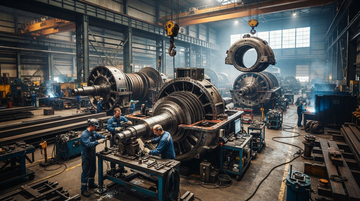
GE Vernova should get a rerating if “steam capacity” stays the next AI power choke point
Reuters reported Siemens Energy is weighing a spin-off (or IPO) and a stepwise stake sale for its “Transformation of Industry” unit, which includes industrial steam turbines. That matters because hyperscaler-driven power buildouts increasingly hinge on steam-side equipment lead times as much as on gas turbine delivery—setting up a valuation read-through to GE Vernova’s power-and-steam franchise.

UBS’s 8,100 S&P 500 target only stays “tape-consistent” if buyback math and long-end yields don’t break
UBS lifted its S&P 500 year-end target to 8,100 alongside higher 2026/2027 EPS forecasts. That bullish tape depends on two fragile links: duration-sensitive discount rates staying stable and buyback credibility keeping equity duration bid. The near-term risk is a regime where higher long-end yields and fading buyback impulse force EPS estimates to do the heavy lifting.

United Airlines is turning 737 Max 10 seat delays into a 2027 pricing bet
United’s pending choice on its 737 Max 10 premium cabin timing is a demand-side way to price Boeing certification uncertainty into 2027 capacity and unit revenue. The airline already has 167 firm commitments for the Max 10 and expects first deliveries in summer 2027, but the premium seat product it planned is not interchangeable—so the decision also pressures Boeing’s delivery cadence and United’s near-term cash conversion.

Veeva's print will decide whether biotech budgets are cutting “seats”… or just “surprises” in pharma CRM
With Veeva’s Q2 FY2027 report due Aug. 26 (for the quarter ended July 31, 2026), investors get the cleanest read on whether commercial/R&D software demand is resilient even as GLP-1-driven reallocations pressure discretionary spend. The key test is margin quality and AI attach as usage grows—because Veeva has historically protected subscription gross margin even while increasing investment and consumption.

Qualcomm's handset leverage meets Xiaomi’s Xring-and-TSMC bet — and the data-center plan is the real profit hinge
Verified filings show Qualcomm is actively repositioning beyond mobile into data-center compute through acquisitions and its nonreportable data-center business. Meanwhile, publicly available event coverage for Xiaomi’s TSMC-made Xring references an EV recall/product-safety library and does not substantiate the claim that a new smartphone SoC is already shipping and structurally replacing Qualcomm or MediaTek volumes. The investable takeaway: even without immediate share loss proof, Qualcomm’s current cash generation and segment mix determine how sensitive the “handset-to-data-center” narrative is if smartphone SoC competition accelerates.

XPeng's Q2 margin test cuts through China’s EV price-war story—because robotaxi upside is optional only if the core P&L stops bleeding
XPeng's latest reported-quarter profitability profile (gross profit, operating loss, and cash/working-capital posture) is the missing “does there exist a profitable floor?” evidence for the China EV margin debate. For investors, the key question is not whether robotaxi/ADAS can move the multiple, but whether the company can convert demand and mix into sustained unit-level economics before tariff and competition pressure forces further pricing cuts.

FTC settlement forces Zillow and Redfin to reverse a $100M “pay-to-exit” deal in multifamily rental listings—turning the portal arms race into a competition test for ad-driven housing marketplaces
The FTC says Zillow paid Redfin $100 million to stop competing in the internet listing services (ILS) advertising market for multifamily rentals, suppressing head-to-head pricing and innovation. The resulting settlement (Aug. 24, 2026) compels Redfin to relaunch its rental ILS advertising business within six months and requires Zillow to unwind recruitment and contract-lock restraints—reshaping how investors should think about “super-app” housing moat economics.
2026-08-23
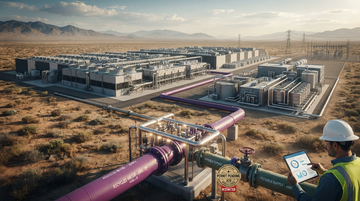
AI Data Centers Are Entering a “Second Constraint” Era—Water Permits, Not Just Power, Decide Who Can Scale
Water scarcity and permitting are moving from background risk to a primary scheduling constraint for AI data centers in drought-prone regions. The practical battleground is cooling choice (water-withdrawing vs. closed-loop) and whether hyperscalers can route cooling demand through recycled-water systems—shifting capex from plant construction into treatment, monitoring, and recycling infrastructure.

AI fabrics hit the “fabric wall”: switch-ASIC + SerDes/retimer capacity, not GPU supply, is tightening the next data-center upgrade cycle
As AI clusters scale toward higher-port-count, 800G-class and 1.6T-era fabrics, the limiting factor is shifting from GPU compute availability to the networking fabric bill of materials—especially switch-ASIC throughput and the SerDes/retimer ecosystems that make optical and copper links behave at scale. Arista has already disclosed that component shortages and lead-time dynamics force it to use non-cancellable semiconductor purchase commitments that can raise working-capital needs and pressure gross margins, while its 1.6T-ready 7060XE7 line shows the engineering push toward the next fabric tier. The practical investor takeaway: watch the silicon and interface bottlenecks that sit between “GPU arrival” and “fully networked training,” because that’s where revenue timing and margins can swing first.

AI server build-out is paying ODMs with single-digit margins — the market sees GPU demand, but not the margin math between silicon and racks
AI server demand is booming, yet the ODM layer that converts GPU shipments into hyperscaler-usable racks is structurally capped by cost-of-sales pass-through, tariffs, expedite charges, and component sourcing concentration. Using Supermicro’s latest SEC disclosure as a load-bearing reference point for gross margin drivers, and cross-checking the revenue scale of major ODMs like Hon Hai Precision, Quanta Computer, and Wistron, the payoff is less “margin expansion” than “volume absorption,” which changes how investors should price order growth and onshoring headlines.

The AI transatlantic build-out is bumping into a real-world bottleneck: cable installation ships and landing capacity
Hyperscalers’ AI demand is translating into a longer “time-to-connect” problem: subsea cable capacity is not just manufactured, it must also be installed with a limited fleet of specialized ships and then terminated at cable landing stations. Prysmian’s planned €350M investment to expand its cable-laying fleet to eight vessels by adding new deep- and shallow-water assets underlines how installation capacity is becoming the choke point—one that can delay AI traffic rollouts even when fiber and systems are ready.

Alibaba's HK$80B placement isn’t just dilution—it funds the compute loop that can mask AI revenue quality
Alibaba [9988.hk] used a large Hong Kong equity placement to raise capital as it ramps AI infrastructure and services. The investor risk isn’t the raise itself—it’s whether incremental cloud/AI demand cycles back into Alibaba fast enough to justify capex, or instead creates a self-reinforcing (and potentially less durable) “circular-financing” pattern that pressures cash flow and margins.

Alibaba’s HK$80B placement sets a “price tag” on China AI capex — and it quietly forces a dilution trade-off for BABA ADR holders
Alibaba BABA is seeking HK$80 billion (~$10.2B) in a Hong Kong share placement at HK$112.70 per share to fund “full stack” AI capabilities. The deal is priced at a modest discount, but it still expands share count by ~710 million shares, reframing China’s AI buildout as a financing-and-dilution race—not just a model-quality race.

Aug. 22’s semi-led selloff sets up Nvidia’s Aug. 26 call: the tape is repricing “duration,” while Canada tariff retaliation tightens risk appetite
Aug. 22 was not just another chip wobble: the Nasdaq’s weekly slide aligned with a macro mix of higher bond-yield sensitivity and escalating cross-border trade risk from Canada’s planned “dollar-for-dollar” tariffs. With Nvidia scheduled to report fiscal Q2 results on Aug. 26, the near-term question for investors is whether guidance can overpower duration-driven multiple compression—and how semiconductor buyers plan budgets under a more punitive policy backdrop.

Ben & Jerry’s mission clauses just got less “absolute” — and that re-prices governance risk for every CPG owner brand with a social mandate
A judge narrowed Ben & Jerry’s lawsuit over Unilever’s alleged efforts to suppress the brand’s social-activism voice, dismissing most claims and leaving only missed-payment claims. The ruling matters less because it ends the dispute than because it clarifies how enforceable “mission clauses” are when they collide with an owner’s contractual and governance rights—turning brand identity activism from a moral argument into a balance-sheet risk.
Canada’s retaliation pressure is skipping cars and aluminum—because the tariff “holes” are concentrated in oil, uranium, potash, and Quebec power
The Aug. 21–23 escalation under the Section 338 tariff snap-back framework explicitly exempts energy and potash from the U.S. action, shifting the real economic stress to the segments the U.S. cannot replace quickly. For investors, that means the first repricing is likely to show up in Cameco, Nutrien, and Canadian oil producers’ U.S.-listed peers—while U.S. utilities and power merchants face second-order stress from Quebec’s cross-border electricity exposure.

Canada can’t “just replace” US aluminum demand—tariffs turn a 60% supply advantage into a $10B+ import-mix problem
U.S. Section 338 actions against Canada and Canada’s dollar-for-dollar posture restart the question of whether Canadian aluminum can absorb the new tariff shock without price and volume fallout. The answer matters because Canada’s share of US primary-aluminum demand is so large that even partial substitution quickly turns into a fill-the-gap scramble that reallocates margin to non-Canadian smelters, scrap recyclers, and aluminum-intensive manufacturers who can re-route supply fast.
What to expect
Evidence-first notes with a visible point of view.
This section collects sharp takes on earnings, shareholder meetings, and market structure. Each new piece should make the thesis, the facts, and the implications obvious within the first few screens.
Expect direct analysis, not generic commentary.
Expect the data to be explicit and the argument to be easy to follow.
Plutux is not an investment adviser. Market data and AI-generated analysis are for information and education only, not investment advice. Disclaimer