Latest
The day's market news, with the argument attached
New notes every trading day on earnings, policy and market structure. Each one opens with the conclusion, then the evidence, then the companies it hits.
2026-08-22
%22%2F%3E%0A%20%20%3Ccircle%20cx%3D%22220%22%20cy%3D%22150%22%20r%3D%22180%22%20fill%3D%22%2322d3ee%22%20fill-opacity%3D%220.12%22%2F%3E%0A%20%20%3Ccircle%20cx%3D%221010%22%20cy%3D%22130%22%20r%3D%22220%22%20fill%3D%22%2338bdf8%22%20fill-opacity%3D%220.08%22%2F%3E%0A%20%20%3Ccircle%20cx%3D%22920%22%20cy%3D%22520%22%20r%3D%22170%22%20fill%3D%22%2322d3ee%22%20fill-opacity%3D%220.06%22%2F%3E%0A%20%20%3Cpath%20d%3D%22M140%20430h920%22%20stroke%3D%22url(%23line)%22%20stroke-width%3D%2212%22%20stroke-linecap%3D%22round%22%2F%3E%0A%20%20%3Cpath%20d%3D%22M220%20360c120-150%20260-220%20380-220s260%2070%20380%20220%22%20fill%3D%22none%22%20stroke%3D%22%2367e8f9%22%20stroke-opacity%3D%220.5%22%20stroke-width%3D%2216%22%20stroke-linecap%3D%22round%22%20stroke-linejoin%3D%22round%22%2F%3E%0A%20%20%3Cpath%20d%3D%22M300%20398h600%22%20stroke%3D%22%2394a3b8%22%20stroke-opacity%3D%220.24%22%20stroke-width%3D%228%22%20stroke-linecap%3D%22round%22%2F%3E%0A%20%20%3Ctext%20x%3D%22220%22%20y%3D%22510%22%20fill%3D%22%23e2e8f0%22%20fill-opacity%3D%220.7%22%20font-family%3D%22Arial%2C%20Helvetica%2C%20sans-serif%22%20font-size%3D%2238%22%20letter-spacing%3D%228%22%3EINSIGHTS%3C%2Ftext%3E%0A%3C%2Fsvg%3E)
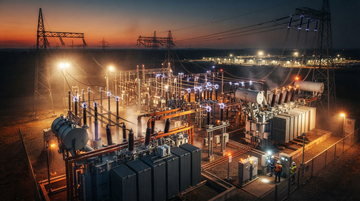
PJM congestion hit $6B in six months—AI load growth is turning transmission limits into a recurring, priced toll
PJM’s transmission congestion costs jumped 43% to $6B in the first half of 2026, driven by binding high-voltage constraints and overload periods. The market implication isn’t just “more congestion”: it’s a shift in who effectively pays for expansion—ratepayers via settlement and capacity economics—while also tightening the demand signal for transformers and high-voltage equipment.
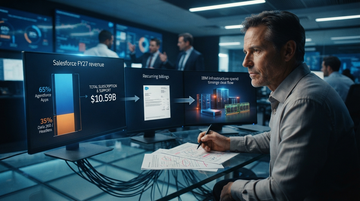
Salesforce is trying to prove Agentforce spend becomes software revenue—its FY27 guide pins the answer to the subscription line
IBM’s latest filing frames a customer spending shift: AI pushes buyers toward servers, storage, and memory, and that timing mismatch drags software deal flow. Salesforce’s counter-test is more specific: it has reorganized revenue reporting around Agentforce Apps and Data 360/Headless and is guiding double‑digit FY27 subscription growth plus stable operating margin. The real question for investors is whether AI monetization lifts recurring billings through the software P&L—or whether it mainly funds infrastructure costs that don’t show up as seats.

SEC’s Aug. 21 case against an ex–Bank of America dealmaker turns M&A leakage into a pricing variable
On Aug. 21, 2026, the SEC charged former Bank of America investment banker Jason Satsky with insider trading tied to the announced acquisition of South Jersey Industries. The complaint alleges a friend, Gavin Wolfe, bought shares ahead of the Feb. 24, 2022 deal announcement and later profited as the stock jumped—underscoring that “leakage risk” is not just a compliance cost; it can move deal dynamics and investor expectations.

South Korea’s Arctic trial turns ice-class demand into the real shipping lever—until war-risk and insurance costs decide the outcome
South Korea’s PanStar Acro is set to begin a pilot container voyage via the Northern Sea Route on Aug 22, targeting a 40–45 day Asia–Europe transit and reporting potential time savings of up to ~35% versus Suez. The economics won’t be proven by distance alone: the trial’s biggest signal for investors is whether ice-capable tonnage can consistently monetize higher transit costs when Hormuz-related war-risk premiums and Panama-driven congestion keep conventional lanes expensive.

Synopsys’ guide is a stress test of the “design is the bottleneck” AI-chip thesis—and China licensing exposure is the real swing factor
Synopsys’ latest guidance is designed to separate two demand drivers: whether the AI-chip bottleneck is dominated by design/verification work (EDA and silicon IP) rather than wafer starts. At the same time, its China/export-control language frames how much of any design-led upside can actually be recognized through its licensing model under shifting approvals.

Nevada’s first paid-robotaxi approvals put Tesla’s Cybercab unit economics ahead of the 2027 promise
Nevada’s Transportation Authority approved paid autonomous ride-hailing for Tesla’s Cybercab fleet in Clark County, capping Tesla’s initial deployment at 5,000 vehicles for the first 12 months. That shifts the bet from “rollout timeline” to regulated, revenue-per-mile execution—where compliance, take-rate, and utilization will matter as much as autonomy progress.

TikTok’s $400M COPPA settlement effectively sets a new “price per platform enforcement” — and it should sharpen the risk math for Meta, Snap, and Alphabet (YouTube)
The U.S. Department of Justice announced a $400M children’s privacy settlement tied to COPPA enforcement against TikTok and ByteDance, including $300M paid immediately and a further $100M contingent on vacating a prior consent decree. Unlike teen-liability cases that live in the “platform immunity” universe, this is a direct compliance-liability datapoint that helps regulators and investors think in enforcement-cost terms for youth-facing product design.

Bessent’s “long-end target” signal matters only if it survives Trump’s credibility test
On Aug. 21, Treasury Secretary Scott Bessent used a public Monday presser to tee up explicit steps aimed at pushing down long-dated yields—via an upsized long-end buyback framework. But Trump’s denial that he directed any bond-market intervention becomes the key credibility test: markets will trade the yield-control “regime” only if it’s repeatable, not one-off messaging.

Ubiquiti: Q4’s “AI-edge” signal lives in margins and inventory, not sales
In Ubiquiti’s fiscal Q4, revenue rose to $937.3M, but the stock’s real battleground is gross margin and working-capital behavior. FY2026 ended with $780.4M of inventory and $928.7M operating cash flow, making the upgrade-cycle question hinge on whether inventory is converting into margin and cash again.
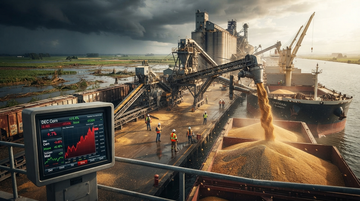
Wild U.S. weather just re-priced food inflation—and the China trade overlay turns it into a “grains-to-CPI” catalyst
Extreme weather is trimming parts of the U.S. crop and lifting input costs for feed and food, re-accelerating the same inflation transmission loop investors had been betting would fade. The twist: the “risk to China trade” narrative can amplify demand and price volatility at the same time, changing who absorbs margin pressure across agribusiness and packaged-food supply chains.

Idaho lab probes Chinese lidar security risk—Hesai and RoboSense face a potential AV sensor “ban-or-divest” shockwave
A U.S. Department of Energy lab is investigating whether widely used Chinese lidar sensors could introduce cybersecurity risks into U.S. vehicles. The immediate threat isn’t just reputational—it’s the procurement layer, where OEMs may accelerate qualification gaps, firmware testing, and supplier swaps before any formal restriction lands.

Virtu Financial jumps ~11% on Aug. 21—market makers are effectively charging the realized-vol toll booth during the Treasury-buyback + crypto volatility regime
Virtu Financial shares surged ~11% on Aug. 21, spotlighting market-structure sensitivity to realized volatility. The key question for investors: whether volatility tied to larger Treasury liquidity-support buybacks and crypto’s momentum-driven whipsaws can translate into sustained market-making economics rather than just a one-day price spike.

NHTSA’s Waymo child-collision probe turns regulatory timing into a first-order cost—long before Cybercab’s rollout
NHTSA’s Office of Defects Investigation has opened a child-collision inquiry into Waymo’s robotaxi, and the record request/response cadence is now the key swing variable for robotaxi scaling. The market lesson is simple: even “data-backed” safety claims can’t substitute for regulatory throughput, because fleets pay in time, frictional redesign cycles, and delayed route/permission expansion.
2026-08-21

AI debt “fatigue” is becoming the demand-side brake on the capex supercycle
A wave of AI-linked corporate borrowing is colliding with buyer constraints in US credit, with larger investors demanding materially better terms to absorb record issuance. For hyperscalers, the near-term risk is not just higher coupons, but a narrower pool of repeat buyers—turning refinancing timing and leverage capacity into the next binding constraint on AI infrastructure funding.

AI-Authorship Is Reaching a Tipping Point: How the Web’s “Training Flywheel” Turns Into a Quality Problem (and a New Ad-Truth Play)
A Pew Research Center study finds AI-authorship signals in over one-third of newly published pages—evidence that the training-data supply is increasingly self-contaminating. The investment angle is not just “more AI text,” but how that content-mix pressures search/ad economics, raises the cost of higher-quality training data, and pulls value toward watermarking, provenance, and rights-clearing.
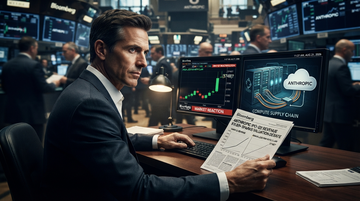
Anthropic’s $11.5B Q2 revenue puts the $74B ARR narrative on trial—so what will the IPO actually price: growth or “run-rate”?
Anthropic is now showing a hard quarterly revenue line of over $11.5B, but the valuation debate hinges on whether the much higher “annualized run-rate” claim is durable and how much is true recurring revenue versus timing effects. The answer matters for buyers of Anthropic shares and for the entire AI supply chain, because run-rate-heavy stories tend to monetize compute, not just software.
argenx wins Phase 3 for autoimmune myositis, pushing its FcRn autoantibody franchise further into chronic immune disease
argenx’s Phase 3 ALKIVIA readout in autoimmune myositis (IMNM + DM) landed a statistically significant primary endpoint, with a 15.4-point Total Improvement Score advantage over placebo. The investor question shifts from “can autoantibodies win?” to “how wide can the FcRn reach go without payer/label friction,” especially as the broader autoantibody-adjacent complex just saw repricing risk after AstraZeneca’s Wainua CARDIO-TTRansform miss.

ChatGPT’s iMessage plug-in “dials-in” Apple’s distribution moat—while Apple’s injunction fight is still in the risk bind
OpenAI’s new Apple Messages plug-in lets ChatGPT read, search, draft, and—after user approval—send texts inside iMessage/SMS/RCS on Apple silicon Macs. That integration underlines why OpenAI cannot fully “bypass Apple” in distribution even as Apple’s trade-secrets injunction effort threatens parts of OpenAI’s hardware pipeline and is flagged as an IPO risk in OpenAI’s public-facing disclosures. The paradox for investors: Apple’s ecosystem becomes both the shortest path to users and the headline legal tail-risk for OpenAI’s licensing, partnerships, and device strategy.

China’s record EV recall turns safety enforcement into a competitive weapon—Tesla, Xiaomi, BYD face a new margin risk
China’s SAMR disclosed a multi-brand, record-scale EV recall in which remedies mix free labeling with software fixes, including an OTA window-lowering strategy after severe crashes. The competitive takeaway is that regulators can now turn safety compliance—especially for software-defined features—into a cost and reputation lever that hits the highest-volume China EV players first.

Citadel’s post-deal unwind challenges the “AI-correction” recovery story for Situational Awareness
After Ken Griffin’s Citadel bought most of [Situational Awareness]’s public equity book in late July 2026, later reporting indicates Citadel has now exited most of the risk it took on—turning the original “buyer of last resort” into a “seller of last resort.” The bigger investor implication: even when the AI drawdown is funding-stable via a rescue buyer, secondary pricing and time-to-liquidate can still reset valuations for the next leg of the AI-correction recovery narrative.
What to expect
Evidence-first notes with a visible point of view.
This section collects sharp takes on earnings, shareholder meetings, and market structure. Each new piece should make the thesis, the facts, and the implications obvious within the first few screens.
Expect direct analysis, not generic commentary.
Expect the data to be explicit and the argument to be easy to follow.
Plutux is not an investment adviser. Market data and AI-generated analysis are for information and education only, not investment advice. Disclaimer