Latest
The day's market news, with the argument attached
New notes every trading day on earnings, policy and market structure. Each one opens with the conclusion, then the evidence, then the companies it hits.
2026-08-21
%22%2F%3E%0A%20%20%3Ccircle%20cx%3D%22220%22%20cy%3D%22150%22%20r%3D%22180%22%20fill%3D%22%2322d3ee%22%20fill-opacity%3D%220.12%22%2F%3E%0A%20%20%3Ccircle%20cx%3D%221010%22%20cy%3D%22130%22%20r%3D%22220%22%20fill%3D%22%2338bdf8%22%20fill-opacity%3D%220.08%22%2F%3E%0A%20%20%3Ccircle%20cx%3D%22920%22%20cy%3D%22520%22%20r%3D%22170%22%20fill%3D%22%2322d3ee%22%20fill-opacity%3D%220.06%22%2F%3E%0A%20%20%3Cpath%20d%3D%22M140%20430h920%22%20stroke%3D%22url(%23line)%22%20stroke-width%3D%2212%22%20stroke-linecap%3D%22round%22%2F%3E%0A%20%20%3Cpath%20d%3D%22M220%20360c120-150%20260-220%20380-220s260%2070%20380%20220%22%20fill%3D%22none%22%20stroke%3D%22%2367e8f9%22%20stroke-opacity%3D%220.5%22%20stroke-width%3D%2216%22%20stroke-linecap%3D%22round%22%20stroke-linejoin%3D%22round%22%2F%3E%0A%20%20%3Cpath%20d%3D%22M300%20398h600%22%20stroke%3D%22%2394a3b8%22%20stroke-opacity%3D%220.24%22%20stroke-width%3D%228%22%20stroke-linecap%3D%22round%22%2F%3E%0A%20%20%3Ctext%20x%3D%22220%22%20y%3D%22510%22%20fill%3D%22%23e2e8f0%22%20fill-opacity%3D%220.7%22%20font-family%3D%22Arial%2C%20Helvetica%2C%20sans-serif%22%20font-size%3D%2238%22%20letter-spacing%3D%228%22%3EINSIGHTS%3C%2Ftext%3E%0A%3C%2Fsvg%3E)
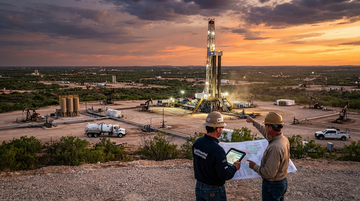
Continental’s FireBird II buy signals Permian “good inventory” is still scarce—while public-deal liquidity tightens into 2027
Continental Resources said it is acquiring FireBird Energy II to add ~54,000 net Permian (Midland) acres and ~32,000 boe/d (69% oil), with ~147,000 net resource acres and 95% operator activity—yet the purchase price was not disclosed. The lack of disclosed price, combined with the size and operating quality of the acquired book, points to a market where top-tier locations still clear at a premium even as the public acquisition window narrows. For listed Permian acreage owners and service names, the immediate takeaway is that scarcity-driven bidding can keep well and completion costs bid higher into the period when supply growth could otherwise surge in 2027.

DOJ’s a16z probe targets a venture-capital operating system: board seats on competing startups
Reporting from Axios, TechCrunch, and Inc says the DOJ is investigating Andreessen Horowitz for alleged “interlocking directorates” tied to partners sitting on the boards of rival companies, including Databricks and Fivetran. If the theory survives, venture governance—not just product competition—could become a regulated variable that rewrites how founders price “top-tier” board access.

ECB’s hike repricing to ~3% by late-2027 could “break” the USD-funded AI carry trade—starting with US duration and dollar funding costs
Traders are repricing the ECB deposit rate toward 3% by late-2027 while the Fed eases, widening the global rates split that typically supports USD-funded risk-taking. For US-linked AI capex, the key transmission is not just FX; it is the feedback loop into USD funding costs and the valuation of long-duration cash flows.
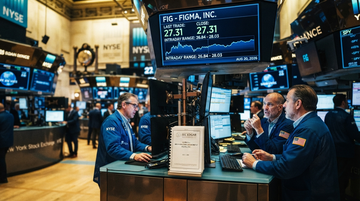
Figma’s public debut isn’t just an IPO—it’s a live audit of whether AI can turn design software into a margin engine
Figma FIG begins public trading on Aug. 20 with investors focused on whether its AI features can monetize fast enough to offset rising compute and product investment. The near-term test is profitability trajectory: recent quarterly results show big swings around operating leverage, so the IPO narrative will rise or fall on AI-driven pricing power rather than user growth alone.

NHTSA’s ~1M GM engine probe targets the pickup profit engine—and the cash-flow risk is asymmetric if “the fix” didn’t fix it
NHTSA opened an engineering probe covering 997,743 General Motors pickup trucks and SUVs over reported engine failures and whether GM’s prior remedy worked. The market focus won’t be the headline count; it will be warranty-cost math tied to GM’s most margin-sensitive North American franchise, where an engine recall can behave like a forced earnings reset rather than a routine liability.

Google’s “Preferred Sources” button turns AI-overview traffic into a measurable publisher asset
Google is giving publishers an embedded, reader-click “Preferred Sources” control designed to restore visibility when AI Overviews skim attention from traditional links. For publishers and SEO intermediaries, the key shift is that the winning signal is closer to a consumer preference than to an opaque ranking contest—so content and distribution can be optimized around verifiable reader selections.
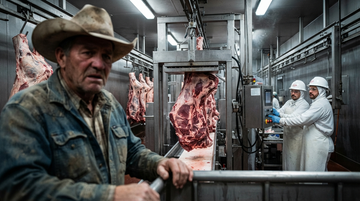
A 90-day beef import window won’t break the “cattle squeeze”—it mainly shifts margins inside the packing chain
Policy easing on certain beef import quotas can relieve near-term pressure on retail prices, but it does not directly fix the underlying bargaining mechanics between ranchers and packers. The first-order effect is usually on packer gross margins (through input cost and product mix), while cattle prices react more slowly and less reliably.
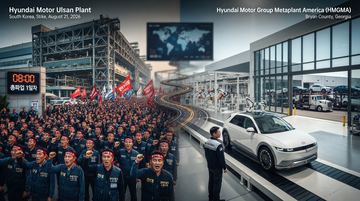
Hyundai’s first full strike in 10 years turns “Georgia/Alabama ramp” into a wage-inflation stress test—starting with who can afford the catch-up
Hyundai’s Korea union launched a full-day 8-hour walkout (two shifts, 16 hours total) at the company’s Ulsan, Jeonju, and Asan plants on Aug. 21, 2026. The near-term risk is production disruption and parts pull-ins; the bigger investable question is whether Hyundai’s wage “benchmark” arrives before its North America output has fully replaced the older export mix—shifting costs downstream to suppliers and margin-sensitive buyers.
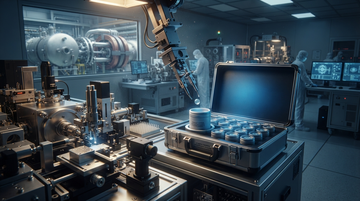
Inertia’s “minutes not days” fusion-fuel breakthrough doesn’t remove fusion’s choke point—tritium stockpile math already sets the real deadline
Inertia says it cut fusion-fuel target production from “several days” to “just minutes,” targeting 10 shots per second and mass fabrication. But deuterium–tritium fusion still faces a separate, slower treadmill: worldwide tritium stocks are only on the order of tens of kilograms, and accumulating enough tritium for first-of-a-kind commissioning requires multi‑year build-up even if pellet-making becomes fast.
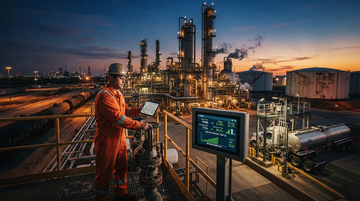
The teapot blockade’s hidden hit: it tightens China’s crude intake first, then forces a utilization reshuffle that changes refining spreads before buyers price it
The U.S. blockade is no longer only a crude-risk premium story: OFAC’s April 28, 2026 sanctions framework shows China’s “teapot” refineries (via specific designated facilities) sit at the center of Iran crude purchases, meaning any cut instantly becomes a demand-side feedstock shock. That shock forces crude substitution and utilization changes, which can reprice global crude differentials and refining margins—setting up a near-term, equity-relevant spread impulse for independent U.S. refiners.

Jackson Hole’s missing link: one Fed speech now has to reconcile $94 oil, a 4.69% 10-year, and a retail-slowdown signal for September
Ahead of the Jackson Hole Economic Policy Symposium (Aug. 27–29, 2026) and amid a sharp weekly equity drawdown, markets are trying to map one Fed narrative onto three conflicting price signals: oil holding near $94, the 10-year around 4.69%, and U.S. retail sales falling 0.6% in July. The paper-for-paper risk for policy makers is that the oil shock can keep inflation expectations anchored while still lifting longer-end rates, so “cuts later” can be incompatible with a weakening consumer.

JPMorgan’s David Fishman hire signals AI M&A is moving from talk to execution
JPMorgan is bringing in Bank of America’s David Fishman to head technology M&A in North America, with JPMorgan also elevating Vineet Seth into a broader investment-banking leadership role. For investors, the signal isn’t just talent—it’s capacity: the deal desk is being organized to win AI-related bolt-ons and infrastructure roll-ups as the IPO window reopens.
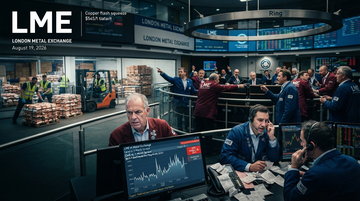
LME copper’s flash squeeze wasn’t a tariff tell—it was a margin-call mechanics reveal that physical tightness can spread company-to-company
The LME copper cash-to-near prompt spread spiked sharply during the Aug. 19, 2026 “flash squeeze,” turning what looked like a price debate into a delivery-and-margin problem. The key investor takeaway is transmission: when nearby supply gets scarce, positions get forced into physical delivery, and the first-order effect shifts from “tariff gauge” talk to “who has liquidity, who has metal, and who can pass through tightness” across copper producers and electrification/AI buyers.

Micro1’s $500M gross run-rate shows the AI data middleman is capturing the margin—before the copyright bill hits
Micro1’s reported jump to a ~$500M gross annual run rate highlights how “human-in-the-loop” training-data services can scale to public-company scale. But the copyright-cost floor created by major AI settlements (including Anthropic’s $1.5B approval) implies the training-data supply chain may see margin compression first—starting with the services that sit between data owners and frontier labs.

NVIDIA's Linux/Chromebook GeForce NOW update turns cloud gaming into a recurring, software-like GPU monetization layer
NVIDIA is pushing GeForce NOW onto Linux and Chromebooks with an “out of beta” native Linux app plus a Chromebook “Fast Pass” that bundles a year of service and prioritizes access. The move matters for investors because it targets lower-utilization device segments and can turn existing GeForce-grade GPU capacity into stickier, subscription-style revenue—at the same time that platform walled gardens face higher pressure.

OpenAI’s “AI Futures” launch turns long-horizon safety into an investor-grade program
On Aug. 20, OpenAI introduced its “AI Futures” initiative, framed around reshaping society for transformative AI while centering governance and individual agency. Read alongside Aug. 18’s “pacing model development” cyber argument and the lab’s “Zero Data Retention” enterprise posture, the move signals a tighter, more institutional way of selling long-horizon risk and capex discipline to regulators and future public-market investors.

OpenAI’s enterprise bounce is squeezing Anthropic’s IPO math: if July share keeps drifting, $190–$200B 2028 revenue assumptions get harder
Fresh Ramp-based market-share reporting shows OpenAI clawing back enterprise business users from Anthropic in July 2026—without the lead fully flipping back. That matters because Reuters reports the street’s Anthropic IPO valuation is being anchored to a $190–$200B 2028 revenue forecast, making persistence of any share erosion (or re-acceleration) a pricing risk for Anthropic’s IPO.
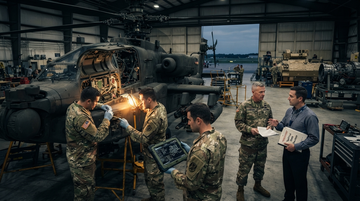
Inside the Pentagon’s “Right to Repair” fight: the policy push targets the defense primes’ sustainment IP profit pool
The Pentagon is pushing contracts to grant the military access to “necessary tools, software, and technical data” so it can repair and sustain weapons without being blocked by intellectual-property limits. Industry pushback is effectively a push to protect the high-margin sustainment economics that come from restricted access to technical data packages—an issue that matters for aftermarket revenue assumptions across RTX, LMT, NOC, GD, and HII.

Ramp’s router move suggests LLM routing is becoming a vertical feature—not a standalone infrastructure moat
Ramp’s new Router product ties model selection to enterprise spend visibility, claiming customer inference-cost reductions of 40% on average and 99.9% production reliability. When paired with Stripe’s plan to acquire OpenRouter for routing optimization across 400+ models, the signal is that “routing intelligence” is shifting from a toll-booth business into table-stakes plumbing that incumbents embed into finance and payments workflows.
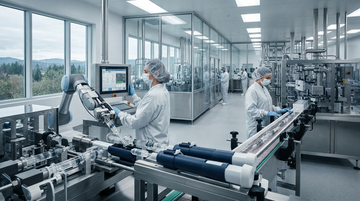
Roche’s $750M Oregon device fill-finish plan turns reshoring into a combination-product systems build
Genentech (Roche’s U.S. subsidiary) will invest about $750M in Hillsboro, Oregon to add a drug-delivery-device fill-finish plant expected to start commercial operations in 2031. That is a contrarian reshoring datapoint versus reports of German companies pulling back U.S. direct investment in H1 2026, and it reframes “onshoring” from just APIs/biologics to full drug-device manufacturing capacity.
What to expect
Evidence-first notes with a visible point of view.
This section collects sharp takes on earnings, shareholder meetings, and market structure. Each new piece should make the thesis, the facts, and the implications obvious within the first few screens.
Expect direct analysis, not generic commentary.
Expect the data to be explicit and the argument to be easy to follow.
Plutux is not an investment adviser. Market data and AI-generated analysis are for information and education only, not investment advice. Disclaimer