Latest
The day's market news, with the argument attached
New notes every trading day on earnings, policy and market structure. Each one opens with the conclusion, then the evidence, then the companies it hits.
2026-08-18
%22%2F%3E%0A%20%20%3Ccircle%20cx%3D%22220%22%20cy%3D%22150%22%20r%3D%22180%22%20fill%3D%22%2322d3ee%22%20fill-opacity%3D%220.12%22%2F%3E%0A%20%20%3Ccircle%20cx%3D%221010%22%20cy%3D%22130%22%20r%3D%22220%22%20fill%3D%22%2338bdf8%22%20fill-opacity%3D%220.08%22%2F%3E%0A%20%20%3Ccircle%20cx%3D%22920%22%20cy%3D%22520%22%20r%3D%22170%22%20fill%3D%22%2322d3ee%22%20fill-opacity%3D%220.06%22%2F%3E%0A%20%20%3Cpath%20d%3D%22M140%20430h920%22%20stroke%3D%22url(%23line)%22%20stroke-width%3D%2212%22%20stroke-linecap%3D%22round%22%2F%3E%0A%20%20%3Cpath%20d%3D%22M220%20360c120-150%20260-220%20380-220s260%2070%20380%20220%22%20fill%3D%22none%22%20stroke%3D%22%2367e8f9%22%20stroke-opacity%3D%220.5%22%20stroke-width%3D%2216%22%20stroke-linecap%3D%22round%22%20stroke-linejoin%3D%22round%22%2F%3E%0A%20%20%3Cpath%20d%3D%22M300%20398h600%22%20stroke%3D%22%2394a3b8%22%20stroke-opacity%3D%220.24%22%20stroke-width%3D%228%22%20stroke-linecap%3D%22round%22%2F%3E%0A%20%20%3Ctext%20x%3D%22220%22%20y%3D%22510%22%20fill%3D%22%23e2e8f0%22%20fill-opacity%3D%220.7%22%20font-family%3D%22Arial%2C%20Helvetica%2C%20sans-serif%22%20font-size%3D%2238%22%20letter-spacing%3D%228%22%3EINSIGHTS%3C%2Ftext%3E%0A%3C%2Fsvg%3E)
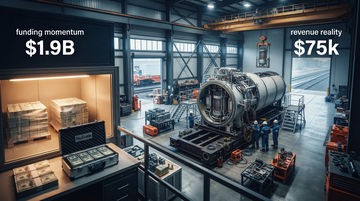
NuScale Power revenue barely exists—while liquidity swells, and the timing matters more than the narrative
In NuScale Power’s Q2 2026 results, revenue totaled just $75k for the quarter while cash, cash equivalents, and investments rose to $1.9B—an extreme mismatch that forces investors to separate “funding momentum” from “revenue reality.” The filing ties the year-over-year revenue plunge to completed Fluor FEED Phase 2 work in late 2025 and the absence of comparable 2026 activity, not a broken business model at every moment; but it still shows that the SMR economics are pacing far behind the AI power-demand storyline.

NVIDIA turns $1.5B into an equity seat on OpenAI’s Ohio data-center developer
NVIDIA will invest $1.5B into SB Energy to secure land, power, and shell capacity at the PORTS‑Pike AI data-center campus that OpenAI leases under a 20‑year structure. The move shifts NVIDIA from “compute-only” supplier into an ownership-and-credit participant in the project’s developer layer—tightening the demand loop between NVIDIA, SB Energy, and SoftBank/OpenAI while concentrating upside and tail-risk in the same chain.
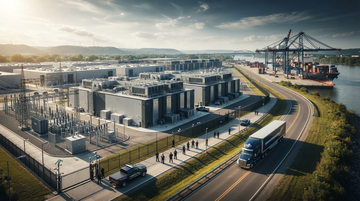
OpenAI’s PORTS-Pike move reframes frontier AI as critical-infrastructure security work—where “workload reliability” can become a contractable capability
OpenAI’s Aug. 17, 2026 announcement ties frontier compute to the PORTS-Pike data-center campus in Pike County, Ohio, with a 20-year tenant deal and a capacity ramp starting in 2028. The strategic significance isn’t the data center itself—it’s how the announcement’s emphasis on resilient, qualification-driven infrastructure and longer “mean time between interruptions” mirrors how U.S. port operators are expected to document and plan cyber risk under Coast Guard guidance.

OpenAI’s “ChatGPT for Teens” shifts the legal center of gravity from feed algorithms to product controls
OpenAI’s new teens experience pairs age-prediction with default “reduced sensitive content,” crisis escalation rules, and parent/guardian “linking” that does not expose chat transcripts. For investors, the strategic punch is that it treats COPPA-style compliance as a product feature—reducing the kind of teen-exposure risk courts have been punishing in social-media ad and recommendation feeds.

Perplexity’s Airtel giveaway in India grew users fast—yet the real test is whether free cohorts will keep paying after the free year ends
Perplexity’s 12-month free Perplexity Pro offer through Bharti Airtel put tens of millions of Indians in front of AI-search—creating a scale shock that matters for “distribution economics” in price-sensitive markets. But the monetization evidence so far is mixed: in-app purchase revenue rose during the promotion, while the harder conversion question—what happens after auto-renewal/cancellations and the free-year expiration—still has to resolve.

Relay shutdown becomes Google’s first “browser-agent” hire—automation is consolidating at the interface, not the model layer
AI workflow startup Relay is shutting down in August–September 2026 and its founder is rejoining Google to lead Chrome product and developer relations. Read alongside Alphabet’s scale and operating cash generation, the move signals that the most durable agent economics are shifting toward the browser runtime—where permissions, distribution, and user intent all meet.

AI Isn’t “killing” staffing—at least not yet; it’s reshaping it into a higher-churn, higher-tech matchmaking business
The staffing industry’s rally contradicts the simplistic “AI replaces recruiters” narrative. Evidence from ManpowerGroup’s Employment Outlook Survey and the direction banks are taking on AI labor suggests a more nuanced model: AI can compress hiring timelines and shift tasks toward agile reskilling, which can increase demand for staffing intermediaries rather than eliminate it.
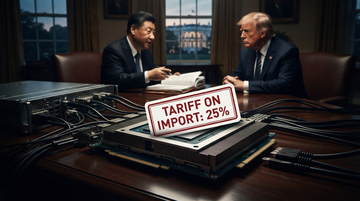
Xi’s UN skip puts the Trump–Xi summit into the market’s “tariff + chip export” binary
Xi Jinping will skip the UN General Assembly while visiting Washington, concentrating the trip around a Sept. 24 Trump meeting at the White House. That timing matters for investors because several chipmakers already describe “tariff-on-import” and export-control pathways that can swing China revenue—making détente versus escalation a direct earnings and margin driver across semiconductors and critical-minerals supply chains.
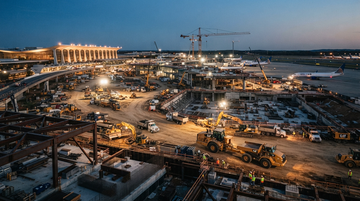
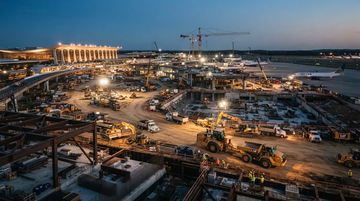
Dulles’ $19.9B overhaul gets the green light—yet financing math at ~5% Treasury yields is the real schedule risk
MWAA’s board is set to vote on a roughly $19.9B Washington Dulles overhaul, framing it as a once-a-generation rebuild. The investment size is less important than the financing stack: if rate-sensitive municipal capital is repriced upward, the program’s phased construction plan becomes the pressure point for contractors, aviation engineering services, and durable-goods suppliers.

Ceasefire expiry flips the “fade” trade: oil lifts back toward $85 as term premium and shipping risk reprice
When the U.S.–Iran ceasefire looked set to expire on Monday, policy language tilted toward coercive pressure and Iran signaled a harder posture—pushing oil and yields higher. The trade implication is not just crude sensitivity: airlines, margin-flex refiners, tanker operators, and long-duration equity exposures can whipsaw as term premium and freight risk re-price before the market regains direction.
Washington’s “more refinery output” push just set a ceiling on the crack-spread trade
Energy Secretary Chris Wright said the U.S. will announce steps within days to help refiners boost fuel output. When policymakers target throughput, the usual winners are volume/working-capital operators—and the usual losers are refiners’ margin flexibility that depends on tight product markets, especially during record crack spreads.

Warsh inherits the White House–Fed fight that could reprice the September path—and the long-end term premium
Kevin Warsh’s confirmation and early Fed chair messaging has put Fed independence back at the center of Washington politics. That matters for markets because rising uncertainty about the policy path has already been linked to higher term premia in Fed communications—and political interference is now the missing variable for how September pricing resolves.
2026-08-17
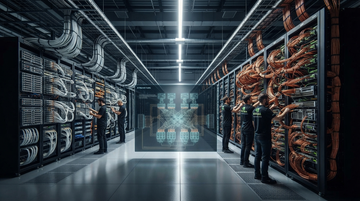
The real AI “tolls the rack” war: Ethernet-scale NVLink’s moat can’t stop fabric spend from compounding
At 100k-GPU scales, the winning network design is less about peak interconnect bandwidth and more about how fast hyperscalers can buy, deploy, and oversubscribe the fabric without sacrificing collective efficiency. The Ethernet side is gaining momentum through purpose-built standards like Ultra Ethernet, while NVLink remains the scale-up “in-rack” fast path—so the interconnect profit pool migrates between chip, switch, and server layers depending on where architectures settle.
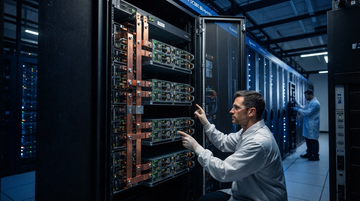
The 48V rack bus is the new price bottleneck in AI data centers—SiC/GaN power silicon may capture the “dollars-per-watt” upside that electrical OEMs can’t
As AI racks scale toward hundreds of kilowatts, the in-rack power-delivery chain (PSU → 48V bus → VRMs → SiC/GaN switching) is getting harder to build, cool, and qualify as one stack. Primary disclosures show that the Vera Rubin NVL72 rack design already concentrates power demand into multiple 110kW shelves, while grid-side electrical backlogs (Eaton) and 800V HVDC guidance (onsemi) point to a multi-year build-out. Investors should expect silicon vendors supplying SiC/GaN efficiency and density to monetize the “per-watt” upgrade cycle faster than the grid/electrical OEM layer.
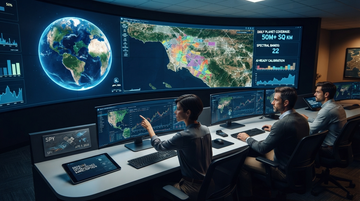
Geospatial Analytics Just Became the New “Recurring Receipts” Layer—Defense-Grade AI-Ready Satellite Feeds Shift the Margin Map
A newly disclosed, eight-figure defense intelligence “AI-ready” subscription underscores a shift: Earth-observation value is moving from raw imagery to analytics-ready data products. The result is a toll-booth dynamic—who owns calibration/consistency and who owns the downstream intelligence workflow determines whether satellite economics get upgraded or commoditized.

Alphabet's first Kangaroo bond is a bet that the USD-to-AUD funding split still beats hedging risk
Alphabet appears to be moving part of its AI-era financing into a brand-new [Australia]() dollar “Kangaroo” format, with the key signal coming from where [Reserve Bank of Australia]() policy meets the [Federal Reserve](). The inaugural step matters because it reframes financing: less “set-and-forget USD issuance,” more targeted cross-currency funding + FX-hedging to match where real hyperscaler demand is showing up on investor balance sheets.

Anthropic’s “crisis of trust” frames the IPO risk investors still may be missing
Anthropic CEO Dario Amodei ties the latest AI backlash to a trust problem—“ordinary people don’t trust companies, governments, or the tech industry”—not just to safety messaging. That framing matters at Anthropic’s $965B post-money valuation after its $65B Series H: if enterprise buyers and regulators treat AI spend as a reputational risk, adoption can slow even when model performance improves.

Apple's $2,000 foldable would test whether margins can beat the memory-cost crunch—and who captures the bill of materials
A $2,000+ Apple foldable would be a rare bet that high-end mix can defend handset profitability even as component pricing pressure rises. If the build routes through Samsung Electronics OLED supply plus hinge and ultra-thin glass specialists, then $2K demand is less important than yield-driven costs—because margins rise or fall at the display and crease/hinge failure points, not in memory alone.

ByteDance’s MPA truce turns AI copyright from lawsuits into a “licensing sooner-or-later” market test
ByteDance’s Aug. 17, 2026 pact with the Motion Picture Association (MPA) is framed as new guardrails for its Seedance/Seedream generators in TikTok, CapCut, and Dreamina—but it does not disclose a resolved licensing or training-data fix. For studios and frontier labs, the deal is still strategically important: it’s the first widely reported “template” showing how an entrenched rights holder can shift AI disputes toward process, refusals, and eventual paid access as liability pressure rises.

Chevron’s Aug 17 OFAC license step adds heavy barrels back—forcing a new U.S. Gulf Coast refining-margin test
An OFAC amendment released Aug 3, 2026 makes Chevron’s Venezuela-linked authorization operative on or after Sept. 17, 2026—raising the odds that heavy Venezuelan crude availability (and its refining economics) moves from headline risk to measurable margin impact. For investors, the key question is whether the restarted heavy flows are large/steady enough to tighten U.S. Gulf Coast heavy differentials and lift refiners’ realizations, without reintroducing political delivery risk.
What to expect
Evidence-first notes with a visible point of view.
This section collects sharp takes on earnings, shareholder meetings, and market structure. Each new piece should make the thesis, the facts, and the implications obvious within the first few screens.
Expect direct analysis, not generic commentary.
Expect the data to be explicit and the argument to be easy to follow.
Plutux is not an investment adviser. Market data and AI-generated analysis are for information and education only, not investment advice. Disclaimer