Latest
The day's market news, with the argument attached
New notes every trading day on earnings, policy and market structure. Each one opens with the conclusion, then the evidence, then the companies it hits.
2026-08-17
%22%2F%3E%0A%20%20%3Ccircle%20cx%3D%22220%22%20cy%3D%22150%22%20r%3D%22180%22%20fill%3D%22%2322d3ee%22%20fill-opacity%3D%220.12%22%2F%3E%0A%20%20%3Ccircle%20cx%3D%221010%22%20cy%3D%22130%22%20r%3D%22220%22%20fill%3D%22%2338bdf8%22%20fill-opacity%3D%220.08%22%2F%3E%0A%20%20%3Ccircle%20cx%3D%22920%22%20cy%3D%22520%22%20r%3D%22170%22%20fill%3D%22%2322d3ee%22%20fill-opacity%3D%220.06%22%2F%3E%0A%20%20%3Cpath%20d%3D%22M140%20430h920%22%20stroke%3D%22url(%23line)%22%20stroke-width%3D%2212%22%20stroke-linecap%3D%22round%22%2F%3E%0A%20%20%3Cpath%20d%3D%22M220%20360c120-150%20260-220%20380-220s260%2070%20380%20220%22%20fill%3D%22none%22%20stroke%3D%22%2367e8f9%22%20stroke-opacity%3D%220.5%22%20stroke-width%3D%2216%22%20stroke-linecap%3D%22round%22%20stroke-linejoin%3D%22round%22%2F%3E%0A%20%20%3Cpath%20d%3D%22M300%20398h600%22%20stroke%3D%22%2394a3b8%22%20stroke-opacity%3D%220.24%22%20stroke-width%3D%228%22%20stroke-linecap%3D%22round%22%2F%3E%0A%20%20%3Ctext%20x%3D%22220%22%20y%3D%22510%22%20fill%3D%22%23e2e8f0%22%20fill-opacity%3D%220.7%22%20font-family%3D%22Arial%2C%20Helvetica%2C%20sans-serif%22%20font-size%3D%2238%22%20letter-spacing%3D%228%22%3EINSIGHTS%3C%2Ftext%3E%0A%3C%2Fsvg%3E)

2026-08-16
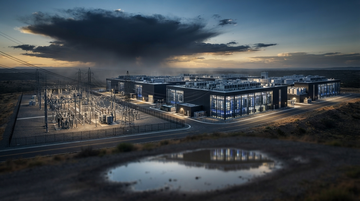
The unpriced line item in AI data-center finance: insurers/reinsurers are underwriting grid-interruption and residual-value “tails” that lenders can’t see
Insuring a $20B+ data-center build is not just a property issue—it’s a business-interruption and residual-value “tail-risk” problem shaped by grid strain and catastrophic concentrations. Swiss Re’s AI data-center risk research ties construction limits and BI severity directly to how insurers ration capacity, which can change project finance math even when property damage itself looks insurable.
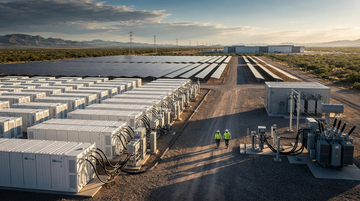
Nvidia’s $3B SB Energy bet highlights the missing “grid-firming” link in AI power
Nvidia’s reported move to invest up to $3B into SB Energy underscores that AI data-center growth is constrained less by chips than by 24/7 power availability. The real supply-chain margin sits in grid-scale storage, power-electronics, and fast interconnection—areas where equipment and energy-storage firms can see order-flow spillover once projects lock fuel (or storage) and transmission timelines.

The transatlantic bottleneck for AI isn’t fiber—it’s who gets to land it
Google’s new transatlantic subsea buildout shows how AI demand is now translated into physical route control: its Nuvem system targets ~384 Tbps across 16 fiber pairs and lands at the Atlantic “gateways” it chooses. In the U.S., FCC licensing and the ownership/architecture of cable landing stations then shape which ecosystems can absorb that capacity first—creating a new competitive edge for operators that sit closest to landing points like Equinix, and a new risk for traffic planners that assume capacity availability is purely a “cable count” problem.

Anthropic’s IPO valuation is being priced off a 2028 revenue number—not today’s run-rate
Reuters reports that Anthropic’s IPO valuation hinges on a specific 2028 revenue forecast of roughly $190–$200B, far above today’s ~$47B run-rate. That shifts the investment question from “Is Claude growing?” to “Can a four-year revenue ramp survive competitive, pricing, and compute constraints?”
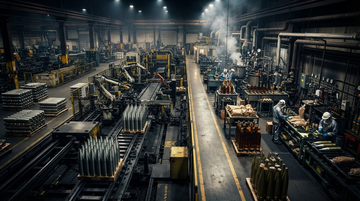
The real bottleneck in 155mm restock isn’t the shell-body line—it’s TNT, propellant charges, and the energetics/chemicals substrate
The U.S. Army’s effort to surge 155mm output has exposed a binding constraint: the energetics layer (TNT explosive fill, propellant charges, and related specialty energetic materials) is harder to scale than the metalworking and assembly steps. The sharpest proof is how capital spent on shell production can still fail to yield usable rounds when upstream requirements—like explosive-fill readiness and propellant/charge compatibility—can’t ramp fast enough.

Alibaba’s next quarter tests whether Qwen monetization can offset a China demand drag
Alibaba BABA is set to report its June-quarter results on Aug 20, 2026—making it the first major China-tech earnings print where Qwen’s shift from “open” to commercial terms shows up in financials. Investors will be watching whether higher cloud/AI monetization can outrun consumer softness and whether capex discipline keeps free cash flow from staying negative while Washington export controls keep margins and deployment optionality under pressure.
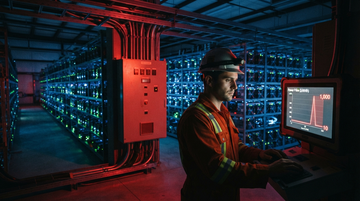
Bitcoin miners just got a brutal new margin line: power that can jump ~100x in an hour
A reported Aug 16, 2026 spike in wholesale power prices—from roughly $10 to about $1,000/MWh in ~60 minutes—turns electricity volatility into the binding variable for crypto miners’ margins. For IREN, CLSK, CIFR, and WULF, the investor takeaway is simple: even with BTC upside, unhedged power exposure can overwhelm operating models on the very time scale miners can’t fully manage.

Capricor Therapeutics’s deramiocel “lifeline” hinges on one thing: whether the FDA will accept an amendment fast enough to matter before the August 22 decision
The FDA’s willingness to review new data/amendment after a sharply negative advisory-committee vote is the catalyst behind Capricor Therapeutics’s surge. But the HOPE-3 evidence, as reflected in the FDA materials, still shows no statistically significant primary or key secondary efficacy at Month 12—so the near-term stock reaction is less about “approval odds” and more about whether the FDA can (and will) change its view on benefit-risk using the revised package by the August 22 PDUFA target.

Databricks’ $190B private ceiling turns Snowflake’s AI Data Cloud into a pricing test
Databricks has closed a $5B round at a $190B valuation, explicitly funding its Lakebase/Genie/“AI Gateway” roadmap—another step toward packaging enterprise data as an AI-ready product. For Snowflake, the market’s job is to answer whether Cortex AI and the Data Cloud can scale fast enough to earn anything like a private-market “ceiling” multiple, or whether the public stock is still discounting lakehouse-vs-warehouse migration risk.
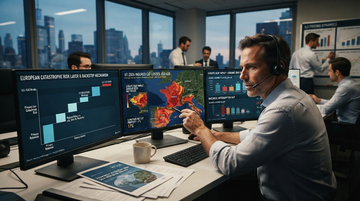
Europe’s heatwave losses expose a “business-interruption” insurance gap—US reinsurers and cat-bond investors are the backstop
Swiss Re’s Institute estimates H1 2026 global insured catastrophe losses at USD 42B, with Europe now facing record-breaking heat and chronic risk. But protection gaps aren’t just about property damage—EIOPA’s Eurobarometer shows only 17% of EU residents report coverage for natural-catastrophe property damage, and heat increasingly acts as a multiplier that drives drought, wildfire, and operational disruption, pushing reinsurance and ILS pricing higher for layers that used to price more cleanly.

Fitness Fanatics’ $4–$6 micro-cap IPO window is pricing in consumer softness—right after retail’s weakest month in 13 months
Fitness Fanatics’ Aug. 14 S-1 sets a $4–$6 IPO range on just ~7M shares, and its filing explicitly ties demand risk to consumer confidence and spending patterns. That comes the same day U.S. retail sales printed a -0.6% monthly drop—the weakest reading in over a year—highlighting how quickly the consumer IPO window has narrowed when the macro tape turns. The deal’s mix of B2B distribution and B2C channels (including online and vending) also suggests investors are stress-testing whether “fitness” can hold up when discretionary retail weakens.

German firms are cutting US capex again—tariff whiplash is reversing the “reshoring supercycle” narrative
Fresh Reuters reporting points to a three-year low in German corporate investment into the United States in the first half of 2026, directly tied to policy-driven uncertainty. For US-market investors, the key takeaway is that the reshoring bid is becoming more selective: autos and industrial supply chains can absorb demand shocks, but they struggle to finance new capacity when tariff paths keep moving.

Global rates are the new boss: US duration is losing its policy anchor—and the AI trade just got re-priced
A rising US 10-year is no longer behaving like a clean read-through of the Fed’s next move. Fed research points to a rise in the real risk premium driven by adverse supply-shock and fiscal/debt-sustainability risk, while term-premium concepts explain why the long end can climb even when policy expectations don’t. The practical implication: duration hedges and steepener trades need to price supply and global issuance pressure, and high-multiple AI capex-heavy equities are more rate-sensitive than investors often assume.
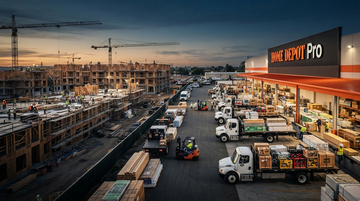
Home Depot's Pro mix is the make-or-break—if it can't hold a $47B quarter, the high-rate housing “bottoming” thesis loses its first real earnings test
Home Depot reports on Tue Aug 18, 2026, right as retail sales are entering a tougher month and 30-year mortgage rates sit near 2007-era highs—an unusually clean stress test for whether big-ticket housing demand is finally stabilizing. The investor question is simple: does “Pro demand” keep transactions and mix resilient enough to protect earnings, even if the DIY cohort wobbles?

The Ice-Cream Brand That Hit Chapter 11 After Losing a Trademark Fight Shows How “Freezer Aisle” Power Has Shifted
Rebel Creamery LLC filed for Chapter 11 in the District of Utah on Aug. 14, 2026, after a trademark/trade-dress ruling from Van Leeuwen Ice Cream required it to redesign packaging and pay $23.785 million in disgorged profits (Jul. 16, 2026). For investors, the key takeaway is not the legal loss—it’s how quickly a packaging/label injunction plus margin pressure can break brands that don’t have scale, pricing power, or cost flexibility against private-label and retailer deal cycles.

Nevada’s geofencing fine targets the real prediction-market bottleneck: state regulators—not the CFTC
Kalshi’s dispute with Nevada’s Gaming Control Board over an alleged geofencing failure has moved from a licensing argument into an operational compliance fight with a $120,000-per-day price tag. If state gambling regulators keep winning on “in-state access,” prediction-market growth will hinge less on federal exchange status and more on whether each state’s licensing rules can be translated into enforceable geofencing.

AI data-center power demand isn’t choking reactor builds—fuel-cycle bottlenecks are tightening uranium-to-fabrication capacity
The hyperscaler PPA wave is being stress-tested by the slowest part of the nuclear supply chain: the front-end fuel cycle. ConverDyn-scale conversion, enrichment capacity, and downstream fuel fabrication are the binding constraints on when new megawatts can actually produce—turning uranium, enrichment, and fuel makers into the margin hinge for AI-linked deployments.

NVIDIA’s Aug. 26 print is the AI trade’s “guide-bar” moment—can it outgrow the capex-and-allocation scare?
After a week of semiconductor repricing, the Aug. 26 NVIDIA report becomes the highest-stakes single catalyst because investors are no longer only buying growth—they’re buying confirmation that the next platform ramp (Vera Rubin) is not being choked by supply constraints or capex confusion. The last confirmed NVIDIA quarter shows extreme profitability and strong cash conversion, but the forward-risk is now whether the next guide keeps gross margin and operating expense discipline intact while revenue accelerates into the Vera Rubin deployment window.

Q2 earnings season “breaks records” — but the real 2H map is the AI-and-guide-down mix Cisco-style
FactSet’s Q2 S&P 500 earnings growth print near 50% can be dramatically lower once you remove outsized mega-cap effects, and it’s not evenly distributed across the market. The more actionable signal is the repeatable “beat-and-selloff, guide-down” pattern in AI-adjacent leaders like AMD and Cisco, which points to 2H expectations being set by margins and next-quarter guardrails—not by the headline beat.
What to expect
Evidence-first notes with a visible point of view.
This section collects sharp takes on earnings, shareholder meetings, and market structure. Each new piece should make the thesis, the facts, and the implications obvious within the first few screens.
Expect direct analysis, not generic commentary.
Expect the data to be explicit and the argument to be easy to follow.
Plutux is not an investment adviser. Market data and AI-generated analysis are for information and education only, not investment advice. Disclaimer