Semiconductors
Chips, from the fab floor to the income statement
Foundry capacity, HBM supply, packaging bottlenecks and export rules — traced through to the companies whose quarters they decide.
2026-08-08
%22%2F%3E%0A%20%20%3Ccircle%20cx%3D%22220%22%20cy%3D%22150%22%20r%3D%22180%22%20fill%3D%22%2322d3ee%22%20fill-opacity%3D%220.12%22%2F%3E%0A%20%20%3Ccircle%20cx%3D%221010%22%20cy%3D%22130%22%20r%3D%22220%22%20fill%3D%22%2338bdf8%22%20fill-opacity%3D%220.08%22%2F%3E%0A%20%20%3Ccircle%20cx%3D%22920%22%20cy%3D%22520%22%20r%3D%22170%22%20fill%3D%22%2322d3ee%22%20fill-opacity%3D%220.06%22%2F%3E%0A%20%20%3Cpath%20d%3D%22M140%20430h920%22%20stroke%3D%22url(%23line)%22%20stroke-width%3D%2212%22%20stroke-linecap%3D%22round%22%2F%3E%0A%20%20%3Cpath%20d%3D%22M220%20360c120-150%20260-220%20380-220s260%2070%20380%20220%22%20fill%3D%22none%22%20stroke%3D%22%2367e8f9%22%20stroke-opacity%3D%220.5%22%20stroke-width%3D%2216%22%20stroke-linecap%3D%22round%22%20stroke-linejoin%3D%22round%22%2F%3E%0A%20%20%3Cpath%20d%3D%22M300%20398h600%22%20stroke%3D%22%2394a3b8%22%20stroke-opacity%3D%220.24%22%20stroke-width%3D%228%22%20stroke-linecap%3D%22round%22%2F%3E%0A%20%20%3Ctext%20x%3D%22220%22%20y%3D%22510%22%20fill%3D%22%23e2e8f0%22%20fill-opacity%3D%220.7%22%20font-family%3D%22Arial%2C%20Helvetica%2C%20sans-serif%22%20font-size%3D%2238%22%20letter-spacing%3D%228%22%3EINSIGHTS%3C%2Ftext%3E%0A%3C%2Fsvg%3E)
2026-08-07
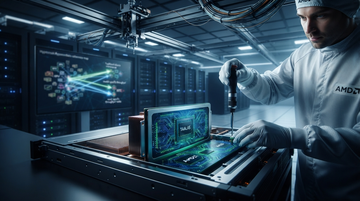
Advanced Micro Devices' first “one-model-to-silicon” buy re-ranks the inference chip war
By acquiring Taalas, Advanced Micro Devices is buying an inference architecture where the model is hardwired into custom silicon, not just accelerated at runtime. That shifts the hyperscaler vendor map toward “model-specific throughput” players, while pressuring GPU-style margins to defend against a new cost-performance axis.

Microchip may be the rare analog/MCU story where guidance implies a broad inventory cycle already turning
In its latest SEC filing, Microchip links sequential net-sales strength to customers reducing excess inventory, and it shows inventory-days improving while gross margin benefits from lower inventory reserves. If the same “inventory-to-orders” mechanism keeps flowing, it’s a test of whether the semiconductor recovery is staying broad (industrial/auto/embedded), not only AI infrastructure.
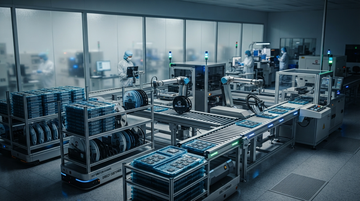
Microchip’s inventory normalization shows the industrial analog/MCU cycle, not just AI accel, is turning
In Microchip Technology’s latest filings, both distribution-channel and direct-customer inventory days move toward “normal” while bookings and backlog strengthen. That combination—“trifecta” demand recovery plus fewer inventory gaps—argues the semiconductor inventory cycle is broadening beyond a single AI accelerator read-through.
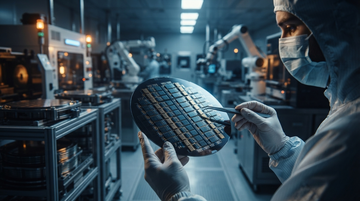
SK Hynix Just Led a Record $83B Asian Share-Sale Wave—And It Changes How to Size the AI Memory Trade
The record $83B wave matters less for “AI euphoria” and more for market mechanics: it adds fresh equity supply right as the memory oligopoly needs stable pricing power to fund aggressive capex. For SK Hynix, that tension shows up in capital efficiency and the way funding sources stack—public-market liquidity now acts like a second pipeline for HBM investment, with different implications for Micron Technology, Samsung Electronics, and the rest of the AI memory complex.

SoftBank Group's Intel mark-to-market turns earnings into portfolio-beta—until cash follows
SoftBank’s latest results show a quarter where Intel fair-value gains dominated the investment line, creating a “Japan AI proxy” narrative that is partly accounting mechanics. The key investor question is whether these mark-to-market swings translate into operating leverage and financing capacity, or remain an equity-portfolio beta read-through.

SoftBank’s Intel-stake windfall didn’t just lift earnings—it changed the “Japan AI proxy” math you thought you understood
SoftBank’s Q1 FY26 results show a lower profit alongside a massive unrealized investment gain, led by its Intel stake. That matters for investors because the gain is the visible tip of a cross-holding chain that routes parts of Japan’s AI exposure through US chip and data-center demand channels—so the usual “Japan tech = US AI proxy” sizing lens gets noisier, not cleaner.

Washington is moving from “AI guardrails” to “voluntary frontier access”—and the compliance burden is likely shifting onto model buyers, not model labs
In Executive Order 14409, the Trump administration explicitly rejects mandatory federal licensing or preclearance for new frontier AI models while creating a voluntary early-access process with up to a 30-day window. For investors, the second-order effect is straightforward: fewer gatekeepers inside model development, but more governance work for enterprises and downstream platforms deciding whether—and how—to deploy covered frontier capabilities.
2026-08-06

Advanced Micro Devices guides Q3 to ~$13B yet the stock sells off because the market is buying a whisper-number trade, not the printed beat
AMD’s Q3 revenue guide lands above consensus, but the after-hours move signals investors were underwriting a higher “duration” AI expectation than management’s range implies. Layered together with AMD’s newly disclosed AI-infrastructure initiatives (notably Helios/Anthropic and inference workload partnerships), the tape reads like a repricing of how fast deployments convert into revenue—not a collapse of demand.

AI memory cash mountains are turning into a payout ultimatum for Samsung Electronics and SK hynix
Fresh Reuters reporting shows foreign shareholders are pushing Samsung Electronics and SK hynix to return more cash via dividends/buybacks while management stays tight-lipped on timing and amounts. The investor math is simple: with both companies generating very large cash flow during the AI memory cycle, the next debate in Korea won’t just be capex—it will be how much of that AI cash mountain becomes shareholder income versus capacity spend.

Singapore’s $7.4B Tariff Hit Shows AI-Chip and Pharma Re-Routing Risk Is Now a Balance-Sheet Story (Not Just a Policy Headline)
Singapore’s MTI says the US tariffs are hitting a very large slice of the city-state’s domestic exports, with product exemptions explicitly covering semiconductors and pharmaceuticals—so the “damage” is concentrated in the same shipment backbone that moves AI and healthcare supply chains across Asia. For listed investors, that maps into near-term logistics/customs uncertainty for chip and healthcare value chains, while the long-term question becomes whether firms re-route through Singapore/Dubai-type hubs or re-source production to avoid tariff incidence.
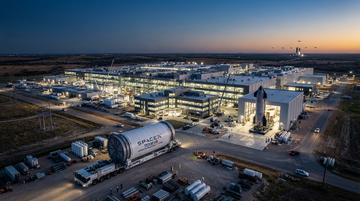
SpaceX’s Terafab bet turns “rocket-grade reliability” into a silicon profit pool—at a disclosed $55B→$119B capex range, with a $16.8B figure not substantiated by primary sources
Terafab is a vertically integrated Texas chip complex pitched by SpaceX alongside Tesla and xAI (usage focus) with a disclosed initial investment of $55B and potential total investment up to $119B. That shifts value from external foundries to equipment, materials, and advanced packaging ecosystems, but it also makes SpaceX’s compute moat contingent on manufacturing scale—not just launch success.
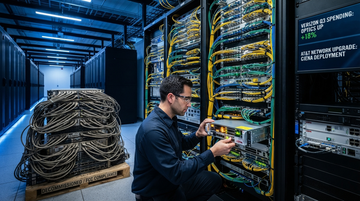
FCC’s Chinese telecom import curbs are starting to act like a capex reroute—here’s the carrier + optical-networking transmission path investors can actually model
The FCC’s expanding ban on imports of certain Chinese telecom and video-surveillance equipment is framed in reporting as more than a pure security measure: it functions as a US-production-reroute lever that can shift how carriers source network buildout hardware. That changes the supply-chain winners by pulling incremental demand toward “non-Chinese-ruled-out” routing/transmission stacks and the US service/install ecosystem, with near-term spend typically landing in optics and network equipment refresh cycles rather than distant software-only compliance.
2026-08-05
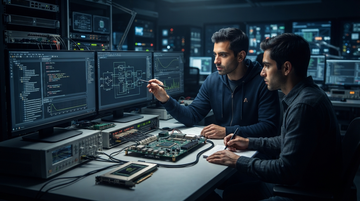
Anthropic’s “Chip Team” Is Real—But It’s a Software-to-Silicon Wedge, Not a Sudden NVIDIA Replacement
Anthropic isn’t (yet) committing to a full in-house accelerator program, but it is hiring ASIC/FPGA talent that explicitly advances silicon-design workflows. That matters because Anthropic’s compute strategy already leans on partner silicon (Google/Broadcom TPUs), so the risk to NVIDIA is gradual: it’s a stack re-optimization project that can chip away at demand over multiple model generations.
SAP’s AI back-office boom is the “second front” the US tape still ignores
Reuters’ Aug 4 reporting highlights Europe’s established tech firms (led by SAP) seeing AI-related demand move from pilots into funded deployment. The trade implication is simple: while investors chase Nvidia-style compute, enterprise software, systems integration, and infrastructure providers are monetizing AI operations—pulling revenue and backlog growth through the supply chain where the US narrative hasn’t looked.
![Foxconn [2317.TW] just set a July revenue record—and hyperscalers’ rack-scale buildout is now the clearest market read insight cover](https://images-1379091077.cos.na-ashburn.myqcloud.com/insights/covers/20260805_foxconn_ai_server_july_record_360px.png)
Foxconn [2317.TW] just set a July revenue record—and hyperscalers’ rack-scale buildout is now the clearest market read
Foxconn [2317.TW] hit a record July monthly revenue level as AI servers and cloud/networking products drove the upside, turning the company’s “manufacturing calendar” into a real-time hyperscaler signal. When you pair that with the firm’s recent earnings power and cash generation profile, the implication is that AI infrastructure demand is no longer just a chip story—it’s a rack-scale execution story that can move suppliers’ revenue before software spend becomes visible.
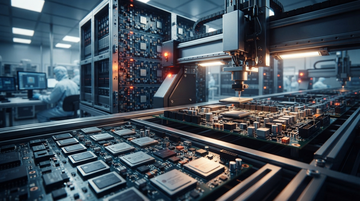
GlobalFoundries’ Q2 Beat Says AI Demand Has Moved Past Leading-Edge—And That’s a Capacity Bottleneck Investors Can Actually Trade
GlobalFoundries’ Q2 reporting indicates AI-related demand is no longer confined to the newest nodes, with upside coming from the company’s specialty/mature manufacturing strengths. The investment implication is that power/analog/RF/“support silicon” is becoming the binding constraint for AI racks, which can spill over into suppliers of power management and custom silicon.
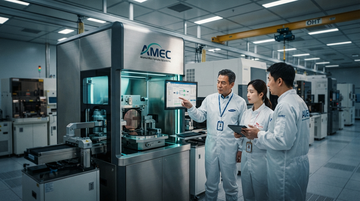
Samsung and SK Hynix testing AMEC tools signals the first real “tool-vendor hedge” against U.S. export-control risk
Reuters reports that Samsung and SK Hynix are evaluating AMEC etching tools for their China fabs as a hedge against tighter U.S. export controls. The key buy-side read-through is not just China localization—it’s a shift in how leading memory makers de-risk Western tool reliance via second-source qualification, which changes the demand timing and pricing power across the etch/deposition value chain.
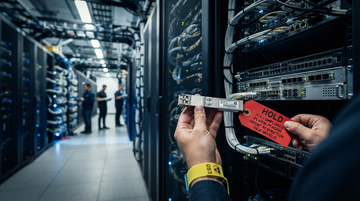
A “quiet” U.S. import ban on Chinese AI data-center components turns optical interconnect into the next choke point
A Reuters report says the FCC is drafting a U.S. ban on imports of new Chinese data-center components—specifically Chinese optical transceivers—targeting the fiber links that move AI traffic inside server parks. That shifts the AI-hardware investment question from compute chips to networking optics, and it changes which listed suppliers can actually capture replacement-system spend as the policy timetable moves through “draft → publish → effective.”
2026-08-04
What to expect
Evidence-first notes with a visible point of view.
This section collects sharp takes on earnings, shareholder meetings, and market structure. Each new piece should make the thesis, the facts, and the implications obvious within the first few screens.
Expect direct analysis, not generic commentary.
Expect the data to be explicit and the argument to be easy to follow.
Plutux is not an investment adviser. Market data and AI-generated analysis are for information and education only, not investment advice. Disclaimer