Semiconductors
Chips, from the fab floor to the income statement
Foundry capacity, HBM supply, packaging bottlenecks and export rules — traced through to the companies whose quarters they decide.
2026-08-30
%22%2F%3E%0A%20%20%3Ccircle%20cx%3D%22220%22%20cy%3D%22150%22%20r%3D%22180%22%20fill%3D%22%2322d3ee%22%20fill-opacity%3D%220.12%22%2F%3E%0A%20%20%3Ccircle%20cx%3D%221010%22%20cy%3D%22130%22%20r%3D%22220%22%20fill%3D%22%2338bdf8%22%20fill-opacity%3D%220.08%22%2F%3E%0A%20%20%3Ccircle%20cx%3D%22920%22%20cy%3D%22520%22%20r%3D%22170%22%20fill%3D%22%2322d3ee%22%20fill-opacity%3D%220.06%22%2F%3E%0A%20%20%3Cpath%20d%3D%22M140%20430h920%22%20stroke%3D%22url(%23line)%22%20stroke-width%3D%2212%22%20stroke-linecap%3D%22round%22%2F%3E%0A%20%20%3Cpath%20d%3D%22M220%20360c120-150%20260-220%20380-220s260%2070%20380%20220%22%20fill%3D%22none%22%20stroke%3D%22%2367e8f9%22%20stroke-opacity%3D%220.5%22%20stroke-width%3D%2216%22%20stroke-linecap%3D%22round%22%20stroke-linejoin%3D%22round%22%2F%3E%0A%20%20%3Cpath%20d%3D%22M300%20398h600%22%20stroke%3D%22%2394a3b8%22%20stroke-opacity%3D%220.24%22%20stroke-width%3D%228%22%20stroke-linecap%3D%22round%22%2F%3E%0A%20%20%3Ctext%20x%3D%22220%22%20y%3D%22510%22%20fill%3D%22%23e2e8f0%22%20fill-opacity%3D%220.7%22%20font-family%3D%22Arial%2C%20Helvetica%2C%20sans-serif%22%20font-size%3D%2238%22%20letter-spacing%3D%228%22%3EINSIGHTS%3C%2Ftext%3E%0A%3C%2Fsvg%3E)
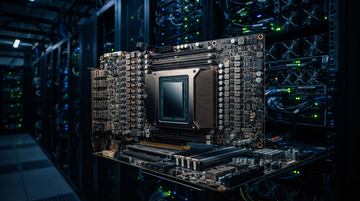
The 1kW GPU’s quiet margin engine: VRM/DrMOS power-management silicon is gaining dollars-per-rack faster than the GPU
AWS is planning to deploy 2 million additional NVIDIA GPUs in 2027–2028, while Nvidia’s AI-server pricing was reported to rise by more than 15% as system costs keep climbing. That combination pushes attention from rack-level power delivery to per-GPU voltage regulation—where multiphase controllers, DrMOS power stages, and PMICs are a fast-growing, density-constrained silicon bottleneck.
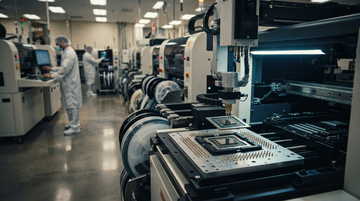
Custom-silicon deals can’t fix the real bottleneck: OSAT assembly-and-test capacity turns into the price lever
Marvell’s Google custom-chip agreement highlights that hyperscalers are funding ASIC volumes, but the economic swing may show up at the back-end floor. When more dies flow through packaging and test, OSAT capacity utilization—not wafer supply—determines whether pricing stays firm or margin compresses at ASE Technology, Amkor Technology, and (where evidenced) Chinese OSAT competitors.
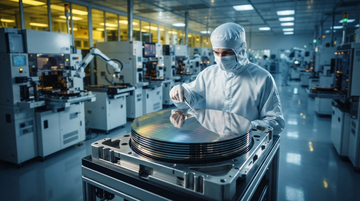
12-inch wafer contracts are the earliest AI-caper cycle tell—if you know where to look
In the 12-inch wafer substrate oligopoly, the key “demand signal” is not wafer pricing or foundry capex—it’s the multi-year contracting structure that can smooth (or amplify) the AI spending cycle years before GPU deliveries. Using Shin-Etsu Chemical, GlobalWafers, and Siltronic financials alongside public contract disclosures, wafer suppliers show more stable but still counter-cyclical revenue/margin behavior than downstream process-cost components, making “contracting depth” a practical investor lens into the post-2023 AI rebuild.
2026-08-29

CXMT’s 1260H lawsuit turns a policy label into a DRAM pricing question
CXMT’s suit challenges the Pentagon’s “Chinese military company” designation that can trigger U.S. procurement restrictions under Section 1260H. The key investor takeaway is whether courts keep narrowing designation power—making it harder to wall off capital from China’s DRAM buildout—and therefore shifting the balance of risk across Micron, SK hynix, and Samsung Electronics.
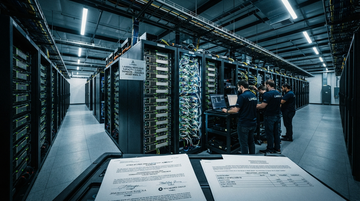
NVIDIA's GPU demand is only half the story—Lambda just proved chip-collateral debt is now setting the neocloud capacity floor
Lambda’s $1B GPU-debt raise (Aug 28, 2026) signals a shift in the AI compute buildout: lenders—backed by the hardware itself—are increasingly funding capacity growth, not end customers. The result is a new credit layer where GPU deployment can keep scaling until collateral value or contracted cash flows break.
2026-08-28
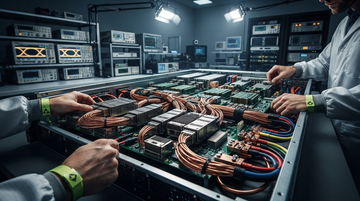
The “dollars per rack” race quietly reorders the BOM: high-speed 224G-grade connectors and 48V power interconnects are becoming the compounding constraint
As AI rack designs push faster copper SerDes and higher bus voltages, the connector/interconnect layer is shifting from “plumbing” to a margin-controlling build constraint. Evidence from TE Connectivity and Luxshare Precision shows 224G connector ecosystems are already being engineered for next-gen switch slot density, while Amphenol reports AI-related strength within IT datacom alongside fast revenue growth.
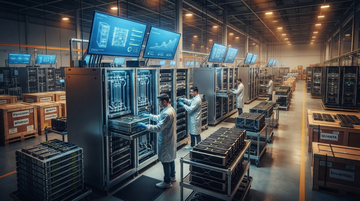
NVIDIA can sell GPUs, but server-assembly wins the “dollars per rack” race—Amazon’s 2M-GPU step makes the ODM bottleneck investable now
Amazon’s AWS is expanding its NVIDIA GPU deployment with an additional 2 million GPUs across 2027–2028, tightening demand for complete rack-scale systems, not just accelerators. With NVIDIA’s Vera Rubin platform emphasizing much faster rack assembly and a broad OEM/ODM ecosystem rollout, the bargaining power shifts toward the companies that can convert GPU schedules into installed racks on time—while margin pressure concentrates where design control and manufacturing yield meet.
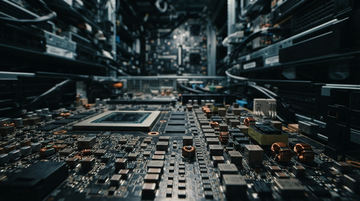
AI Servers’ Quietest Bottleneck Is the Passive Layer: MLCC + Power Magnetics Can Gain Content Share Even When “Component Strength” Reads False
The passive parts that sit under every GPU power step—MLCCs and power magnetics inside the 48V rack ecosystem—can grow faster than the “GPU-cycle” proxy because higher power density increases decoupling and transient-demand content per rack. Using Murata’s reported financials as a compounding baseline, the investment takeaway is that winners in capacitors/inductors can look steadier than the semiconductor tape, while memory-price volatility can distort how component strength shows up in reported supply chains.

Nvidia’s +$400B print surge didn’t just beat the quarter—it repriced the whole AI capex trade heading into Jackson Hole
Nvidia’s blowout quarter and post-print surge signaled that the market is no longer trading “guidance semantics”—it is trading evidence that hyperscalers will keep funding AI capacity. When the same day brought AWS’s commitment to add 2 million more Nvidia GPUs for 2027–2028, the risk-on bid into Jackson Hole shifted toward the supply-chain and power/infra buildout that makes those installs real.
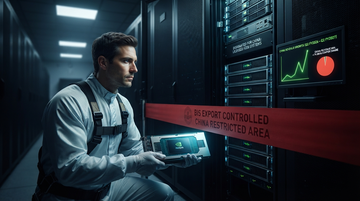
NVIDIA's China open-model push collides with export controls—and that tension is what to price
On Aug 27, NVIDIA backed the use of Chinese open AI models while warning that a broad U.S. chip crackdown would be a “wrong move” for innovation and competitiveness. The trade’s real tell is that NVIDIA is simultaneously managing China revenue exposure under detailed BIS licensing—evidenced in its disclosed H200 program outcomes and China revenue geography—for the next BIS rule cycle.

Pasqal’s Nasdaq debut turns “quantum second wave” into a cash-and-capex test
Pasqal’s Nasdaq go-public deal with Bleichroeder values the neutral-atom pure-play at a roughly $2.0B pre-money with ~$500M gross proceeds to the company, giving the market a concrete pricing benchmark for deep-tech hardware beyond the AI complex. Using IonQ’s reported cash burn and revenue scale as a yardstick, the question for investors is less “who wins quantum,” and more whether Pasqal can turn a cash runway into commercialization that outgrows burn before the public-market IPO window tightens further.
2026-08-27
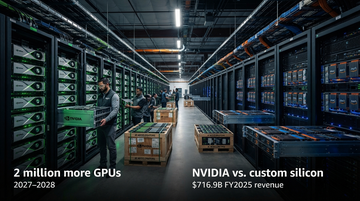
Amazon turns 2M more NVIDIA GPUs into a supply-chain signal—while AWS Trainium argues the “Nvidia-only” story is incomplete
Amazon’s expanded AWS partnership adds 2 million more NVIDIA GPUs for delivery in 2027–2028, the clearest hyperscaler “yes” to the AI capex cycle that aligns with NVIDIA’s recently reiterated ~70% FY2028 revenue-growth framing. But the same expansion exists alongside AWS’s continued scaling of Trainium, meaning the order book can strengthen Nvidia demand while still reshaping how much incremental compute ends up being “Nvidia GPUs vs. custom silicon.”
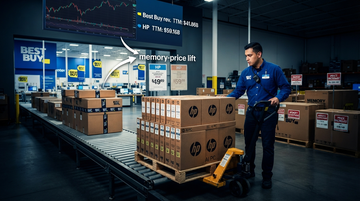
Best Buy “computing strength” looks real, but memory-price lift can fool the retail tape
Best Buy’s earnings showed strength tied to “computing,” yet the same period’s broader hardware pricing pressure implies a big share of the sales lift could be margin-neutral price passthrough rather than true AI-PC unit acceleration. Meanwhile, HP isn’t confirming an AI-PC demand inflection with its shipment mix, raising the odds that consumers are upgrading into higher memory costs—not because AI PCs are pulling-forward usage.
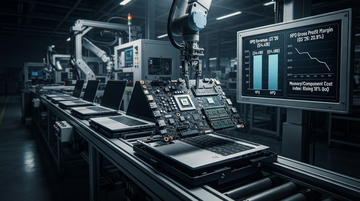
HP Inc.'s AI-PC story is failing the first test: unit momentum isn’t showing up, and memory costs decide the margin outcome
HP’s latest quarter showed revenue resilience while the PC side weakened, forcing investors to separate “AI-PC mix” rhetoric from unit-driven refresh demand. The bigger risk isn’t the AI features themselves—it’s that elevated memory/component costs can swamp any pricing benefit, especially if the upgrade cycle stalls on shipment volumes.

NVIDIA turns model distribution into a moat with a $12.9B Hugging Face buy
The reported $12.9B NVIDIA agreement to acquire Hugging Face would shift control of a key open-model “traffic layer” from a neutral ecosystem to a silicon owner. For investors, the bet is less about GPUs sold today and more about shaping how open weights, datasets, and developer workflows route compute demand over the next 1–3 years.
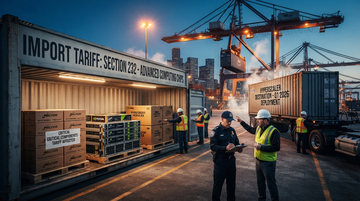
A “tariff pass-through” test is about to decide whether AI capex keeps its pace
A new U.S. semiconductor import-tariff escalation (Section 232) targets “advanced computing chips” and specified derivative products, effective Jan. 15, 2026. Nvidia’s customers are simultaneously being told server prices tied to its AI accelerators could rise 15%+ as DRAM costs surge—creating a rare setup to see who absorbs the combined shock: hyperscalers, server OEMs, memory importers, or end devices.
2026-08-26
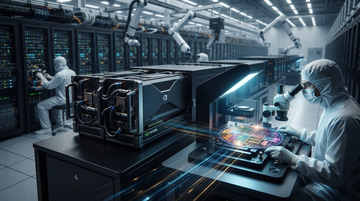
NVDA’s Aug. 26 guide-bar signals the market is paying for custom silicon, not just hyperscaler capex
NVIDIA’s Aug. 26 outlook framed AI buildout as a compute “mix” story: more spend is expected to land in architectures customers design around rather than only NVIDIA’s standard rack-scale GPUs. That shift reframes near-term winners across the ASIC/custom-silicon supply chain and the “neo-cloud” operators that monetize scarce compute first—while leaving hyperscaler-heavy capex bets more exposed to timing risk.

HP licensing Huawei Wi‑Fi patents doesn’t “break the firewall” — it exposes the real gray zone: standards-essential IP vs. export-control intent
HP’s reported multi-year, global Wi‑Fi patent licensing deal with Huawei highlights how US-China decoupling can stop at device supply while still allowing cross-border access to standards-essential intellectual property. For connectivity-silicon investors, the actionable takeaway is that Wi‑Fi royalties and licensing pools—not just chip sourcing—can keep Huawei-linked IP flowing even under stricter trade rules.

Marvell's Q2 FY27 print turns “custom-silicon backlog” into earnings power—or exposes it as optics
Marvell’s Q2 FY27 setup is being judged on whether it converts AI networking “bookings” into sustainable revenue, margin, and cash generation. The only defensible way to tell is to read the print alongside its outlook math: Q2 FY27 revenue guidance centers on $2.7B with a GAAP gross margin range of 52.1%–53.1% and explicit calls for “exceptional AI-related bookings.”
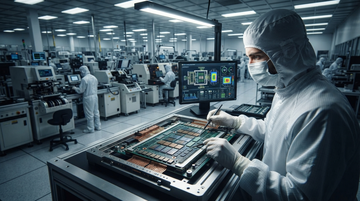
NVIDIA turns the AI trade into a guidance trade: the beat matters less than gross margin discipline and what capex commentary implies for the next build cycle
After NVIDIA delivered a strong fiscal Q2 FY27 outlook, the market focus shifts from “did it beat?” to “does the guide protect AI gross margin and keep the custom-silicon/mix story intact?”. The key risk for the supply chain is that a high expectations premium can compress quickly if the guidance tolerates weaker mix, narrower gross-margin bands, or slower downstream refresh—especially in the memory and interconnect bottlenecks feeding the AI build cycle.
What to expect
Evidence-first notes with a visible point of view.
This section collects sharp takes on earnings, shareholder meetings, and market structure. Each new piece should make the thesis, the facts, and the implications obvious within the first few screens.
Expect direct analysis, not generic commentary.
Expect the data to be explicit and the argument to be easy to follow.
Plutux is not an investment adviser. Market data and AI-generated analysis are for information and education only, not investment advice. Disclaimer