%22%2F%3E%0A%20%20%3Ccircle%20cx%3D%22220%22%20cy%3D%22150%22%20r%3D%22180%22%20fill%3D%22%2322d3ee%22%20fill-opacity%3D%220.12%22%2F%3E%0A%20%20%3Ccircle%20cx%3D%221010%22%20cy%3D%22130%22%20r%3D%22220%22%20fill%3D%22%2338bdf8%22%20fill-opacity%3D%220.08%22%2F%3E%0A%20%20%3Ccircle%20cx%3D%22920%22%20cy%3D%22520%22%20r%3D%22170%22%20fill%3D%22%2322d3ee%22%20fill-opacity%3D%220.06%22%2F%3E%0A%20%20%3Cpath%20d%3D%22M140%20430h920%22%20stroke%3D%22url(%23line)%22%20stroke-width%3D%2212%22%20stroke-linecap%3D%22round%22%2F%3E%0A%20%20%3Cpath%20d%3D%22M220%20360c120-150%20260-220%20380-220s260%2070%20380%20220%22%20fill%3D%22none%22%20stroke%3D%22%2367e8f9%22%20stroke-opacity%3D%220.5%22%20stroke-width%3D%2216%22%20stroke-linecap%3D%22round%22%20stroke-linejoin%3D%22round%22%2F%3E%0A%20%20%3Cpath%20d%3D%22M300%20398h600%22%20stroke%3D%22%2394a3b8%22%20stroke-opacity%3D%220.24%22%20stroke-width%3D%228%22%20stroke-linecap%3D%22round%22%2F%3E%0A%20%20%3Ctext%20x%3D%22220%22%20y%3D%22510%22%20fill%3D%22%23e2e8f0%22%20fill-opacity%3D%220.7%22%20font-family%3D%22Arial%2C%20Helvetica%2C%20sans-serif%22%20font-size%3D%2238%22%20letter-spacing%3D%228%22%3EINSIGHTS%3C%2Ftext%3E%0A%3C%2Fsvg%3E)
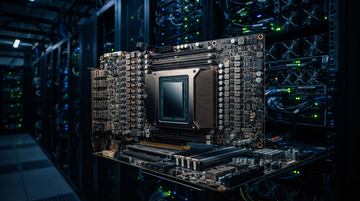
The easiest way to underweight power-silicon in AI systems is to stay stuck at the 48V rack bus: it sounds like the “biggest watts” part of the bill of materials. But once GPUs are moving toward ~1kW-class draw, the on-board voltage-regulation layer becomes the real engineering choke point. That layer is built from multiphase PWM controllers, DrMOS power stages (driver + MOSFET), and PMIC supervision—components that scale with the number of GPUs, not just with the rack.
In other words: investors often track the rack, while the money is flowing per GPU.
What changed in the AI demand / pricing stack
Two headline moves make “dollars per GPU” matter more than “watts per rack”
- scales to 2 million more GPUs changes the unit economics for per-GPU VRM design choices (phases, power stages, controller generations).
- can translate a >15% server price increase into higher willingness-to-pay for better power efficiency, lower telemetry loss, and thermal robustness.
How 1kW-class GPUs shift the silicon bottleneck
Why VRM/DrMOS power-management silicon is the hidden line item
A modern AI server is not one power supply problem—it’s multiple, in series.
1) The rack bus (often 48V) supplies bulk power. 2) The server power architecture converts that bulk to intermediate rails. 3) The GPU still needs tightly regulated, low-noise, fast-transient rails close to the die.
At ~1kW per GPU, step (3) gets expensive: fewer “big” conversion blocks and more tightly integrated, high-density multiphase power stages. That pushes system designers to buy more VRM phases and higher-performance DrMOS / smart power-stage silicon, plus controllers/PMICs that can run stable loops under extreme transient load.
So the supply-chain question becomes: which silicon companies most directly benefit from (a) more GPUs and (b) higher complexity per GPU?
Investor-grade way to frame the margin engine
What to look for in public numbers (when VRM silicon is the growth driver)
VRM/DrMOS silicon rarely shows up as a named revenue line in public reporting. The investable approach is therefore indirect but still measurable:
- Identify the power-management IC incumbents whose portfolio includes high-density DC-DC controllers and power-stage integration.
- Check whether financial momentum (revenue, gross profit, operating leverage) lines up with the broader semiconductor cycle.
- Look for “AI power” wording in product/market materials (as corroborating evidence for design wins).
Below, I ground the investable “signal” using one listed power-management supplier with directly trackable financial trend data. For other VRM/DrMOS-focused vendors, the article flags what is not verifiable from the accessible primary sources in this run.
Verified demand anchor from NVIDIA → AWS
The GPU-count catalyst is real: NVIDIA and AWS signaled 2 million more GPUs (2027–2028)
Demand anchor used for the “per-GPU” lens
Event
AWS expands NVIDIA deployment plan
GPU quantity & timing
2 million additional NVIDIA GPUs, planned for 2027–2028
Company announcement
This matters for VRM silicon because multi-phase regulators live on the GPU card (or very near it). When GPU counts expand in a two-year window, the VRM silicon bill of materials repeats per card. That creates a “multiplier” dynamic: even if rack-level power infrastructure stays capped, the per-GPU conversion layer keeps growing with every additional GPU.
Financial grounding (listed supplier) — what VRM-adjacent power IC exposure can look like
Texas Instruments shows operating strength that can absorb power-efficiency demand upcycles
Revenue
$19.45B
TTM through Jun 30, 2026, reported Jul 24, 2026 (income statement summary)
Net income
$6.05B
TTM through Jun 30, 2026, reported Jul 24, 2026
Operating margin (EBIT)
37.4%
TTM through Jun 30, 2026, derived from reported EBIT vs. revenue
A key investor takeaway is not that Texas Instruments sells every VRM component; it sells power-management silicon broadly. The thesis here is that when GPUs become power-complex, power IC content per card increases—and that sort of mix shift is directionally supportive for diversified analog/power players with deep VRM-controller and power-management portfolios.
What’s unproven in this run: exact per-GPU VRM silicon share across MPS, TI, ADI, Infineon, and other DrMOS / controller vendors. That requires vendor-specific disclosures or supply-chain win announcements that are not accessible as primary, citable sources here.
Supply chain map — upstream and downstream entities that actually connect
A full supply-chain view: silicon → power stages → GPU cards → AI fleets
- Upstream: power-management IC vendors (controllers/PMICs) and power-stage suppliers (DrMOS / integrated power stages) provide the regulation silicon that keeps GPU rails stable under fast transients.
- Upstream constraint: as phase counts and switching performance rise, designers prioritize smaller thermal footprints and higher transient response—favoring suppliers with dense power portfolio depth.
- Downstream linkage: GPU card designers/OEM system integrators must buy that silicon per GPU card, so GPU-count expansions flow through to VRM silicon demand even if rack-level power delivery is unchanged.
Non-obvious causality — why “power efficiency” becomes a silicon volume driver
Power efficiency isn’t just about kWh: it increases the number of “buyable” silicon cycles per GPU
At high GPU power, efficiency improvements reduce thermals, which can either (a) allow tighter layouts (more phases in less space) or (b) reduce throttling-related performance loss in constrained thermal budgets. Both outcomes feed back into the regulator design space.
The non-obvious part is that “efficiency” can increase silicon content per GPU, not just substitute parts. Higher transient-performance requirements often mean the controller and power stages must meet tighter dynamic specs—pushing designers toward specific generations of multiphase control and integrated power-stage solutions.
That’s the mechanism by which VRM/DrMOS silicon can grow in dollars per GPU faster than the GPU itself: the regulator must be engineered to the system’s electrical dynamics, not just to its average watts.
What to monitor next (short-term and 1–3 year horizon)
Short-term: phase-count and platform announcements. Long-term: density and reliability premiums
- moves first in design wins—board-level platform refreshes typically change VRM controller/power-stage BOMs before they show up as high-level revenue growth.
- shows up in margins after ramp—gross margin and operating leverage respond once higher-complexity power silicon ships at volume.
- Risks: if GPU supplier schedules pull demand forward then normalize, VRM silicon growth can mean-revert faster than rack-level copper/PSU spending.
Listed investors’ “watch list” tied to power-management IC demand
- Texas Instruments keeps scaling profitably with TTM revenue of $19.45B and EBIT margin ~37.4% through Jun 30, 2026—supportive for power-cycle upshifts.
- If per-GPU VRM complexity rises, Texas Instruments is positioned as a broad power-management supplier whose analog/power portfolio can capture incremental content per card.
- Over the next 1–3 years, investors should watch whether revenue growth concentrates in power/analog segments rather than only in industrial/auto cycles.