Semiconductors
Chips, from the fab floor to the income statement
Foundry capacity, HBM supply, packaging bottlenecks and export rules — traced through to the companies whose quarters they decide.
2026-08-19
%22%2F%3E%0A%20%20%3Ccircle%20cx%3D%22220%22%20cy%3D%22150%22%20r%3D%22180%22%20fill%3D%22%2322d3ee%22%20fill-opacity%3D%220.12%22%2F%3E%0A%20%20%3Ccircle%20cx%3D%221010%22%20cy%3D%22130%22%20r%3D%22220%22%20fill%3D%22%2338bdf8%22%20fill-opacity%3D%220.08%22%2F%3E%0A%20%20%3Ccircle%20cx%3D%22920%22%20cy%3D%22520%22%20r%3D%22170%22%20fill%3D%22%2322d3ee%22%20fill-opacity%3D%220.06%22%2F%3E%0A%20%20%3Cpath%20d%3D%22M140%20430h920%22%20stroke%3D%22url(%23line)%22%20stroke-width%3D%2212%22%20stroke-linecap%3D%22round%22%2F%3E%0A%20%20%3Cpath%20d%3D%22M220%20360c120-150%20260-220%20380-220s260%2070%20380%20220%22%20fill%3D%22none%22%20stroke%3D%22%2367e8f9%22%20stroke-opacity%3D%220.5%22%20stroke-width%3D%2216%22%20stroke-linecap%3D%22round%22%20stroke-linejoin%3D%22round%22%2F%3E%0A%20%20%3Cpath%20d%3D%22M300%20398h600%22%20stroke%3D%22%2394a3b8%22%20stroke-opacity%3D%220.24%22%20stroke-width%3D%228%22%20stroke-linecap%3D%22round%22%2F%3E%0A%20%20%3Ctext%20x%3D%22220%22%20y%3D%22510%22%20fill%3D%22%23e2e8f0%22%20fill-opacity%3D%220.7%22%20font-family%3D%22Arial%2C%20Helvetica%2C%20sans-serif%22%20font-size%3D%2238%22%20letter-spacing%3D%228%22%3EINSIGHTS%3C%2Ftext%3E%0A%3C%2Fsvg%3E)
Analog Devices ADI calls out AI-linked signal-chain strength—showing analog demand is no longer the “late” trade, it’s the supply bottleneck
Analog Devices’ latest guidance commentary reinforces that AI capex is spilling into mature-node analog/mixed-signal—power management, data converters, and upstream signal conditioning—rather than staying confined to GPUs. The investor takeaway: the next constraint may be not compute, but the analog “plumbing” that turns electricity into usable, low-noise data in data-center racks.
Etched’s $21B jump signals that inference silicon is moving from “experiment” to “economics”—and it pressures Nvidia’s GPU advantage on both cost and capacity
Etched’s Aug. 18 financing valued the company at $21B after a prior $10.3B valuation just weeks earlier—an investor re-rate that coincides with first customer delivery to Jane Street and more than $1B in customer contracts. The market takeaway is not “another chip startup,” but a shift toward dedicated inference hardware that competes with GPUs on two fronts: utilization/cost per token and rack-level capacity to meet urgent decoding demand.
Velaura AI’s $110M Series A reframes the AI power bottleneck as an “inside-the-silicon” battleground
Velaura AI raised $110M in a Series A and says its Titan Core silicon design can enable up to 2x lower chip power (up to ~500W savings vs a typical 1000W GPU/XPU) and cut math energy 2–4x. If hyperscalers scale this as a licensing layer, it could compress “compute-per-rack” economics and shift budgeting from just grid and cooling toward silicon efficiency—pressuring incumbent custom-silicon economics while benefiting thermal/power infrastructure winners.
2026-08-18

2026-08-17
The 48V rack bus is the new price bottleneck in AI data centers—SiC/GaN power silicon may capture the “dollars-per-watt” upside that electrical OEMs can’t
As AI racks scale toward hundreds of kilowatts, the in-rack power-delivery chain (PSU → 48V bus → VRMs → SiC/GaN switching) is getting harder to build, cool, and qualify as one stack. Primary disclosures show that the Vera Rubin NVL72 rack design already concentrates power demand into multiple 110kW shelves, while grid-side electrical backlogs (Eaton) and 800V HVDC guidance (onsemi) point to a multi-year build-out. Investors should expect silicon vendors supplying SiC/GaN efficiency and density to monetize the “per-watt” upgrade cycle faster than the grid/electrical OEM layer.

Fabrinet will try to prove the 800G→1.6T ramp is shipping, not just selling design wins
Fabrinet’s Q4 FY2026 report is the first high-signal check from the ODM layer of AI optical supply chains: it turns optical module “qualification” into product shipments and margin. Investors should focus on whether optical communications revenue mix and gross margin expand together, and whether working-capital swings look consistent with a real production ramp into larger-capacity transceivers.

Keysight’s Q3 print is a live test for whether 1.6T optical designs are actually clearing validation—before the “shipping” headline hits revenue
Keysight’s communications-solutions orders are one of the earliest demand signals in the AI networking supply chain, because hyperscalers and optical-module makers must validate stressed electrical/optical designs on Keysight test platforms before 1.6T systems ship. With Keysight reporting this week, the key question isn’t “is AI spend real?”—it’s whether design-validation orders are accelerating fast enough to confirm the optical rally hasn’t priced only aspirations.

Nvidia’s “$1T through 2027” target resets the AI capex scare into a system-scale test
Nvidia says it now sees at least $1T in AI-chip demand through 2027—framed as a doubling from an earlier ~$500B view. Investors should treat the Aug. 26 quarter as the feasibility checkpoint: can memory, advanced packaging, power, and networking expand fast enough to convert that visibility into shipments without forcing an avoidable margin or cash crunch?
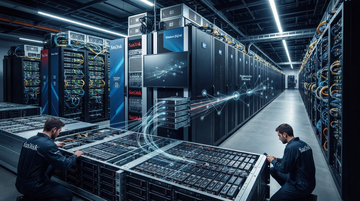
SanDisk’s “$94B backlog + 80% gross-margin” promise turns NAND into a contracting business—but the key test is whether the pricing floor survives
Western Digital’s SanDisk business claims multi-year visibility through a very large contracted backlog and an 80% gross-margin target through 2030. For investors, the trade is no longer “is NAND still commodity,” but “do hyperscalers sustain committed demand without forcing renegotiations, and does the cost stack keep up with 80% economics?”
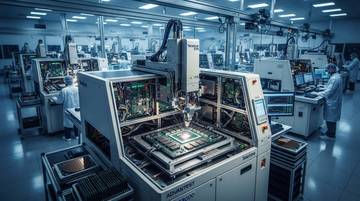
ATE is the real AI bottleneck: Advantest and Teradyne own the “last meter” on shipping HBM-heavy silicon
As HBM stacks and chiplet complexity multiply test vectors, test floor throughput and “known-good” screening—not EUV—can become the binding constraint on how fast AI chips convert into shippable units. Teradyne and Advantest are positioned as critical enablers because they sell the platforms (and test pattern memory/architecture) that make high-throughput memory and compute testing feasible.
2026-08-16

NVIDIA’s Aug. 26 print is the AI trade’s “guide-bar” moment—can it outgrow the capex-and-allocation scare?
After a week of semiconductor repricing, the Aug. 26 NVIDIA report becomes the highest-stakes single catalyst because investors are no longer only buying growth—they’re buying confirmation that the next platform ramp (Vera Rubin) is not being choked by supply constraints or capex confusion. The last confirmed NVIDIA quarter shows extreme profitability and strong cash conversion, but the forward-risk is now whether the next guide keeps gross margin and operating expense discipline intact while revenue accelerates into the Vera Rubin deployment window.

The US fab buildout’s real bottleneck won’t be EUV or HBM—it will be wafer-gas, CMP consumables, and sputtering targets
As the US memory/logic buildout ramps, the chokepoint shifts from tools to consumables: specialty gases, CMP slurries/pads, and metal sputtering targets that must arrive with tight specs and continuous uptime. For investors, the “materials-first” winners are the companies with scale, qualification depth, and upstream integration in those categories—while every schedule slip becomes a margin and delivery risk for downstream fabs.
2026-08-15
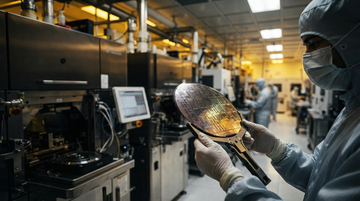
Applied Materials beat on the numbers, but the stock sold off because the China pipeline still looks lumpy
Applied Materials delivered a Q3 FY2026 sales and EPS beat, but the market focused on what comes next: China-related licensing uncertainty and the shape of memory-capex demand. The quarter still shows strong operating momentum, yet the guidance/test of end-demand timing remains the key swing factor for the AI semi-cap equipment cycle.

SK Hynix's $38B memory-fab plan won’t ease supply until after Dec 2028
SK Hynix approved about ₩54.3T (≈$38.30B) for two new fabs whose first cleanrooms open in Dec 2028 (NAND) and Jun 2029 (DRAM/Yongin Y2), with construction beginning in 2027. That 2.5-year capex-to-cleanroom gap is the cleanest timing proof that AI-driven tightness can persist even as the next capacity wave is already locked in—quietly shifting the market from a short squeeze to a longer-dated overhang risk.
2026-08-14

Broadcom gets repriced because AI capex financing is now leaking into its own backlog math
Investors punished Broadcom because the market started treating customer financing terms as a backlog-quality problem—not just a data-center operator balance-sheet issue. The result is a sharper linkage between chip delivery cadence and how easily customers can fund the next wave of AI hardware, with meaningful implications for 1–3 year revenue timing and near-term order visibility.
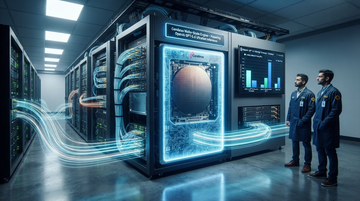
OpenAI’s GPT‑5.6 “Ultrafast” mode makes latency—not token price—rewrite who wins AI inference
OpenAI previewed GPT‑5.6 Sol “Ultrafast” with up to 14× faster output and up to 750 tokens/second, explicitly pitching ultra-low-latency inference (not cheaper tokens) as the differentiator. The underappreciated investor angle: when latency becomes the primary product metric, inference capacity economics shift toward architectures that can sustain interactive speeds—re-pricing demand for different compute stacks and agent workflows.
2026-08-13

Cerebras just proved inference-only isn’t enough: margins reset—then the market repriced the moat
Cerebras’s first earnings as a public company showed revenue growing quickly, but gross margin (and especially “core” margin) reset sharply from the company’s prior high levels. The market punished the economics the same day Nvidia’s system moat would normally keep competitors’ inference bets from turning into durable profitability.
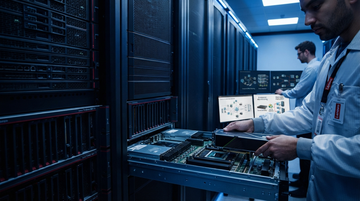
Lenovo's AI-server pipeline jumped to $54B—here’s what it implies for US chip and component demand
Lenovo reported a blowout fiscal Q1 on AI computers, servers, and services, with AI-related revenue up to $9.3B (35% of revenue) and an AI server pipeline of $54B, up 157% QoQ. The quarter matters for the US AI-hardware stack because it links the AI PC upgrade cycle to follow-on server and managed-service deployments—where demand shows up first in orders, then in component volumes.
2026-08-12
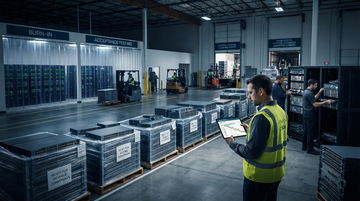
Cisco's FY27 guide effectively sets a “$9B+ AI order bar”—and it will be judged on revenue conversion, not backlog headlines
Cisco guided the market with an AI-networking demand runway that hinges on sustaining a high order pace into FY27. The key risk is that supply-chain and acceptance timing can push revenue recognition out of the quarter—so investors should treat “AI order proof” as a revenue-conversion test, with every miss resetting expectations for the entire networking trade.
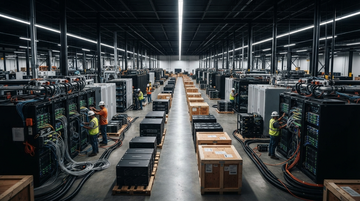
CoreWeave proves $104B backlog can still lose $626M—because the AI cloud “toll booth” is a financing story before it’s a cash story
In its Q2 2026 update, CoreWeave more than doubled revenue to $2.58B and reported an approximately $104B revenue backlog, yet also posted a $626M net loss and guided full-year 2026 revenue to $12.4B–$13.2B. The gap implies that the economic conversion of signed commitments into cash is being delayed by build-and-finance timing—so 2026 looks like a construction bill, not a backlog monetization victory.
What to expect
Evidence-first notes with a visible point of view.
This section collects sharp takes on earnings, shareholder meetings, and market structure. Each new piece should make the thesis, the facts, and the implications obvious within the first few screens.
Expect direct analysis, not generic commentary.
Expect the data to be explicit and the argument to be easy to follow.
Plutux is not an investment adviser. Market data and AI-generated analysis are for information and education only, not investment advice. Disclaimer