Semiconductors
Chips, from the fab floor to the income statement
Foundry capacity, HBM supply, packaging bottlenecks and export rules — traced through to the companies whose quarters they decide.
2026-08-26
%22%2F%3E%0A%20%20%3Ccircle%20cx%3D%22220%22%20cy%3D%22150%22%20r%3D%22180%22%20fill%3D%22%2322d3ee%22%20fill-opacity%3D%220.12%22%2F%3E%0A%20%20%3Ccircle%20cx%3D%221010%22%20cy%3D%22130%22%20r%3D%22220%22%20fill%3D%22%2338bdf8%22%20fill-opacity%3D%220.08%22%2F%3E%0A%20%20%3Ccircle%20cx%3D%22920%22%20cy%3D%22520%22%20r%3D%22170%22%20fill%3D%22%2322d3ee%22%20fill-opacity%3D%220.06%22%2F%3E%0A%20%20%3Cpath%20d%3D%22M140%20430h920%22%20stroke%3D%22url(%23line)%22%20stroke-width%3D%2212%22%20stroke-linecap%3D%22round%22%2F%3E%0A%20%20%3Cpath%20d%3D%22M220%20360c120-150%20260-220%20380-220s260%2070%20380%20220%22%20fill%3D%22none%22%20stroke%3D%22%2367e8f9%22%20stroke-opacity%3D%220.5%22%20stroke-width%3D%2216%22%20stroke-linecap%3D%22round%22%20stroke-linejoin%3D%22round%22%2F%3E%0A%20%20%3Cpath%20d%3D%22M300%20398h600%22%20stroke%3D%22%2394a3b8%22%20stroke-opacity%3D%220.24%22%20stroke-width%3D%228%22%20stroke-linecap%3D%22round%22%2F%3E%0A%20%20%3Ctext%20x%3D%22220%22%20y%3D%22510%22%20fill%3D%22%23e2e8f0%22%20fill-opacity%3D%220.7%22%20font-family%3D%22Arial%2C%20Helvetica%2C%20sans-serif%22%20font-size%3D%2238%22%20letter-spacing%3D%228%22%3EINSIGHTS%3C%2Ftext%3E%0A%3C%2Fsvg%3E)
2026-08-25
Marvell has a rare “price-vs-performance” setup in Q2 FY2027: its custom-silicon pitch meets Nvidia’s server cost shock
Marvell’s Aug. 27 print is the first earnings-level test of whether demand for custom inference silicon can offset Nvidia’s reported 15%+ AI-server price hikes. Marvell has already guided Q2 FY2027 net revenue to $2.700B ±5%, with gross-margin and non-GAAP EPS ranges that will reveal whether “ASIC substitution” shows up in results—or stays a narrative.

OpenAI’s Jalapeño posts 1.5–1.9× more inference work per watt—turning “custom silicon” from an option into a pricing-power threat for NVIDIA
OpenAI published its first Jalapeño inference-chip benchmark results on Aug. 25, claiming 1.5–1.9× more AI work per watt at peak throughput and 1.7–3.6× lower end-to-end latency versus stated comparison systems. Because inference is the spend that scales with live usage, the headline is that OpenAI can potentially shift its next compute build from “GPUs as the default” toward purpose-built accelerators—compressing NVIDIA’s margin cushion just ahead of its Aug. 26 earnings.
2026-08-24
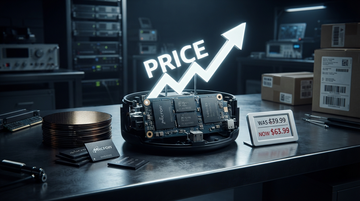
Amazon's 60% device price hikes confirm memory pricing power is moving into consumer hardware
Amazon raised prices on multiple first-party devices—including the Echo Dot base model—by as much as 60%, explicitly citing “significant increases” in memory and storage component costs. The move is a retail-grade proof point that DRAM/NAND tightness can translate into end-demand pricing, sharpening 2H26 contract-price narratives for Micron, SK Hynix, and Samsung Electronics while increasing the near-term risk that Amazon’s device ecosystem growth depends on a tighter—or costlier—hardware attachment loop.

Broadcom's $60B+ AI-debt backstop has shifted credit risk from “equity optimism” to bond-market math
A reported plan for Broadcom to raise more than $60B of AI-chip debt to support Anthropic and other buyers is now being read through the lens of credit: the company’s CDS spread widening implies lenders worry about who absorbs losses if AI demand timing or collateral values miss. For investors, the signal is less about whether Broadcom can finance chips and more about whether today’s AI “backlog math” understates tail risk across the buildout financing chain.
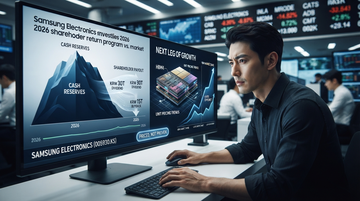
Samsung Electronics record payout stops moving the stock because memory cash returns are now “priced, not proven”
Samsung’s 2026 shareholder-return program is large enough to matter on cash, but investors are treating it as table stakes while they underwrite the next leg of AI/HBM demand. The market reaction fits the new memory playbook: capital returns are no longer the catalyst—unit pricing, HBM share, and capex discipline are.
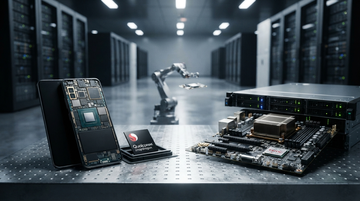
Qualcomm's handset leverage meets Xiaomi’s Xring-and-TSMC bet — and the data-center plan is the real profit hinge
Verified filings show Qualcomm is actively repositioning beyond mobile into data-center compute through acquisitions and its nonreportable data-center business. Meanwhile, publicly available event coverage for Xiaomi’s TSMC-made Xring references an EV recall/product-safety library and does not substantiate the claim that a new smartphone SoC is already shipping and structurally replacing Qualcomm or MediaTek volumes. The investable takeaway: even without immediate share loss proof, Qualcomm’s current cash generation and segment mix determine how sensitive the “handset-to-data-center” narrative is if smartphone SoC competition accelerates.
2026-08-23
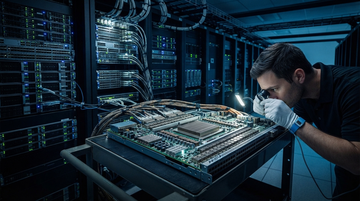
AI fabrics hit the “fabric wall”: switch-ASIC + SerDes/retimer capacity, not GPU supply, is tightening the next data-center upgrade cycle
As AI clusters scale toward higher-port-count, 800G-class and 1.6T-era fabrics, the limiting factor is shifting from GPU compute availability to the networking fabric bill of materials—especially switch-ASIC throughput and the SerDes/retimer ecosystems that make optical and copper links behave at scale. Arista has already disclosed that component shortages and lead-time dynamics force it to use non-cancellable semiconductor purchase commitments that can raise working-capital needs and pressure gross margins, while its 1.6T-ready 7060XE7 line shows the engineering push toward the next fabric tier. The practical investor takeaway: watch the silicon and interface bottlenecks that sit between “GPU arrival” and “fully networked training,” because that’s where revenue timing and margins can swing first.
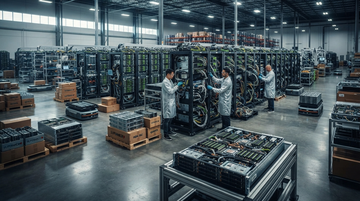
AI server build-out is paying ODMs with single-digit margins — the market sees GPU demand, but not the margin math between silicon and racks
AI server demand is booming, yet the ODM layer that converts GPU shipments into hyperscaler-usable racks is structurally capped by cost-of-sales pass-through, tariffs, expedite charges, and component sourcing concentration. Using Supermicro’s latest SEC disclosure as a load-bearing reference point for gross margin drivers, and cross-checking the revenue scale of major ODMs like Hon Hai Precision, Quanta Computer, and Wistron, the payoff is less “margin expansion” than “volume absorption,” which changes how investors should price order growth and onshoring headlines.

Aug. 22’s semi-led selloff sets up Nvidia’s Aug. 26 call: the tape is repricing “duration,” while Canada tariff retaliation tightens risk appetite
Aug. 22 was not just another chip wobble: the Nasdaq’s weekly slide aligned with a macro mix of higher bond-yield sensitivity and escalating cross-border trade risk from Canada’s planned “dollar-for-dollar” tariffs. With Nvidia scheduled to report fiscal Q2 results on Aug. 26, the near-term question for investors is whether guidance can overpower duration-driven multiple compression—and how semiconductor buyers plan budgets under a more punitive policy backdrop.
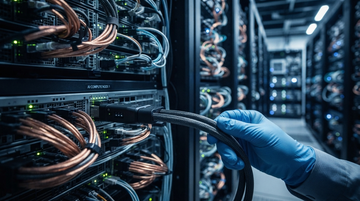
Credo’s AEC print is the first “copper-rack” signal for AI buildouts — and it matters because optics don’t fix the margin math
Credo’s latest guidance implies the AI-connectivity bottleneck is shifting downstream to the rack-level interconnect layer, where its active copper AECs should protect gross margin. In FY2026, Credo linked revenue growth overwhelmingly to AEC ramp and credited margin expansion to scale rather than optics mix — a setup where a “quiet” AEC beat can outweigh the market’s focus on the optical leg.
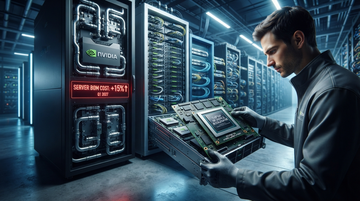
NVIDIA's 15%+ server price hike raises the payoff for custom inference silicon—and reframes who captures AI profit into 2027
NVIDIA’s reported 15%+ AI-server price increases—linked to memory costs—will likely make “build vs. buy” math harder for OEMs and easier for hyperscalers considering custom inference silicon. The underappreciated consequence is that higher platform BOM costs can accelerate ASIC substitution, shifting a bigger share of compute economics toward winners already embedded in custom stacks like Marvell, Broadcom, and hyperscaler-designed accelerators tied to Microsoft.
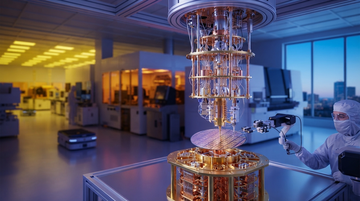
Quantum’s next supply chain winner won’t be the “best qubit”—it’ll be the firm that owns the atoms-to-atmosphere stack
DoD, Oracle, and hyperscalers are pulling quantum hardware decisions forward, but the bottleneck is no longer the algorithm—it’s cryogenics (or its absence), trapped-ion control electronics, and the foundry/packaging chain. IonQ’s planned SkyWater acquisition and its $5.7M DoD-backed networked-quantum design work point to a defensible economic play: closing the loop between device physics and manufacturability before the market standardizes.
2026-08-22
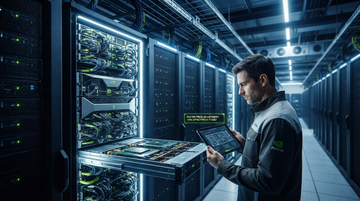
NVIDIA price hikes are the market’s missing AI-spending signal
Reports say NVIDIA notified AI server customers that prices for systems containing its chips will rise by more than 15% in many cases, effective on early-next-year shipments. The timing—four days before its Aug. 26 results call—turns a “demand is still tight” message into something closer to accounting: if hyperscalers absorb higher system prices, Nvidia’s margin and backlog quality matter more than the headline revenue growth rate.
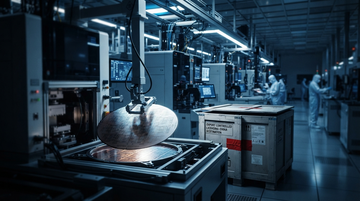
Synopsys’ guide is a stress test of the “design is the bottleneck” AI-chip thesis—and China licensing exposure is the real swing factor
Synopsys’ latest guidance is designed to separate two demand drivers: whether the AI-chip bottleneck is dominated by design/verification work (EDA and silicon IP) rather than wafer starts. At the same time, its China/export-control language frames how much of any design-led upside can actually be recognized through its licensing model under shifting approvals.
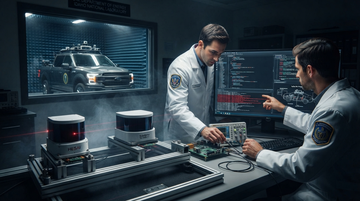
Idaho lab probes Chinese lidar security risk—Hesai and RoboSense face a potential AV sensor “ban-or-divest” shockwave
A U.S. Department of Energy lab is investigating whether widely used Chinese lidar sensors could introduce cybersecurity risks into U.S. vehicles. The immediate threat isn’t just reputational—it’s the procurement layer, where OEMs may accelerate qualification gaps, firmware testing, and supplier swaps before any formal restriction lands.
2026-08-21
2026-08-20
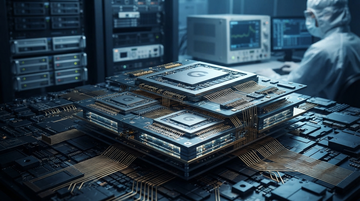
Marvell just got a Google route into TPU-attached custom AI silicon—tightening the “ASIC duopoly” pressure on NVIDIA’s inference economics
Marvell’s newly disclosed agreement with Google ties Marvell-designed custom semiconductor products to the TPU ecosystem, with Google receiving a warrant equivalent to about $12.2B of Marvell shares and vesting linked to Custom Products revenue. The investment implication is not “Marvell wins a chip”; it is that hyperscalers can diversify beyond Broadcom-led custom designs while still optimizing inference compute near TPU—raising the probability of faster cost-per-inference improvements that directly pressure NVIDIA’s accelerator pricing power.
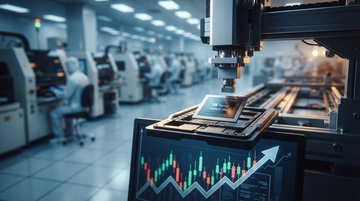
SK Hynix's $29B buyback is a cycle bet: management is paying in the stock selloff to pull the bottom forward
SK Hynix approved a KRW 40 trillion (about $28.6B) share repurchase and cancellation on Aug. 19, with buying starting Aug. 20 and running about three months. In a memory market still trading through a selloff, that timing uses buybacks as a “bottom-signal,” while the parallel strength of its U.S. ADR creates an unusual capital-structure setup for investors and forces peers to answer the same payout question.
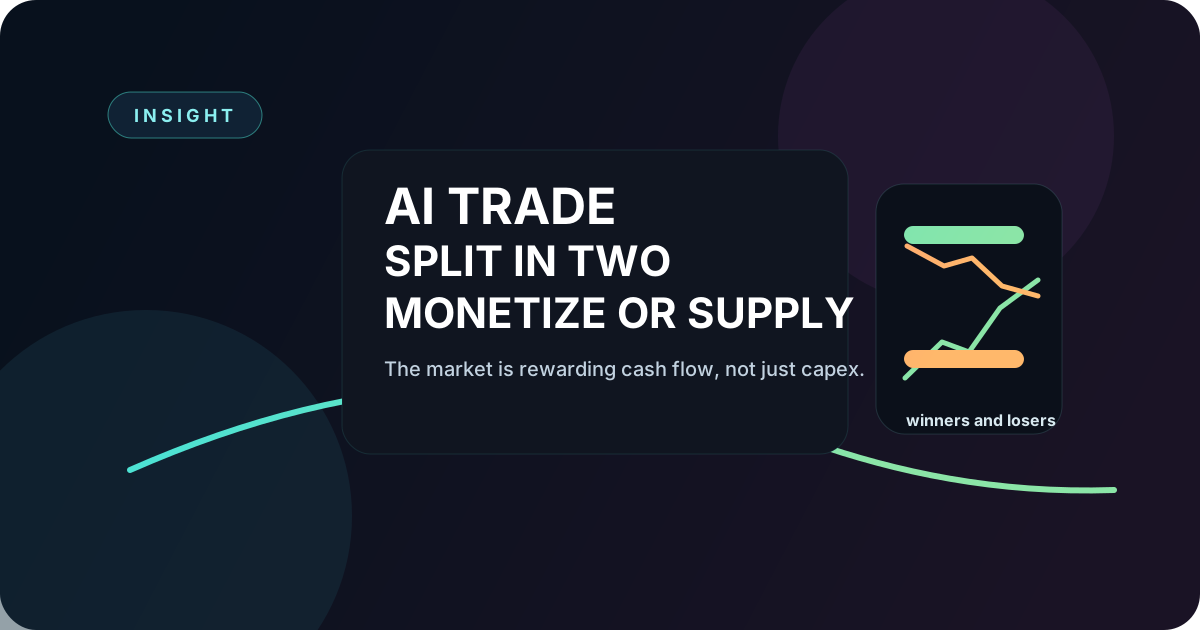
Wolfspeed’s outlook break shows the SiC trade is splitting: AI power could stay tight, but EV/industrial SiC demand is no longer a one-way bet
Wolfspeed’s Aug. 19 guidance reset (and the stock’s -7.5% pre-market move into Aug. 20) is the first “hard” datapoint that AI datacenter power silicon and EV/industrial SiC are moving out of lockstep. The message for investors: the market may reward the SiC supply chain differently by end-market—tight 48V-to-rack power needs versus a cooling EV/industrial ramp—creating winners in adjacent power silicon and control platforms while pressuring wafer/device oversupply.
What to expect
Evidence-first notes with a visible point of view.
This section collects sharp takes on earnings, shareholder meetings, and market structure. Each new piece should make the thesis, the facts, and the implications obvious within the first few screens.
Expect direct analysis, not generic commentary.
Expect the data to be explicit and the argument to be easy to follow.
Plutux is not an investment adviser. Market data and AI-generated analysis are for information and education only, not investment advice. Disclaimer