%22%2F%3E%0A%20%20%3Ccircle%20cx%3D%22220%22%20cy%3D%22150%22%20r%3D%22180%22%20fill%3D%22%2322d3ee%22%20fill-opacity%3D%220.12%22%2F%3E%0A%20%20%3Ccircle%20cx%3D%221010%22%20cy%3D%22130%22%20r%3D%22220%22%20fill%3D%22%2338bdf8%22%20fill-opacity%3D%220.08%22%2F%3E%0A%20%20%3Ccircle%20cx%3D%22920%22%20cy%3D%22520%22%20r%3D%22170%22%20fill%3D%22%2322d3ee%22%20fill-opacity%3D%220.06%22%2F%3E%0A%20%20%3Cpath%20d%3D%22M140%20430h920%22%20stroke%3D%22url(%23line)%22%20stroke-width%3D%2212%22%20stroke-linecap%3D%22round%22%2F%3E%0A%20%20%3Cpath%20d%3D%22M220%20360c120-150%20260-220%20380-220s260%2070%20380%20220%22%20fill%3D%22none%22%20stroke%3D%22%2367e8f9%22%20stroke-opacity%3D%220.5%22%20stroke-width%3D%2216%22%20stroke-linecap%3D%22round%22%20stroke-linejoin%3D%22round%22%2F%3E%0A%20%20%3Cpath%20d%3D%22M300%20398h600%22%20stroke%3D%22%2394a3b8%22%20stroke-opacity%3D%220.24%22%20stroke-width%3D%228%22%20stroke-linecap%3D%22round%22%2F%3E%0A%20%20%3Ctext%20x%3D%22220%22%20y%3D%22510%22%20fill%3D%22%23e2e8f0%22%20fill-opacity%3D%220.7%22%20font-family%3D%22Arial%2C%20Helvetica%2C%20sans-serif%22%20font-size%3D%2238%22%20letter-spacing%3D%228%22%3EINSIGHTS%3C%2Ftext%3E%0A%3C%2Fsvg%3E)
Semiconductors • AI infrastructure economics
A >15% system price rise reads like supply catching up to demand
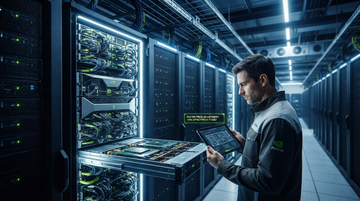
A Reuters report says NVIDIA told some customers that the prices of servers containing its AI chips will rise by more than 15% in many cases, with the changes tied to AI server builds rather than standalone GPU chips. A Bloomberg report adds that the hikes are expected to take effect on systems shipped early next year and will vary by chip generation and memory configuration.
Why that matters for investors is the transmission chain. When AI server prices rise, hyperscalers can respond in two broad ways: (1) absorb the higher billed system cost to protect model training/inference throughput, or (2) defer orders and accept slower scaling. A price hike notice just before a key earnings “guide-bar” can be interpreted as NVIDIA believing option (1) dominates—because demand isn’t soft enough to force a retreat.
What we can verify about the event
Customer notification (price direction)
More than 15% higher server prices in many cases
Reported by Reuters based on customer notification details.
When it hits the order book
Systems shipped early next year
Reported by Bloomberg; timing tied to shipment window.
NVIDIA’s next results “guide-bar”
Aug. 26, 2026 conference call (FY2027 Q2 ended Jul. 26, 2026)
Conference call scheduling details from NVIDIA.
Supply chain • pricing power • gross margin math
Who absorbs the hike: hyperscaler budgets first, Nvidia margin second
AI server bills are usually a mix of: the GPU compute, networking/interconnect, system integration, and—critically—memory. Bloomberg specifically links the magnitude to memory cost conditions. If server prices rise by >15% and hyperscalers keep buying, the immediate accounting impact sits in capex, but the longer-run impact for NVIDIA flows through two channels: (1) higher average selling prices for the platform components it supplies and (2) the probability that demand remains strong enough to sustain favorable mix and utilization.
FY2025 revenue
$130.5B
FY2025, reported Feb. 26, 2025 (annual financials)
FY2025 net income
$72.9B
FY2025, reported Feb. 26, 2025 (annual financials)
FY2025 operating cash flow
$64.1B
FY2025, reported Feb. 26, 2025 (annual financials)
FY2025 free cash flow
$60.9B
FY2025, reported Feb. 26, 2025 (annual financials)
System design • GPU vs ASIC debate • why pricing blurs the comparison
Price hikes make the ASIC-versus-GPU argument harder to win on economics
The ASIC-vs-GPU debate often boils down to “total cost per token / total cost per inference.” But the >15% hike notice is a reminder that token economics are dominated by platform procurement and scheduling, not just the chip. If server prices rise even when demand stays firm, that increases the risk that ASIC challengers face the same (or worse) system-level cost uplift—because they still require the same memory, power delivery, racks, and network fabrics.
- A >15% system price move directly raises the cost floor for AI scaling, narrowing the “ASIC is automatically cheaper” narrative unless ASICs fully offset memory and system costs.
- If hyperscalers accept the new price point, Nvidia’s platform bundle can reprice faster than competitors can redesign supply, supporting near-term margin resilience.
- If hyperscalers resist, the market should see slower shipped volumes before lower realized ASPs; the Aug. 26 guide-bar is where that shows up first.
Forward expectations • what to watch in the Aug. 26 guide
Four earnings questions the hike forces the market to ask
Because NVIDIA is signaling price changes before the Aug. 26 results call, investors should focus less on whether revenue grew and more on the quality of that growth: mix, shipments, and how quickly higher system costs translate into realized results.
- Will NVIDIA imply higher realized pricing or mix (not just revenue growth) as the demand backdrop?
- Will it frame lead times and supply throughput as demand-constrained or supply-constrained?
- Will the company connect guidance to memory and system configuration dynamics that can amplify or dampen the price hike effect?
Supply chain • upstream capex • downstream demand • who benefits
Second-order winners and losers across the AI supply chain
In a world where AI server prices rise, upstream memory and components can benefit if higher costs are passed through, but they can also face demand elasticity if hyperscalers slow ordering. Downstream, the hyperscalers face capex budget constraints; the winners are often the suppliers that can protect delivery schedules while maintaining pricing. For investors, the key is whether the hike signals ongoing tightness rather than a one-off reprice.
| Layer | What changes | Investor read-through | What would confirm it |
|---|---|---|---|
| System procurement (hyperscalers → integrators) | Billed server price rises in early-next-year shipments | Capex absorbs cost first; volume reaction comes later | Guidance implying stable orders despite higher bills |
| NVIDIA platform monetization | Realized economics depend on mix (chip generation, memory config) | Margin can improve if pricing holds and volumes stay strong | Company language on pricing, mix, and shipment cadence |
| Memory / components | Cost pressure shows up as configuration-dependent price increases | Better pass-through supports supplier margins | Signals from supplier guidance/earnings that reflect sustained pricing |
| GPU competitors (ASIC vs GPU) | Platform-level bill rises for all approaches | GPU may hold demand if integration and ecosystem keep adoption smooth | Competitive disclosures about delays or repricing |
Listed stocks most directly tied to the pricing-power and capex transmission
- NVIDIA faces less demand friction if hyperscalers accept >15% server price increases, supporting stronger mix and margin durability into the Aug. 26 guide-bar.
- NVIDIA should show pricing/mix signals before volume signals if the hike reflects sustained tightness rather than temporary configuration spikes.
- AMD could lose share if Nvidia’s ecosystem pricing holds while hyperscalers keep scaling, compressing AMD’s ability to win purely on cost-per-accelerator.
- If higher system bills trigger budget cuts, AMD benefits from any substitution demand, but only if shipment cadence and software adoption remain competitive.
- Broadcom can benefit from AI server “keep buying” behavior because networking and system infrastructure demand tends to travel with shipped AI systems.
- If the market reprices AI capex upward rather than downgrading volumes, Broadcom could see operating leverage through higher cycle utilization in AI-related connectivity.
- If the >15% hike confirms sustained AI buildout, ASML should benefit from continued capex intensity at leading logic/memory nodes—but it depends on whether customers fund new wafer starts rather than rerouting spend.
- The confirmation window is the next several quarters of reported order activity; investors should watch for evidence of order durability, not just backlog churn.