Semiconductors
Chips, from the fab floor to the income statement
Foundry capacity, HBM supply, packaging bottlenecks and export rules — traced through to the companies whose quarters they decide.
2026-08-12
%22%2F%3E%0A%20%20%3Ccircle%20cx%3D%22220%22%20cy%3D%22150%22%20r%3D%22180%22%20fill%3D%22%2322d3ee%22%20fill-opacity%3D%220.12%22%2F%3E%0A%20%20%3Ccircle%20cx%3D%221010%22%20cy%3D%22130%22%20r%3D%22220%22%20fill%3D%22%2338bdf8%22%20fill-opacity%3D%220.08%22%2F%3E%0A%20%20%3Ccircle%20cx%3D%22920%22%20cy%3D%22520%22%20r%3D%22170%22%20fill%3D%22%2322d3ee%22%20fill-opacity%3D%220.06%22%2F%3E%0A%20%20%3Cpath%20d%3D%22M140%20430h920%22%20stroke%3D%22url(%23line)%22%20stroke-width%3D%2212%22%20stroke-linecap%3D%22round%22%2F%3E%0A%20%20%3Cpath%20d%3D%22M220%20360c120-150%20260-220%20380-220s260%2070%20380%20220%22%20fill%3D%22none%22%20stroke%3D%22%2367e8f9%22%20stroke-opacity%3D%220.5%22%20stroke-width%3D%2216%22%20stroke-linecap%3D%22round%22%20stroke-linejoin%3D%22round%22%2F%3E%0A%20%20%3Cpath%20d%3D%22M300%20398h600%22%20stroke%3D%22%2394a3b8%22%20stroke-opacity%3D%220.24%22%20stroke-width%3D%228%22%20stroke-linecap%3D%22round%22%2F%3E%0A%20%20%3Ctext%20x%3D%22220%22%20y%3D%22510%22%20fill%3D%22%23e2e8f0%22%20fill-opacity%3D%220.7%22%20font-family%3D%22Arial%2C%20Helvetica%2C%20sans-serif%22%20font-size%3D%2238%22%20letter-spacing%3D%228%22%3EINSIGHTS%3C%2Ftext%3E%0A%3C%2Fsvg%3E)
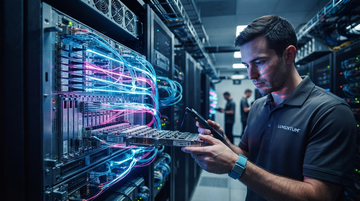
Lumentum turns “1.6T is coming” into Q4 revenue—making optical capacity conversion the new proof point investors should price
Lumentum’s fiscal Q4 2026 delivered a record $1.006B in revenue and $3.23 non-GAAP diluted EPS, while full-year revenue rose to $3.014B—nearly tripling year over year. The key signal is not just growth; it’s that optical networking hardware (including the company’s optical communications engine) is translating hyperscaler throughput plans into measurable quarterly dollars, giving the 800G/“1.6T” AI interconnect narrative a company-level anchor.
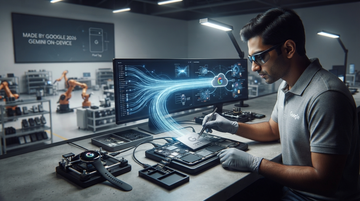
Made by Google 2026: Pixel’s Gemini on-device push turns every new phone into a distribution channel—potentially compressing app-store bargaining power
Google’s Made by Google 2026 lineup puts Gemini “Intelligence” directly into Pixel 11, Pixel Watch 5, and a new Pixel Tag experience, with explicit on-device compute claims tied to a new TPU. If this improves response speed and lowers friction for everyday actions, it can shift user time from third-party apps toward Google-first workflows, pressuring platforms built around app discovery and extensions.
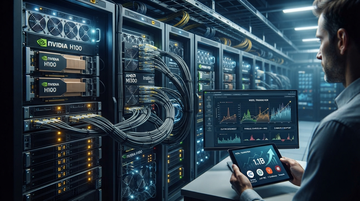
River AI’s $1.1B Round Turns Custom-Model Training Into a Co-Op Between NVIDIA and AMD
River AI says it raised $1.1B in a round led by General Catalyst and AMP PBC, with strategic participation from both NVIDIA and AMD Ventures. The bigger signal isn’t just the money—it’s River’s pitch that enterprises can train and deploy custom frontier “open-weight” models via an API in minutes, forcing chip vendors to compete on not only hardware, but end-to-end training workflows.
2026-08-11

Aug 10–14 AI-Infra Earnings Is the First “Build-vs-Buy Audit” for the Hyperscaler Cloud Race
Between Nebius, CoreWeave, and Super Micro Computer, investors get a rare same-window read on how much margin and contracted demand the AI infrastructure stack can actually monetize. The cluster matters because it turns the “data-center financing is the bottleneck” thesis into an earnings-testable build-versus-rent problem—starting with Nebius’s $7–$9B ARR target and >3GW contracted power, and flowing into CoreWeave’s and Supermicro’s ability to keep gross profit quality intact as 2027 backlog visibility becomes the market’s next currency.
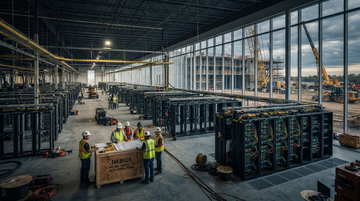
Nebius’s Vineland delay risk just re-priced the “build-fast, rent-fast” AI-server trade
D.A. Davidson’s 30% cut to its Nebius price target—citing Vineland, New Jersey buildout delays that may not complete this year—spotlights a new failure mode for neocloud economics: infrastructure timing, not GPU demand, is what can break revenue ramps. With Nebius already framing long-duration GPU delivery tranches that can affect performance/credits, investors should expect second-order repricing risk across other AI-compute landlords when project timelines slip.
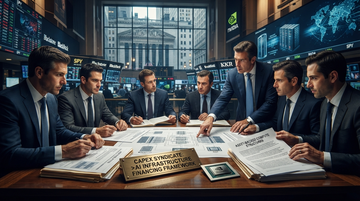
NVIDIA's $500B Wall Street syndicate reframes AI capex ownership: bankers—not GPUs—become the gatekeeper
A reported Nvidia partnership with Apollo, BlackRock, Blackstone, Brookfield, Goldman Sachs, and KKR targets >$500B of third‑party financing for AI infrastructure, shifting the “capex stack” from Nvidia’s balance sheet to Wall Street underwriting. For investors, the key is not Nvidia’s chips—it’s how financeable-asset structure (and who prices risk) changes hyperscaler ROI, network/equipment throughput, and ultimately who captures the margin.
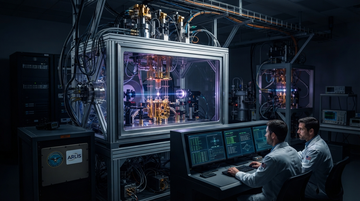
IonQ and ARLIS Are Building the DoD’s First Networked “Blind” Quantum System—Turning Quantum From Demos Into Deployable Mission Capability
IonQ’s newly awarded ARLIS contract is a meaningful step from “quantum access” toward a deployable, multi-node “blind quantum computing” system for national-security research. The investor implication is not just a government check—it’s whether quantum vendors can operationalize networked quantum with the security, control, and integration stack the Pentagon will repeatedly fund.
2026-08-10

Akamai’s Q2 proves edge security is the revenue bridge to AI inference—CIS growth is measurable, but the linkage is still the debate
In Akamai Q2 2026 results (quarter ended June 30, 2026), Security revenue grew 10% YoY to $604M while Cloud Infrastructure Services (CIS) grew 39% YoY to $99M—plus $2.8B+ in signed multi-year CIS contracts YTD. The company frames CIS growth as “AI infrastructure” positioning, but it did not quantify an explicit dollar “AI inference” contribution in the earnings materials reviewed, so investors must underwrite the security→inference attachment story more than they can spreadsheet it.

Appaloosa’s Q2 pivot bets the AI capex chain is still mispriced—and its “walk-away-from-banks” move tightens the signal
Appaloosa Management (David Tepper) reportedly rotated its Q2 2026 13F exposure toward AI infrastructure—highlighting a sharp add to Micron and a larger position in Amazon, with Taiwan Semi also pushed into core territory—while exiting bank holdings entirely. The investable takeaway isn’t “AI good, banks bad”; it’s that memory + foundry + hyperscaler demand signals can re-rate margins and capex intensity even when financials look safer on paper.
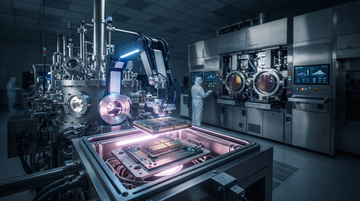
The Real Bottleneck Isn’t Rack Cooling—It’s the IP Stack Behind the Thermal Interface That Makes AI Chips Work
Discovered Materials’ AI-driven “whack-a-mole” approach to finding cooler thermal materials highlights how fast the industry has to iterate to avoid thermal throttling. But the investable constraint is upstream: the process, deposition, and materials IP that can manufacture new thermal interface layers reliably at scale—where Applied Materials sits and where materials suppliers like Shin-Etsu Chemical and Tokyo Ohka Kogyo are built to monetize.
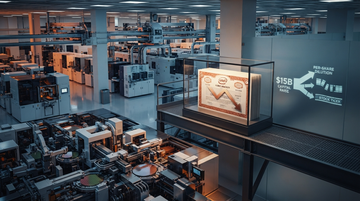
Intel selling $15B of new stock turns the turnaround rally into dilution math
Intel’s proposed $15B common-stock offering (plus a $2.25B underwriter option) gives management capital for capex/working capital—but it also means investors are funding the foundry ramp with fresh share issuance at a high-price tape. The market implication is straightforward: even if foundry timelines improve, per-share economics get worse until operating leverage arrives.
Alphabet's talent exodus risk: investors should watch whether CEO-level AI capex and recruiting intensity rise after Jeff Dean-style departures
When Jeff Dean and other senior Google AI researchers left to launch [Discovery Loop], the headline wasn’t just a startup story—it was a signal that top-model talent can be a bottleneck that forces hyperscalers to spend more to stay competitive. Alphabet already shows heavy reinvestment capacity, but the market should now price in whether leadership churn increases hiring and compute-cost pressure at the company level.
Microsoft's September Maia 300 reveal tests whether custom inference silicon can undercut NVIDIA without breaking the supply chain
Microsoft is signaling a next-generation custom AI accelerator (“Maia 300”) for a September public unveiling and 2027 deliveries. Its earlier Maia 200 already claims 30% better inference performance-per-dollar, so the real question isn’t specs—it’s whether Microsoft can scale volume enough to shift the inference cost curve and take share from NVIDIA’s full-stack economics.
2026-08-09

Apple's CXMT test isn’t a price story—it’s a sanctions-and-qualification story that can *stabilize Apple’s bill or strengthen SK hynix and Samsung’s pricing power
Apple is reported to have progressed to qualification testing of [CXMT] PRC DRAM for iPhone/Mac devices sold in China, while also engaging US policy for clearance. The first-order market implication is that CXMT can’t credibly undercut pricing yet, so the substitution “math” likely sharpens near-term leverage for SK Hynix and Samsung Electronics while raising a binary compliance risk for Apple’s sourcing pipeline.

Cloudflare’s Q2 AI-Inference Guide Raised the “Toll” Value of the Internet Edge—So NET Repriced From CDN to Answer-Engine Infrastructure
Cloudflare used its Q2 2026 print to guide fiscal 2026 revenue to $2.864B–$2.870B and non-GAAP EPS to $1.25–$1.26, a combination the market treated like proof that AI inference traffic is accelerating at the edge. The read-through is that Cloudflare (and edge rivals) increasingly function as the “metering + policy control plane” for machine-to-machine traffic—not just a caching layer.

VKOSPI's two-month low signals the leveraged flush is cooling—and that’s when foreign rotation into Samsung Electronics & SK hynix can start working
Korea’s volatility gauge (VKOSPI) fell to a two-month low after forced deleveraging in single-stock leveraged products, while the KOSPI shed nearly 40% from its June peak. If this “deleveraging-over” phase is real, the next price action is less about panic selling and more about foreign capital re-pricing Korea’s memory leaders—starting with Samsung Electronics and SK hynix, not the US proxy names.
KOSPI volatility ebbed—but the AI-memory trade is now a different risk asset after leveraged flush
South Korea’s volatility gauge has fallen to a two-month low after forced liquidations and regulatory tightening on single-stock leveraged ETFs. The key implication for investors isn’t “risk-on returns”—it’s that the AI-memory complex’s tape is now shaped more by de-leveraging mechanics than by momentum alone.
SK hynix’s 18-Month Insider Sentence Doesn’t Target HBM—It Forces a New Audit Standard Across the Entire Memory Toolchain
An Aug 9, 2026 appeals-court ruling upheld an 18-month jail sentence for a former SK hynix engineer who leaked classified semiconductor manufacturing information to a Chinese firm. Even though the leaked technology described in the primary report concerns CMOS image-sensor manufacturing (not HBM specifically), the verdict functionally raises the compliance-and-audit bar for any memory supplier whose customer share depends on “trust.”
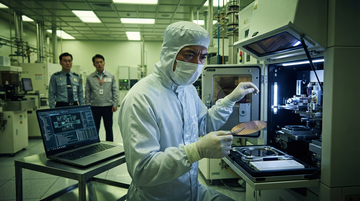
SK Hynix's 18-month jail ruling signals a new personnel-sensitive trade-secret standard for Samsung, Micron—and the AMAT/KLA/LRCX field-toolchain
A Seoul court sentenced an ex-SK Hynix employee to 18 months in jail for leaking semiconductor trade secrets to a Chinese firm, and the decision (as reported) explicitly rejects “light treatment” of leak crimes. The bigger investor takeaway is indirect: this case hardens how South Korea treats dual-use engineering knowledge—including off-site resumes/prints/photos—so tool vendors that embed with fabs must expect tougher export-control-by-personnel friction around memory/AI process data.
2026-08-08
What to expect
Evidence-first notes with a visible point of view.
This section collects sharp takes on earnings, shareholder meetings, and market structure. Each new piece should make the thesis, the facts, and the implications obvious within the first few screens.
Expect direct analysis, not generic commentary.
Expect the data to be explicit and the argument to be easy to follow.
Plutux is not an investment adviser. Market data and AI-generated analysis are for information and education only, not investment advice. Disclaimer