Semiconductors
Chips, from the fab floor to the income statement
Foundry capacity, HBM supply, packaging bottlenecks and export rules — traced through to the companies whose quarters they decide.
2026-07-21
%22%2F%3E%0A%20%20%3Ccircle%20cx%3D%22220%22%20cy%3D%22150%22%20r%3D%22180%22%20fill%3D%22%2322d3ee%22%20fill-opacity%3D%220.12%22%2F%3E%0A%20%20%3Ccircle%20cx%3D%221010%22%20cy%3D%22130%22%20r%3D%22220%22%20fill%3D%22%2338bdf8%22%20fill-opacity%3D%220.08%22%2F%3E%0A%20%20%3Ccircle%20cx%3D%22920%22%20cy%3D%22520%22%20r%3D%22170%22%20fill%3D%22%2322d3ee%22%20fill-opacity%3D%220.06%22%2F%3E%0A%20%20%3Cpath%20d%3D%22M140%20430h920%22%20stroke%3D%22url(%23line)%22%20stroke-width%3D%2212%22%20stroke-linecap%3D%22round%22%2F%3E%0A%20%20%3Cpath%20d%3D%22M220%20360c120-150%20260-220%20380-220s260%2070%20380%20220%22%20fill%3D%22none%22%20stroke%3D%22%2367e8f9%22%20stroke-opacity%3D%220.5%22%20stroke-width%3D%2216%22%20stroke-linecap%3D%22round%22%20stroke-linejoin%3D%22round%22%2F%3E%0A%20%20%3Cpath%20d%3D%22M300%20398h600%22%20stroke%3D%22%2394a3b8%22%20stroke-opacity%3D%220.24%22%20stroke-width%3D%228%22%20stroke-linecap%3D%22round%22%2F%3E%0A%20%20%3Ctext%20x%3D%22220%22%20y%3D%22510%22%20fill%3D%22%23e2e8f0%22%20fill-opacity%3D%220.7%22%20font-family%3D%22Arial%2C%20Helvetica%2C%20sans-serif%22%20font-size%3D%2238%22%20letter-spacing%3D%228%22%3EINSIGHTS%3C%2Ftext%3E%0A%3C%2Fsvg%3E)
2026-07-20
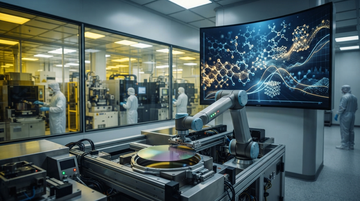
Bezos, Nvidia, Meta Back CuspAI's $450M Series B and 'AI Materials Foundry' — AI Drug-Discovery-Style Bets Now Target Chipmaking Inputs
On July 20, 2026, Cambridge-based CuspAI launched its 'AI Materials Foundry' — a coalition of 45+ technology firms, industrial players, and research labs — alongside a $450 million Series B led by Jeff Bezos with participation from Nvidia (compute), Meta FAIR (Universal Model for Atoms), Kleiner Perkins, NEA, and Temasek, bringing total funding to $650 million. Powered by CuspAI's 'MIRA' platform, the Foundry already screened 300 trillion molecular structures for client Kemira in 6 months (versus years traditionally) and uses curated data from the Cambridge Structural Database, Inorganic Crystal Structure Database, and Wiley. The bet signals that generative-AI-for-materials — analogous to AI drug discovery — is now being explicitly aimed at chipmaking materials bottlenecks.
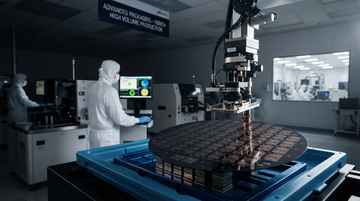
Micron Stock Snap: SK Hynix's Memory Price Warning Reprices the AI Memory Oligopoly
On July 19–20, 2026, Micron shares snapped a recent losing streak after an SK Hynix memory-price warning reinforced that the AI-driven DRAM/HBM cycle remains supply-constrained into 2027 and beyond. The warning follows SK Hynix CEO Kwak Noh-jung's comments on July 10 calling 2027 the 'worst year' for memory supply shortages, with the crunch expected to last to 2030 — and comes as memory stocks (SK Hynix, Micron, SanDisk, Western Digital) sold off sharply the prior week on concerns about peak-cycle pricing.
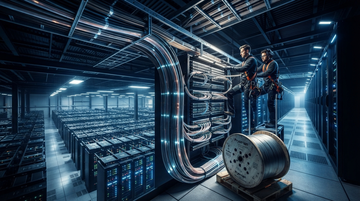
Molex-Prysmian's $6.29B Data-Center Cable Deal Is the Newest Anchor for the Hyperscaler Optical Supply Chain
On July 20, 2026, Koch-owned Molex struck a 10-year, up to $6.29 billion (€5.5 billion) deal with Italy's Prysmian for the supply of optical cables used inside AI data centers, including a €550 million upfront payment. The agreement — one of the largest hyperscaler-adjacent cabling contracts ever disclosed — follows Prysmian's May 2026 guidance that hyperscaler deals would push 2028 EBITDA up ~64% from 2024, and a $4.68B M&A exploration to bolt on capacity. The deal locks in critical optical interconnect supply at a moment when AI-driven data-center fiber demand is competing with telecom and subsea projects for the same Prysmian capacity.
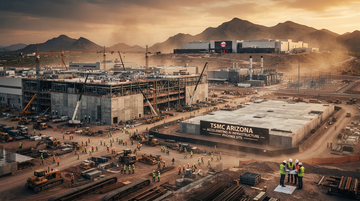
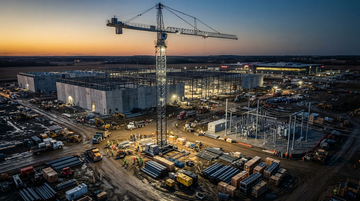
TSMC Accelerates Arizona Buildout, Lifts 2026 Capex to $60-64B — The AI 'Megatrend' Is Now a US Foundry Story
On July 20, 2026, TSMC CFO Wendell Huang told CNBC the company is accelerating its Arizona fab buildout to capitalize on what he called a 'multi-year structural' AI 'megatrend', with the Arizona pipeline raised to $265 billion on top of an additional $100 billion commitment. TSMC simultaneously lifted full-year 2026 capex guidance to $60-64 billion (from a prior $52-56B) and confirmed Phase 1 of Arizona is in production on 4nm, with advanced packaging also being built on-site. Crucially, Huang disclosed that US fab construction costs run 4-5x Taiwan levels, a key margin datapoint for assessing the long-run economics of US-based AI chip manufacturing.
2026-07-19

2026-07-18

CXMT's IPO Turns China's Memory Catch-Up Into a Direct Challenge to Micron, SK Hynix, and Samsung Electronics
China's biggest memory-chip listing in years is not just a capital-raising event. It is a signal that the memory market is being pulled into a state-backed industrial race, with consequences for pricing, capacity, and the global AI supply chain.

CXMT's Mega IPO Is Draining Liquidity From China and Repricing Hong Kong Tech
CXMT's $8.6 billion listing is not just a memory-chip event. The bigger market signal is that a giant domestic IPO can pull liquidity out of mainland China and into a policy-backed industrial story, forcing Alibaba, Tencent, and other Hong Kong tech names to reprice against a tighter cash pool.

Nvidia Barely Kept the Market Cap Crown Over Apple, and That Turns the AI Trade Into a Cash-Conversion Test
The intraday fight between Nvidia and Apple is not just a market-cap headline. It is the market asking which mega-cap can still justify a premium when AI capex, memory costs, and valuation crowding are all rising at once.

The SOX Bear Market Is Not the End of AI, It Is the Start of a Capital-Discipline Regime
When the Philadelphia Semiconductor Index drops more than 20% from its high, the market is not saying AI demand vanished. It is saying the cost of owning the AI supply chain is now high enough that only the cleanest cash converters deserve a premium.
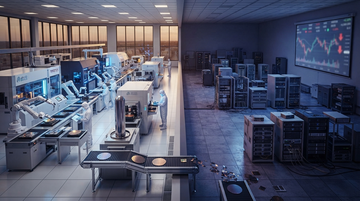
The SOX Bear Market Is Splitting AI Toll Collectors From AI Beta
When the semiconductor index falls into bear-market territory, the market is not dumping AI. It is sorting the AI stack into companies that toll the buildout and companies that are still being priced like pure beta.
2026-07-17
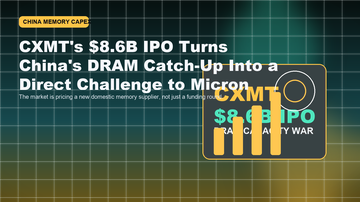
CXMT's $8.6B IPO Turns China's DRAM Catch-Up Into a Direct Challenge to Micron
China's ChangXin Memory Technologies is using a blockbuster IPO to turn AI demand into domestic DRAM capacity. That is not just a China story; it is a direct pricing challenge for Micron, SK Hynix, and Samsung Electronics.
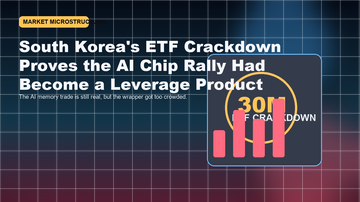
South Korea's ETF Crackdown Proves the AI Chip Rally Had Become a Leverage Product
South Korea's move to suspend new single-stock leveraged ETF listings is not just a retail-protection headline. It is a market-structure admission that the AI chip rally had become a leverage trade layered on top of a real memory upcycle.

Moonshot AI's Kimi K3 Turns the Chip Selloff Into a Margin Test for Nvidia, Broadcom, and Micron
The latest semis drawdown is not only about one Chinese model launch. It is a repricing of how much margin the AI stack can still support when benchmark pressure, export-control risk, and crowded positioning all hit at once.
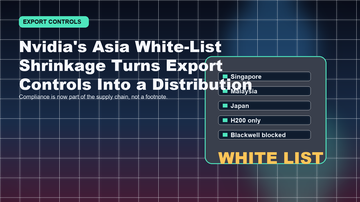
Nvidia's Asia White-List Shrinkage Turns Export Controls Into a Distribution Moat
By cutting the number of authorized Asian buyers by more than half, Nvidia is making compliance part of the supply chain. That sounds bureaucratic, but it is actually a moat: fewer customers, tighter verification, and a more controllable route to China.

TSMC's Record Earnings Selloff Exposes the Three Fault Lines the AI Trade Can No Longer Ignore
TSMC delivered a record quarter on July 16, 2026, but the stock still sold off. That disconnect is the story: the AI semiconductor cycle is still strong, yet the market is now pricing margin compression, higher capex, and a broader repricing of AI infrastructure risk.
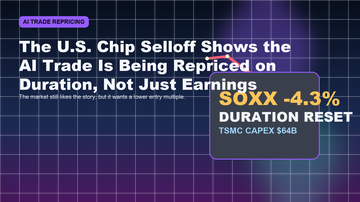
The U.S. Chip Selloff Shows the AI Trade Is Being Repriced on Duration, Not Just Earnings
Even after strong results from TSMC, the market started selling the names that had benefited most from the AI spend cycle. That is a duration reset, not an earnings collapse, and it changes how investors should size the entire semiconductor basket.
2026-07-16

Apple's China AI Approval Is Now a 3-Platform Race - Alibaba, Baidu, and Huawei Just Became the Most Important AI Cohort in the World
CNBC reported on July 16, 2026 that Hong Kong-listed shares of Alibaba rose 5% and Baidu rose 4% after the Cyberspace Administration of China included Apple Intelligence on a list of seven approved AI service providers for iPhone users in China, alongside Huawei and homegrown AI models. The approval opens the door for Baidu's AI chip unit Kunlunxin - targeting a Hong Kong IPO at a $50B valuation - and creates a 3-platform China AI race. The read-through is direct for Apple, Baidu, Alibaba, Huawei, Tencent, and the entire China AI-cohort.
The July 16 Semiconductor Slide Shows the AI Trade Is Repricing Cash Discipline, Not Just Growth
Semiconductor stocks fell even after strong results from TSMC, which tells you the market is no longer rewarding AI growth in isolation. It now wants proof that the capex cycle, margin math, and export-control risk can all coexist without breaking returns.
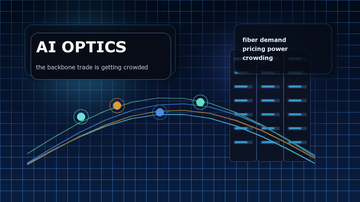
Corning and Coherent Show the AI Optics Trade Is Starting to Behave Like a Crowded Winner, Not a Fresh Frontier
The July 16 market slide hit optical networking names even as AI infrastructure spending remains strong. Corning and Coherent both sagged inside a broader AI selloff, which suggests the market is no longer paying up just for exposure to the backbone of the AI buildout. Investors now want proof of pricing power, not just a good seat in the supply chain.
What to expect
Evidence-first notes with a visible point of view.
This section collects sharp takes on earnings, shareholder meetings, and market structure. Each new piece should make the thesis, the facts, and the implications obvious within the first few screens.
Expect direct analysis, not generic commentary.
Expect the data to be explicit and the argument to be easy to follow.
Plutux is not an investment adviser. Market data and AI-generated analysis are for information and education only, not investment advice. Disclaimer