%22%2F%3E%0A%20%20%3Ccircle%20cx%3D%22220%22%20cy%3D%22150%22%20r%3D%22180%22%20fill%3D%22%2322d3ee%22%20fill-opacity%3D%220.12%22%2F%3E%0A%20%20%3Ccircle%20cx%3D%221010%22%20cy%3D%22130%22%20r%3D%22220%22%20fill%3D%22%2338bdf8%22%20fill-opacity%3D%220.08%22%2F%3E%0A%20%20%3Ccircle%20cx%3D%22920%22%20cy%3D%22520%22%20r%3D%22170%22%20fill%3D%22%2322d3ee%22%20fill-opacity%3D%220.06%22%2F%3E%0A%20%20%3Cpath%20d%3D%22M140%20430h920%22%20stroke%3D%22url(%23line)%22%20stroke-width%3D%2212%22%20stroke-linecap%3D%22round%22%2F%3E%0A%20%20%3Cpath%20d%3D%22M220%20360c120-150%20260-220%20380-220s260%2070%20380%20220%22%20fill%3D%22none%22%20stroke%3D%22%2367e8f9%22%20stroke-opacity%3D%220.5%22%20stroke-width%3D%2216%22%20stroke-linecap%3D%22round%22%20stroke-linejoin%3D%22round%22%2F%3E%0A%20%20%3Cpath%20d%3D%22M300%20398h600%22%20stroke%3D%22%2394a3b8%22%20stroke-opacity%3D%220.24%22%20stroke-width%3D%228%22%20stroke-linecap%3D%22round%22%2F%3E%0A%20%20%3Ctext%20x%3D%22220%22%20y%3D%22510%22%20fill%3D%22%23e2e8f0%22%20fill-opacity%3D%220.7%22%20font-family%3D%22Arial%2C%20Helvetica%2C%20sans-serif%22%20font-size%3D%2238%22%20letter-spacing%3D%228%22%3EINSIGHTS%3C%2Ftext%3E%0A%3C%2Fsvg%3E)
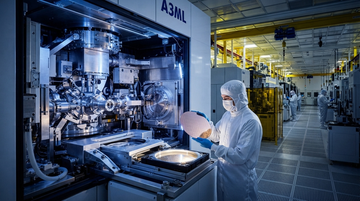
A week after Citadel stepped in as a buyer of most of Situational Awareness public holdings following AI-share losses, the fund reportedly deployed fresh $400M into Source Foundry—a stealth semiconductor/manufacturing startup.[Reuters-style excerpt below, plus multiple press mirrors for the Source Foundry bet] The immediate investor question isn’t “did they miss the AI stock trade?” It’s whether frontier AI capex in 2027–2030 is likely to be funded through (and constrained by) manufacturing capacity, yields, and equipment/tooling—not just by GPUs and data-center shells.
What happened (verified event chain)
The Citadel “bailout” mattered for liquidity; the Source Foundry bet mattered for capex beliefs
| Link in the chain | Verified fact | What it implies for AI capex reality |
|---|---|---|
| Citadel–Situational unwind | Situational Awareness unwound most of a $16B public portfolio; Citadel picked up the leverage-financed portion; remaining book roughly $10B. | Shows an AI-equity liquidity shock driven by leverage, not necessarily a collapse in long-horizon capex needs. |
| Source Foundry bet | Reportedly Source Foundry is the recipient of a $400M infusion from Situational Awareness shortly after the unwind headlines; reported round context includes $500M and a ~$5B valuation. | Suggests the fund still wants manufacturing “upstream bets” rather than staying fully exposed to public AI-equity price moves. |
| Strategic positioning | Source Foundry is described in reporting as a stealth effort to reinvent/advance chip manufacturing tools/equipment—explicitly framed as taking on the tooling stack associated with ASML. | Connects the bet to the constraint chain: lithography/processing/tooling → yield → throughput → capex realization. |
Event specifics and verifiability
We can verify the unwind mechanics, but Source Foundry remains thin on primary disclosures
- Reuters confirms the Citadel acquisition/unwind mechanics: $16B public portfolio unwound; leverage-financed portion acquired; Situational’s remaining book roughly $10B after the deal.
- The $400M Source Foundry figure is widely echoed in secondary reporting; the stronger primary disclosure (e.g., a filing or Source Foundry press release) was not accessible from this session due to paywalls/blocked domains.
- The Source Foundry “~$5B valuation” and “plans to compete with ASML” are reported in secondary sources; treat these as headline-reported until Source Foundry publishes a primary document.
Because Source Foundry is private and stealth, the completion-standard approach is: use the Citadel/Reuters piece for the liquidity shock mechanics, then interpret the Source Foundry allocation as a signal about where frontier-AI capex bottlenecks are perceived to be. Where terms/valuation aren’t primary-disclosed in-session, the article labels them accordingly.
Causal chain (why this bet is a “capex reality” tell)
How a leverage-driven unwind can still co-exist with a manufacturing/tools thesis
The public-market leg broke because leverage turned a valuation drawdown into forced selling. But the capex thesis can still survive if the underlying bottleneck is physical—throughput, yield, and tool supply—rather than purely financial/marketing-driven. A fund re-entering via a stealth manufacturing-tools startup is consistent with the view that the next 1–3 years will decide whether AI deployment can scale without manufacturing friction, not whether “AI stocks” keep their multiple.
What the unwind confirms vs. what the Source Foundry bet suggests
Directional synthesis anchored to what was actually verifiable in-session
Unit: USD (billions for first two; millions for bet)
Liquidity / leverage shock in public AI equities
Situational unwound most of a $16B public portfolio (Reuters excerpt).
16
Remaining capital base post-unwind
Remaining book roughly ~$10B (Reuters excerpt).
10
New allocation into manufacturing constraint layer
Reported $400M bet into Source Foundry (secondary press echo; not a primary filing in-session).
400
Supply-chain lens (full stack, not just “chip demand”)
The bet’s real transmission channel: tools → yields → wafer starts → AI system throughput
- Upstream constraints: advanced processing/lithography tooling capacity and software/process integration are gating factors for leading-edge wafer starts.
- Midstream constraints: yield learning curves and defect density control determine whether new capacity translates into sellable die.
- Downstream constraints: compute availability (training/inference) ultimately depends on whether manufacturers can deliver chips in volume and at acceptable cost-per-GPU.
This is why a “fab-style” stealth manufacturing bet can be framed as a capex reality check. The market can reprice equity multiples on short-term sentiment, but if capex must buy down physical constraints, allocations often persist (or even accelerate) into the constraint layer.
Public-market proxies (what to watch now)
If the 2027–2030 buildout is constrained by manufacturing tools, certain listed names should keep acting like “throughput telltales”
ASML (tooling proxy)
Revenue: $35.3B (TTM)
Operational scale indicator from company overview feed.
ASML (profit engine)
Operating margin: 35.4% (TTM)
Indicative of pricing power through cycles.
TSMC (foundry proxy)
Operating margin: 56.0% (TTM)
Shows resilience when yields/production execution are healthy.
Intel (process turnaround risk)
Net margin: -19.8% (TTM)
Highlights how execution risk can punish equity even when capex headlines remain strong.
CoreWeave (downstream compute proxy)
Free cash flow: negative (TTM)
Shows that downstream demand doesn’t auto-fix financing/capex timing.
| Stock (proxy layer) | TTM revenue | TTM operating margin | Why it matters to this thesis |
|---|---|---|---|
| ASML | $35.3B | 35.4% | Lithography/tooling bottleneck proxy; profitability reflects pricing power and demand for advanced nodes. |
| TSM | $4.4T | 56.0% | Foundry throughput/yield proxy; margin resilience suggests execution stability that converts AI spend into actual wafers. |
| INTC | $57.0B | 0.1% | Turnaround risk proxy; if manufacturing execution lags, system builders may diversify or re-time commitments. |
| CRWV | $6.2B | -2.6% | Downstream compute proxy; free cash flow pressure can show when AI capex doesn’t immediately become monetizable utilization. |
| AVGO | $75.5B | 49.0% | Infrastructure silicon/proximity proxy; networking/accelerator supply chain reflects whether platform scaling absorbs component constraints. |
Non-obvious investor angles (5–8 specific, answerable claims)
What this episode suggests you should price differently than the average “AI capex” narrative
- Angle 1 — Cycle survivability: even after a public-market wipeout, capital can reappear in the upstream constraint layer, implying investors should treat “manufacturing bottleneck” risk as structural, not just cyclical.
- Angle 2 — Timing split: equity multiples can compress faster than physical capacity clears, so public AI-equity drawdowns can be misread as capex collapse.
- Angle 3 — Tooling vs. models: if a fund is betting on Source Foundry as an ASML-relevant tooling/process play, model developers should be less of the only capex narrative; manufacturing enablement matters more for 2027–2030.
- Angle 4 — Financing mechanics: leverage-driven liquidity events force selling regardless of thesis; therefore, “who you can hold through drawdowns” matters more than “who you believe in long-term.”
- Angle 5 — Equity execution dispersion: INTC shows how execution lag can pressure margins even during AI infrastructure enthusiasm; that dispersion can drive supply-chain re-routing.
- Angle 6 — Downstream monetization lag: CRWV negative operating/FCF profile shows compute demand monetization isn’t instantaneous; supply delivery can outrun customer willingness to pay at the margin.
Horizons (days–quarters vs. 1–3 years)
What moves first, and what you should wait to confirm
Short-term (days–quarters): if the market is already pricing an AI-equity slowdown, near-term listed proxies that reflect tooling/fab execution should remain comparatively supported on fundamentals. You’d look for guidance stability, order commentary, and margin resilience in upstream equipment/foundry proxies, because those show capex translation before downstream utilization improves.
Long-term (1–3 years): the structural question is whether new tools/processes can actually expand sellable throughput. That’s when a tooling/process challenger like Source Foundry would need to demonstrate milestones (pilot results, customer engagements, yield/throughput claims). Because Source Foundry is stealth and private, this long-term validation is likely to arrive as partnerships, hiring, test runs, or equipment qualification—none are confirmed in-session.
Listed proxies likely most linked to the manufacturing-tools translation mechanism
- If AI capex is constrained by advanced tooling, demand durability should support ASML’s operating margin; it sits at 35.4% operating margin in TTM (data tool).
- A buildout that requires more leading-edge capacity typically pulls demand forward in equipment cycles, supporting near-term sentiment around orders.
- Over 1–3 years, winning share against process bottlenecks should show up in sustained earnings power rather than transient revenue spikes.
- Foundry execution translates AI demand into wafer starts; TSM’s TTM operating margin is 56.0% (data tool), reflecting strong translation when yields hold.
- If new manufacturing approaches are needed for 2027–2030, the incumbent’s ability to scale should keep margins resilient in the near term.
- Over 1–3 years, any throughput/yield disruptions should hit gross profit and operating margin quickly versus long model cycles.
- If capex translation depends on execution quality, Intel faces harsh market tests; Intel’s TTM net margin is -19.8% (data tool).
- Near-term, volatility in manufacturing execution can change customer allocation timelines, pressuring results even if capex headline demand persists.
- Over 1–3 years, any failure to regain credible process competitiveness would make it the “late” supply source in system buildouts.
- Even if chips arrive, monetization timing can lag; CoreWeave’s TTM operating margin is -2.6% (data tool).
- Near-term, utilization swings and financing costs can dominate stock moves versus long-horizon AI demand narratives.
- Over 1–3 years, the “winner” outcome depends on whether supply delivery improvements lower cost-per-inference faster than customer pricing pressure.
- If the buildout needs platform scaling (networking/storage/compute interconnect), infrastructure silicon can absorb spend; Broadcom’s TTM operating margin is 49.0% (data tool).
- Near-term, AI infrastructure capex typically creates incremental demand for networking/IT infrastructure components with less direct exposure to wafer-yield risk.
- Over 1–3 years, sustained margin implies platform scaling is translating into component volume, not only system-level announcements.