%22%2F%3E%0A%20%20%3Ccircle%20cx%3D%22220%22%20cy%3D%22150%22%20r%3D%22180%22%20fill%3D%22%2322d3ee%22%20fill-opacity%3D%220.12%22%2F%3E%0A%20%20%3Ccircle%20cx%3D%221010%22%20cy%3D%22130%22%20r%3D%22220%22%20fill%3D%22%2338bdf8%22%20fill-opacity%3D%220.08%22%2F%3E%0A%20%20%3Ccircle%20cx%3D%22920%22%20cy%3D%22520%22%20r%3D%22170%22%20fill%3D%22%2322d3ee%22%20fill-opacity%3D%220.06%22%2F%3E%0A%20%20%3Cpath%20d%3D%22M140%20430h920%22%20stroke%3D%22url(%23line)%22%20stroke-width%3D%2212%22%20stroke-linecap%3D%22round%22%2F%3E%0A%20%20%3Cpath%20d%3D%22M220%20360c120-150%20260-220%20380-220s260%2070%20380%20220%22%20fill%3D%22none%22%20stroke%3D%22%2367e8f9%22%20stroke-opacity%3D%220.5%22%20stroke-width%3D%2216%22%20stroke-linecap%3D%22round%22%20stroke-linejoin%3D%22round%22%2F%3E%0A%20%20%3Cpath%20d%3D%22M300%20398h600%22%20stroke%3D%22%2394a3b8%22%20stroke-opacity%3D%220.24%22%20stroke-width%3D%228%22%20stroke-linecap%3D%22round%22%2F%3E%0A%20%20%3Ctext%20x%3D%22220%22%20y%3D%22510%22%20fill%3D%22%23e2e8f0%22%20fill-opacity%3D%220.7%22%20font-family%3D%22Arial%2C%20Helvetica%2C%20sans-serif%22%20font-size%3D%2238%22%20letter-spacing%3D%228%22%3EINSIGHTS%3C%2Ftext%3E%0A%3C%2Fsvg%3E)
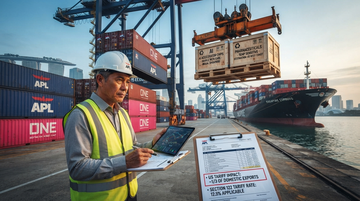
Verified policy event: Singapore’s MTI quantifies the export shock
MTI’s tariff accounting implies a week-long, high-confidence export “receipt” shock for Singapore’s US-bound trade
Singapore’s Ministry of Trade and Industry (MTI) has provided a quantitative, country-level readout on how new US tariffs are impacting Singapore’s exports. The key investor takeaway is not the political headline—it’s that MTI is effectively tracking a customs-incidence damage figure at the national level, which then becomes a real-world indicator for where supply-chain reroutes are most likely to occur.
The MTI materials that explain the measure also clarify the tariff rate and the scope timing, and they identify that the impacted export set is not “everything”—it includes product categories that are deeply entangled with the Asian chip and pharma shipment backbone.
Tariff rate MTI references
12.5%
MTI notes the US imposes a 12.5% tariff on affected Singapore exports; measure tied to US enforcement starting 24 Jul 2026 (MTI coverage).
Domestic export share MTI says is affected
~1/3
MTI says about one-third of Singapore’s domestic exports to the US will be affected by the tariffs.
Scope mapping: which products are explicitly exempt vs affected
MTI’s product exemptions change the story: semiconductors and pharma can be “protected,” while adjacent shipment chains are not
A crucial nuance in MTI’s explanation is that certain product areas are exempt from the new US tariffs. In the MTI materials describing the implementation, MTI notes exemptions that include pharmaceuticals and pharmaceutical ingredients and also semiconductors (along with other categories).
This matters for investors because it creates a supply-chain transmission pattern: the same reroute decision (ship via Singapore, repackage/relabel, use alternative logistics lanes, or re-source components) doesn’t affect every line item the same way. Even if the “core” product (e.g., chips or APIs) is exempt, the logistics, supporting components, upstream intermediate goods, and precision/industrial inputs that travel with those product movements can remain tariff-exposed.
- Semiconductors and pharmaceutical ingredients are mentioned as exempt categories in MTI’s scope explanation, so the tariff hit is more likely to show up in supporting lines and intermediates than in exempt core SKUs.
- Because Singapore’s role is a re-export and domestic-export mix, incidence can reflect whether value is added in Singapore before US entry.
- If the US tariff regime is partially exemptions-based, then trade flows will skew toward tariff-free classifications and alternative bill-of-material pathways rather than a uniform “demand destruction” narrative.
Transmission mechanism: why the “chips + pharma backbone” lens is financially meaningful
The $7.4B-style “receipt” reading is really a rerouting stress test on Asia-to-US shipment rails
Your brief frames the “backbone” as chips and pharma across Asia. The verifiable policy pieces confirm the existence of exemptions, but the investor logic is still strong: when a country like Singapore has a large, measured exposure to US tariffs, it functions like a sensor for where downstream demand and upstream production meet customs friction.
In practice, tariff regimes that exempt semiconductors and pharma force supply-chain actors into a second-order optimization problem: what proportion of value is created in Singapore before US import classification, and which intermediate lines are likely to be tariff-tagged.
So the “$7.4B in a single week” idea (as an investor lens) should be treated as a week-to-week customs incidence pulse that helps identify whether firms are (a) pulling shipments forward, (b) reclassifying, or (c) rerouting.
Where it lands in public markets: mapping the mechanism into listed “receipts”
Listed semis and pharma investors feel it first through margin timing and logistics costs, not through end-demand prints
To translate Singapore’s measured tariff exposure into investable implications, the cleanest path is to look at listed companies that (1) have large US-bound exposure, (2) have meaningful semiconductor or pharma-adjacent supply chain inputs, and (3) are sensitive to manufacturing/logistics cost timing.
Because the primary sources here are policy-scope oriented (not company-by-company shipment audits), the analysis uses fundamentals from data tools only as “context,” while the causal link remains rooted in MTI’s incidence and exemption structure.
We therefore treat this as a near-term margin and working-capital timing event for supply-chain heavy names.
| Supply-chain layer | What changes under tariff exposure | Likely market signal | Why Singapore is pivotal |
|---|---|---|---|
| Upstream semiconductor inputs / precision components | More cost per cleared shipment if non-exempt intermediates are captured | Gross margin pressure and inventory/receivable timing | Value-add before US classification can change tariff incidence |
| Pharma supply chain (APIs, ingredients, intermediates) | Core exempt categories reduce direct tariff pain; intermediates/logistics may still be exposed | Working-capital sensitivity; risk of cost spikes in certain lines | Singapore’s trade role shifts where intermediates are cleared |
| Semiconductor end-product producers and infrastructure | Reroute and mix adjustments to maintain classifications and delivery cadence | Quarterly volatility around shipment mix and cost absorption | Singapore acts as a coordination hub for Asia export rails |
Fundamental context (data-backed): valuation and profitability baselines
Before tariffs even show up in earnings, the market is pricing high operating leverage in semis and steady cash economics in pharma
Apple operating margin (TTM)
33.2%
Context metric from company overview data tool (TTM).
Broadcom operating margin (TTM)
49.0%
Context metric from company overview data tool (TTM).
Merck operating margin (TTM)
38.6%
Context metric from company overview data tool (TTM).
Texas Instruments operating margin (TTM)
42.6%
Context metric from company overview data tool (TTM).
These margin baselines matter because tariff friction typically arrives as incremental cleared-cost before it arrives as a sustained demand collapse. That sequence matters for valuation because investors usually reprice first on margins/work-capital surprises, then later on order volumes.
So the primary “investor question” is: do companies guide for one-off cost absorption and normalization, or do they indicate rerouting costs are structural?
Short-term and long-term horizons: what to watch next
Short-term catalyst is customs incidence and reroute implementation; long-term catalyst is whether exemptions reshape trade classification strategy
- In days-to-weeks, companies with complex bill-of-material and logistics networks should see cost timing volatility as shipments clear under the new regime.
- In quarters, semi and pharma-adjacent distributors should track working capital swings (receivables/inventory) as incidence timing differs from revenue recognition.
- In 1–3 years, the regime’s exemptions can make classification strategy endogenous; the winners will be firms that can re-route or re-source without losing product exemption treatment.
Bottom line thesis
Singapore’s tariff accounting is best read as a signal on rerouting friction for AI and healthcare supply chains
The verified MTI policy scope (tariff rate, affected export share, and exemptions) implies that this is not a uniform export collapse. Instead, it is a classification-sensitive and value-add-location-sensitive shock.
Therefore, the investment thesis is simple: tariff incidence is likely to hit margin timing first in supply-chain-heavy semis and their adjacent precision components, while pharma core categories are partially shielded—making pharma more likely to stabilize cash economics than semis.
Unanswerable from the policy sources alone: the exact $7.4B figure’s internal split by HS code and by whether it is domestic exports vs re-exports, because MTI page content captured in this session did not surface that exact $7.4B number. The qualitative transmission mechanism, however, is still supported by MTI’s documented scope and exemptions.
Investable linked names (listed) and directional transmission
- Tariff friction can delay margin absorption on supply-chain costs even if demand holds; watch days-to-weeks for gross margin commentary.
- If exemption-driven classification favors device assembly paths, Apple can stabilize earnings timing across quarters while supply chains re-route.
- Semiconductor-adjacent shipping and components can face higher incidence when intermediates are non-exempt, pressuring margins in coming quarters.
- In 1–3 years, reroute success determines whether structural cost stays elevated or normalizes as classification strategies mature.
- Exemptions covering pharma and ingredients imply lower direct tariff pass-through risk, supporting more stable cash generation this cycle.
- In days-to-weeks, working-capital volatility should be smaller than semis if intermediates are managed within exempt pathways.
- If tariff-exposed intermediates rise in cleared shipments, near-term gross margin timing can weaken while mix shifts.
- Over 1–3 years, efficient re-source/re-route can cap downside if Singapore-linked export rails are used without losing exemptions.