%22%2F%3E%0A%20%20%3Ccircle%20cx%3D%22220%22%20cy%3D%22150%22%20r%3D%22180%22%20fill%3D%22%2322d3ee%22%20fill-opacity%3D%220.12%22%2F%3E%0A%20%20%3Ccircle%20cx%3D%221010%22%20cy%3D%22130%22%20r%3D%22220%22%20fill%3D%22%2338bdf8%22%20fill-opacity%3D%220.08%22%2F%3E%0A%20%20%3Ccircle%20cx%3D%22920%22%20cy%3D%22520%22%20r%3D%22170%22%20fill%3D%22%2322d3ee%22%20fill-opacity%3D%220.06%22%2F%3E%0A%20%20%3Cpath%20d%3D%22M140%20430h920%22%20stroke%3D%22url(%23line)%22%20stroke-width%3D%2212%22%20stroke-linecap%3D%22round%22%2F%3E%0A%20%20%3Cpath%20d%3D%22M220%20360c120-150%20260-220%20380-220s260%2070%20380%20220%22%20fill%3D%22none%22%20stroke%3D%22%2367e8f9%22%20stroke-opacity%3D%220.5%22%20stroke-width%3D%2216%22%20stroke-linecap%3D%22round%22%20stroke-linejoin%3D%22round%22%2F%3E%0A%20%20%3Cpath%20d%3D%22M300%20398h600%22%20stroke%3D%22%2394a3b8%22%20stroke-opacity%3D%220.24%22%20stroke-width%3D%228%22%20stroke-linecap%3D%22round%22%2F%3E%0A%20%20%3Ctext%20x%3D%22220%22%20y%3D%22510%22%20fill%3D%22%23e2e8f0%22%20fill-opacity%3D%220.7%22%20font-family%3D%22Arial%2C%20Helvetica%2C%20sans-serif%22%20font-size%3D%2238%22%20letter-spacing%3D%228%22%3EINSIGHTS%3C%2Ftext%3E%0A%3C%2Fsvg%3E)
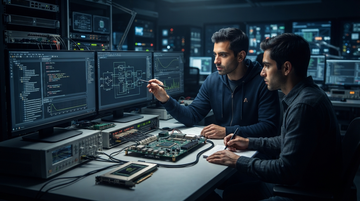
Private frontier lab • In-house hardware hiring signals a compute-stack change
The verified signal isn’t “Anthropic will tape out a chip tomorrow”—it’s Anthropic hiring for silicon-design capability
A key Reuters report says Anthropic is exploring designing its own AI chips, and also notes the plans are early-stage and it hasn’t yet committed to dedicated chip design.
The more concrete datapoint for investors is that Anthropic has an open role explicitly centered on “Chip Design RL” (reinforcement learning) work where responsibilities include agentic RTL generation, design/verification, and physical design optimization, with explicit requirements around ASIC/FPGA workflows (RTL, formal/verification, synthesis/place-and-route, DFT, and “taped out chips”). That’s not generic engineering; it’s capability-building aimed at silicon outcomes.
What the primary sources actually confirm (not what they imply)
Chip strategy status
Exploring (early stage)
Reuters: exploring designing its own AI chips; plans are early and not committed.
Team/capability evidence
Hiring ASIC/FPGA-relevant chip-design capability
Anthropic Greenhouse job: RTL/verification/physical design/DFT; “taped out chips” experience.
Partner silicon still in play
Anthropic uses partner chip ecosystems
Reuters context includes Anthropic using TPUs designed by Google/Amazon and a long-term deal involving Google and Broadcom TPU design.
Mechanism • How silicon decisions propagate through the stack
Why this hiring move threatens NVIDIA’s economics more through “mix shift” than through instant substitution
The fast read is “in-house chips reduce reliance on NVIDIA.” The more investable read is how the work changes Anthropic’s compute allocation and cost structure over time.
When a frontier lab builds internal silicon-design capability (even if it doesn’t immediately tape out a full accelerator), it typically enables three things: 1) tighter control of performance-per-watt targets for inference/training runs, 2) faster iteration cycles across model ↔ compiler ↔ accelerator compatibility, and 3) leverage in partner negotiations because the lab can evaluate alternatives on more than price.
So the likely NVIDIA impact path is: partial de-risking of GPU exclusivity (and potentially more work handled by non-NVIDIA accelerators) rather than a single-step collapse of GPU demand.
- Anthropic’s role explicitly targets RTL/verification/physical design, enabling faster iteration on silicon-relevant constraints for future accelerators
- Partner TPUs remain central; internal capability mainly raises Anthropic’s negotiating power and optimization depth rather than replacing everything overnight
- The first measurable shifts are likely to show up in compute procurement mix across model generations (days–quarters), not as immediate revenue deflation (quarters+)
- If internal capability translates into custom chips, the biggest near-term variable for NVIDIA becomes utilization/mix, not total model training cost
Supply chain • Where this shows up first
The earliest second-order winners are EDA toolchains and advanced foundry capacity, because silicon iteration needs the whole stack
A chip-design capability program has a clear supply-chain footprint: it increases demand for (a) verification and physical design tool throughput and (b) advanced manufacturing capacity once design effort turns into silicon.
Even before tape-out, hiring for formal/verification and PPA optimization implies more internal iterations—each iteration still runs through EDA flows in practice. That’s why the EDA names are not just “AI beneficiaries”; they become workflow infrastructure when a lab starts treating silicon as an internal variable, not an external commodity.
| Layer | What changes when labs build silicon capability | Likely investable channel | Evidence level from this research |
|---|---|---|---|
| Silicon design workflows | More internal RTL/verification/physical optimization iterations | EDA verification + implementation tool licensing/usage | High (job description is explicit about verification and physical design) |
| Manufacturing route | If exploration turns into custom accelerators, more advanced-node wafer starts | Foundry utilization/advanced packaging scheduling | Medium (no tape-out commitment verified; manufacturing exposure is conditional) |
| Accelerator mix | Potential shift away from single-vendor GPU exclusivity | GPU OEMs see utilization/mix pressure; TPU/other accelerators compete | Medium (Reuters confirms exploration; timeline not committed) |
Investor framing • Short-term vs long-term
This is a multi-quarter competitive rebalancing story, not a one-quarter NVIDIA “death by a thousand cuts” headline
NVIDIA remains a huge baseline supplier—your “thesis trigger” is procurement mix, not total demand
We do not have Anthropic segment-level spend here; this chart anchors NVIDIA’s scale so you can calibrate how hard a “replacement” needs to be to matter quickly.
Unit: USD
NVIDIA revenue (TTM, USD)
From company overview data tool
253,491,003,000
Horizon view:
- Short term (days–quarters): expect signals in job postings, tooling requests, and partner leverage—not a sudden revenue break in public NVIDIA.
- Medium/long term (1–3 years): if exploration evolves into custom silicon decisions (tape-out or broader partner custom pathways), the relevant measurable outcome is a procurement mix shift (NVIDIA share of Anthropic compute), plus knock-ons to EDA and advanced process capacity.
Impacted ecosystem • Who benefits or loses under different “chip exploration” outcomes
Three scenarios that map to different P&L lines across NVIDIA, EDA, and foundries
- Scenario A (explore only): Anthropic uses partner silicon; NVIDIA sees limited mix change while EDA usage rises mainly from internal tooling/iteration growth
- Scenario B (partial acceleration customization): Anthropic develops constraints/compatibility but still relies on partners for fabrication; NVIDIA faces more meaningful utilization/mix pressure while EDA and foundry planning ramps
- Scenario C (custom accelerator program): Anthropic moves beyond workflow capability into product silicon; NVIDIA experiences the largest long-term addressable mix dilution, with EDA/advanced manufacturing capturing the “time-to-silicon” spend
Because Reuters explicitly says exploration is early and uncommitted, Scenario A is the base case. That makes the investment edge less about predicting tape-out and more about tracking whether Anthropic transitions from “design workflows” into “accelerator product decisions.”
Investable touchpoints (listed names) tied to the supply-chain linkage above
- If Anthropic’s silicon capability translates into non-NVIDIA compute mix, NVIDIA faces utilization/mix pressure first, not an immediate demand cliff
- NVIDIA’s current scale (TTM revenue ~$253.5B) implies any Anthropic-driven revenue hit must be large to show up quickly
- Near term (quarters): procurement optics matter most; long term (1–3y): custom/partner silicon decisions can dilute exclusivity
- Broadcom ties into TPU ecosystem context referenced by Reuters; if Anthropic deepens TPU customization, that can support Broadcom’s accelerator-adjacent value chain
- But any long-term shift to independent custom silicon from frontier labs could cap the upside versus a purely partner-TPU path
- Medium term (1–3y): bargaining power increases if frontier labs internalize hardware constraints
- Anthropic’s hiring targets verification and physical design optimization, implying more EDA workflow intensity—supporting Cadence usage demand
- Short term (days–quarters): internal iteration doesn’t require tape-out to consume verification/implementation cycles
- Long term (1–3y): any move toward custom silicon would increase the silicon time-to-closure pressure
- Because the role explicitly references formal/design verification and EDA-tool latency optimization, it is directionally aligned with Synopsys verification continuum demand—benefiting from higher verification throughput
- Near term (quarters): more internal RTL/verification experiments can raise tool usage even before manufacturing commitments
- Long term (1–3y): if silicon exploration becomes product work, verification spend scales with complexity
- Foundry exposure is conditional: Reuters confirms exploration but not tape-out; if custom silicon proceeds, TSM can gain advanced-node/packaging allocation
- Near term (quarters): capacity impact is not confirmed without commitments; watch for partner/manufacturing signals
- Long term (1–3y): successful design-to-silicon conversion would pull more wafer starts forward
- Samsung is a plausible alternative manufacturing route in custom-accelerator scenarios, but Reuters evidence here is exploration-only—so this is a catalyst watch
- Near term (quarters): no verified tape-out or binding manufacturing commitment
- Long term (1–3y): if silicon decisions shift toward Samsung manufacturing, wafer/packaging allocation could rise