%22%2F%3E%0A%20%20%3Ccircle%20cx%3D%22220%22%20cy%3D%22150%22%20r%3D%22180%22%20fill%3D%22%2322d3ee%22%20fill-opacity%3D%220.12%22%2F%3E%0A%20%20%3Ccircle%20cx%3D%221010%22%20cy%3D%22130%22%20r%3D%22220%22%20fill%3D%22%2338bdf8%22%20fill-opacity%3D%220.08%22%2F%3E%0A%20%20%3Ccircle%20cx%3D%22920%22%20cy%3D%22520%22%20r%3D%22170%22%20fill%3D%22%2322d3ee%22%20fill-opacity%3D%220.06%22%2F%3E%0A%20%20%3Cpath%20d%3D%22M140%20430h920%22%20stroke%3D%22url(%23line)%22%20stroke-width%3D%2212%22%20stroke-linecap%3D%22round%22%2F%3E%0A%20%20%3Cpath%20d%3D%22M220%20360c120-150%20260-220%20380-220s260%2070%20380%20220%22%20fill%3D%22none%22%20stroke%3D%22%2367e8f9%22%20stroke-opacity%3D%220.5%22%20stroke-width%3D%2216%22%20stroke-linecap%3D%22round%22%20stroke-linejoin%3D%22round%22%2F%3E%0A%20%20%3Cpath%20d%3D%22M300%20398h600%22%20stroke%3D%22%2394a3b8%22%20stroke-opacity%3D%220.24%22%20stroke-width%3D%228%22%20stroke-linecap%3D%22round%22%2F%3E%0A%20%20%3Ctext%20x%3D%22220%22%20y%3D%22510%22%20fill%3D%22%23e2e8f0%22%20fill-opacity%3D%220.7%22%20font-family%3D%22Arial%2C%20Helvetica%2C%20sans-serif%22%20font-size%3D%2238%22%20letter-spacing%3D%228%22%3EINSIGHTS%3C%2Ftext%3E%0A%3C%2Fsvg%3E)
Bottom line
The chip itself is not the main event. The industrial spending wave behind it is.
The market reacted to Meta's latest AI push because the company is no longer just talking about internal efficiency. It is building a full-stack monetization model: Muse Spark 1.1, a paid model API, and now an in-house chip program called Iris that Reuters says is slated for September 2026 mass production.
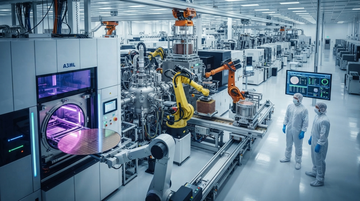
That is a different conversation. Once hyperscalers design their own chips, they do not eliminate the supply chain; they deepen it. Fabs still need tools, advanced packaging, test capacity, and more electricity to feed the compute they want.
Why the market cared
The first move was in equipment, because that is where the money lands first.
Semicap equipment reaction to Meta's chip plan
Barron's reported sharp same-day gains across the equipment stack, which is the market's way of saying the capex signal matters.
Unit: same-day move (%)
Share jump after the news
9.8%
Market expects more WFE demand
10%
Yield and inspection demand rises with complexity
11%
Lumentum
Optics and connectivity also benefit
12%
Power and cooling are part of the spend
2.8%
| Layer | Implication |
|---|---|
| Chip design | More internal control for Meta. |
| Wafer fab equipment | More demand for Applied Materials, Lam Research, and KLA. |
| Packaging & test | More complexity means more bottlenecks to solve. |
| Power & cooling | Compute density raises the value of infrastructure names. |
The deeper setup
The WFE market is still growing even before the next wave hits.
2026 WFE market
$145B
Citi's base-year estimate
2027 WFE market
$200B
A large step-up if hyperscaler capex holds
2028 WFE market
$250B
Shows the market is still in an expansion regime
That matters because investors often think custom chips are bearish for the incumbent GPU supplier only. In reality, if the hyperscaler spends more to own more of the stack, the aggregate equipment bill can still rise. The bottleneck just moves one layer down.
Implications
Who wins if Iris becomes real production instead of a slide-deck promise.
- Toolmakers win because every new node still needs lithography, deposition, etch, metrology, and inspection.
- Foundry partners win because Meta still needs outside manufacturing capacity.
- Power and thermal suppliers win because AI density keeps rising.
- The GPU story is not killed; it just becomes a larger, more competitive spend pool.
My view is simple: custom chips are not a bearish signal for semicap. They are a proof point that the AI arms race is still forcing more capital into the industrial stack. The market should treat that as a toll-booth expansion, not a toll-booth bypass.
Conclusion
The more AI becomes vertically integrated, the more valuable the picks-and-shovels layer becomes.
When a hyperscaler builds its own chip, it does not leave the casino. It just orders a bigger stack of chips from the house.
For investors, the right question is not “will Meta stop buying GPUs?” It is “which parts of the supply chain get paid as compute density keeps rising?” That is where the next durable alpha sits.