%22%2F%3E%0A%20%20%3Ccircle%20cx%3D%22220%22%20cy%3D%22150%22%20r%3D%22180%22%20fill%3D%22%2322d3ee%22%20fill-opacity%3D%220.12%22%2F%3E%0A%20%20%3Ccircle%20cx%3D%221010%22%20cy%3D%22130%22%20r%3D%22220%22%20fill%3D%22%2338bdf8%22%20fill-opacity%3D%220.08%22%2F%3E%0A%20%20%3Ccircle%20cx%3D%22920%22%20cy%3D%22520%22%20r%3D%22170%22%20fill%3D%22%2322d3ee%22%20fill-opacity%3D%220.06%22%2F%3E%0A%20%20%3Cpath%20d%3D%22M140%20430h920%22%20stroke%3D%22url(%23line)%22%20stroke-width%3D%2212%22%20stroke-linecap%3D%22round%22%2F%3E%0A%20%20%3Cpath%20d%3D%22M220%20360c120-150%20260-220%20380-220s260%2070%20380%20220%22%20fill%3D%22none%22%20stroke%3D%22%2367e8f9%22%20stroke-opacity%3D%220.5%22%20stroke-width%3D%2216%22%20stroke-linecap%3D%22round%22%20stroke-linejoin%3D%22round%22%2F%3E%0A%20%20%3Cpath%20d%3D%22M300%20398h600%22%20stroke%3D%22%2394a3b8%22%20stroke-opacity%3D%220.24%22%20stroke-width%3D%228%22%20stroke-linecap%3D%22round%22%2F%3E%0A%20%20%3Ctext%20x%3D%22220%22%20y%3D%22510%22%20fill%3D%22%23e2e8f0%22%20fill-opacity%3D%220.7%22%20font-family%3D%22Arial%2C%20Helvetica%2C%20sans-serif%22%20font-size%3D%2238%22%20letter-spacing%3D%228%22%3EINSIGHTS%3C%2Ftext%3E%0A%3C%2Fsvg%3E)
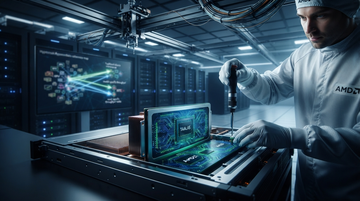
AMD’s announced agreement to acquire Taalas is more than another AI chip-company tuck-in. It’s the first widely reported case (for a US listed incumbent with a leading AI GPU roadmap) of buying an inference approach that hardwires transformer behavior into silicon for one model—reframing the hyperscaler decision from “which accelerator is fastest on your workload?” to “which vendor can turn a workload into fixed-rate hardware?”
What happened (verified) • Who is involved
AMD just agreed to buy model-hardwired inference silicon—transaction terms still intentionally undisclosed
Verified deal snapshot (from primary-accessible reporting)
Buyer
[Advanced Micro Devices](amd)
US-listed chip incumbent
Target
Taalas (private)
No public ticker
Structure
Definitive agreement to acquire
Undisclosed amount
Core tech claim in the deal coverage
Custom silicon that hardwires AI models into hardware
Taalas described as hardwiring models into silicon for inference speedups
The key limitation for investors: the acquisition price is not disclosed in the available primary reports, so you can’t back into a near-term EPS dilution math problem. What you can evaluate instead is the strategic direction: buying a technology path that targets inference efficiency by eliminating (or sharply reducing) runtime model-load and general-purpose compute overhead.
Architecture • Supply-chain mechanism
Why “one-model-to-silicon” changes inference economics (and what changes in the stack)
- Hardwiring model behavior into silicon shifts cost from runtime compute to one-time manufacturing, which favors steady, high-utilization workloads in hyperscaler inference fleets.
- A model-specific design compresses the memory/IO bottlenecks that punish GPU-style decoding (even if some weights must still exist in system form, the runtime path can be dramatically shorter).
- The vendor contract becomes less about “tokens/sec on our benchmark” and more about repeatable performance per fixed model SKU, which changes how hyperscalers structure capacity planning.
Competitive re-ranking • hyperscaler vendor map
How this likely reorders the vendor map versus Groq / Cerebras / Etched-style inference bets
In GPU-first procurement, hyperscalers primarily optimize for (1) flexibility, (2) ecosystem maturity, and (3) scale-out scaling efficiency. In contrast, hardwired model silicon optimizes for (1) peak per-model throughput, and (2) cost per served token under stable mixes. The result is a “two-tier” vendor strategy risk: if enough traffic concentrates on a small set of models, hardwired vendors can occupy the highest-utilization tier.
| Decision factor | GPU-style runtime accelerator | Model-hardwired inference silicon |
|---|---|---|
| Performance metric | Tokens/sec per workload measured on general hardware | Tokens/sec per fixed model SKU with less runtime variability |
| Cost driver | Compute hours + memory movement during decoding | Manufacturing cost amortized over many inferences on one model |
| Procurement cycle | Reallocate capacity as demand shifts | Plan capacity around model lifetimes and deployment cadence |
| Failure mode | Underutilization if model mix changes quickly | Value erosion if model versions churn before amortization |
Demand-side fit • when the approach wins
When the “one-model-to-silicon” approach should win in hyperscaler inference
- Model mixes with slow version churn and high request volume (stable customer-facing copilots, enterprise assistants, long-running search/rag pipelines with predictable decode patterns).
- Inference services designed for tight latency SLOs at a known concurrency envelope, where throughput predictability beats average benchmark speed.
- Settings where hyperscalers want to reduce incremental system cost per token even if capacity must be carved into more “model-specific” pools.
AMD fundamentals • capacity and execution capacity
What AMD brings to make this acquisition actionable (not just interesting)
FY revenue
$34.6B
FY 2025 (reported)
FY net income
$4.27B
FY 2025 (reported)
FY operating cash flow
$7.71B
FY 2025 (reported)
FY free cash flow
$6.74B
FY 2025 (reported)
AMD’s financial profile supports the ability to execute acquisitions and custom-product integration: in FY 2025, it generated $6.74B of free cash flow while scaling its compute business. That matters because turning a private inference-ASIC roadmap into hyperscaler-ready deployables typically requires more than IP—it requires packaging, system integration, and long-cycle qualification.
Causal chain • what investors should watch next
Near-term: validation signals matter more than price; long-term: execution on model-compile cadence matters more than peak tokens/sec
AMD free cash flow trend (directional financing capacity)
Trend from listed financial statements used for this session’s fundamentals blocks.
Unit: USD
FY 2023
Free cash flow
1,121,000,000
FY 2024
Free cash flow
2,405,000,000
FY 2025
Free cash flow
6,735,000,000
Research angles • answered with session evidence or flagged
What we can conclude now—and what remains unanswerable from the accessible data
- Verified: AMD agreed to acquire Taalas to support the inference market; deal amount is undisclosed in accessible reporting.
- Verified (architecture implication): Taalas is described as hardwiring AI models into custom silicon for inference efficiency.
- Partially answerable (needs more primary access): exact model families, deployment timelines, and whether this is “decode-only” versus broader transformer coverage are not confirmed in the accessible primary sources in this session.
- Answerable from listed-company data: AMD’s cash generation provides financing headroom for integrating a private technology platform.
Listed stock exposure (what this story should move, and why)
- Deal supports AMD’s thesis of winning inference beyond GPUs by adding a harder-to-copy efficiency vector (custom silicon model-hardwiring).
- AMD’s FY 2025 cash flow enables acquisition/integration spend without immediate balance-sheet stress.
- If model demand concentrates, GPU utilization risk rises because hardwired silicon targets per-model token cost instead of general throughput.
- Near-term, the market may reprice Nvidia’s inference incumbency if procurement shifts to fixed-rate hardware for the highest-volume models.
- Intel is a candidate to benefit from the “more customized inference” trend if it can deliver competitive fixed-function stacks as model versions churn.
- Hardwired inference can increase the need for high-speed interconnect and memory hierarchy efficiency, supporting Marvell’s networking/IO role for data center inference clusters.
- But if service providers reduce system complexity, it could cap upside versus a pure “more GPUs, more ports” buildout.