Energy
Crude, refining and the price at the pump
Supply, inventories, crack spreads and OPEC decisions, followed down to the producers, refiners and buyers who book the difference.
2026-08-14
%22%2F%3E%0A%20%20%3Ccircle%20cx%3D%22220%22%20cy%3D%22150%22%20r%3D%22180%22%20fill%3D%22%2322d3ee%22%20fill-opacity%3D%220.12%22%2F%3E%0A%20%20%3Ccircle%20cx%3D%221010%22%20cy%3D%22130%22%20r%3D%22220%22%20fill%3D%22%2338bdf8%22%20fill-opacity%3D%220.08%22%2F%3E%0A%20%20%3Ccircle%20cx%3D%22920%22%20cy%3D%22520%22%20r%3D%22170%22%20fill%3D%22%2322d3ee%22%20fill-opacity%3D%220.06%22%2F%3E%0A%20%20%3Cpath%20d%3D%22M140%20430h920%22%20stroke%3D%22url(%23line)%22%20stroke-width%3D%2212%22%20stroke-linecap%3D%22round%22%2F%3E%0A%20%20%3Cpath%20d%3D%22M220%20360c120-150%20260-220%20380-220s260%2070%20380%20220%22%20fill%3D%22none%22%20stroke%3D%22%2367e8f9%22%20stroke-opacity%3D%220.5%22%20stroke-width%3D%2216%22%20stroke-linecap%3D%22round%22%20stroke-linejoin%3D%22round%22%2F%3E%0A%20%20%3Cpath%20d%3D%22M300%20398h600%22%20stroke%3D%22%2394a3b8%22%20stroke-opacity%3D%220.24%22%20stroke-width%3D%228%22%20stroke-linecap%3D%22round%22%2F%3E%0A%20%20%3Ctext%20x%3D%22220%22%20y%3D%22510%22%20fill%3D%22%23e2e8f0%22%20fill-opacity%3D%220.7%22%20font-family%3D%22Arial%2C%20Helvetica%2C%20sans-serif%22%20font-size%3D%2238%22%20letter-spacing%3D%228%22%3EINSIGHTS%3C%2Ftext%3E%0A%3C%2Fsvg%3E)

BP’s AGM vote didn’t just reject resolutions—it pressured the company to defend its climate governance and capital discipline trade-off in front of the market
At BP’s AGM on 23 April 2026, shareholders rejected three key contested items (resolutions 22, 23, and 24), including moves tied to climate disclosure and project-level reporting. The pattern matters for investors because it tests whether BP can keep funding shareholder returns while simplifying governance—without losing the institutional consensus that supports supermajor capital-return frameworks.

The market just priced the Iran oil-shock “fade.” The US plan due next week re-prices the term premium—and shipping risk—before crude ever fully turns
A White House “economic isolation” approach for Iran—paired with continued pressure at Hormuz—reintroduces an anxiety channel the market already tried to dismiss: higher risk premia in rates and energy transportation costs. The immediate trade is less about another WTI headline and more about whether financial isolation again makes future barrels costlier to move and insure.
2026-08-13

2026-08-12
2026-08-11
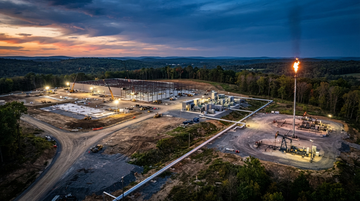
Alpha Compute’s Pennsylvania play reframes the AI data-center bottleneck: buying gas rights to beat the power queue
Alpha Compute ALP reportedly plans to buy Pennsylvania land plus gas rights to anchor a 55MW AI data-center campus—an unusually fuel-first approach to a project pipeline dominated by utility interconnect timelines. If the gas-rights control is real and bankable, it shifts “site control” from the grid side to the upstream fuel side, tightening the link between midstream gas operators and data-center power buildouts.

Trump extended the Jones Act waiver—but the narrow “case-by-case” change shifts who benefits from US coastal fuel trade
The 90-day extension keeps foreign-flag ships eligible to move certain energy commodities between US ports, but it replaces blanket access with voyage-by-voyage review. That design reduces broad “market-wide” arbitrage benefits while still easing the specific shipping bottlenecks driving US fuel-cost pressure.
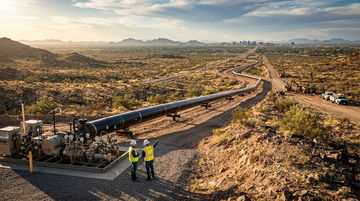
Western Gateway’s $5B midstream bet: Kinder Morgan and Phillips 66 lock in the West Coast refined-products corridor while HF Sinclair pays for capacity certainty
Phillips 66, Kinder Morgan, and HF Sinclair have finalized the $5B Western Gateway refined-products pipeline, including a reversal of existing assets and a new-build Borger, Texas-to-Phoenix segment. The project is structured around long-term contracted economics (primarily ~10-year take-or-pay), which shifts the West Coast refined-products logistics moat toward these three sponsors and reduces merchant exposure during a tariff/refining-margin regime. Investors should track how quickly the corridor monetizes the 230,000 bpd design capacity and whether completion risk stays on track for mid-2029.

A U.S. Shot Across the Bow Re-Priced Oil’s “Peace Premium”—and the Refining Trade Just Lost Its Clean Story
A U.S. strike on a vessel attempting to breach Iran’s blockade directly re-anchors the market’s risk path from “de-escalation” back to “escalation.” For energy equities, the near-term winner isn’t uniform: integrated producers gain from higher crude and tighter supply expectations, while refiners face a more fragile crack-spread setup as volatility and shipping risk raise input uncertainty.
2026-08-09
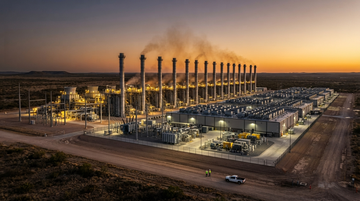
Amazon's Pecos County gas plant permit implies ~33M tons CO2/year—so AI data-center siting is starting to behave like a carbon-forward power project
A planned Amazon-powered AI data-center campus in Pecos County, Texas is tied to an on-site natural-gas power plant permitted to emit up to 33 million tons of CO2 per year. That shifts the hyperscaler AI-capex trade from “compute demand vs. electricity availability” toward a carbon-cost and regulatory-liability problem that can change project economics well before the campus starts full operations.
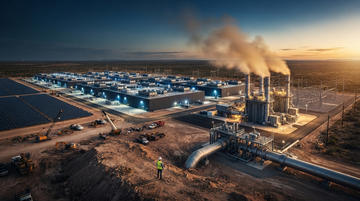
Amazon’s Texas gas permit flips the AI power debate from “capacity” to “carbon cap”—and it makes the ESG discount a competitive advantage
A Texas air-permit authorization for Amazon-backed GW Ranch (Pecos County) contemplates emissions up to 33M tons of CO2e per year, turning AI “power availability” into an immediately measurable climate trade. The result is a reshuffling of who wins in the AI buildout: hyperscalers internalize the permitting risk, while grid and gas-infrastructure names with execution-ready capex ramps are positioned closer to the cash register.

China’s inflation cooled just as the Iran oil shock faded—creating the cleanest disinflation cross-current the market is still mispricing
China’s inflation slowdown is showing up right when the Iran-related energy impulse is unwinding, pulling commodity and energy-cost pressure off the table. For global markets, that matters because it weakens the “energy keeps inflation sticky” leg of the hawkish Fed narrative—especially when US goods deflation and energy-import-cost relief are moving in the same direction.

Sila’s $1.4B OSC conditional loan turns silicon-anode industrial policy into a direct, materials-led Pentagon procurement lever
On Aug 7, 2026 the U.S. Office of Strategic Capital (OSC) announced a $1.4B conditional loan commitment to Sila Nanotechnologies tied to expanding silicon‑carbon (Si/C) anode production and building lithium‑ion cell capacity. The strategic signal is that DoD/OSC is funding the next energy-storage stack at the materials bottleneck—before cells and primes—so investors should map winners to silicon-anode scaling, electrolyte/lithium refining, and US cell manufacturing.
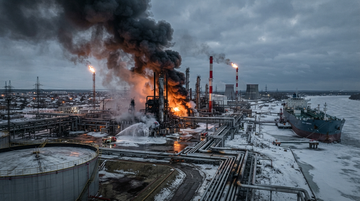
Ukraine’s drone strike on Russian refineries shifts the diesel story from “Iran/Hormuz risk” to hard supply destruction
By hitting two Russian refineries in a coordinated drone attack, Ukraine has targeted the part of the system that converts crude into diesel—tightening product availability and strengthening diesel crack spreads through lost runs. For refiners with product-heavy exposure, the investment implication is not just “war risk premium,” but whether incremental outages persist long enough to translate into sustained margins.
2026-08-08

Berkshire Hathaway's Q2 cash use isn’t “patient”—it’s self-buyback at a size that forces the whole “cash mountain” narrative to update
In Berkshire Hathaway's Q2 2026 reporting, the firm shows operating-business earnings before tax of $14.376B and consolidated earnings before tax of $32.063B, alongside a clear cash deployment into buying back its own equity. The key reset is that cash, cash equivalents, and short-term U.S. Treasury bills were $359.2B at quarter-end—lower than where they stood at the start of the year—while treasury-stock purchases were material (most in Q2), implying the company is now returning capital through the same asset whose trade it’s marking.

Trump’s “cancel offshore wind and pay” policy turns developers’ sunk costs into a utility balance-sheet problem—$4B becomes a 2027 grid reprice trigger
The Trump administration’s offshore-wind buyouts have reached nearly $4B in taxpayer-backed settlements to cancel leases and projects, shifting risk from developers to whoever ultimately must fund the replacement generation build. For investors, the signal isn’t just lower clean power supply—it’s a new cancellation-with-compensation mechanism that can re-rate regulated utilities’ capital plans starting in 2027.
2026-08-07
2026-08-06

ConocoPhillips accelerates its exit plan with a Ryan Lance transition—so the Permian deal window may already be narrowing
ConocoPhillips is pairing a dated leadership succession with an accelerated asset monetization pace, including a $1.3B disposition to push disposition proceeds ahead of schedule. For Permian-focused independents, the investor implication is that the highest-quality “harvest” assets may be getting absorbed faster than marginal acreage can clear at peak multiples.

Polysilicon protection + tungsten/black-mass export lockup turns the “2027 refining miss” into a forced US procurement story
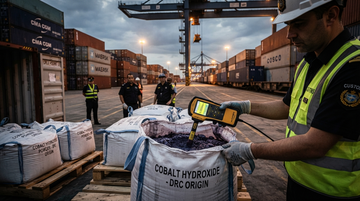
Two coordinated Trump-era industrial-policy moves—an EO to shield US polysilicon production and a BIS rule that blocks exports of tungsten scrap and lithium-battery black mass—together convert “tariff fights” into “keep processing at home” constraints. Investors should treat the pair as a supply-chain reallocation shock: domestic feedstock availability tightens first, contracts re-price next, and multi-year capex justification follows.
2026-08-05

Does Albemarle turning profits mean the lithium cycle is back—or just that batteries finally caught up to Albemarle’s accounting? The earnings print to watch
The core investor question for Albemarle isn’t whether lithium demand exists—it’s whether the company’s latest profitability step-up is durable enough to outlive price volatility. With Albemarle already showing multi-year financial swings, the real test is whether operating economics (not just timing) are improving in a way the EV and grid-storage supply chain can actually maintain.

Glencore’s ASX Secondary Listing Is a Capital-Flow Play, Not a New Share Sale—and That Changes How Copper M&A Will Get Financed
Glencore is exploring an Australian secondary listing to broaden its investor base in a market where mining capital is sticky and deal scrutiny is comparatively workable. The upside for copper investors is less about “fresh money” and more about lowering the cost of capital for future copper/power/industrial metal projects—while the risk is that governance and execution will still be the real constraint.
What to expect
Evidence-first notes with a visible point of view.
This section collects sharp takes on earnings, shareholder meetings, and market structure. Each new piece should make the thesis, the facts, and the implications obvious within the first few screens.
Expect direct analysis, not generic commentary.
Expect the data to be explicit and the argument to be easy to follow.
Plutux is not an investment adviser. Market data and AI-generated analysis are for information and education only, not investment advice. Disclaimer