Energy
Crude, refining and the price at the pump
Supply, inventories, crack spreads and OPEC decisions, followed down to the producers, refiners and buyers who book the difference.
2026-08-05
%22%2F%3E%0A%20%20%3Ccircle%20cx%3D%22220%22%20cy%3D%22150%22%20r%3D%22180%22%20fill%3D%22%2322d3ee%22%20fill-opacity%3D%220.12%22%2F%3E%0A%20%20%3Ccircle%20cx%3D%221010%22%20cy%3D%22130%22%20r%3D%22220%22%20fill%3D%22%2338bdf8%22%20fill-opacity%3D%220.08%22%2F%3E%0A%20%20%3Ccircle%20cx%3D%22920%22%20cy%3D%22520%22%20r%3D%22170%22%20fill%3D%22%2322d3ee%22%20fill-opacity%3D%220.06%22%2F%3E%0A%20%20%3Cpath%20d%3D%22M140%20430h920%22%20stroke%3D%22url(%23line)%22%20stroke-width%3D%2212%22%20stroke-linecap%3D%22round%22%2F%3E%0A%20%20%3Cpath%20d%3D%22M220%20360c120-150%20260-220%20380-220s260%2070%20380%20220%22%20fill%3D%22none%22%20stroke%3D%22%2367e8f9%22%20stroke-opacity%3D%220.5%22%20stroke-width%3D%2216%22%20stroke-linecap%3D%22round%22%20stroke-linejoin%3D%22round%22%2F%3E%0A%20%20%3Cpath%20d%3D%22M300%20398h600%22%20stroke%3D%22%2394a3b8%22%20stroke-opacity%3D%220.24%22%20stroke-width%3D%228%22%20stroke-linecap%3D%22round%22%2F%3E%0A%20%20%3Ctext%20x%3D%22220%22%20y%3D%22510%22%20fill%3D%22%23e2e8f0%22%20fill-opacity%3D%220.7%22%20font-family%3D%22Arial%2C%20Helvetica%2C%20sans-serif%22%20font-size%3D%2238%22%20letter-spacing%3D%228%22%3EINSIGHTS%3C%2Ftext%3E%0A%3C%2Fsvg%3E)
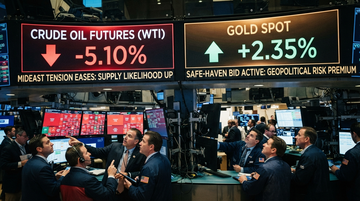
A “deal is imminent” reprice flips oil-and-gold the other way—here’s what it means for Exxon Mobil, Chevron, Delta Air Lines, and Barrick Mining
When reports that a US-Iran “imminent” peace package would reduce Middle East risk hit, oil fell sharply while gold rose—signaling markets are pricing supply-likelihood and safe-haven bid at the same time, but in opposite directions for different asset classes. The first-order implication is not just “lower escalation risk”: it’s a capex and margin timing shift across oil majors, refiners/airlines, and gold miners—turning July’s escalation-premium framework inside out.
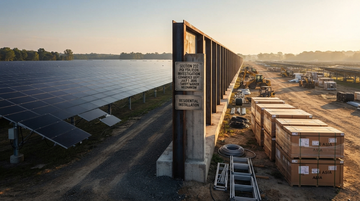
Polysilicon tariffs aren’t a module story—they’re a waiver-and-margin story that decides whether IRA solar builds keep running
The US Commerce Department’s polysilicon Section 232 process is upstream policy leverage, and it can still ripple to module prices even before any “15% tariff” becomes official. The investor impact is a bifurcation: First Solar is structurally insulated because it sells cadmium-telluride modules that don’t rely on polysilicon waifers, while Enphase and residential installers face demand risk if tariffs raise installed system costs faster than incentives can offset.

S&P 500’s first 7,700 close rewards cyclicals, not AI—because Hormuz de-escalation reprices the “oil risk premium”
The Aug. 4 move looks like a pure tech-led rally, but the Dow’s +907 point surge vs the Nasdaq’s +2.6% pop signals investors are rotating into cyclicals that benefit directly when Hormuz-risk compresses oil and shipping insurance. With oil trading below ~$80 amid de-escalation chatter, the first 7,700 print becomes a sector composition signal—not just a momentum milestone.
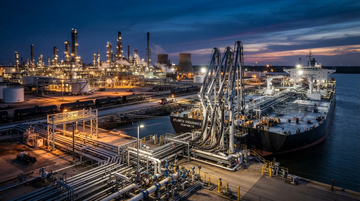
US distillate exports hitting record levels are turning the refining margin trade into an Atlantic-basin diesel shortage bet
The EIA shows U.S. distillate exports surged to a weekly record of 1,861 thousand barrels/day (week ending May 1, 2026), and those barrels are finding their way into a tight Atlantic-basin middle-distillate market. When diesel cracks stay historically high while inventories stay constrained, the refiner story becomes less about oil supply and more about conversion capacity plus logistics—an edge held by refiners like Valero, Marathon Petroleum, and Phillips 66 that can consistently monetize distillate exports.
2026-08-04
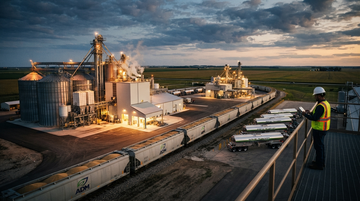
ADM’s Raised 2026 Biofuels-Driven Outlook Suggests a Margin Cycle That May Be More Policy-Structured Than Cyclical
ADM lifted its 2026 adjusted EPS outlook to $4.15–$4.70, explicitly tying the upgrade to “constructive” post–U.S. biofuel policy clarity and expected earnings improvement across its crushing and ethanol businesses. The key shift isn’t just higher margins—it’s that renewed regulatory demand visibility is changing how feedstock economics flow through crushers, refiners/ethanol plants, and ultimately to farmers.
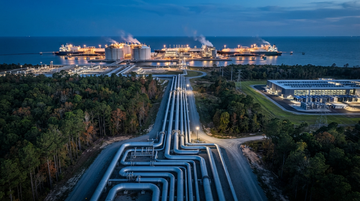
Williams is paying up for a gas-volume thesis the market hasn’t priced in yet
Williams’ up-to-$5.5B all-cash-and-stock deal for Momentum Midstream is an explicit bet that AI-driven power demand plus LNG feedgas will tighten US gas gathering capacity—starting in the Haynesville-to-Gulf corridor. The key investor question is whether this creates a step-change in long-haul contracted volumes (and therefore cash flow durability) rather than just adding regulated/fee-like mileage.
2026-08-03

Berkshire’s Abel week is a value-rotation tell: cutting Chevron yet elevating Alphabet into a “virtual monopoly” position
In Greg Abel’s first-week-era moves, Berkshire reduced Chevron exposure while pushing Alphabet into a new top-5 “virtual monopoly” role—using concentration to express a new conviction stack rather than pure cash-and-yield defensiveness. For active managers, the investable takeaway is that Berkshire’s re-rating map is shifting from “dividend insulation” toward “moat + compounding” inside the public-equity sleeve, even when it means exiting parts of the energy/cash yield complex.
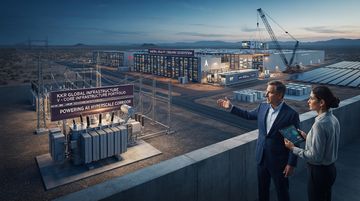
KKR’s $19.2B infrastructure close marks the LP “go-ahead” for AI power + data-center deals (and it changes the deal math)
KKR’s KKR Global Infrastructure Investors V closing at $19.2B is the clearest public confirmation that large LP capital is willing to fund long-duration AI-adjacent infrastructure. The investable takeaway: this capital should compress the risk premium—and therefore improve entry valuations—for equity, credit, and lease/contract structures that sit between hyperscalers and the grid.

Trump turns supermajor capital return into a “gasoline-price” hostage—Exxon and Chevron can’t buyback their way out
On Aug 3, 2026, Trump told ExxonMobil and Chevron to “stop making too much money” and to “cut the retail price, the consumer price,” explicitly tying Big Oil’s high profits to gasoline affordability. The core investor risk is not that buybacks stop tomorrow; it’s that politicized price pressure forces Integrated majors to re-optimize cash allocation between returns, capex, and supply—raising second-order risk to Permian/Midcontinent-capex and refining feedstock plans.
2026-08-02
2026-07-31

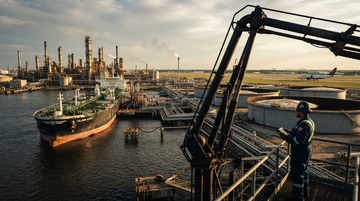
Chevron's $12.1B Quarter Beats Exxon's $14.7B on Capital Return Math — The Iran-War Crude Print That Splits the Supermajors
Exxon Mobil and Chevron reported Q2 2026 earnings on July 31, fueled by Brent averaging $96.68/bbl during the Iran war — up 23% sequentially. Chevron's $6.06 EPS beat expectations by $0.50, while Exxon's $3.52 missed by $0.08, exposing a cleaner buyback/yield story at CVX versus XOM's scale advantage. Combined they returned $16B to shareholders and generated ~$35B of FCF in a single quarter, rewriting capital-return math into a sticky $90+ tape.

Westinghouse’s IPO Has a $30 Billion Shadow Price — but the Services Base Must Justify It
Westinghouse’s confidential filing is more than an IPO: it tests whether public investors will pay a premium for a reactor OEM that services roughly 63% of the operating fleet while retaining upside to a proposed 10-reactor U.S. buildout. The strongest valuation support comes from recurring fuel and outage work, not unbuilt reactors; the biggest complication is a government participation right that becomes economically relevant above a $17.5 billion threshold. For investors, the filing could reprice Cameco and Brookfield Renewable Partners first, then suppliers such as BWX Technologies if conditional projects become funded orders.
2026-07-30
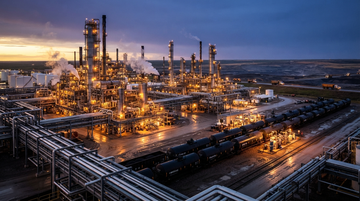
Cenovus Energy proves oil’s operating leverage—then exposes how quickly it can flip
Cenovus raised its 2026 upstream production outlook as second-quarter net earnings surged to $2.87B, showing how a bigger barrel base can amplify profits when margins cooperate. But the same leverage also means the stock will be sensitive to any slip in crude differentials, refinery throughput/utilization, or capital/working-capital discipline—so the real question isn’t “can profits triple,” it’s “can they stay there.”

US Strike on Iran Forces a 2026 Risk-Premium Reprice: Oil’s “Discount” Is No Longer the Trade
A US strike on Iran reopens Strait-of-Hormuz tail-risk in hours, reversing the recent de-escalation-driven deflationary narrative for crude pricing. The fastest transmission is not headlines—it is how refiners’ and defense primes’ hedging, working-capital timing, and near-term contract marks must reprice under higher oil volatility.
2026-07-29
2026-07-27
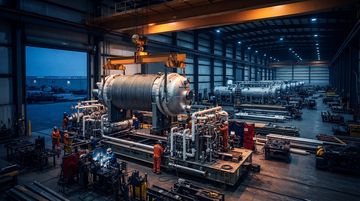
Baker Hughes's backlog is growing—but it doesn't yet prove LNG is more durable than oilfield services
Baker Hughes ended 1Q26 with $36.1B of remaining performance obligations (RPO), including $33.1B in industrial-and-energy technology (IET)—yet the company does not disclose a backlog “duration” metric in the primary filings we reviewed. That means investors still have to validate how much of the LNG-weighted backlog converts into revenue on a timeline that actually beats oilfield-services cyclicality.

Baker Hughes’ LNG backlog looks like a counter-cyclical shock absorber—Q2 shows $37.1B IET RPO even as oil drilling economics soften
Baker Hughes’ latest filings show IET orders and remaining performance obligations (RPO/backlog) staying elevated through mid-2026, with IET RPO reaching record levels. That matters for the oilfield-service cycle because backlog visibility can mute crude-driven demand swings—but the oil rig count still provides an early warning that oil jobs can fade faster than LNG projects book.

Fed’s “Two‑Shock” Setup Doesn’t Just Move Oil—It Decides Whether Banks Get a Rate‑Cut Tailwind or Stay Discounted Under 3.5% Inflation
A weekend pause in US strikes on Iran drove a ~4% daily drop in WTI and ~4% in Brent, creating a near-term inflation relief impulse. But the Fed’s latest 2026 PCE inflation path still clusters around the high‑3s, so the key repricing question is whether policymakers treat oil relief as “transitory” or as another reason to keep rates restrictive—through this lens, banks and energy market dynamics diverge quickly.
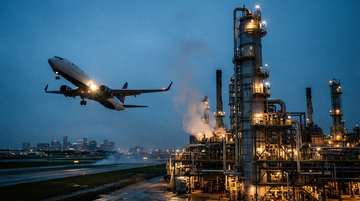
Oil’s “Good News” Slide: US–Iran De-Escalation Cut WTI/Brent ~5%—and It Makes Rate-Cut, Airline-Fare, and Refining-Margin Calls Move in Reverse
A fresh US–Iran de-escalation triggered a rapid ~5% crude unwind, treating geopolitical risk as if it can disappear overnight. That “symmetric premium” is a direct problem for the usual playbook: it pressures near-term airline fuel-expense expectations and cracks refine-margin assumptions while simultaneously shifting Fed-rate odds faster than typical macro signals.
The SPR at 1983 Levels Makes the “$20 Refill” Argument Irreversible—Until Congress Restores a National-Security Buffer
With the U.S. Strategic Petroleum Reserve reported at 311.4M barrels—the lowest since March 1983—the policy debate stops being about price timing and becomes about survivability: there’s less reserve left to absorb shocks. The key investment implication is that oil-market “volatility hedges” (crude producers and refiners with inventory optionality) start mattering more than incremental downstream demand, because refill delays turn SPR capacity into a macro risk premium.
What to expect
Evidence-first notes with a visible point of view.
This section collects sharp takes on earnings, shareholder meetings, and market structure. Each new piece should make the thesis, the facts, and the implications obvious within the first few screens.
Expect direct analysis, not generic commentary.
Expect the data to be explicit and the argument to be easy to follow.
Plutux is not an investment adviser. Market data and AI-generated analysis are for information and education only, not investment advice. Disclaimer