%22%2F%3E%0A%20%20%3Ccircle%20cx%3D%22220%22%20cy%3D%22150%22%20r%3D%22180%22%20fill%3D%22%2322d3ee%22%20fill-opacity%3D%220.12%22%2F%3E%0A%20%20%3Ccircle%20cx%3D%221010%22%20cy%3D%22130%22%20r%3D%22220%22%20fill%3D%22%2338bdf8%22%20fill-opacity%3D%220.08%22%2F%3E%0A%20%20%3Ccircle%20cx%3D%22920%22%20cy%3D%22520%22%20r%3D%22170%22%20fill%3D%22%2322d3ee%22%20fill-opacity%3D%220.06%22%2F%3E%0A%20%20%3Cpath%20d%3D%22M140%20430h920%22%20stroke%3D%22url(%23line)%22%20stroke-width%3D%2212%22%20stroke-linecap%3D%22round%22%2F%3E%0A%20%20%3Cpath%20d%3D%22M220%20360c120-150%20260-220%20380-220s260%2070%20380%20220%22%20fill%3D%22none%22%20stroke%3D%22%2367e8f9%22%20stroke-opacity%3D%220.5%22%20stroke-width%3D%2216%22%20stroke-linecap%3D%22round%22%20stroke-linejoin%3D%22round%22%2F%3E%0A%20%20%3Cpath%20d%3D%22M300%20398h600%22%20stroke%3D%22%2394a3b8%22%20stroke-opacity%3D%220.24%22%20stroke-width%3D%228%22%20stroke-linecap%3D%22round%22%2F%3E%0A%20%20%3Ctext%20x%3D%22220%22%20y%3D%22510%22%20fill%3D%22%23e2e8f0%22%20fill-opacity%3D%220.7%22%20font-family%3D%22Arial%2C%20Helvetica%2C%20sans-serif%22%20font-size%3D%2238%22%20letter-spacing%3D%228%22%3EINSIGHTS%3C%2Ftext%3E%0A%3C%2Fsvg%3E)
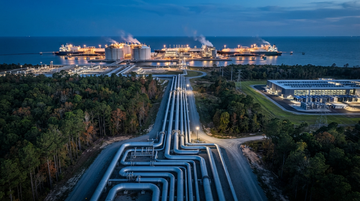
Williams is making a very specific infrastructure bet: buy the midstream “pipes to where the future gas gets burned.” The deal doesn’t just add pipeline assets—it increases the odds that long-haul gathering/transport contracts will behave like volume-backed capacity, not just “existence” tariffs. That’s why this is a first real test of whether the AI-powered electricity buildout has become large enough to re-rate the Permian-to-Gulf gathering complex via the broader LNG + gas-fired generation system.
Verified deal terms and asset linkage
Williams is buying full control of Momentum to lock in LNG-and-power-linked gas takeaway
Williams agreed to acquire 100% of Momentum Midstream for total consideration of up to $5.5B, made up of approximately $3.5B of cash and debt and roughly $2.0B of Williams equity. The deal framing ties the acquired system directly to Haynesville-to-Gulf Coast LNG and power demand—which matters because gas gathering value ultimately depends on who consumes the gas downstream, and under what contract structure.
Deal value (max)
$5.5B
Williams agreement to acquire 100% of Momentum Midstream; total consideration up to $5.5B (cash+debt+equity mix)
Consideration mix
$3.5B
Approximately $3.5B cash and debt consideration
Equity component
~$2.0B
Roughly $2.0B of Williams equity
What Momentum actually contributes to the AI+LNG thesis
NG3 gathering footprint
250 miles
Direct Haynesville-to-LA link, positioned as LNG-demand adjacency
NG3 total capacity
2.3 Bcf/d
System capacity figure stated by Momentum
System LNG connectivity
10 LNG facilities
Momentum states LNG-related connectivity to 10 LNG facilities
System throughput context
6 Bcf/d capacity; 20 Bcf/d connectivity
Momentum provides aggregate capacity/connectivity context
Supply-chain mechanics
The deal only “re-rates” gas gathering if it shifts volumes into long-haul contract behavior
The market can miss the mechanism. Gathering value in the US is usually discussed as miles, interconnect count, and fee stability. But what moves midstream multiples is whether the acquired network captures incremental gas volumes that are “pulled” by (1) LNG export feedgas commitments and (2) gas-fired power dispatch economics. Williams’ willingness to pay up suggests management expects a step-change in contracted volumes and/or effective utilization—rather than a passive asset count increase.
- Upstream linkage: Haynesville supply must be physically routed into Gulf LNG feed corridors where downstream contracts exist (volume-backed demand).
- Midstream transmission linkage: the value driver becomes utilization of gathering/transport paths that reduce basis risk and increase deliverability to LNG and power demand centers.
- Downstream linkage: LNG facilities and gas-fired generators must compete for molecules; if AI-driven power growth pushes overall gas demand up, the corridor tightens and re-rates.
- Contract behavior linkage: the market pays for pipeline systems that can convert incremental gas supply into cash flows via contracts and take-or-pay structures; without volume conversion, asset additions look like capex that never “turns into” growth cash flow.
Capital markets lens
Can Williams absorb the price without breaking the cash-flow durability story?
From a fundamentals standpoint, the deal’s “momentum” narrative needs financial support: Williams must maintain operating cash generation while funding acquisition-related capital needs. Using the available income statement and cash flow data for Williams, operating cash flow remains large and free cash flow remains positive, which helps explain why an up-to-$5.5B acquisition is feasible without immediately impairing the dividend or leverage posture (though deal-close and integration costs could shift the near-term profile).
| Fiscal year | Revenue | EBITDA | Operating cash flow | Free cash flow |
|---|---|---|---|---|
| 2023 | $10.907B | $7.712B | $5.938B | $3.371B |
| 2024 | $10.503B | $6.569B | $4.974B | $2.401B |
| 2025 | $11.950B | $7.414B | $5.898B | $1.005B |
Non-obvious causal chain: AI power → gas demand → corridor value
Why “AI momentum” should show up first in LNG-to-power gas corridors
The AI thesis isn’t a single market story; it’s a system story. AI data centers tend to drive long-duration, high-load power growth. That power growth, absent perfect renewables catch-up, increases the role of gas-fired generation, which competes for the same molecules that LNG exports require as feedgas. When LNG and power compete, the best-positioned systems are those that can route molecules efficiently—meaning the corridor that connects resource basins (like Haynesville) to Gulf demand becomes economically critical.
This is why the Momentum network specifically matters. Momentum states NG3 has 2.3 Bcf/d capacity and links to the “epicenter” of LNG demand in Gillis, Louisiana, while also reporting connectivity to 10 LNG facilities. That aligns with the idea that AI-powered load growth ultimately “selects” midstream assets that can deliver gas where demand is already contractually anchored.
Williams free cash flow has stayed positive but can swing
Illustrates why investors should demand clear deal synergies and utilization assumptions; the thesis requires the deal to preserve or extend cash generation durability.
Unit: USD
2023
3,371,000,000
2024
2,401,000,000
2025
1,005,000,000
What to watch next (angles that answer the “re-rate” question)
Completion Gate: 6 specific signals that the market will treat as “AI-driven gas re-rating”
- Utilization proof: post-close guidance that indicates higher contracted volumes or improved throughput on the Haynesville-to-Gulf corridor.
- Contract structure proof: disclosures that clarify whether incremental demand is captured via take-or-pay, firm capacity commitments, or other volume-linked terms.
- Basis/transportability: signs that the network reduces deliverability constraints to LNG and gas-fired power hubs (lower friction costs, higher effective delivered volumes).
- Synergy math: a bridge from the $5.5B deal price to expected value creation (cost of capital + integration costs + incremental margin on volume).
- Cash-flow durability: quarterly free cash flow trend relative to 2024–2025 volatility; the market will compare deal-funded capex vs. organic cash generation.
- Risk framework: any updates on regulatory approvals, commodity price sensitivity, and construction schedule impacts to LNG/power demand absorption.
Investor payoff: who benefits and who faces tradeoffs
A re-rate usually lifts the “molecule routers,” but it punishes the wrong risk model
If AI-powered load growth becomes material enough to tighten gas markets, investors should expect a corridor-level rerating for operators with (a) deliverability to LNG/power hubs and (b) the ability to monetize incremental volumes. The tradeoff is that if demand growth is real but molecules can’t physically move—or if contracts remain non-volume-linked—then deal prices compress returns and rerating won’t stick.
Related listed names tied to the same LNG-to-power gas transmission logic
- The $5.5B Momentum acquisition positions Williams to capture incremental Haynesville-to-Gulf volumes if LNG/power demand tightens corridor deliverability.
- Williams’ scale supports financing: 2023–2025 revenue stayed ~${10.5B–$12.0B}, reducing the odds of near-term solvency stress from the purchase itself.
- Over quarters, the market will watch whether deal-close synergies stop free cash flow sliding toward ~$1.0B (2025) instead of rebounding.
- If LNG feedgas demand grows, systems with long-haul reach can benefit, but the impact may be mixed if volumes are met via competing basins rather than incremental contracted utilization.
- Rerating depends on whether gas flows shift to routes EPD serves; that is a contract-and-physical-deliverability question, not a pure commodity beta call.
- Kinder Morgan’s exposure to gas transport means it could see volume upside if LNG/power competition tightens constraints, but the catalyst is quarterly utilization commentary post-deal/quarterly gas flow updates.
- Near term (days–quarters), the market will price whether demand pulls ahead of pipeline scheduling, not whether the theme is “AI-friendly.”
- Cheniere is downstream of the corridor; if AI-driven power increases LNG feedgas pull-through, it can be bullish for realized LNG demand, but marketing/volume timing may offset pure feedgas gains.
- Over 1–3 years, rerating depends on whether LNG contract structures translate into durably higher utilization and margins versus short-cycle spot volatility.
- If AI load expands, gas-fired generation often fills the gap; that can support the system that midstream depends on, but NextEra’s mix means the benefit can be partly indirect (power generation economics and fuel mix vary).
- Over quarters, the signal will be how quickly load growth translates into dispatch and capacity needs that rely on gas.