%22%2F%3E%0A%20%20%3Ccircle%20cx%3D%22220%22%20cy%3D%22150%22%20r%3D%22180%22%20fill%3D%22%2322d3ee%22%20fill-opacity%3D%220.12%22%2F%3E%0A%20%20%3Ccircle%20cx%3D%221010%22%20cy%3D%22130%22%20r%3D%22220%22%20fill%3D%22%2338bdf8%22%20fill-opacity%3D%220.08%22%2F%3E%0A%20%20%3Ccircle%20cx%3D%22920%22%20cy%3D%22520%22%20r%3D%22170%22%20fill%3D%22%2322d3ee%22%20fill-opacity%3D%220.06%22%2F%3E%0A%20%20%3Cpath%20d%3D%22M140%20430h920%22%20stroke%3D%22url(%23line)%22%20stroke-width%3D%2212%22%20stroke-linecap%3D%22round%22%2F%3E%0A%20%20%3Cpath%20d%3D%22M220%20360c120-150%20260-220%20380-220s260%2070%20380%20220%22%20fill%3D%22none%22%20stroke%3D%22%2367e8f9%22%20stroke-opacity%3D%220.5%22%20stroke-width%3D%2216%22%20stroke-linecap%3D%22round%22%20stroke-linejoin%3D%22round%22%2F%3E%0A%20%20%3Cpath%20d%3D%22M300%20398h600%22%20stroke%3D%22%2394a3b8%22%20stroke-opacity%3D%220.24%22%20stroke-width%3D%228%22%20stroke-linecap%3D%22round%22%2F%3E%0A%20%20%3Ctext%20x%3D%22220%22%20y%3D%22510%22%20fill%3D%22%23e2e8f0%22%20fill-opacity%3D%220.7%22%20font-family%3D%22Arial%2C%20Helvetica%2C%20sans-serif%22%20font-size%3D%2238%22%20letter-spacing%3D%228%22%3EINSIGHTS%3C%2Ftext%3E%0A%3C%2Fsvg%3E)
Verified deal mechanics • what moved, who controls it, and how long
A state oil pipeline network is being monetized as a tariff-backed infra-LP asset, not sold off
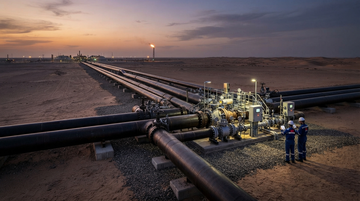
Kuwait’s pipeline network deal is structured as a 20.5-year lease-and-leaseback that keeps Kuwait Oil Company operating the system. The consortium—Blackstone, Brookfield, and KKR—collectively takes 49% economic exposure without taking day-to-day operation.
CNBC (citing Reuters) outlines the core terms: $16B total transaction value; $7.85B upfront proceeds at closing; 13 pipelines spanning ~320 kilometers; and a volume-based tariff. In this structure, the public operator (KOC) preserves operational control, while the private capital stack buys long-duration cashflow characteristics.
Deal size
$16.0B
Total transaction value (lease-and-leaseback), per CNBC/Reuters
Upfront proceeds at closing
$7.85B
Cash generated at closing (reported figure), per CNBC/Reuters
Consortium stake
49%
Blackstone + Brookfield + KKR collective ownership in JV, per CNBC/Reuters
Operator stake
51%
Kuwait Oil Company controlling stake in JV, per CNBC/Reuters
Asset scope
13 pipelines
Approximately 320 km total, per CNBC/Reuters
Duration
20.5 years
Lease term period, per CNBC/Reuters
Supply-chain transmission • from midstream asset to capital markets bid
Why this is a new Gulf infra wedge: it shifts pipeline risk into an LP-style cashflow product
- Locks a long-duration tariff stream into private capital while the state operator retains operational control—reducing “asset-on-the-books sale” optics and keeping system reliability under KOC.
- Turns upstream export bottlenecks into investable midstream cashflows, so infra funds can underwrite demand using volume-based tariff mechanics rather than full commodity exposure.
- Creates a replicable model for other state pipeline systems: 20+ year tenors + retained O&M by the public operator + private minority economics.
- Expands the pool of energy buyers beyond oil traders, pulling in infra LP capital that is structurally searching for inflation-hedge-like contract duration.
Mechanism • how the leaseback changes incentives vs. a normal sale
Leaseback changes the incentive geometry: fewer policy fights, clearer underwriting, faster monetization
In a straightforward asset sale, the public owner typically loses control of maintenance and future capacity decisions, which can raise operational/political friction. With a lease-and-leaseback, the state can preserve day-to-day operating rights while monetizing value upfront. The underwriting logic becomes clearer for infra investors because the asset is packaged around a contract structure (lease term + tariff), not exposed to a full-sale merchant pipeline model.
This is the “wedge”: it invites institutional infrastructure capital into energy midstream without requiring full privatization of critical logistics.
Cross-entity mapping • who is upstream/downstream of cashflows in this structure
Full transmission chain: infrastructure capital → pipeline JV economics → state operator reliability
| Layer | Participant(s) | What they provide | What they receive/control | Decision-relevant note |
|---|---|---|---|---|
| Financing / asset buyer economics | Blackstone + Brookfield Infrastructure Partners + KKR | Infra-LP style long-duration capital | JV economic exposure (collectively 49%) | They underwrite a contract-backed cashflow profile rather than commodity price risk. |
| Public operator controlling rights | Kuwait Oil Company (KOC) (via state structure) | Operational control and network know-how | Controlling JV stake (51%) and full operational/ownership rights for the network | This limits reliability risk from private governance changes. |
| Asset scope (system bottleneck) | 13 pipelines (~320 km) | Physical capacity for crude oil movements | Contracted tariff-backed utilization economics | Asset count/length define the investable “package size.” |
Data-backed investor angles • what moves first vs. what matters later
What investors should watch next: closing, tariff mechanics, and downstream replication odds
Upfront cash at closing is roughly half of headline transaction value (reported figures)
Source-reported terms only; does not imply IRR—used to visualize the monetization split between upfront proceeds and remaining contract value.
Unit: USD bn
Headline transaction value
USD billions
16
Upfront proceeds at closing
USD billions
7.9
- First-order catalyst is closing and consortium funding delivery—upfront proceeds ($7.85B) are the near-term headline metric that can re-rate infra funds’ deal pipelines.
- Second-order catalyst is how the volume-based tariff behaves through throughput cycles—this determines whether returns behave like resilient contracted cashflows or like hidden commodity linkage.
- Third-order catalyst is replication signaling across Gulf midstream assets—a 20.5-year term with retained O&M is a template other state systems can copy.
Fundamentals & comparability • linking this to listed infra-capital players
Why this matters to listed infra-capital managers now
Even without pulling Kuwait operator financials (KPC/KOC are not resolvable to a tradable symbol in this session), the structure is directly relevant to the listed infrastructure-capital managers that run similar LP-style underwriting.
A repeated pattern in infra portfolios is: long tenor + contracted or contracted-like cashflows + active operational governance remains with a credible operator. This Kuwait pipeline leaseback is explicitly aligned to that pattern: it is not a pure privatization; it is an extraction of value into a private vehicle while the public operator keeps operational control.
Listed beneficiaries tied to the deal’s infra-LP cashflow underwriting model
- The consortium’s 49% JV exposure tied to a 20.5-year pipeline contract supports repeatable infra underwriting narratives in days–quarters if closing proceeds remain on track.
- Upfront $7.85B proceeds highlight deal origination capacity; investors may re-rate fundraising/fee outlook over the next quarter.
- Volume-based tariff packaging reduces commodity linkage vs. merchant models; watch for disclosures that validate downside protection over 1–3 years.
- KKR’s consortium 49% economics in a 320 km / 13-pipeline package is the kind of large-ticket infra-LP product markets usually reward in the next earnings cycle.
- 20.5-year tenor is a key match to KKR’s long-duration capital themes; monitor whether deal documentation confirms tariff mechanics in coming quarters.
- If infrastructure pipeline contracts prove resilient, deal replication odds rise over 1–3 years, improving pipeline visibility and fee cadence.
- Brookfield’s involvement in a lease-and-leaseback with retained O&M fits an operator-centric governance model that can improve risk-adjusted cashflow durability over 1–3 years.
- The reported $7.85B upfront cash signals execution strength; expect near-term sentiment uplift in days–quarters around infrastructure deal flow.
- A volume-based tariff shifts value toward utilization; watch quarterly indicators once contract performance metrics are disclosed.
- This deal is energy-infrastructure, not semiconductors; the relevant question is whether Kuwait’s broader monetization supports macro stability that eventually feeds electronics demand—direction is unproven in days–quarters.
- Investors may model indirect effects through Gulf capex cycles, but no KPI is disclosed here; no direct linkage number exists in the sourced terms for 1–3 years.