Energy
Crude, refining and the price at the pump
Supply, inventories, crack spreads and OPEC decisions, followed down to the producers, refiners and buyers who book the difference.
2026-08-23
%22%2F%3E%0A%20%20%3Ccircle%20cx%3D%22220%22%20cy%3D%22150%22%20r%3D%22180%22%20fill%3D%22%2322d3ee%22%20fill-opacity%3D%220.12%22%2F%3E%0A%20%20%3Ccircle%20cx%3D%221010%22%20cy%3D%22130%22%20r%3D%22220%22%20fill%3D%22%2338bdf8%22%20fill-opacity%3D%220.08%22%2F%3E%0A%20%20%3Ccircle%20cx%3D%22920%22%20cy%3D%22520%22%20r%3D%22170%22%20fill%3D%22%2322d3ee%22%20fill-opacity%3D%220.06%22%2F%3E%0A%20%20%3Cpath%20d%3D%22M140%20430h920%22%20stroke%3D%22url(%23line)%22%20stroke-width%3D%2212%22%20stroke-linecap%3D%22round%22%2F%3E%0A%20%20%3Cpath%20d%3D%22M220%20360c120-150%20260-220%20380-220s260%2070%20380%20220%22%20fill%3D%22none%22%20stroke%3D%22%2367e8f9%22%20stroke-opacity%3D%220.5%22%20stroke-width%3D%2216%22%20stroke-linecap%3D%22round%22%20stroke-linejoin%3D%22round%22%2F%3E%0A%20%20%3Cpath%20d%3D%22M300%20398h600%22%20stroke%3D%22%2394a3b8%22%20stroke-opacity%3D%220.24%22%20stroke-width%3D%228%22%20stroke-linecap%3D%22round%22%2F%3E%0A%20%20%3Ctext%20x%3D%22220%22%20y%3D%22510%22%20fill%3D%22%23e2e8f0%22%20fill-opacity%3D%220.7%22%20font-family%3D%22Arial%2C%20Helvetica%2C%20sans-serif%22%20font-size%3D%2238%22%20letter-spacing%3D%228%22%3EINSIGHTS%3C%2Ftext%3E%0A%3C%2Fsvg%3E)

2026-08-21

Continental’s FireBird II buy signals Permian “good inventory” is still scarce—while public-deal liquidity tightens into 2027
Continental Resources said it is acquiring FireBird Energy II to add ~54,000 net Permian (Midland) acres and ~32,000 boe/d (69% oil), with ~147,000 net resource acres and 95% operator activity—yet the purchase price was not disclosed. The lack of disclosed price, combined with the size and operating quality of the acquired book, points to a market where top-tier locations still clear at a premium even as the public acquisition window narrows. For listed Permian acreage owners and service names, the immediate takeaway is that scarcity-driven bidding can keep well and completion costs bid higher into the period when supply growth could otherwise surge in 2027.

Inertia’s “minutes not days” fusion-fuel breakthrough doesn’t remove fusion’s choke point—tritium stockpile math already sets the real deadline
Inertia says it cut fusion-fuel target production from “several days” to “just minutes,” targeting 10 shots per second and mass fabrication. But deuterium–tritium fusion still faces a separate, slower treadmill: worldwide tritium stocks are only on the order of tens of kilograms, and accumulating enough tritium for first-of-a-kind commissioning requires multi‑year build-up even if pellet-making becomes fast.

The teapot blockade’s hidden hit: it tightens China’s crude intake first, then forces a utilization reshuffle that changes refining spreads before buyers price it
The U.S. blockade is no longer only a crude-risk premium story: OFAC’s April 28, 2026 sanctions framework shows China’s “teapot” refineries (via specific designated facilities) sit at the center of Iran crude purchases, meaning any cut instantly becomes a demand-side feedstock shock. That shock forces crude substitution and utilization changes, which can reprice global crude differentials and refining margins—setting up a near-term, equity-relevant spread impulse for independent U.S. refiners.
2026-08-20

Brent clearing $94 snaps the “oil fade” setup—and makes September rate math run through the P&L, not the dot plot
Brent pushed above $94 on Aug. 20, ending a multi-session run that had kept traders leaning on the idea of an $85 “fade.” The oil regime break matters for Fed odds because it quickly tightens near-term inflation and risk-premium assumptions, while also feeding directly into fuel-sensitive earnings.
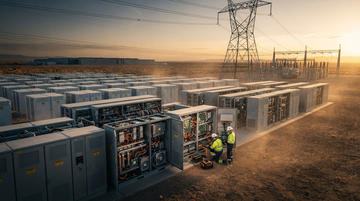
AI’s grid firming bottleneck isn’t batteries—it’s the grid-scale storage “power electronics” that let queues turn into revenue
Grid-scale battery projects are increasingly pulled forward by AI-driven interconnection demand, but economics are still governed by what can actually connect and operate: cells, then PCS/power electronics, then integrator execution. Tesla and Enphase both show how tariff and policy mechanics flow through the storage value chain—strong deployments can coexist with margin pressure when the PCS/inverter leg costs rise faster than pricing.
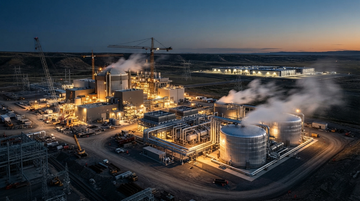
TerraPower’s Natrium turns nuclear into a data-center “load-following battery,” not just baseload
Natrium pairs a 345 MWe sodium fast reactor with a molten-salt energy storage system that can boost output to 500 MWe, giving nuclear dispatchability that hyperscalers need for AI-driven peak demand. TerraPower is already moving Kemmerer Unit 1 through the 10 CFR Part 50 construction-permit milestone and building a HALEU fuel path—suggesting the next bottleneck is less “baseload availability” and more flexible, contractable output.
2026-08-19

2026-08-18

Tesla's non-auto truck bet gets a real fleet test: Einride's 500-Semi rollout targets September 2026 start
Einride says it will deploy 500 Tesla Semi trucks across North America on its Saga AI platform starting in September 2026. For investors, the order is less about near-term vehicle volume and more about whether electric trucking economics can clear a full fleet TCO hurdle—while also stress-testing Tesla's non-auto revenue mix and charging-related capex needs.
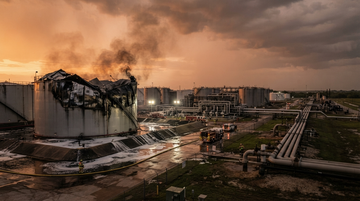
Lightning Tore Through a US Fuel “Bottleneck” — and Crack-Spread Trades Now Have a Physical Supply Shock Washington Didn’t Model
A lightning-triggered fire at the Explorer Pipeline Glenpool tank farm in Oklahoma forced operations to shut and is now tightening refined-product supply logistics on a key pipeline corridor. For crack-spread trades, the implication is simple: even if Washington caps “refinery output” expectations, physical downtime at storage/transport nodes can still move forward the timing (and size) of product shortages that widen differentials.
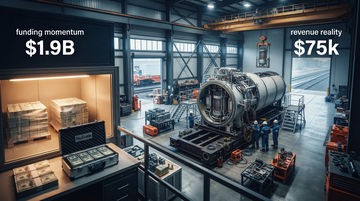
NuScale Power revenue barely exists—while liquidity swells, and the timing matters more than the narrative
In NuScale Power’s Q2 2026 results, revenue totaled just $75k for the quarter while cash, cash equivalents, and investments rose to $1.9B—an extreme mismatch that forces investors to separate “funding momentum” from “revenue reality.” The filing ties the year-over-year revenue plunge to completed Fluor FEED Phase 2 work in late 2025 and the absence of comparable 2026 activity, not a broken business model at every moment; but it still shows that the SMR economics are pacing far behind the AI power-demand storyline.

Ceasefire expiry flips the “fade” trade: oil lifts back toward $85 as term premium and shipping risk reprice
When the U.S.–Iran ceasefire looked set to expire on Monday, policy language tilted toward coercive pressure and Iran signaled a harder posture—pushing oil and yields higher. The trade implication is not just crude sensitivity: airlines, margin-flex refiners, tanker operators, and long-duration equity exposures can whipsaw as term premium and freight risk re-price before the market regains direction.
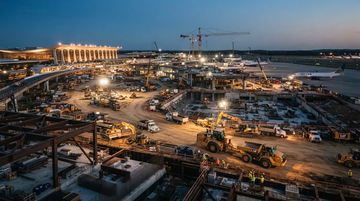
Washington’s “more refinery output” push just set a ceiling on the crack-spread trade
Energy Secretary Chris Wright said the U.S. will announce steps within days to help refiners boost fuel output. When policymakers target throughput, the usual winners are volume/working-capital operators—and the usual losers are refiners’ margin flexibility that depends on tight product markets, especially during record crack spreads.
2026-08-17

Chevron’s Aug 17 OFAC license step adds heavy barrels back—forcing a new U.S. Gulf Coast refining-margin test
An OFAC amendment released Aug 3, 2026 makes Chevron’s Venezuela-linked authorization operative on or after Sept. 17, 2026—raising the odds that heavy Venezuelan crude availability (and its refining economics) moves from headline risk to measurable margin impact. For investors, the key question is whether the restarted heavy flows are large/steady enough to tighten U.S. Gulf Coast heavy differentials and lift refiners’ realizations, without reintroducing political delivery risk.

Crude can stay near $82 while Hormuz convoys slow—because the tape is priced by global balances, not one strait
Even with renewed tanker attacks around the Strait of Hormuz and stalled US–Iran talks, crude can trade in a “calm” range when markets believe supply buffers and demand destruction are doing the heavy lifting. Investors should watch for the moment the disruption shows up in inventories, freight/insurance spreads, and refinery throughput rather than in headlines—because that’s when US-listed shipping-linked names and refiners tend to re-price.

Hydro-Québec and Newfoundland lock in firm hydro for the U.S. Northeast—at a price that forces utilities to model higher “AI firm-power” costs
A new Hydro-Québec–Newfoundland and Labrador Churchill Falls framework would replace the old 1969 economics with a much higher long-term effective purchase price and a defined path to deliver up to 985 MW of firm transmission capacity through Quebec to U.S. markets. For power buyers chasing AI-driven reliability, the deal matters less as headlines about volume and more as a supply-side pricing signal that can tighten what “firm” gets priced like.
2026-08-16
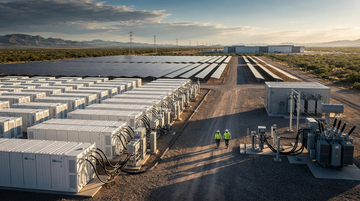
Nvidia’s $3B SB Energy bet highlights the missing “grid-firming” link in AI power
Nvidia’s reported move to invest up to $3B into SB Energy underscores that AI data-center growth is constrained less by chips than by 24/7 power availability. The real supply-chain margin sits in grid-scale storage, power-electronics, and fast interconnection—areas where equipment and energy-storage firms can see order-flow spillover once projects lock fuel (or storage) and transmission timelines.

AI data-center power demand isn’t choking reactor builds—fuel-cycle bottlenecks are tightening uranium-to-fabrication capacity
The hyperscaler PPA wave is being stress-tested by the slowest part of the nuclear supply chain: the front-end fuel cycle. ConverDyn-scale conversion, enrichment capacity, and downstream fuel fabrication are the binding constraints on when new megawatts can actually produce—turning uranium, enrichment, and fuel makers into the margin hinge for AI-linked deployments.

Thiel’s 1% Vaca Muerta stake reframes global gas: Argentina is trying to graduate from “energy chance” to LNG rival
Peter Thiel’s 1% filing stake in Vista Energy turns Vaca Muerta from a niche Latin shale story into an investor-recognizable gas-export bet. The key read-through for US E&Ps is that the marginal “next shale” may be Argentina for LNG-linked timelines, while the near-term winners are companies that can convert unconventional output into export-grade barrels fast.
2026-08-15

What to expect
Evidence-first notes with a visible point of view.
This section collects sharp takes on earnings, shareholder meetings, and market structure. Each new piece should make the thesis, the facts, and the implications obvious within the first few screens.
Expect direct analysis, not generic commentary.
Expect the data to be explicit and the argument to be easy to follow.
Plutux is not an investment adviser. Market data and AI-generated analysis are for information and education only, not investment advice. Disclaimer