Energy
Crude, refining and the price at the pump
Supply, inventories, crack spreads and OPEC decisions, followed down to the producers, refiners and buyers who book the difference.
2026-08-31
%22%2F%3E%0A%20%20%3Ccircle%20cx%3D%22220%22%20cy%3D%22150%22%20r%3D%22180%22%20fill%3D%22%2322d3ee%22%20fill-opacity%3D%220.12%22%2F%3E%0A%20%20%3Ccircle%20cx%3D%221010%22%20cy%3D%22130%22%20r%3D%22220%22%20fill%3D%22%2338bdf8%22%20fill-opacity%3D%220.08%22%2F%3E%0A%20%20%3Ccircle%20cx%3D%22920%22%20cy%3D%22520%22%20r%3D%22170%22%20fill%3D%22%2322d3ee%22%20fill-opacity%3D%220.06%22%2F%3E%0A%20%20%3Cpath%20d%3D%22M140%20430h920%22%20stroke%3D%22url(%23line)%22%20stroke-width%3D%2212%22%20stroke-linecap%3D%22round%22%2F%3E%0A%20%20%3Cpath%20d%3D%22M220%20360c120-150%20260-220%20380-220s260%2070%20380%20220%22%20fill%3D%22none%22%20stroke%3D%22%2367e8f9%22%20stroke-opacity%3D%220.5%22%20stroke-width%3D%2216%22%20stroke-linecap%3D%22round%22%20stroke-linejoin%3D%22round%22%2F%3E%0A%20%20%3Cpath%20d%3D%22M300%20398h600%22%20stroke%3D%22%2394a3b8%22%20stroke-opacity%3D%220.24%22%20stroke-width%3D%228%22%20stroke-linecap%3D%22round%22%2F%3E%0A%20%20%3Ctext%20x%3D%22220%22%20y%3D%22510%22%20fill%3D%22%23e2e8f0%22%20fill-opacity%3D%220.7%22%20font-family%3D%22Arial%2C%20Helvetica%2C%20sans-serif%22%20font-size%3D%2238%22%20letter-spacing%3D%228%22%3EINSIGHTS%3C%2Ftext%3E%0A%3C%2Fsvg%3E)
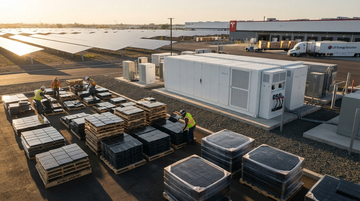
Tesla's Solar Roof exit is a confession, not a setback — it killed 0.17% of US residential solar to free up the energy segment that actually scales
After a decade and roughly 3,000 installed systems, Tesla quietly told certified installers in mid-August 2026 it will stop supplying Solar Roof tiles and only sell conventional panels going forward. The retreat is small in unit terms but huge as a signal: Tesla's energy segment — now a $12.77B business at a 29.8% gross margin in FY2025 — is Megapack-led, not roof-tile-led, and the $240M Q2 warranty true-up shows what custom-manufactured products cost when they don't scale. The move tightens the moat around utility-scale storage, validates Enphase and SolarEdge as the inverter standard for the rest of residential solar, and hands roof-replacement economics back to traditional players like Sunrun and the legacy installer base — while LG Energy Solution collects a $4.3B tailwind from the Megapack cell deal.

Washington turns sanctions into state shareholding: a 35% equity stake and 20% offtake rights in Venezuela could rewrite Chevron’s barrel math
The U.S. is moving from restrictions to direct economic ownership in Venezuela, seeking a 35% stake in North American Blue Energy Partners alongside preferential rights to buy 20% of production under a 25-year framework targeting more than 1.5 million bpd. If the deal’s throughput materializes, it strengthens the U.S. margin capture link from upstream barrels to Gulf Coast refiners—while forcing investors to reassess how quickly Venezuelan supply can be “made bankable” for U.S. counterparties.
2026-08-30
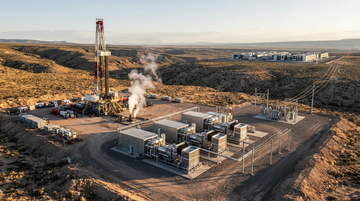
AI’s 24/7 power sprint just found a missing supply-chain map: geothermal’s drill-to-ORC-to-PPA chain
Fervo Energy is converting geothermal from “pilot projects” into bankable 24/7 capacity for AI and data centers—by locking megawatts in PPAs and then moving fast through drilling, permitting, and Organic Rankine Cycle (ORC) equipment. That creates a measurable, investable supply-chain pattern: drill capacity that delivers contracted MW on schedule, ORC turbine/generator OEM scope that scales, and utility-grade offtake economics that are designed to survive the interconnect clock.

Graphite anodes just became the EV-and-storage bottleneck—because the U.S. tariff/export-control regime targets the active-anode link
The binding constraint in the lithium-ion supply chain is shifting from headlines about lithium to the graphite anode value chain—where China’s processing dominance collides with U.S. trade enforcement. A February 17, 2026 Commerce dumping determination for “active anode material from China” sets estimated weighted-average dumping margins at 93.50% (and 102.72% for the China-wide rate), making non-China qualification and contracting the near-term scramble for EV and grid-storage developers.

Venezuela’s potential OPEC exit meets a fading Brent—if quotas never mattered, the “cartel test” becomes who buys the marginal barrel
Venezuela is reportedly considering leaving OPEC as U.S.-backed access to its oil expands, but the quota mechanics matter less than the market’s new swing factor: excess supply discipline vs. marginal-buyer power as Brent slides. The cleanest investor takeaway is that the market share battle after an exit would not be about “freeing barrels” that were already exempt, but about who captures additional volumes when OPEC’s signaling weakens.
2026-08-29

2026-08-27
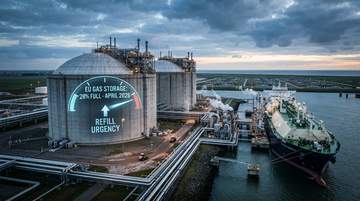
Europe’s depleted storage turns US LNG into the swing supplier for winter—and it can reprice the whole LNG value chain
Europe starts the 2026–27 winter with low underground gas in storage, forcing higher LNG refill urgency and making TTF price risk more likely to translate into a wider Atlantic price signal. If that winter tail risk materializes, US LNG exporters can capture a larger share of the swing margin as cargoes route where the arb (TTF vs. Henry Hub-linked supply costs) is widest.
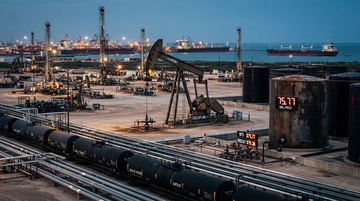
OPEC’s Iran-war price floor is being underwritten by China—and the first crack shows up when WTI slips below $80
Reuters’ reporting on the Iran-war crude reshuffle points to a structural change: as China slows buying, OPEC+ loses the ability to “hold” prices with its supply discipline. The near-term market signal is showing up in real-time benchmark pricing—while US shale’s capital discipline determines whether this becomes a shallow dip or a sustained oversupply regime.
2026-08-26
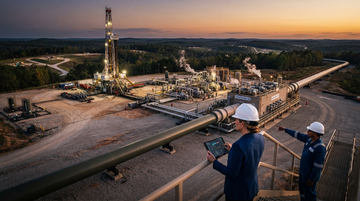
Gunvor’s >$1B Haynesville bid flags a gas-trading power shift: feedgas control is the scarce margin
Gunvor is reportedly in talks to buy Haynesville shale assets for more than $1B, a sign that LNG-era economics are pulling trading-house capital into US gas basins. The deal’s implied wager is that the export margin increasingly depends on securing feedgas access (and bottleneck capacity) rather than simply owning more production barrels of hydrocarbons.

WTI under $80 flips the trade: an Iran–Oman Hormuz framework plus a U.S. sanctions ‘hold’ turns the summer’s geopolitical hedge into an oversupply bet
A reported Aug. 26 framework between Iran and Oman aims to set up a temporary navigational corridor and mine-clearing pathway for the Strait of Hormuz, while the U.S. reportedly held off on extending major secondary sanctions. That combination repriced oil from a geopolitics premium toward a reopening/flow-normalization scenario—exactly the pathway the IEA frames as moving the market from risk scarcity to oversupply-driven price pressure.
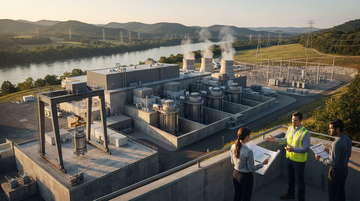
NuScale's TVA deal would be a utility-scale SMR procurement step—if it turns into binding PPAs
TVA and ENTRA1 Energy disclosed an agreement to enable up to 6 GW of NuScale SMR capacity across TVA’s seven-state territory, with ENTRA1 targeting development and ownership and selling electricity to TVA under future power purchase agreements. For investors, the inflection is not the “up to” headline scale—it’s whether this moves from planning to bankable contract terms that translate into revenue and backlog for NuScale while shifting cash-flow economics toward the asset owner and EPC ecosystem.

SLB’s Venezuela “data seat” signals sanctions-era value shifting from barrels to subsurface intel
A new PDVSA arrangement gives SLB access to Venezuela’s oilfield data—turning subsurface digitization into the next sanctions-era entry ticket. The market read-through is supply-chain monetization: the first services spend may show up in data management, geoscience workflows, and upgrade work before it shows up as drilling or production equipment.
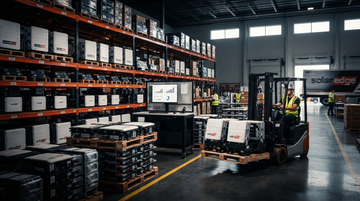
SolarEdge’s margin jump is telling you “inventory math” first—watch the inverter recovery survive working-capital normalization
SolarEdge’s Q2 2026 results show gross margin rising sharply while working-capital flows stabilize—an earnings optics shift that matters more for the inverter recovery than headline demand. The key question for investors: whether the improvement is sustained after inventory aging, write-down accruals, and trade working-capital settle back to normal.
2026-08-25
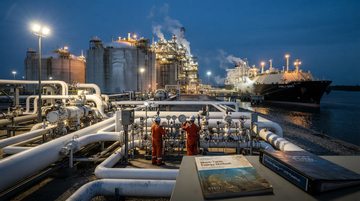
When $10 gas hits, LNG becomes an allocation fight: the marginal molecule shifts toward whoever can buy (or avoid) feedgas best
As domestic Henry Hub pricing tightens, U.S. LNG exports face an economics-and-queue problem: LNG still runs, but profitability depends on who holds the next cheapest gas supply and how quickly they can reroute molecules. EIA’s 2026 outlook still calls for relatively low average Henry Hub, yet the same framework implies a sharply higher “break-even sensitivity” if prices persist near $10/MMBtu—turning exporter margin durability into the core equity question.

Woodside drops its clean-energy target while profit rises—an LNG valuation signal that “transition spend” is being repriced for 2027
Woodside WDS abandoned its longer-term emissions/clean-energy targets and a planned clean-energy spend by 2030 while reporting a 7% rise in first-half profit. The move reframes the LNG investment debate: markets appear to reward “cash-first” project selection now, and treat transition targets as discretionary rather than mandatory—until regulators or counterparties change the rules.
2026-08-24

EPA’s Sept. 1 RFS deadline delay rewires the margin trade between refiners and ethanol—turning late-August SRE decisions into the real price catalyst for RIN-linked cashflows
EPA confirmed it is issuing decisions on small refinery exemption petitions and has maintained a Sept. 1 compliance deadline framework for 2025 RFS obligations—creating a near-term timing window where RIN prices can move sharply on policy certainty. For obligated refiners such as Valero, Marathon Petroleum, PBF Energy, and Phillips 66, that timing directly affects the cost of meeting renewable volume obligations, while for ethanol-linked credit holders it can swing expected cash margins.
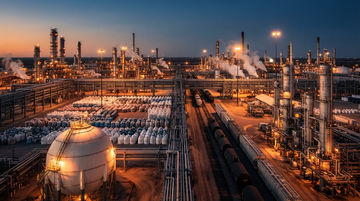
Exxon’s reported bid for Shell’s U.S. chemicals assets tests the ethane advantage—against a global oversupply that can turn “margin” into a margin trap
Reportedly bidding for Shell’s U.S. chemicals assets would be a strategic shift: Exxon is effectively paying for more integrated cracking capacity at the very moment global petrochemicals risk staying structurally oversupplied. For investors, the key question is whether Exxon can translate U.S. ethane feedstock advantage into durable cash margins—without inheriting the same downcycle volatility that has repeatedly hit global polyolefins.
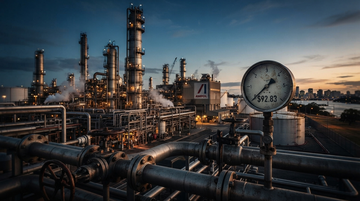
Iran sanctions hit—and oil still faded to $92.83: the trade just proved it survives headlines
The latest U.S. Iran sanctions announcement tested the “oil fade” setup and, instead of forcing crude higher, WTI traded down to about $92.83. At the same time, refinery economics strengthened: Ampol’s Lytton refining margin in Q2 jumped to $30.93/bbl (up from $8.71 a year earlier), supporting a cracked-spread divergence that can outlast sanctions-driven headlines.
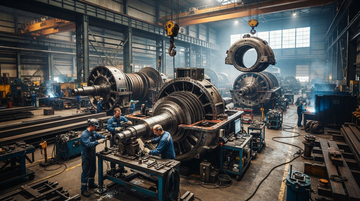
GE Vernova should get a rerating if “steam capacity” stays the next AI power choke point
Reuters reported Siemens Energy is weighing a spin-off (or IPO) and a stepwise stake sale for its “Transformation of Industry” unit, which includes industrial steam turbines. That matters because hyperscaler-driven power buildouts increasingly hinge on steam-side equipment lead times as much as on gas turbine delivery—setting up a valuation read-through to GE Vernova’s power-and-steam franchise.
2026-08-23

What to expect
Evidence-first notes with a visible point of view.
This section collects sharp takes on earnings, shareholder meetings, and market structure. Each new piece should make the thesis, the facts, and the implications obvious within the first few screens.
Expect direct analysis, not generic commentary.
Expect the data to be explicit and the argument to be easy to follow.
Plutux is not an investment adviser. Market data and AI-generated analysis are for information and education only, not investment advice. Disclaimer